

best short term rental websites
7 Best Short-Term Rental Websites for Operators (2026)
Posted on Oct 2, 2025
TL;DR: The "best" short-term rental website isn't one platform — it's the right channel mix for your portfolio. Below we rank the 7 biggest STR listing sites by what actually moves your P&L: commission, payout control, and whether you keep the guest relationship. Then we show how the smartest operators use these channels as top-of-funnel demand, not a permanent landlord.
If you run a portfolio, you already know the tension. Every OTA listing fills nights — and quietly skims margin, hides your guest's email, and trains travelers to book through someone else's brand. So the real question isn't "which site is best?" It's "which channels earn their commission, and how do I convert their guests into repeat, direct bookings I own?"
The short answer: what to weigh before you list
For a professional operator, a listing channel is worth its commission only if it delivers high-intent demand you can't reach yourself. When you evaluate any of the platforms below, weigh four things that most "best of" roundups ignore:
- Commission / host fee. What the channel keeps off every booking — directly off your margin.
- Payout control. Do you get paid on your schedule, or does the platform hold funds and release on its terms?
- Guest-data ownership. Do you get the guest's real email and contact info, or a masked relay you lose the moment they check out?
- Direct-booking friendliness. Can you legitimately move that guest to your own site for the next stay, or does the channel's terms punish you for it?
Hold those four against every platform and the trade-offs get clear fast.
1. Airbnb
Airbnb is the largest peer-to-peer STR marketplace in the world, and for most operators it's the single biggest source of net-new guest demand. Its search reach, mobile booking flow, and review network are unmatched — which is exactly why it's also where you have the least control.
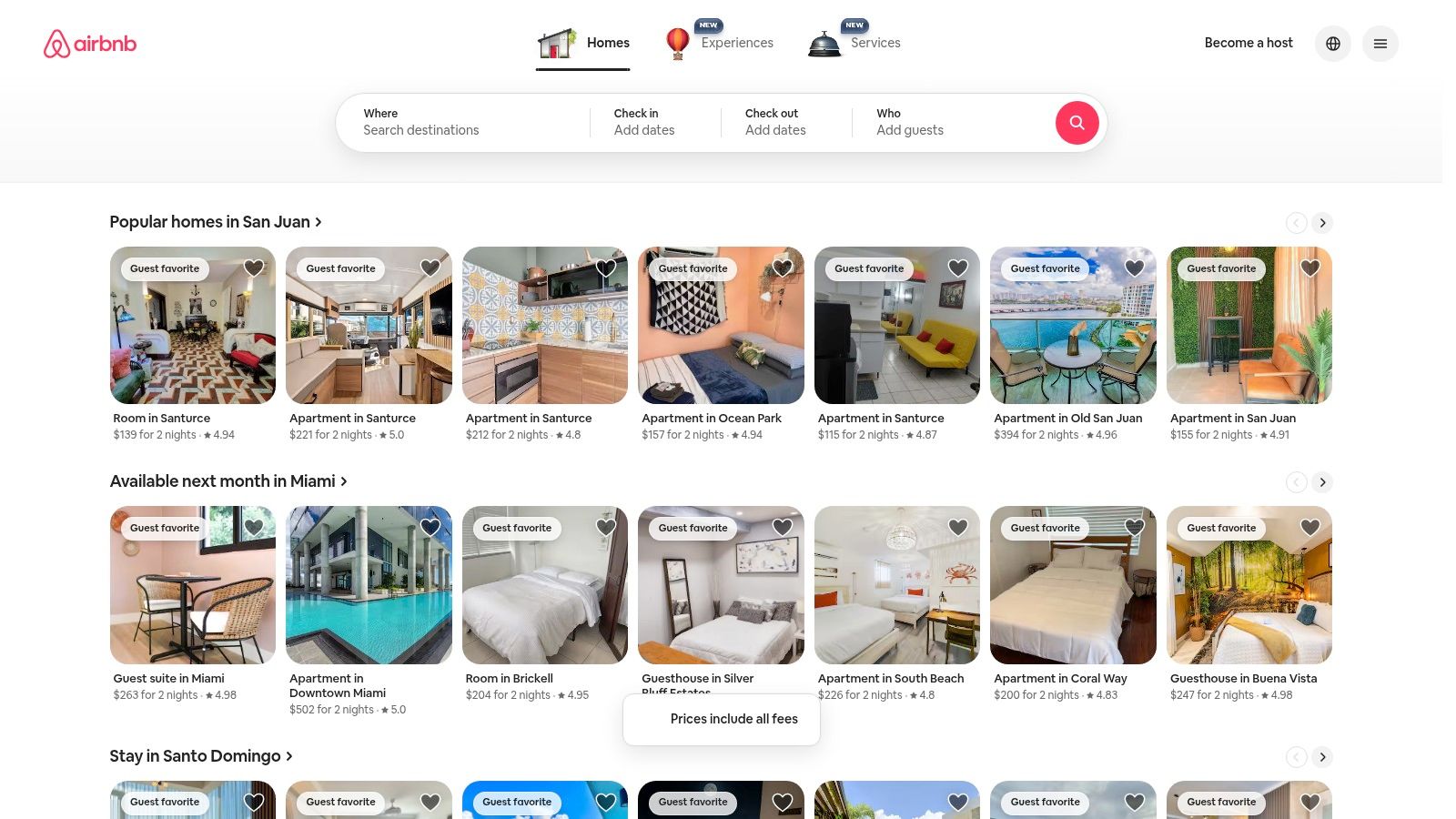
For operators, Airbnb runs two fee models. The split-fee structure charges hosts a ~3% service fee while passing a larger fee (often 14%+) to the guest. The host-only fee model — mandatory for most professionally managed listings connected through a channel manager — shifts roughly 14–16% onto the host instead. That's a meaningful spread, and it's the first number to confirm before you assume Airbnb is "cheap" to list on.
Guest contact is relayed and masked. You manage everything inside Airbnb's walls, on Airbnb's payout schedule. The reach is real demand — but it's rented, not owned.
- Reach: The largest STR demand pool globally; strong for unique, design-forward, and urban inventory.
- Fee reality: Host-only model (~14–16%) for most connected portfolios.
- Control gap: Masked guest data, platform-held payouts, branding lives inside Airbnb.
- Operator move: Treat it as paid acquisition — then earn the repeat stay direct.
Website: airbnb.com
2. Vrbo
Vrbo (now part of Expedia Group) lists entire homes only — no shared spaces — which makes it the strongest fit for family and group inventory: cabins, multi-bedroom homes, drive-to vacation markets. The guests skew higher-value and longer-stay, which often means better RevPAR per booking than a one-night urban turnover.
Vrbo's pay-per-booking model runs around 8% (roughly a 5% commission plus ~3% payment processing), with an annual-subscription alternative for high-volume listers. That's typically lighter than Airbnb's host-only fee — but the audience is narrower, and demand is more seasonal in resort markets.
- Reach: High-intent family and group travelers; best for whole-home, multi-bedroom inventory.
- Fee reality: ~8% pay-per-booking, or annual subscription for volume.
- Control gap: Platform-mediated guest communication and payouts, like any OTA.
- Operator move: Great for filling shoulder-season group nights you'd otherwise miss.
Website: vrbo.com
3. Booking.com
Booking.com puts your homes in front of an audience that isn't even searching for vacation rentals — it's a hotel-first OTA where your apartment sits next to hotel rooms in the same results. For operators, that's incremental demand you can't reach on Airbnb or Vrbo, especially internationally and for shorter urban stays.
The trade is commission. Booking.com's vacation-rental commission typically runs around 15%, and its Genius and visibility-booster programs can push effective cost higher in exchange for ranking. Many listings also use "pay at property," shifting payment collection and risk back to you.
- Reach: Massive international and hotel-crossover demand; strong for urban and short stays.
- Fee reality: ~15% base commission, higher with visibility/Genius programs.
- Control gap: OTA-set policies; payment and deposit handling vary by listing.
- Operator move: Use for geographic and channel diversification, not as a primary margin engine.
Website: booking.com
4. Expedia (Vacation Rentals)
Expedia bundles your rental into a full trip — flights, cars, hotels — which reaches travelers in package-buying mode you won't catch on a pure STR site. For operators, the draw is access to Expedia's loyalty base and the chance to capture demand that's optimizing for a whole-trip deal, not the lowest nightly rate.
Expedia's STR commission generally sits in the ~15–18% range depending on program and visibility tier. Inventory is smaller than Airbnb or Vrbo, so think of it as a supplemental channel for specific markets rather than a primary one. If you do lean into bundled demand, this is exactly where disciplined channel and pricing strategy protects your margin.
- Reach: Package and loyalty travelers; useful crossover from Expedia's hotel base.
- Fee reality: ~15–18% commission, varies by program tier.
- Control gap: Smaller STR inventory; OTA-standard data and payout limits.
- Operator move: A targeted add-on channel, not a portfolio backbone.
Website: expedia.com
5. Homes & Villas by Marriott Bonvoy
For operators with premium and luxury inventory, Homes & Villas by Marriott Bonvoy is a credibility channel. Marriott vets every home and lets guests earn and redeem Bonvoy points — which pulls a discerning, brand-loyal traveler who often books longer and spends more than a marketplace guest.
The catch is selectivity: the network only accepts professionally managed homes that clear Marriott's quality bar, and inventory is intentionally small. It won't fill your calendar on its own, but for the right portfolio it lends hotel-grade trust and access to a high-LTV guest segment you can later nurture direct.
- Reach: Affluent, brand-loyal Bonvoy members; premium and luxury homes only.
- Fee reality: Program terms via Marriott's distribution partners; premium positioning.
- Control gap: Curated and standards-gated; not open self-serve listing.
- Operator move: A trust and prestige channel for high-end inventory.
Website: homes-and-villas.marriott.com
6. Furnished Finder
Furnished Finder serves the mid-term market — 30+ day stays for traveling nurses, corporate relocators, and remote workers. It isn't a booking intermediary; it's a lead-gen directory. You pay a flat annual listing fee, charges no traveler booking fees, and connect with tenants directly.
For operators, that model is a structural advantage on the metrics that matter: there's no per-booking commission, you talk to the guest directly, and you keep the relationship and the contact info from day one. The trade-off is that you do your own screening, contracting, and payment coordination — which is why mid-term operators often pair it with direct-booking and operations tooling to handle the workflow.
- Reach: Healthcare, corporate, and relocation tenants seeking 30+ day furnished stays.
- Fee reality: Flat annual listing fee; no per-booking commission.
- Control gap: You own the guest relationship — but you also own screening and contracting.
- Operator move: The most direct-friendly channel here; ideal for mid-term inventory.
Website: furnishedfinder.com
7. Blueground
Blueground is less a listing site and more a managed-housing operator in its own right — fully furnished, move-in-ready apartments on 30-night-plus terms in major global cities. Most independent operators won't "list" here so much as study it: it's the benchmark for how a standardized, branded, app-managed STR experience drives repeat stays and city-to-city retention.
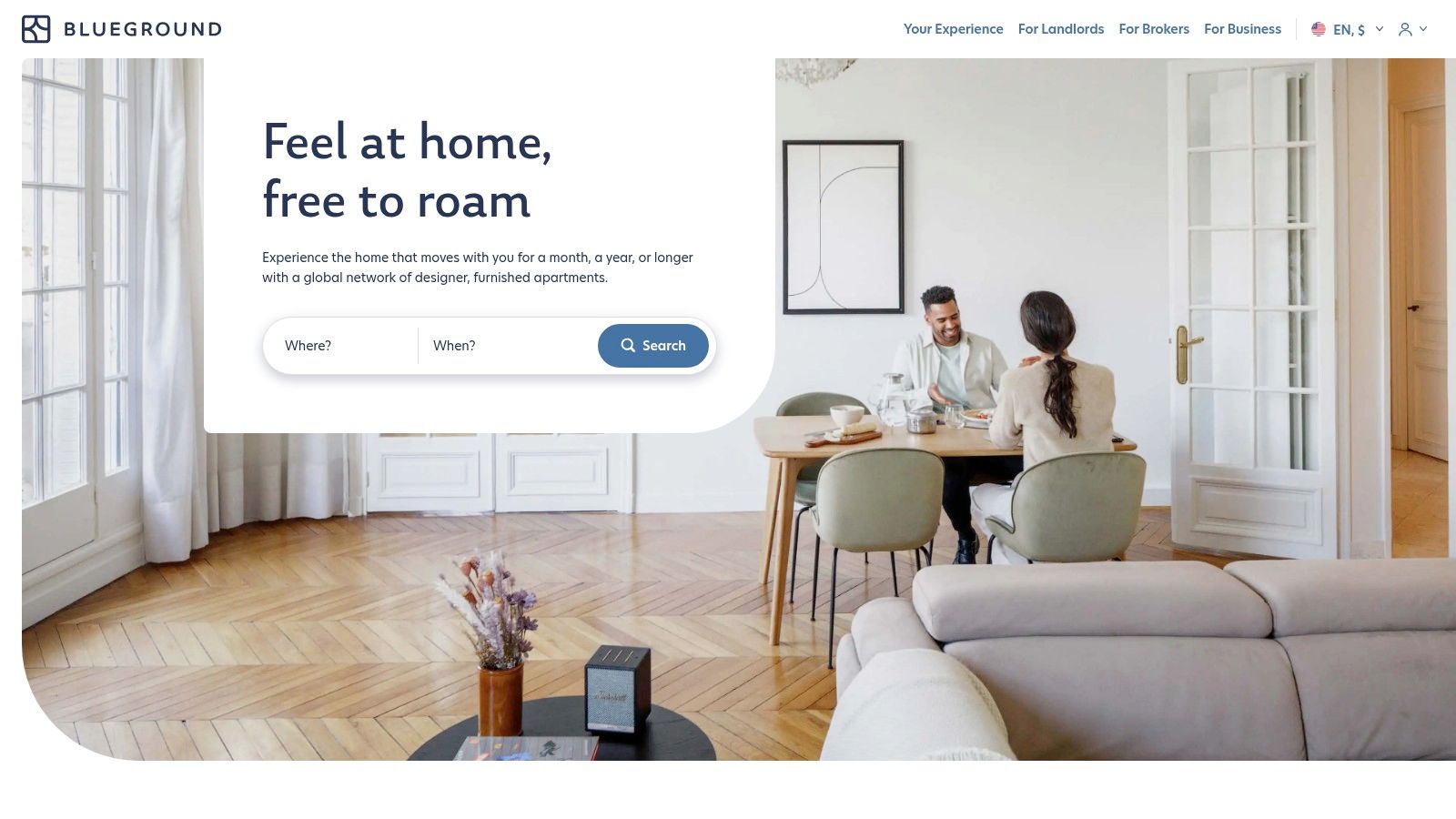
The lesson for your own brand: Blueground wins on consistency and a guest who can re-book in a new city without leaving the brand. That's the direct-booking flywheel — and it's exactly what you're building when you convert OTA guests into your own repeat audience.
- Reach: Relocating professionals and digital nomads on month-plus stays.
- Fee reality: Operator/master-lease model, not an open listing channel.
- Control gap: Closed network — relevant as a benchmark, not a channel for most.
- Operator move: Steal the playbook: consistency + brand-owned re-booking.
Website: theblueground.com
Operator comparison: what each channel actually costs you
Forget star ratings. Here's how the seven stack up on the metrics that hit your P&L and your ownership of the guest. Fee figures are typical published ranges for professionally managed listings — always confirm against your own connected-account terms.
| Platform | Typical operator commission / fee | Payout control | Guest-data ownership | Direct-booking friendliness | Best-fit inventory |
|---|---|---|---|---|---|
| Airbnb | ~14–16% (host-only) or ~3% (split) | Platform-held, scheduled | Masked relay | Low | Unique, urban, design-forward |
| Vrbo | ~8% (or annual subscription) | Platform-held | Masked relay | Low | Family / group whole-home |
| Booking.com | ~15% (more with visibility programs) | Mixed; "pay at property" option | Limited / OTA-set | Low | Urban, short, international |
| Expedia | ~15–18% | Platform-held | Limited / OTA-set | Low | Package & loyalty travelers |
| Homes & Villas by Marriott | Premium program terms | Partner-managed | Limited | Low–Medium | Premium / luxury homes |
| Furnished Finder | Flat annual fee, no commission | You collect directly | You own it | High | Mid-term (30+ days) |
| Blueground | Operator / master-lease model | N/A (closed) | N/A (closed) | N/A | Benchmark, not a channel |
The real strategy: use the channels, own the guest
Here's the kicker. Every platform above is rented demand. The reach is genuine — but on the high-commission OTAs you're paying 14–18% per booking, getting a masked email, and handing the guest relationship to someone else the moment they check out. List on one channel only, and a single algorithm change or commission hike can reshape your whole revenue line.
So the answer to "which is best" is: a diversified mix matched to your inventory — Vrbo for the family villa, Booking.com for the downtown studio, Furnished Finder for the corporate relocations — with each one feeding a brand you actually own. The savviest operators treat OTAs as top-of-funnel acquisition, then convert that first stay into a direct, repeat booking on their own site, where the commission is zero and the guest's email is yours.
That conversion is the whole game. A direct-booking website with your own brand, your own payment flow, and a guest list you control turns a one-time OTA booking into a long-term asset — exactly the move direct distribution is built on. hostAI helps operators stand up that direct-booking site and the AI-driven marketing to fill it, so the demand you pay OTAs to find converts into stays you own.
FAQ
What is the best short-term rental website for operators?
There's no single best — it depends on your inventory and goals. Airbnb and Booking.com drive the most volume, Vrbo wins for family whole-homes, and Furnished Finder is best for commission-free mid-term stays. The strongest strategy is a channel mix that feeds your own direct-booking site.
Which platform charges operators the lowest commission?
Among the major OTAs, Vrbo's ~8% pay-per-booking is typically lower than Airbnb's host-only fee (~14–16%) or Booking.com and Expedia (~15–18%). Furnished Finder charges no per-booking commission at all — just a flat annual listing fee.
Can I get the guest's contact info from these platforms?
Generally no. Airbnb, Vrbo, Booking.com, and Expedia mask or limit guest contact data. Furnished Finder is the exception — you connect with tenants directly. To build a guest list you fully own, convert first-time OTA guests to direct re-bookings on your own site.
Should I list on multiple short-term rental websites?
Yes. Relying on one channel exposes you to algorithm and commission changes. Match each property to the platform whose audience fits, then use those bookings as top-of-funnel demand to grow your direct channel.
Ready to stop renting your guest relationships? hostAI helps STR operators launch an AI-driven direct-booking website and automated marketing in days — so the guests you pay OTAs to acquire become repeat, commission-free bookings you own. See how at gethostai.com.