
build vacation rental website
How to build vacation rental website for direct bookings
Posted on Nov 29, 2025
To build a vacation rental website that actually drives commission-free bookings, you have to get the foundation right. That means more than just picking a pretty template. It's about setting clear goals and choosing the right tech—a memorable domain name, solid hosting, and a website platform that fits your budget and skills, whether that's WordPress or a specialized builder. Once that's in place, you can shift your focus to creating an experience that turns lookers into bookers.
Your Blueprint for a Profitable Booking Website
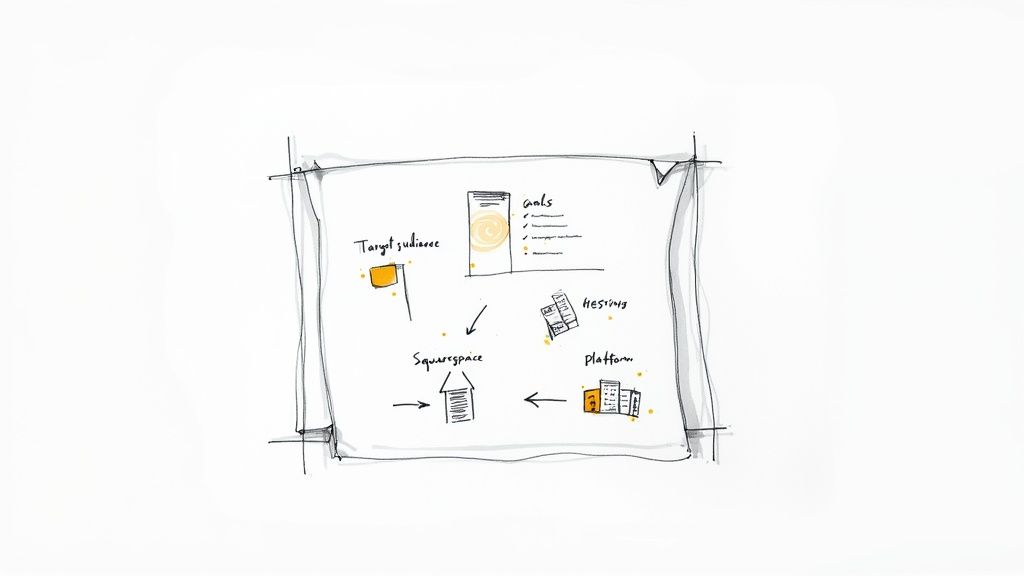
Before you even think about color schemes or photo galleries, the most important work happens on paper. A solid strategic plan is what separates a pretty-but-useless digital brochure from a powerful direct booking machine. This is your chance to build a real business asset, not just another online listing.
First things first, you need clear, measurable goals. What does success actually look like? For most hosts, the main goal is simple: cut the cord with OTAs and their ever-rising commission fees. Getting back that 15-20% they skim off every booking goes straight into your pocket.
But it’s not just about the money. Think about your brand. Your website is your home turf—a place to tell your story, build real trust, and create a loyal following of repeat guests who wouldn't dream of booking anywhere else.
Who Are You Really Talking To?
You can't sell to everyone. Trying to attract all types of travelers is a surefire way to attract no one. The question you need to answer is: who is my ideal guest? This single decision shapes everything that follows, from the words you use on your homepage to the amenities you feature.
Let’s get specific with a few guest personas:
- The Family Vacationer: They need space, kid-friendly features, and easy access to local attractions. Safety and convenience are huge for them, and they’ll be scanning for clear details on sleeping arrangements.
- The Adventurous Couple: They’re hunting for unique experiences, romantic vibes, and your insider tips on the best local hikes or hidden-gem restaurants. For them, it’s all about the ambiance, so your photos have to be top-notch.
- The Digital Nomad: This guest needs fast, reliable Wi-Fi, a decent workspace, and flexible check-in times. They often stay longer and value comfort and consistency above all else.
When you know exactly who you're targeting, you can tailor every part of your website to their needs, making them feel like you get them from the moment they land on your site. The global vacation rental market hit roughly USD 97.85 billion as of 2025 and is on track to hit USD 134.26 billion by 2034. To grab your piece of that pie, you have to speak directly to your niche.
Choosing Your Technical Foundation
With your goals and audience dialed in, it’s time to pick the tools that will bring your vision to life. This "tech stack" is the engine that will power your entire direct booking business.
It all starts with a memorable domain name. This is your digital address, so keep it short, brandable, and easy to say out loud. Steer clear of hyphens or numbers that just cause confusion.
Next up is web hosting—the piece of digital land where your site will live. Don't cheap out here. Look for providers that prioritize speed, security (an SSL certificate is non-negotiable), and have customer support that actually helps.
The biggest decision you'll make is your website platform, or Content Management System (CMS). You’ve got a few solid paths to choose from, and the right one depends on your budget, technical comfort, and long-term goals.
A quick comparison can make this choice a lot clearer.
Comparing Website Platforms for Your Vacation Rental Business
This table breaks down the most popular options to help you see which platform is the best fit for your direct booking site.
| Platform | Best For | Ease of Use | Customization Level | Approximate Cost |
|---|---|---|---|---|
| WordPress.org | Total control & scalability | Moderate (learning curve) | Extremely High | $100 - $300+ setup, plus plugins |
| hostFront | Turnkey, AI-powered sites | Very Easy | High (STR-focused) | $250 - $450/month |
| Lodgify | All-in-one STR solution | Easy | Medium | $36 - $103/month + booking fee |
| Squarespace | Beautiful design templates | Very Easy | Medium | $23 - $49/month + booking plugin |
| Wix | Drag-and-drop simplicity | Very Easy | High | $27 - $59/month + booking plugin |
Ultimately, whether you go with the endless flexibility of WordPress, a specialized builder like hostFront or Lodgify, or a design-focused platform like Squarespace, the goal is the same. You need a powerful and reliable system that makes it easy for guests to book. You can dig deeper into these options in our guide on strategies for direct vacation rental bookings.
No matter which platform you choose, a critical component is a robust reservation system for hotels and rentals. It's the heart of your operation, handling bookings, payments, and availability seamlessly.
Designing an Experience That Converts Lookers to Bookers
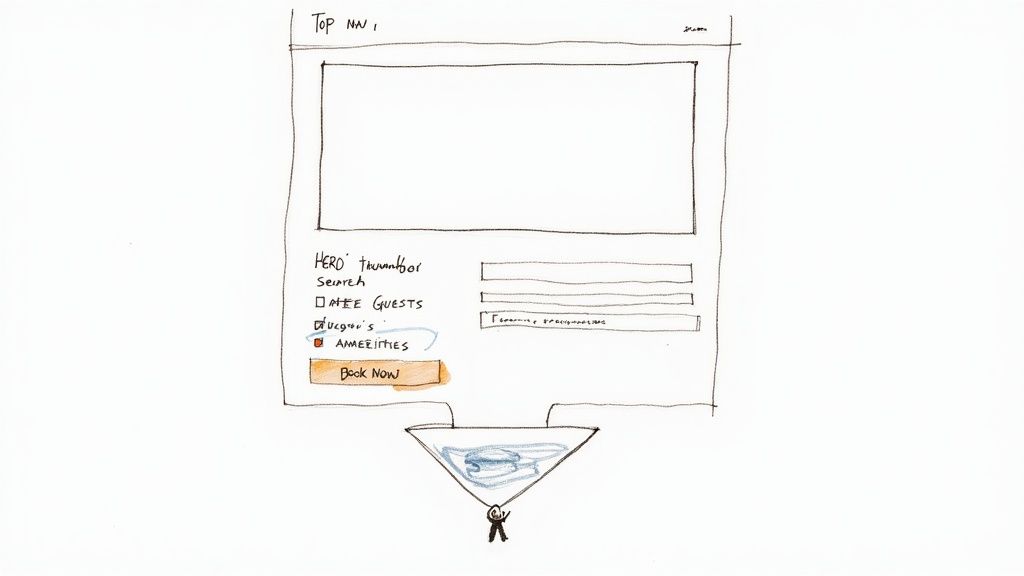
A beautiful website that doesn't actually book stays is just an expensive digital brochure. The real mission when you build a vacation rental website is to create an experience that guides visitors from "just looking" to confidently clicking that “Book Now” button. This isn't about flashy animations; it's about smart, intuitive user experience (UX) that removes friction at every single turn.
Think about it from the guest's perspective. Your design needs to anticipate what they need before they even realize they need it. It all starts with clean, simple navigation. A visitor should be able to find your properties, learn about your brand, and check availability without a second thought. A cluttered or confusing menu is the quickest way to send a potential booking packing.
Crafting an Intuitive Guest Journey
The moment a traveler lands on your homepage, their journey begins. Your site has to immediately answer their most urgent questions: What kind of places do you have, where are they, and can I stay there on my dates? This is where a powerful, easy-to-use search function becomes your most valuable player.
Your search tool absolutely must include:
- A prominent date picker: Make this one of the very first things a user sees.
- Guest count filters: Let people easily specify the number of adults and children.
- Key amenity filters: Give guests a fast track to find properties with their must-haves, whether that's a hot tub, a pet-friendly policy, or an ocean view.
This kind of filtering isn't just a nice-to-have feature; it helps guests qualify themselves. By finding exactly what they’re looking for right away, they arrive on your property pages with a much stronger intent to book.
Great design is invisible. It’s the art of removing every obstacle between the guest's desire to travel and their ability to book your property. The less they have to think, the more likely they are to convert.
Don't forget who you're designing for. By 2025, Gen Z and millennials are expected to make up about 75% of Airbnb's traveler base. This demographic has high expectations for a modern, visual, and mobile-first experience. A slow, clunky site that looks terrible on a phone will be abandoned in seconds. You can get a better feel for this shift by exploring short-term rental market trends on IGMS.com.
The Anatomy of a High-Converting Property Page
Once a guest clicks through to a specific property, that page has one job and one job only: make them fall in love with the idea of staying there. This is your chance to turn features into experiences and build the trust they need to book direct.
Visuals are everything. Professional photography and videography are completely non-negotiable. Blurry, dark phone pictures scream amateur and will instantly undermine your pricing. You need crisp, bright photos that tell a story—show the morning sun hitting the patio, the cozy fireplace at night, and that incredible view from the balcony.
Below is an example of a property listing that gets it right. It combines great visuals with clear booking information, creating a straight line to conversion.
This layout puts a high-quality hero image right next to a clear call-to-action, availability calendar, and price breakdown. It answers a visitor's key questions in a single glance.
Beyond the images, your descriptions need to sell the dream, not just list the furniture. Instead of "queen bed, two chairs," try something like, "A restful queen bed awaits after a day of exploring, with a cozy reading nook perfect for your morning coffee." You're painting a picture and helping the guest imagine themselves in that space.
Finally, trust signals are what seal the deal. You have to prominently display guest reviews and ratings, be transparent with your pricing by showing all fees upfront, and provide a comprehensive, easy-to-scan list of amenities. Each of these elements chip away at uncertainty and build the confidence a guest needs to book direct. You can go deeper on these essentials in our guide to the 14 must-have features for a high-converting short-term rental website.
Integrating the Tech That Powers Your Business
A beautiful website is a great start, but it's just the storefront. To really make your direct booking site work for you, it needs a powerful engine running under the hood. This is where you connect the essential tech that turns a simple online brochure into a fully automated, commission-free business machine.
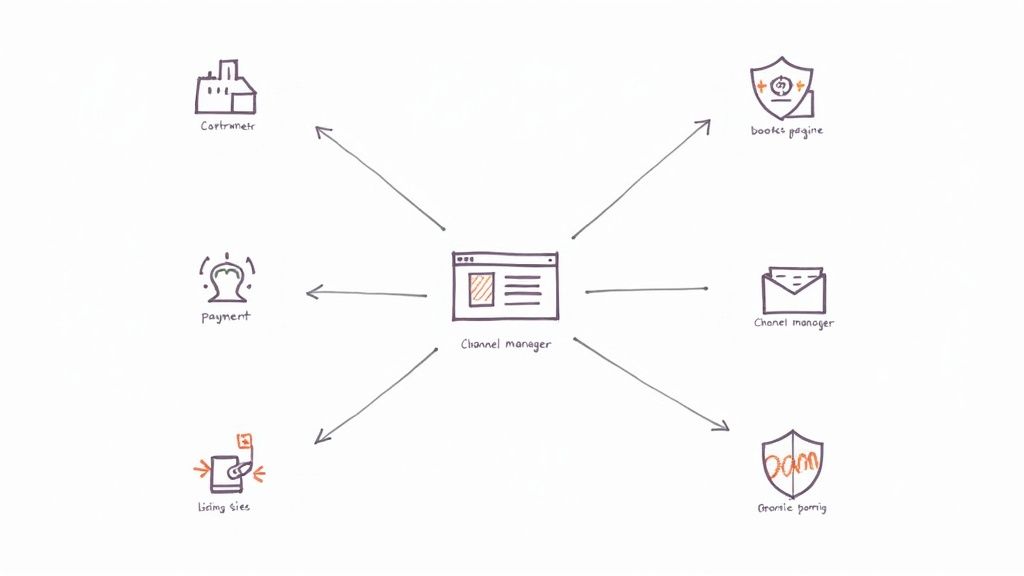
These integrations are the silent partners working 24/7 in the background. They handle the mind-numbing, repetitive tasks that used to eat up your day, creating a seamless experience for your guests while giving you back your most valuable asset: time.
The Heart of Your Operation: Your Booking Engine
First things first: you need a direct booking engine. This is the single most critical piece of software in your entire setup. It’s what allows a guest to pick dates, see an accurate price, and securely pay for their reservation right on your site. Without it, you just have a gallery of nice photos with no way to make money.
A modern booking engine has to be dead simple for the guest to use but powerful enough for you to manage. It needs to juggle your complex pricing rules—think seasonal rates, weekend premiums, or length-of-stay discounts—and automatically tack on the correct taxes and fees. When a guest hits that "Book Now" button, they should see a clean, mobile-friendly checkout that inspires confidence, not confusion.
The other side of this coin is the payment processor. This is the tool that securely handles the money, processing credit cards and getting the funds into your bank account. You absolutely must integrate with trusted, recognizable names like Stripe or PayPal. Seeing those logos provides the security blanket guests need to feel comfortable punching in their card details on an independent website.
Eliminating Double Bookings Forever
Are you still manually blocking off your Airbnb calendar every time a Vrbo booking comes through? If so, you're living on the edge, constantly one mistake away from the dreaded double booking—one of the biggest operational headaches a host can face.
This is where a channel manager becomes an absolute game-changer.
Think of a channel manager as the central nervous system for all your listings. It syncs your availability and rates in real-time across every single platform where you list your property.
Here's how that plays out:
- A guest books a week in July on your direct site.
- Instantly, the channel manager blocks those dates on your Airbnb calendar.
- At the exact same time, it blocks them on Vrbo and Booking.com.
- All of this happens automatically, in seconds, without you lifting a finger.
This two-way sync means you can cast a wide net across multiple channels to maximize visibility, all while funneling as many guests as possible back to your commission-free website. It’s the key to scaling your business without scaling your stress levels.
A channel manager isn’t just a tool; it's an insurance policy against lost revenue and reputational damage. It turns your various listings into a single, cohesive system, making overbookings a thing of the past.
Automating the Guest Experience with a CRM
The final core piece of your tech stack is a Customer Relationship Management (CRM) tool. Don't let the corporate-sounding name fool you. For a vacation rental owner, a CRM is simply a way to automate and personalize all your guest communication.
Hooking up a simple CRM, like the one built into a platform like hostMail, can dramatically elevate the guest experience and become your secret weapon for driving repeat business.
Picture this automated workflow kicking in the moment a booking is made:
- Booking Confirmation: An instant, personalized confirmation email lands in their inbox with all the key details.
- Pre-Arrival Info: A week before check-in, another email goes out with directions, door codes, and a link to your digital welcome guide.
- Mid-Stay Check-In: A quick, friendly message on day two of their stay asks if everything is perfect.
- Post-Stay Review Request: The day after checkout, a final email thanks them and provides a direct link to leave a review.
This kind of proactive communication makes guests feel genuinely cared for. It also systematically builds your arsenal of five-star reviews, which is pure gold for social proof. Most importantly, it keeps your brand top-of-mind, turning one-time visitors into loyal, repeat guests who know to book direct next time around.
Winning the SEO Game to Attract Free Bookings
Alright, your stunning website is live. Now what? Launching a direct booking site is a bit like opening a beautiful shop on a quiet backstreet. You can't just wait for people to find you; you need to put up signposts that lead travelers directly to your front door. That's exactly what Search Engine Optimization (SEO) does—it makes you visible to the right people, the ones actively hunting for a stay just like yours.
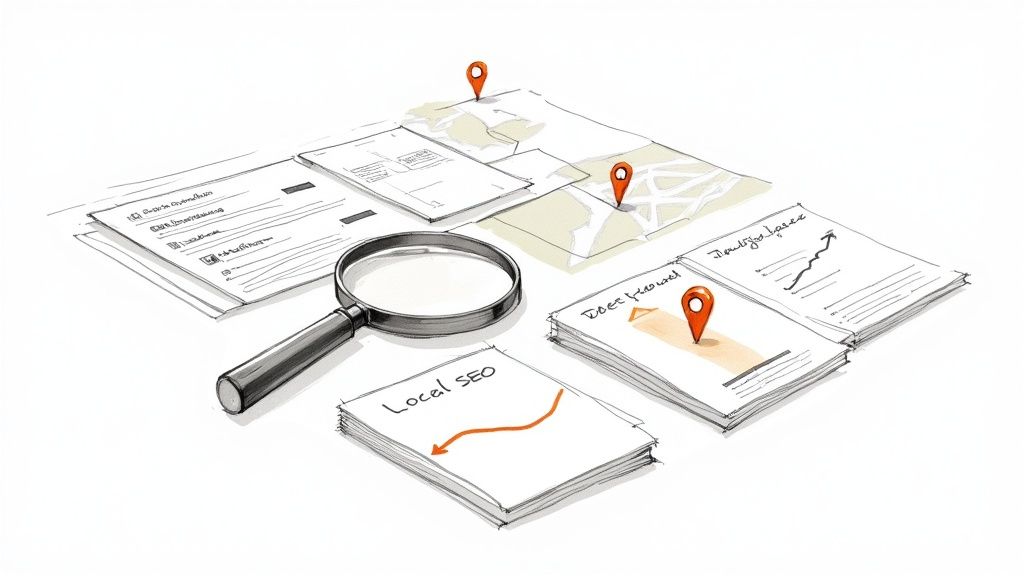
Unlike paid ads, which disappear the second you stop paying the bill, good SEO builds a lasting asset for your business. It pulls in a steady stream of organic, high-intent traffic from search engines like Google, which is hands-down one of the most cost-effective ways to fill your calendar. To really get things moving, you need to know where to start with SEO for your website and focus on the right things first.
Finding Your Core Keywords
The bedrock of any solid SEO strategy is getting inside your guests' heads and figuring out what they're actually typing into Google. It’s not about ranking for a vague term like "vacation rental." The real money is in capturing the super-specific searches that scream, "I'm ready to book!"
Put yourself in a traveler's shoes. They aren't just looking for a "cabin." They're searching for a "pet-friendly cabin with a hot tub in Asheville" or a "Miami condo with an ocean view for a bachelorette party." These long, descriptive phrases are your goldmine keywords.
You can start digging with free tools like Google Keyword Planner or get more serious with paid options like Ahrefs. Your goal is to find that sweet spot: keywords with enough people searching for them but without a ton of competition, giving you a realistic shot at ranking on the first page.
The Power of Programmatic SEO
Now, what if you could create dozens, or even hundreds, of hyper-targeted pages without having to write every single one from scratch? This isn't a fantasy; it's the magic of Programmatic SEO (pSEO). It’s a game-changing strategy that feels like it was custom-built for vacation rental managers.
With pSEO, you build one master page template and then use data to automatically generate unique landing pages for very specific searches. Think of it like a mail merge for your website, combining things like property types, amenities, and locations into targeted pages.
Here is a simplified look at how you could structure a pSEO plan to quickly scale up the number of relevant pages on your site.
Sample Programmatic SEO Page Generation Plan
| Page Template | Location Variable | Amenity Variable | Resulting Page Title |
|---|---|---|---|
| {Amenity} Cabins in {Location} | Asheville | Pet-Friendly | Pet-Friendly Cabins in Asheville |
| {Amenity} Cabins in {Location} | Gatlinburg | Hot Tub | Hot Tub Cabins in Gatlinburg |
| {Amenity} Condos in {Location} | Miami | Ocean View | Ocean View Condos in Miami |
| {Amenity} Condos in {Location} | South Beach | Bachelorette Party | Bachelorette Party Condos in South Beach |
This approach allows you to create highly relevant entry points for travelers, dramatically increasing your chances of showing up in search results for very specific needs.
Programmatic SEO lets you scale your content efforts in a way that’s impossible to do manually. Instead of one page fighting for a broad keyword, you have hundreds of pages competing for specific, long-tail keywords that convert like crazy.
Platforms like hostFront are designed with this built-in, using AI to automatically generate these high-value pages. It saves an incredible amount of time and helps you cast a much, much wider net. To really wrap your head around the fundamentals, check out our complete guide on SEO for vacation rentals—it's a must-read.
Dominating Local Search Results
For vacation rentals, local SEO isn't just a nice-to-have; it's everything. When travelers search for places to stay, Google often slaps a "map pack" with local business listings right at the top, above the normal organic results. Landing your property in that box is like getting a billboard in Times Square.
Your most powerful weapon here is your Google Business Profile (GBP). Don't just claim it—obsess over it. A fully optimized listing is a massive signal to Google that you're a legitimate, trusted local business.
Here’s a quick-and-dirty checklist to get your GBP in fighting shape:
- Fill Out Everything: Don't skip a single field. Business category, address (if you can show it), phone number, website link—complete it all.
- Flood It with Photos: Upload dozens of high-quality, professional photos. Show off every room, the exterior, the views, and the amenities.
- Chase Down Reviews (and Reply!): Actively ask past guests for reviews. Then, make sure you reply to every single one, good or bad. It shows you're engaged.
- Use the Q&A Feature: Get ahead of guest questions by adding your own common questions and answering them yourself. Think "What's the Wi-Fi like?" or "Is there free parking?"
A well-tended Google Business Profile is one of the fastest ways to start seeing real results, driving direct traffic and phone calls from guests who are already packed and ready to book.
Launching Your Website for Maximum Impact
You’ve poured blood, sweat, and maybe a few tears into building the perfect direct booking website. But here's the hard truth: even the most stunning site is just a digital ghost town if no one knows it exists. A powerful launch isn't just about flipping a switch; it's a strategic push to create immediate buzz and get a stream of commission-free bookings flowing from day one.
A smart launch takes your new site from a simple URL to a genuine milestone for your business. This is your chance to make a statement, reconnect with your best past guests, and finally start steering your business away from total reliance on the OTAs. Let's dig into the playbook for making sure your new website gets the grand opening it deserves.
Your Pre-Flight Checklist
Before you even think about telling the world, you need to run a thorough pre-launch diagnostic. Seriously, catching a tiny glitch now can save you from losing a huge booking later. This final check is all about making sure every piece of the guest experience is seamless, professional, and ready for primetime.
Think of it as your final walkthrough. Here's what you absolutely must check:
- Mobile Usability Testing: Pull out your phone and go through the entire booking process yourself. Is the calendar a pain to use on a small screen? Can you punch in your payment info without pinching and zooming like a mad person? With over 60% of travel searches happening on mobile, a clunky mobile experience is a complete non-starter.
- Booking Flow Simulation: This is crucial. Make a real test booking with a real credit card (you can just refund it). Did the confirmation email land in your inbox instantly? Was the pricing, including all taxes and fees, calculated correctly? Any friction at this stage will absolutely murder your conversion rates.
- Form Functionality: Test every single form. Does your contact form actually send an email to the right person? Does the newsletter signup work like it's supposed to?
- Analytics Installation: You can't improve what you don't measure. Double-check that your Google Analytics and any other tracking scripts (like a Facebook Pixel) are installed and firing correctly. This data is going to be gold for figuring out where your bookings are actually coming from.
Nailing this checklist means that when the first wave of visitors arrives, your site is armed and ready to turn lookers into bookers without a single technical hiccup.
Crafting Your Multi-Channel Promotion Strategy
Okay, your site is tested and ready to rock. Time to make some noise. Your launch promotion shouldn't be a one-and-done social media post. Think of it as a coordinated campaign across several channels, each hitting a different part of your audience.
Your most valuable asset, by far, is your list of past guests. These are people who already know your properties and trust you. They're your warmest leads and the ones most likely to book direct right away. You need to craft a launch announcement email that does more than just say, "Hey, we have a new website." Make it feel like an exclusive invitation.
Your launch email to past guests is your single biggest opportunity for immediate bookings. Frame it as a 'thank you' for their loyalty by offering them an exclusive discount for booking direct on the new site. This rewards them and trains them to bypass the OTAs.
For social media, the goal is to create buzz that drives clicks. Announce the launch with your absolute best property photos or a quick, compelling video tour. It's also a great idea to run a special launch offer, like "Book direct this week and get a complimentary late checkout!" This creates a sense of urgency and gives people a real reason to click over to your site right now.
Leveraging OTAs to Funnel Traffic
This might sound a little backward, but your existing OTA listings can be a surprisingly slick tool for promoting your new direct booking site. You can't just plaster your URL in the description—that's a quick way to get your listing suspended. But you can be much savvier.
Try slightly updating your property title on Airbnb or Vrbo to feature your unique property name or brand. For example, "The Salty Dog Beach House" is far more memorable and searchable than just another "Charming 3BR Oceanfront Home." Guests who see this will often pop that name into Google, leading them straight to your new website where they can book without the hefty OTA fees.
Finally, a small, targeted ad budget can be a powerful accelerant. Running a simple Facebook or Google ad campaign targeting people who have already visited your website or social media profiles can be incredibly effective. This ensures your launch isn't a quiet affair but a powerful, momentum-building moment for your vacation rental business.
Common Questions About Building Your Site
Stepping into the world of direct bookings can feel like a huge leap, and it's totally normal to have questions swirling around. Getting clear, straightforward answers is the best way to move forward with confidence. Let's tackle some of the most common concerns we hear from hosts just like you.
What Does This Actually Cost?
This is usually the first question on everyone's mind. The honest answer? It really depends on the path you choose.
You can get a solid foundation with a template-based website builder for as little as $30 to $100 per month. If you want more control and a custom feel, a site built on a platform like WordPress might run you between $2,000 and $10,000 upfront. For a completely bespoke, ground-up solution, the budget can easily top $15,000. It all comes down to your budget and how hands-on you want to be.
How Do OTAs Fit into This New Strategy?
A lot of hosts worry that building their own site means they have to ditch Airbnb and Vrbo. For most, the answer is a hard no. It’s not about replacing them; it’s about rebalancing your strategy.
Think of your direct booking site as your most profitable channel. The OTAs, on the other hand, become powerful marketing engines that put you in front of millions of new eyeballs. The absolute key is using a channel manager to keep your calendars perfectly synchronized across all platforms. No more double bookings.
Here’s the two-step dance:
- Use OTAs for acquisition: Let new travelers discover your amazing properties on the major platforms.
- Encourage direct bookings for retention: Once a guest has a fantastic stay, offer them a small perk—like a 10% discount or a free bottle of wine—for their next trip if they book through your site. This simple move trains your best guests to come straight to the source.
This hybrid approach really does give you the best of both worlds: maximum exposure and maximum profit.
Setting Realistic Expectations for Bookings
"Okay, but how long until the bookings start rolling in?" This is the million-dollar question, and the timeline depends entirely on how you get the word out.
If you have a healthy email list of past guests, you could see direct bookings within days of launching your site. Just send out an announcement with a special "welcome" offer.
But if you're starting from scratch and relying on Google to send you traffic (SEO), you need to be patient. It can take a good 3-6 months to start seeing consistent organic traffic. Paid ads, of course, can bring in bookings almost immediately, but that requires a dedicated budget.
The most effective launch is a multi-pronged one. Combine an email blast to past guests, a small paid ad campaign for quick wins, and a steady SEO effort. This builds short-term momentum and long-term, sustainable growth.
If I Can Only Focus on One Thing, What Should It Be?
With so many moving parts, it's easy to get overwhelmed. If you have to pour your limited time and resources into just one thing, what is it? While everything plays a role, high-quality, professional photography is the undisputed champion.
Think about it: travelers are visual buyers. They make emotional decisions based on the images they see. Stunning photos that accurately and beautifully show off your property do more to drive bookings than almost anything else.
They build trust, create desire, and justify your nightly rate before a guest reads a single word. It’s the one area where you should never, ever cut corners.
Ready to build a vacation rental website that not only looks stunning but also drives bookings automatically? hostAI uses cutting-edge AI to create SEO-optimized content, automate your marketing, and fill your calendar with commission-free stays. Discover how our platform can double your direct revenue at https://gethostai.com.