
customer retention
10 Customer Retention Strategies for STR Managers (2026)
Posted on Jan 16, 2026
TL;DR: Customer retention for short-term rental operators is the practice of turning a one-time guest into a repeat, direct-booking guest — through email, loyalty, proactive communication, a branded site, and a deliberate post-stay sequence. It matters because a returning guest who books directly costs almost nothing to reacquire, while a new OTA guest costs you 15–20% in commission on every booking (StayFi, 2025; Airbnb moved to a single ~15.5% host fee in late 2025). Below are 10 retention plays built for STR portfolios — each with how to run it, what to measure, and the numbers that justify the effort.
Here's the uncomfortable math most operators avoid: across industries, acquiring a new customer runs 5–25x more expensive than keeping an existing one (Harvard Business Review, citing Bain & Company). Yet most STR managers pour their energy into filling the calendar with strangers off the OTAs, then watch those guests disappear back into Airbnb's funnel — never to be seen again.
The operators winning the direct-booking game think differently. They treat the first stay as the start of a relationship, not the end of a transaction. Industry benchmarks now put a 22% repeat-guest rate as the target for portfolios serious about bypassing OTA fees (CUFinder, 2026). And it pays off downstream: in 2025, direct bookings produced 45% longer stays and 51% longer booking windows than OTA bookings — guests who come to you directly book earlier and stay longer.
Key takeaways
- Retention is a direct-distribution strategy. Every repeat guest you keep off the OTAs is a guest whose lifetime value lands in your P&L, not in a 15%+ commission.
- The post-stay window is your highest-leverage moment. The guest just had the experience — that's when you capture the email, request the review, and plant the next booking.
- Own the relationship, or the channel owns it for you. Empirical research shows guests acquired through intermediaries stay loyal to the channel, not your brand (University of Twente). Retention is how you flip that.
This guide is built specifically for STR managers running portfolios — not generic small-business advice. Each strategy below includes an implementation plan, the KPI to track, and operator examples drawn from real vacation-rental brands. Let's get into it.
1. Post-Stay Email Automation That Drives Rebookings
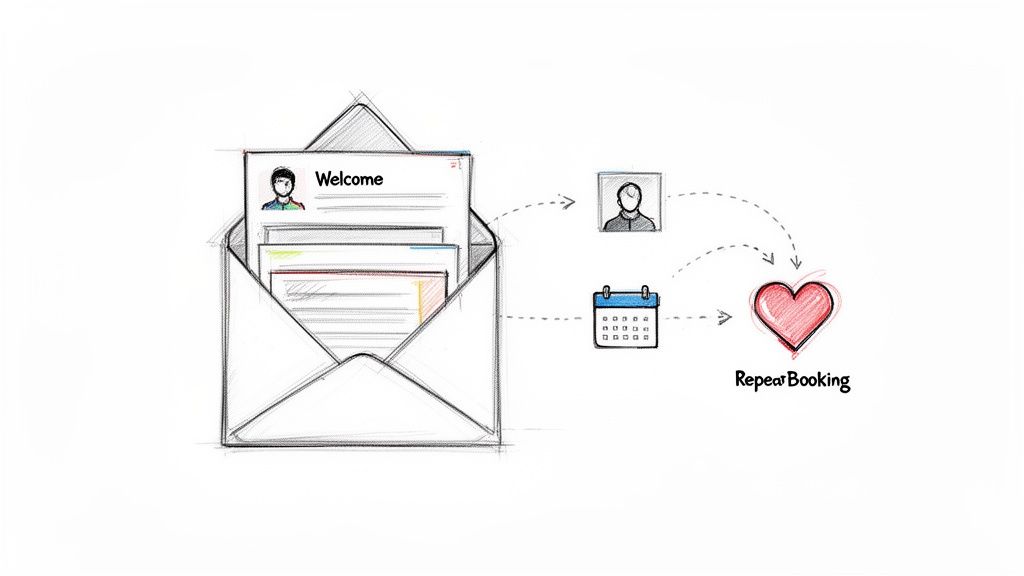
Personalized email automation is the single highest-leverage retention play for STR operators, because it's the one channel you fully own. It uses guest data — booking history, travel dates, property preferences — to send the right message at the right moment, long after checkout. Done well, it converts the goodwill of a great stay into a direct rebooking before the guest ever opens the Airbnb app again.
How to implement it
- Capture the email first. If a guest books via OTA, getting a direct touchpoint (email or phone) is non-negotiable — it's the prerequisite for everything else. Use your check-in flow or guest app to collect it.
- Segment by behavior, not demographics. "First-time guests," "repeat visitors," "same-week-every-year travelers," "booked a pet-friendly property." STR guests cluster by trip type — lean into it.
- Build three core sequences. A pre-arrival welcome series, a post-checkout review request (within 24 hours), and a re-engagement campaign timed to their booking anniversary — "this is the week you stayed with us last year."
- Personalize with dynamic fields. First name, property name, check-in date. A returning guest offered their property during their season converts because you've removed the decision friction.
Track this: repeat-booking rate from email and direct-channel revenue share. The goal isn't to automate communication — it's to automate personalization at portfolio scale.
The operators winning at direct production lean on owned channels — and the email list is the engine underneath it. hostAI's hostMail automates this sequence end to end, turning guest data into repeat bookings without you touching the keyboard.
2. A Loyalty Program Guests Actually Use
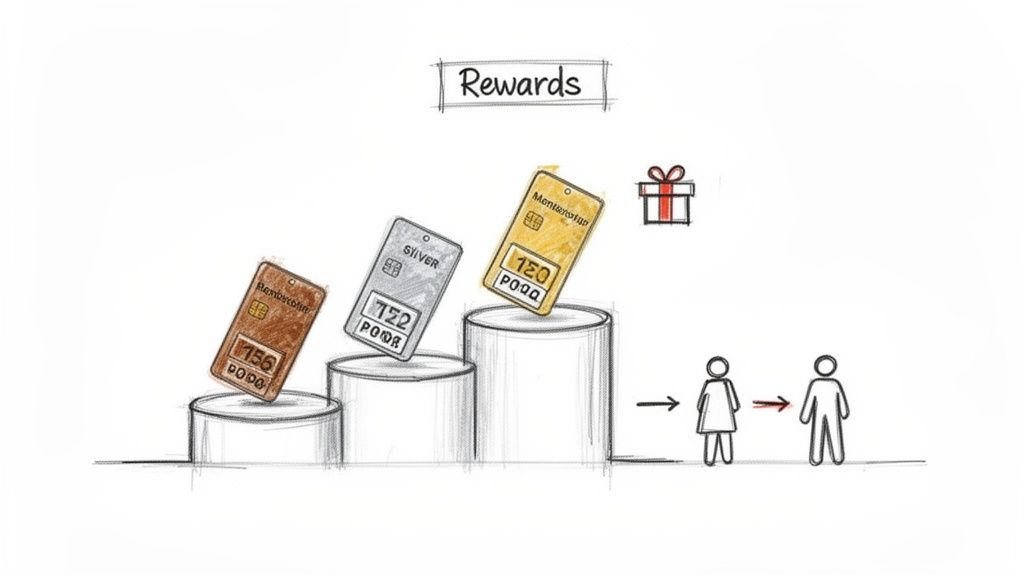
A loyalty program gives repeat guests a financial and emotional reason to book you again instead of comparison-shopping on an OTA. The mistake operators make is over-engineering it. You don't need a points economy — you need a clear, valuable reason to come back.
How to implement it
- Start simple. A flat "book direct, save 10–15%" beats a complicated tier system for most portfolios. Fund it from the commission you're not paying the OTA.
- Reward what you want repeated. A free night after a set number of stays, complimentary late checkout, or priority booking in peak season — perks guests actually want over abstract points.
- Promote it where guests already are. Post-stay emails, your direct site, and the in-property welcome materials. Make the benefit obvious and the signup frictionless.
Track this: share of repeat bookings coming through the loyalty/direct channel, and guest lifetime value of members vs. non-members.
For your best 10–20% of guests, consider a quiet VIP tier — early access to holiday weeks, a personalized welcome gift. These are the guests already inclined to return; a small gesture cements them.
3. Proactive Guest Communication
Responsive, anticipatory communication before, during, and after a stay is the cornerstone of retention — and it's a direct input to your reviews and Superhost status on the OTAs. When you answer the question before the guest asks it, you signal a level of professionalism that makes the next booking feel safe.
How to implement it
- Auto-acknowledge every inquiry instantly and set a response-time expectation. Speed wins bookings against slower competitors.
- Schedule the touchpoints. Pre-arrival message with check-in details (7 days out), a light mid-stay check-in, and a post-stay note requesting feedback within 24 hours of checkout.
- Personalize the templates. Templates save time; a guest's name and a specific reference to their trip make them land like a one-to-one message.
Track this: first-response time, review rating, and re-inquiry rate. The goal is to be helpful and available — not to flood the inbox.
4. Personalized Pricing for Returning Guests
Smart pricing isn't just adjusting rates for busy weekends — it's recognizing a repeat guest's value and giving them a reason to skip the OTA search entirely. A special rate on their favorite property, framed around their past stay, turns pricing from a transaction into a relationship signal.
How to implement it
- Mine your booking history for patterns: who books the same week annually, who travels with family, who needs the mid-week rate.
- Create a "returning guest" rate — a modest direct-only discount or early-booking window for past guests, set against your dynamic pricing baseline.
- Bundle around known preferences. A couple who booked a romantic getaway gets a package with late checkout; a family gets the early check-in. Frame it as value, not a markdown.
Track this: direct-rebooking rate among past guests and ADR retention on returning-guest bookings.
5. Content That Keeps Your Brand Top-of-Mind
Content marketing positions your brand as the trusted local expert, giving past guests a reason to land on your site even when they aren't actively booking. For STR operators, that means destination knowledge competitors can't easily replicate.
How to implement it
- Build destination guides — top spots, hidden gems, family activities — optimized for local search so they double as an acquisition channel.
- Create property-specific resources: short how-to guides for the hot tub, smart locks, or kitchen. These cut in-stay questions and improve the experience.
- Keep a local events calendar updated. Seasonal content gives past guests a recurring reason to return to your site — and a nudge toward the next trip.
Track this: returning-visitor traffic, organic landing-page sessions, and assisted direct conversions.
6. A Direct Booking Site Built to Convert and Be Recognized
A consistent brand across your direct site, email, social, and even your OTA listings builds the recognition that makes a guest seek you out directly next time. The OTA listing is your billboard; the direct site has to deliver an even better experience to justify the click.
How to implement it
- Lock down a brand kit — colors, fonts, tone — and apply it everywhere a guest meets your brand.
- Invest in real photography. Professional assets across every channel are non-negotiable for a portfolio that wants to be remembered.
- Optimize the booking flow. Mobile-first, sub-three-second load, a visible direct-booking incentive, and prominent reviews. Industry benchmarks suggest a majority of travelers now book on mobile, so the phone experience is the experience.
Track this: direct-site conversion rate, direct-revenue share, and returning-visitor booking rate.
7. Review Generation and Reputation Management
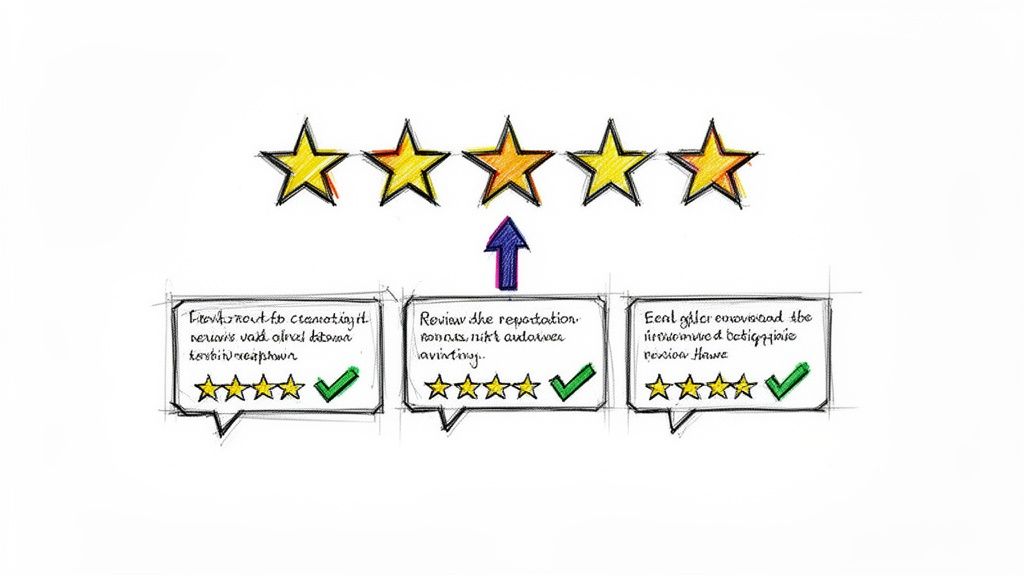
A steady stream of recent, positive reviews is one of the strongest trust signals in STR — it lifts OTA ranking and reinforces a past guest's positive memory when they see you respond with care.
How to implement it
- Automate the request within 24–48 hours of checkout, with direct links to Airbnb, Vrbo, and Google to remove friction.
- Respond to every review within 48 hours — positive and negative. A professional reply to a complaint is a public demonstration that you listen.
- Reuse your best reviews on your direct site, in email, and on social as social proof that converts new and returning guests alike.
Track this: review velocity, average rating, and response rate.
8. Retargeting Past Guests and Warm Visitors
Retargeting re-engages people who already know you — past guests, abandoned bookers, recent site visitors — with relevant ads that pull them back to your direct site. It's among the most cost-effective retention plays because you're nurturing a warm audience instead of buying cold strangers.
How to implement it
- Install tracking pixels (Meta, Google Ads) on your direct site to start building audiences immediately.
- Segment by behavior: "visited a specific property," "site visitors in the last 30 days," "past guests in the last 180 days."
- Match offer to segment. A "welcome back" rate for past guests; a property reminder for recent viewers. Refresh creative every few weeks to fight fatigue.
Track this: ROAS, cost per direct booking, and rebooking rate from the past-guest audience.
9. Guest Experience and Amenity Optimization
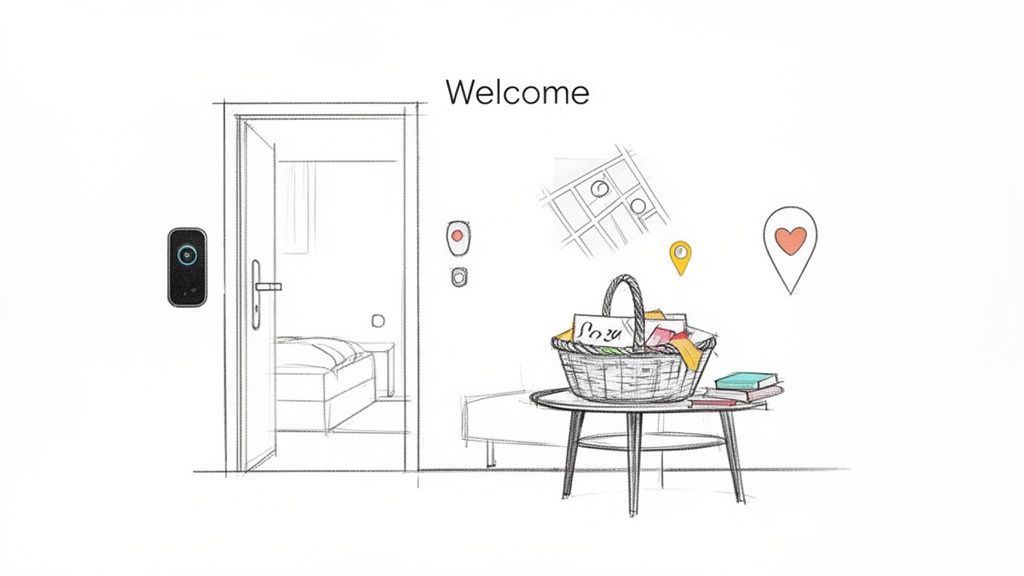
Continuously improving the stay itself — smart-home tech, upgraded essentials, thoughtful local touches — is the most defensible retention strategy you have. Competitors can match your price; they can't easily copy a flawlessly executed experience that guests remember and talk about.
How to implement it
- Survey past guests on what they loved and what was missing, and let that data prioritize your spend.
- Cover the table stakes: keyless smart locks, reliable fast Wi-Fi, comfortable bedding. These are now expectations, not differentiators.
- Add the memorable touch — a welcome basket of local products, a digital guidebook with your real recommendations. A holistic, end-to-end approach to the guest experience is what earns loyalty.
Track this: review rating trend, repeat-booking rate, and ADR on upgraded units.
10. Social Proof and Referral Marketing
Your happiest guests are your cheapest acquisition channel. Pairing visible social proof (reviews, guest photos) with a simple referral program turns loyalty into a self-sustaining growth loop — and referred guests tend to be a better fit, which makes them more likely to become repeat guests themselves.
How to implement it
- Systematize collection. Post-stay emails request reviews and (with permission) guest photos you can reshare.
- Launch a clear referral offer: a reward for the referrer (e.g., a discount on their next stay) and the new guest (a first-booking discount). Keep it dead simple.
- Show proof everywhere — direct site, email, social — so prospects see the "why" and loyal guests have the "how" to spread the word.
Track this: referral-driven bookings, customer acquisition cost, and repeat rate of referred guests.
The 10 Strategies at a Glance
| Strategy | Effort | What it needs | Primary KPI | Best for |
|---|---|---|---|---|
| Post-stay email automation | Moderate | Email platform, clean guest data | Repeat-booking rate | Every portfolio — start here |
| Loyalty program | Medium | Discount budget, tracking | Member lifetime value | Frequent bookers, multi-property |
| Proactive communication | Low–Medium | Templates or messaging tool | Review rating, response time | High-touch, reputation-focused hosts |
| Returning-guest pricing | High | Pricing engine, booking history | Past-guest rebooking rate | Dynamic, seasonal markets |
| Content marketing | Medium | Content time, local SEO | Returning-visitor traffic | Destination-driven brands |
| Direct booking site | Medium–High | Design, photography, CRO | Direct-revenue share | Portfolios reducing OTA reliance |
| Review generation | Low–Medium | Automation, response protocol | Review velocity & rating | All listings |
| Retargeting | Medium | Pixels, ad budget, creative | ROAS, cost/booking | Sites with steady traffic |
| Experience & amenities | Medium–High | Capital, maintenance | Rating & repeat rate | Premium, unique-stay listings |
| Social proof & referrals | Low–Medium | Incentives, UGC curation | Referral bookings, CAC | Community-focused hosts |
How the strategies stack into one guest journey
The real leverage isn't any single tactic — it's weaving them into one continuous loop. Picture a returning guest's path through a portfolio that does this well:
- Pre-arrival: a personalized email with local recommendations tied to their last trip's interests.
- During the stay: proactive check-ins and curated amenities that produce a genuinely memorable experience.
- Post-departure: a thank-you and review request inside 24 hours, then an invitation to your loyalty program with a direct-only offer.
- Months later: a retargeting nudge or anniversary email — "this is the week you stayed with us last year" — landing them back on your direct site, not the OTA.
That's the pivot from competing on price in someone else's marketplace to building a defensible, direct-booking business of your own. Empirical research is blunt about the stakes: guests acquired through OTAs stay loyal to the channel unless you deliberately build the relationship (University of Twente). Retention is how you take the relationship back.
FAQ
What is customer retention for short-term rentals?
It's the set of strategies an STR operator uses to turn a one-time guest into a repeat, direct-booking guest — primarily email automation, loyalty rewards, proactive communication, a branded booking site, and a deliberate post-stay sequence. The goal is to reduce dependence on OTAs and capture guest lifetime value directly.
What's a good repeat-guest rate for an STR portfolio?
Industry benchmarks point to roughly a 22% repeat-guest rate as the target for operators serious about bypassing OTA fees (CUFinder, 2026). Most portfolios that aren't actively running retention land well below that.
Why does retention matter more than acquisition for STR managers?
Acquiring a new customer costs 5–25x more than keeping an existing one (Harvard Business Review / Bain), and a new OTA guest also costs 15–20% in commission on every booking. A repeat guest who books directly costs almost nothing to reacquire — and direct bookings come with longer stays and longer booking windows.
Where do I start if I'm doing none of this?
Capture guest emails on every booking, then automate a post-stay review request and a re-engagement email. It's the lowest-effort, highest-return move — and it builds the owned list every other strategy depends on.
Turning one-time guests into repeat direct bookers
Sustainable growth in STR doesn't come from the expensive treadmill of acquiring strangers — it comes from making the guests you've already won come back, directly. Start by auditing your current guest journey and picking the one or two strategies that close your biggest gap, most likely automating your post-stay sequence or launching a simple "book direct and save" offer. Measure it, then layer on the next.
If you'd rather run that entire guest journey on autopilot — from owned-channel guest comms to a direct-booking site optimized to convert — see how hostAI helps STR operators win direct bookings.