
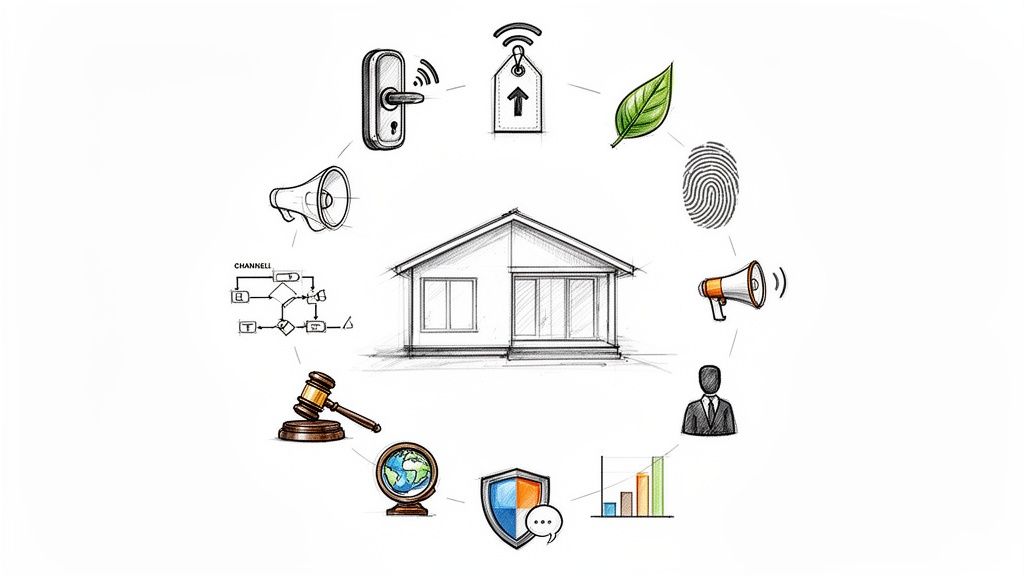
hospitality industry trends
12 Hospitality Industry Trends Redefining Short-Term Rentals in 2026
Posted on Feb 9, 2026
The vacation rental market is evolving at an unprecedented pace. Staying ahead is no longer just about offering a clean property; it's about mastering technology, understanding guest psychology, and optimizing every channel. The line between boutique hotels and professional short-term rentals is blurring, driven by powerful hospitality industry trends that are reshaping guest expectations and operational strategies.
For ambitious STR managers, adapting to these shifts isn't optional. It's the key to unlocking higher revenue, securing more direct bookings, and building a resilient brand. This comprehensive roundup explores the 12 most impactful trends you need to implement now, complete with actionable advice on how to leverage them for maximum growth.
We've designed this guide to be direct and practical, avoiding generic advice in favor of specific, data-backed strategies. You will learn how to:
- Implement AI-powered personalization to enhance the guest experience.
- Optimize direct booking channels and automate your content marketing.
- Navigate omnichannel distribution and build trust through data privacy.
From AI-driven pricing to programmatic SEO, we'll break down what matters most. We will also highlight where integrated solutions, such as the hostAI suite (hostMail, hostFront, hostDistro), provide the tools to not just compete, but to lead the market. This article delivers the clear, actionable insights needed to prepare your vacation rental business for what's next.
1. AI-Powered Personalization and Dynamic Pricing
One of the most impactful hospitality industry trends is the adoption of artificial intelligence for dynamic pricing and guest personalization. This technology moves beyond static, seasonal rates by using sophisticated algorithms to analyze vast datasets in real time. It considers factors like competitor pricing, local events, flight booking data, market demand, and even specific booking patterns to continuously adjust your property's rates for maximum revenue and occupancy.
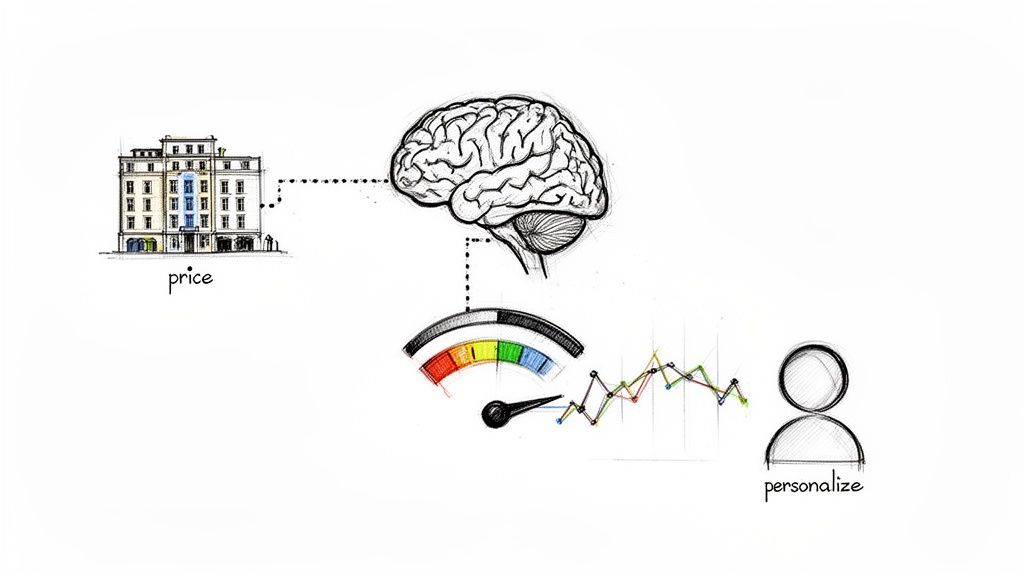
The goal is to find the perfect price point that attracts guests without leaving money on the table. Platforms like Airbnb and Booking.com have popularized this with their internal tools, but dedicated revenue management systems now offer even more advanced capabilities. For instance, hostAI's intelligent pricing algorithms are built directly into its platform, giving managers granular control and strategic automation. This ensures you're not just competitive, but also proactively optimizing your revenue per available rental (RevPAR).
How to Implement AI Pricing Strategically
Successfully integrating AI-driven pricing requires a thoughtful approach rather than a simple "set it and forget it" mindset.
- Set Guardrails: Establish firm minimum and maximum price boundaries. This protects your brand positioning during low-demand periods and prevents price gouging during high-demand surges.
- Analyze Historical Data: Before activating an AI tool, feed it your property’s historical performance data. This gives the algorithm a strong baseline to learn from.
- A/B Test Strategies: Test different pricing rules on similar properties or during similar timeframes to identify what works best for your specific inventory and market.
- Communicate Clearly: Use your booking software and guest messaging to be transparent about how rates might fluctuate based on seasonality or demand. Learn more about how to manage bookings and communication effectively with advanced short-term rental booking software.
2. Direct Booking Optimization and Website Conversion
Another critical hospitality industry trend is the strategic shift toward driving direct bookings through optimized branded websites. Rather than relying solely on OTAs, savvy managers are investing in their own digital storefronts to reduce commission fees, build direct guest relationships, and gain full control over their brand. This involves creating a seamless, trustworthy, and high-converting online experience that captures bookings without a middleman.
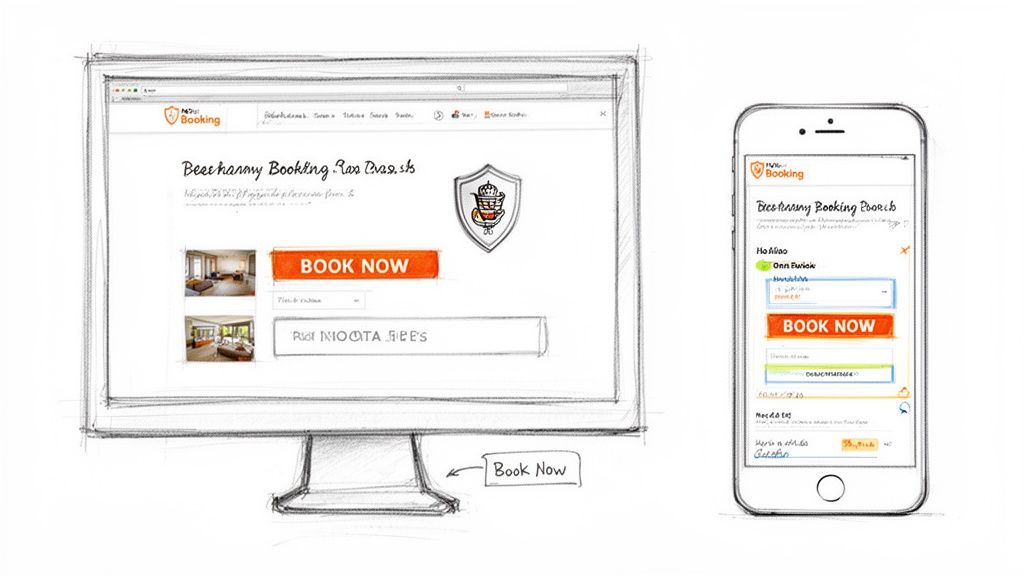
The goal is to own the customer journey from start to finish. By building a powerful, mobile-responsive website with an integrated booking engine, you create a direct channel that fosters loyalty and increases profit margins. Platforms like hostAI's hostFront are designed specifically for this, allowing managers to launch intelligent, conversion-focused websites that showcase their properties professionally and securely process payments. This approach transforms your brand from a simple listing into a legitimate, independent hospitality business.
How to Boost Your Direct Booking Conversions
A high-traffic website is useless if it doesn't convert lookers into bookers. Optimizing your booking flow is key to maximizing direct revenue.
- Offer Direct Booking Perks: Incentivize guests to book directly with exclusive offers like a small discount, a free welcome basket, or more flexible cancellation policies.
- Showcase Social Proof: Prominently display guest reviews, ratings, and testimonials on property pages to build trust and credibility with new visitors.
- Optimize for Mobile: With over 60% of travel searches happening on mobile devices, ensure your website offers a fast, intuitive, and frictionless booking experience on any screen size.
- Create Urgency: Use subtle indicators like "Only 2 nights left this month!" or "Booked 5 times in the last week" to encourage hesitant guests to complete their reservation.
3. Programmatic SEO and Content Marketing Automation
Another of the most significant hospitality industry trends is the strategic use of programmatic SEO and content automation to capture high-intent organic traffic. This advanced technique involves using technology to systematically generate thousands of optimized landing pages that target long-tail keywords and hyper-specific local search queries. Instead of manually creating one page at a time, this method automates the creation of valuable pages for every neighborhood, attraction, or amenity you serve.
The goal is to answer every potential guest's search query, from "pet-friendly cabin with hot tub near hiking trails in Asheville" to "3-bedroom rental with ocean view in Miami Beach." By programmatically generating unique, relevant pages for these queries, you dramatically expand your digital footprint and attract highly qualified traffic directly to your booking engine. This approach is a core component of platforms like hostAI, which leverages automation to build a powerful organic marketing funnel for property managers.
How to Implement Programmatic SEO Strategically
A successful programmatic SEO strategy requires a strong technical foundation and a clear focus on delivering genuine value to the user.
- Define Your Page Templates: Create well-structured templates for different page types (e.g., location pages, amenity pages, property-type pages). Ensure each template is designed for an optimal user experience.
- Focus on User Intent: Every generated page must answer a specific guest need or question. The content, while automated, should be unique and valuable, not just keyword-stuffed filler.
- Ensure Technical Excellence: Prioritize technical SEO fundamentals like fast page load speeds, mobile optimization, and clean URL structures. These are critical for search engine crawlers to index thousands of pages efficiently.
- Integrate Structured Data: Use schema markup on your generated pages to help search engines understand your content. This can lead to rich snippets in search results, improving click-through rates. Learn more about how to get started by understanding what is programmatic SEO and how it applies to the rental industry.
4. Automated Email Marketing and Guest Communication
Another of the most crucial hospitality industry trends is the strategic use of automated email marketing to nurture guest relationships. This approach uses AI-driven systems to send personalized, timely messages throughout the entire guest journey, from pre-booking inquiries to post-stay feedback requests and re-engagement campaigns. It moves beyond generic email blasts by segmenting audiences and tailoring content for maximum impact.
This level of automation ensures consistent, professional communication without manual oversight, building trust and enhancing the guest experience. For instance, a guest who just booked a stay receives an immediate confirmation, followed by a pre-arrival guide a week before check-in. Platforms like hostAI's hostMail are designed specifically for this, allowing managers to build sophisticated workflows that trigger based on guest actions, driving both direct bookings and repeat business.
How to Implement Automated Communication Strategically
Effective automation is about sending the right message to the right person at the right time. A well-planned strategy is key to achieving this.
- Segment Your Audience: Group guests by booking frequency, property type, length of stay, or booking source. This allows you to send highly relevant content.
- Create Lifecycle Sequences: Develop distinct email flows for different stages: pre-arrival (local tips, check-in info), mid-stay (service check-ins), post-stay (review requests, discount offers), and re-engagement for past guests.
- Personalize at Scale: Use dynamic tags to insert guest names, property details, and past booking information. This makes automated messages feel personal and considerate.
- Optimize for Mobile: Design simple, clean emails with clear calls-to-action (CTAs), as a majority of travelers will open them on their smartphones.
- Test and Refine: Continuously A/B test subject lines, send times, and content to see what resonates best with your audience and drives the highest engagement rates.
5. Smart Retargeting and Programmatic Advertising
Another one of the most powerful hospitality industry trends is the strategic use of smart retargeting and programmatic advertising. This approach moves beyond simply hoping guests will return by actively re-engaging them after they’ve visited your direct booking site. By using tracking pixels and audience segmentation, you can serve highly relevant ads to potential guests across platforms like Google, Facebook, and Instagram, reminding them of the specific properties they viewed.
The core goal is to bring high-intent traffic back to your website to complete a booking, significantly improving conversion rates and lowering guest acquisition costs. Major players like Expedia and Booking.com have perfected this strategy, and now it's accessible to independent managers. It's about delivering the right message to the right person at the right time, turning initial interest into a confirmed reservation.
How to Implement Smart Retargeting Strategically
Effective retargeting requires precision and a focus on the user journey rather than just blasting ads to everyone who visits your site.
- Install Tracking Pixels: Your first step must be to install tracking pixels (like the Meta Pixel and Google Ads tag) on every page of your direct booking website. This is non-negotiable for gathering audience data.
- Segment High-Intent Audiences: Create specific audience segments. Prioritize users who visited the booking page but didn't convert over those who only viewed the homepage. This allows you to focus your budget where it matters most.
- Use Dynamic Creative: Instead of generic ads, use dynamic ads that automatically showcase the exact property images, names, and prices a user previously viewed. This level of personalization is far more effective.
- Set Frequency Caps: To avoid annoying potential guests, set a frequency cap that limits ad exposure to around 3-5 times per day. Ad fatigue is real and can damage your brand perception. Discover how different ad networks handle this by exploring the best retargeting platforms for vacation rentals.
6. Sustainability and Eco-Conscious Hospitality
Another one of the defining hospitality industry trends is the growing demand for sustainability and eco-friendly travel options. Modern travelers, particularly Gen Z and millennials, are increasingly making booking decisions based on a property's environmental impact. This shift pushes managers to adopt green practices not just for ethical reasons, but as a powerful market differentiator that can also lead to significant operational cost savings through enhanced efficiency.

This trend goes beyond simply asking guests to reuse towels. It involves tangible commitments like achieving green certifications, installing energy-efficient appliances, and transparently communicating sustainability efforts. For example, properties with LEED certifications or those powered by solar energy are gaining immense popularity. By embracing this movement, you appeal to a climate-conscious audience, enhance your brand's reputation, and future-proof your business against evolving guest expectations and regulations.
How to Implement Sustainable Practices Authentically
Integrating eco-conscious hospitality requires genuine effort and clear communication to build trust and avoid accusations of "greenwashing."
- Start with Easy Wins: Begin with low-cost, high-impact changes like switching to LED lighting, installing programmable smart thermostats, and using eco-friendly cleaning supplies.
- Showcase Your Efforts: Use your hostFront website and OTA listings to prominently feature your sustainability features. Create a dedicated page or section that details your green initiatives, from recycling programs to water-saving fixtures.
- Pursue Certifications: Gain credibility by pursuing recognized third-party green certifications. These provide verifiable proof of your commitment and can boost your property’s visibility on booking channels.
- Engage Your Guests: Use in-property signage and your hostMail automated messages to invite guests to participate in your sustainability efforts, such as using designated recycling bins or conserving energy.
7. Voice Search Optimization and Conversational AI
Another of the key hospitality industry trends is the shift toward voice-activated technology and conversational AI. As guests increasingly use voice assistants like Alexa, Google Assistant, and Siri, optimizing your property’s online presence for voice search is no longer optional. This means structuring your content to answer direct, conversational questions like, "Where are the best family-friendly vacation rentals in Orlando with a pool?"
This trend also extends to on-site communication and guest service through conversational AI chatbots. These bots provide instant, 24/7 answers to common guest questions, from "What's the Wi-Fi password?" to "What's the check-out procedure?". Implementing this technology not only meets guest expectations for immediate support but also frees up your team to handle more complex issues. Tools like hostAI’s AI-powered guest communication platform, hostMail, automate these interactions, ensuring guests receive quick and accurate responses at any hour.
How to Implement Voice and Conversational AI
Integrating these technologies requires a focus on how people naturally speak and ask for information.
- Optimize for Questions: Focus your website content and listings on answering question-based queries. Create detailed FAQ pages that directly address common inquiries your guests might ask a voice assistant.
- Use Structured Data: Implement schema markup on your website. This structured data helps search engines like Google understand the specifics of your property (e.g., amenities, price range, location), making it easier for them to feature you in voice search results.
- Ensure Directory Consistency: Make sure your property's name, address, and phone number (NAP) are identical across all online directories, including Google Business Profile and Yelp. Voice assistants pull from these sources to provide recommendations.
- Deploy an AI Chatbot: Integrate an intelligent chatbot into your direct booking site and automate responses on OTAs. Program it with answers to frequently asked questions to provide instant guest support and improve your response rate metrics.
8. Omnichannel Distribution and Channel Management
One of the most essential hospitality industry trends for growth is adopting a sophisticated omnichannel distribution strategy. This approach involves managing your property's availability, rates, and messaging cohesively across all booking platforms, including OTAs like Airbnb and Vrbo, your direct booking website, social media channels, and even email marketing campaigns. The core principle is real-time synchronization to prevent costly double-bookings and maintain a consistent brand presence everywhere guests might find you.
This unified strategy moves beyond simply listing on multiple sites. It ensures that a booking on one channel instantly blocks the dates on all others, and a price update in your central system reflects everywhere simultaneously. Advanced property management systems with built-in channel managers are key to this. For example, hostAI's hostDistro feature allows managers to coordinate their listings and automate updates across various platforms from a single dashboard, simplifying operations and maximizing visibility without increasing manual workload.
How to Implement Omnichannel Distribution Strategically
A successful omnichannel presence requires a central system and clear rules to avoid chaos and maximize revenue from each channel.
- Choose a Single Source of Truth: Select a robust PMS or channel manager as the central hub for all your rates, availability, and content. All updates should originate from this system.
- Tailor Your Channel Strategy: While brand messaging should be consistent, you can set unique rules for each channel. For example, you might require a longer minimum stay on Vrbo but offer a small discount for direct bookings.
- Monitor Channel Performance: Use analytics to track which channels deliver the most bookings, the highest revenue, and the best guests. Adjust your strategy to focus on the most profitable sources.
- Automate and Override: Rely on automated synchronization for daily operations but ensure you have the ability to manually override rules for specific dates or events to capitalize on unique demand surges.
9. Personalized Guest Experiences, Data Privacy, and Trust Building
Another of the most crucial hospitality industry trends is the dual focus on hyper-personalization and robust data privacy. Today's guests expect experiences tailored to their preferences, from customized welcome messages to specific amenities based on their travel history. This requires collecting and analyzing guest data, but it must be balanced with a transparent and secure approach to data handling to build and maintain trust.
The goal is to use data to enhance the guest journey, not exploit it. For instance, knowing a guest is traveling with young children allows you to proactively offer a crib or high chair, while noting a repeat guest’s preference for a specific type of coffee can create a memorable moment upon arrival. This level of detail transforms a standard stay into a thoughtful, personalized experience, fostering loyalty and positive reviews while complying with regulations like GDPR and CCPA.
How to Implement Personalization with a Focus on Privacy
Balancing bespoke service with data security is a strategic imperative that demonstrates respect for your guests and protects your business.
- Collect Data Transparently: Use pre-arrival questionnaires or booking form fields to ask guests about their preferences, the purpose of their trip, or any special requests. Always explain why you are collecting this information.
- Create Guest Profiles: Use your property management system to build secure guest profiles that track past stays, preferences, and feedback. This allows you to anticipate needs for future visits.
- Ensure Secure Data Handling: Implement strong data protection measures, including secure storage and access controls. Ensure your team is trained on privacy policies and proper data handling procedures.
- Automate Thoughtful Communication: Use tools like hostAI’s hostMail to send personalized pre-arrival and in-stay messages based on guest profile data, providing relevant information that enhances their experience without being intrusive.
10. Mobile-First and App-Based Booking Platforms
The dominance of smartphones in travel planning has made a mobile-first approach one of the most critical hospitality industry trends today. Guests now expect seamless booking experiences on their mobile devices, from initial search to final payment. This shift requires hospitality businesses to prioritize mobile-optimized websites and, for larger operators, dedicated mobile apps to capture this growing market segment and foster direct guest relationships.

This trend goes beyond a simple responsive website. It involves creating a user journey specifically designed for smaller screens, incorporating features like in-app messaging, push notifications for special offers, and streamlined mobile checkout. Pioneers like Airbnb built their entire strategy around a flawless mobile experience, proving its effectiveness. Major hotel chains and OTAs like Booking.com have followed suit with highly successful apps, demonstrating the value of a dedicated mobile presence.
How to Implement a Mobile-First Strategy
Adopting a mobile-first mindset involves optimizing every touchpoint for on-the-go users to reduce friction and boost direct bookings.
- Prioritize Performance: Ensure your direct booking website loads quickly on mobile networks. Use optimized images and streamlined code to prevent potential guests from abandoning the page.
- Simplify the Checkout Process: Reduce the number of steps required to complete a booking to a maximum of three or four screens. Implement one-click payment options like Apple Pay and Google Pay.
- Test Extensively: Regularly test your mobile booking experience on various devices and screen sizes to identify and fix any usability issues.
- Use Clear Calls-to-Action (CTAs): Design large, easily tappable buttons for key actions like "Book Now" or "Check Availability" that stand out on a smaller screen.
11. Influencer Partnerships and User-Generated Content
A pivotal shift in marketing, and one of the most authentic hospitality industry trends, is leveraging social proof through influencer partnerships and user-generated content (UGC). Instead of relying solely on branded advertisements, property managers are collaborating with travel influencers and encouraging guests to share their own photos, videos, and reviews. This strategy builds trust and authenticity, reaching new audiences through credible, peer-to-peer recommendations.
This trend moves marketing from a monologue to a community conversation. When a travel blogger posts about their stay or a guest shares a TikTok video from your property, it acts as a powerful, third-party endorsement. This content feels more genuine and relatable to potential guests than polished promotional materials, effectively turning your happy customers into a distributed marketing team.
How to Implement a UGC and Influencer Strategy
Building a successful content ecosystem requires encouraging and curating authentic guest experiences rather than just buying advertisements.
- Partner with Micro-Influencers: Focus on influencers with 10,000 to 100,000 followers in your specific niche (e.g., family travel, eco-tourism). They often have higher engagement rates and a more dedicated audience than macro-influencers.
- Create Incentives for Guests: Encourage guests to share their experiences by offering a discount on a future stay, a small gift, or a feature on your social media channels. Create a unique, memorable hashtag to track submissions.
- Showcase Content Prominently: Feature the best guest photos and videos on your website’s homepage, in email newsletters, and across your social profiles. Always request permission before repurposing guest content.
- Systematize Review Collection: Actively solicit reviews on multiple platforms like Google and TripAdvisor. Use positive testimonials and quotes as social proof in your marketing materials and on your direct booking site, which you can build with tools like hostFront.
12. Ancillary Revenue Streams and Bundled Services
A key evolution among hospitality industry trends is the strategic expansion beyond nightly rates to include ancillary revenue and bundled services. This approach involves offering guests add-on purchases, experiences, and premium upgrades that enhance their stay while significantly increasing the average revenue per booking. Instead of just selling a stay, managers are selling a complete, customizable travel experience.
This model diversifies income and moves properties away from being solely dependent on occupancy. Successful examples range from Airbnb Experiences, which allows hosts to offer local tours and activities, to luxury rentals that bundle private chef services, in-home spa treatments, or pre-stocked groceries. The core idea is to anticipate guest needs and provide convenient, high-value solutions directly through your booking platform or pre-arrival communication.
How to Implement Ancillary Services Strategically
Integrating add-on services effectively requires more than just listing options; it demands a deep understanding of your guest demographics and local market.
- Identify High-Value Add-Ons: Survey past guests or analyze booking data to discover what services they seek out. This could be anything from airport transfers and mid-stay cleaning to equipment rentals like kayaks or ski gear.
- Partner with Local Businesses: Forge partnerships with trusted local tour operators, restaurants, and service providers. This not only offers guests authentic experiences but also creates a valuable community network and potential commission-based revenue.
- Create Tiered Packages: Bundle services into clear tiers, such as a "Family Fun" package with theme park tickets or a "Romantic Getaway" package with champagne and a late checkout. This simplifies decision-making for guests.
- Seamless Integration: Make add-ons easy to browse and purchase during the booking process. Use your direct booking site, like one built with hostFront, to showcase these offerings with compelling photos and descriptions, making them an integral part of the value proposition.
12 Hospitality Industry Trends — Side-by-Side Comparison
| Item | Implementation Complexity | Resource Requirements | Expected Outcomes | Ideal Use Cases | Key Advantages |
|---|---|---|---|---|---|
| AI-Powered Personalization and Dynamic Pricing | High — ML models and booking system integrations | Historical data, pricing engine, integrations, analyst support | Increased RevPAR, optimized occupancy, faster price response | Multi-property managers, competitive/dynamic markets | Automated revenue optimization, real-time adjustments, personalization |
| Direct Booking Optimization and Website Conversion | Medium — web/CRO and payment integrations | Web development, CRO tools, marketing and SEO resources | Higher direct bookings, reduced OTA fees, improved margins | Brands/hosts with marketing capacity and repeat guests | Lower commission costs, brand control, first-party guest data |
| Programmatic SEO and Content Marketing Automation | Medium-High — development + scalable content pipelines | Content/data feeds, SEO tools, dev and monitoring resources | Scaled organic traffic, long-term bookings, lower CAC | Large portfolios, multi-location listings targeting long-tail queries | High organic reach, scalable content creation, cost-efficient ROI |
| Automated Email Marketing and Guest Communication | Low-Medium — setup of flows and templates | Email platform, clean guest data, templates, analytics | Higher repeat bookings, improved reviews, strong lifecycle ROI | Properties with repeat customers and CRM focus | Highest ROI channel, automated lifecycle engagement, retention boost |
| Smart Retargeting and Programmatic Advertising | Medium — ad platform setup and optimization | Ad budget, pixel/tracking, creatives, audience data | Better conversion rates from warm traffic, lower CAC | High-traffic sites and properties needing demand stimulation | Efficient re-engagement, measurable ROI, cross-platform reach |
| Sustainability and Eco-Conscious Hospitality | Medium — operational changes and certification processes | CapEx for upgrades, monitoring tools, certification fees | Improved brand reputation, potential cost savings, niche demand | Premium/eco-aware markets, properties targeting conscious travelers | Differentiation, operational savings, appeal to eco-conscious guests |
| Voice Search Optimization and Conversational AI | High — NLP, voice integration, continuous training | Conversational AI, dev resources, content optimization, testing | Better accessibility, reduced support load, emerging voice bookings | Tech-forward brands, multilingual markets, 24/7 support needs | 24/7 conversational support, early competitive edge, accessibility gains |
| Omnichannel Distribution and Channel Management | Medium-High — many integrations and sync logic | Channel manager/PMS, integration work, staff training | Fewer double bookings, wider visibility, operational efficiency | Managers with many listings across OTAs and direct channels | Centralized inventory, consistent messaging, time savings |
| Personalized Guest Experiences, Data Privacy, and Trust Building | High — data systems, security, compliance controls | CRM, security/compliance tools, analytics, legal support | Higher satisfaction and LTV, regulatory compliance, trust | Luxury properties, repeat-guest programs, privacy-sensitive markets | Stronger guest trust, tailored experiences, reduced regulatory risk |
| Mobile-First and App-Based Booking Platforms | High — native apps or advanced mobile UX | Mobile dev, payments integration, maintenance, marketing | Higher mobile conversion and engagement, direct bookings | Brands with large mobile audiences or frequent guests | Faster checkout, push engagement, first-party mobile data |
| Influencer Partnerships and User-Generated Content | Low-Medium — campaign coordination and moderation | Marketing budget, social management, incentives, moderation | Increased visibility, authentic content, improved conversions | Destinations, lifestyle properties, social-savvy audiences | Authentic social proof, cost-effective content, expanded reach |
| Ancillary Revenue Streams and Bundled Services | Medium — partner integration and UX changes | Partner agreements, fulfillment ops, pricing and booking updates | Increased ARPB, diversified income, higher guest satisfaction | Experience-driven locales, properties able to upsell services | Additional revenue, guest differentiation, enhanced experience |
Your Blueprint for a Future-Proof Vacation Rental Business
Navigating the dynamic landscape of the vacation rental market can feel like trying to chart a course in a constantly shifting sea. The hospitality industry trends we've explored, from AI-powered dynamic pricing and programmatic SEO to the non-negotiable rise of direct bookings and sustainable practices, are not just fleeting currents. They are the powerful, interconnected tides reshaping guest expectations and operational realities for property managers worldwide.
The common thread weaving through these developments is a fundamental shift in control. The future of this industry belongs not to those who simply list properties, but to those who build and own the entire guest journey. It's about transforming from a passive property manager into a proactive, tech-savvy hospitality brand.
The Synthesis of Strategy: Key Takeaways
The most successful vacation rental managers will be those who see these trends not as a checklist of isolated tasks, but as components of a single, cohesive strategy.
- Technology is the Foundation: Automation and AI are no longer luxuries; they are the bedrock of efficiency and scalability. Automating communication with tools like hostMail, optimizing pricing with intelligent algorithms, and streamlining distribution with platforms like hostDistro frees you to focus on high-value, strategic growth initiatives.
- Data is Your Compass: Every interaction, from a website visit to a post-stay review, is a valuable data point. Harnessing this data allows you to personalize experiences, refine marketing efforts, and make informed decisions that drive revenue. The era of guesswork is over; data-driven hospitality has arrived.
- Direct is the Destination: While OTAs remain a crucial part of a diversified distribution strategy, the ultimate goal is cultivating direct relationships. A high-converting website, powered by a platform like hostFront, combined with strategic content marketing and retargeting, is your most powerful asset for building brand loyalty and maximizing profitability.
Your Actionable Roadmap for Tomorrow
Moving from understanding to implementation is the critical next step. Don't try to tackle everything at once. Instead, adopt a phased approach to integrate these powerful hospitality industry trends into your business.
- Audit Your Tech Stack: Begin by evaluating your current technology. Where are the gaps? Are your communication, pricing, and distribution systems integrated, or are they creating data silos and operational friction? Identify the most significant bottleneck and start there.
- Prioritize the Guest Experience: Map out your entire guest journey, from initial search to post-stay follow-up. Pinpoint opportunities to inject personalization, add value through ancillary services, and build trust through transparent communication and a focus on sustainability.
- Invest in Your Brand: Your brand is more than a logo; it's the sum of every guest touchpoint. Commit to building your direct booking channel as the primary representation of your brand promise. This means investing in a professional website, creating valuable content, and actively managing your online reputation.
Embracing these trends is about more than just keeping up; it's about building a resilient, future-proof business that can thrive amidst competition and evolving market dynamics. By strategically integrating technology, focusing on data-driven personalization, and championing the direct booking channel, you are not just adapting to the future, you are actively building it. The blueprint is here, and the tools are available. The time to build is now.
Ready to transform these trends into your competitive advantage? The hostAI platform is your all-in-one solution, integrating an intelligent website (hostFront), automated marketing (hostMail), and smart advertising (hostDistro) to empower you to own your guest relationships and scale your business. Explore how hostAI can provide the essential infrastructure to master the future of hospitality today.