
property description sample
7 High-Converting Property Description Sample Formats for 2026
Posted on Jan 12, 2026
In the crowded short-term rental market, a compelling property description is your most powerful tool for converting browsers into bookers. It’s more than just a list of amenities; it’s your first handshake, your digital tour guide, and your 24/7 salesperson. An average description gets lost in the noise, but a strategically crafted one can significantly increase direct bookings, justify premium pricing, and attract your ideal guests. This first impression begins before they even read a word about the interior. To truly unlock the power of your property description and create an irresistible first impression, consider the importance of a home's exterior and stunning curb appeal.
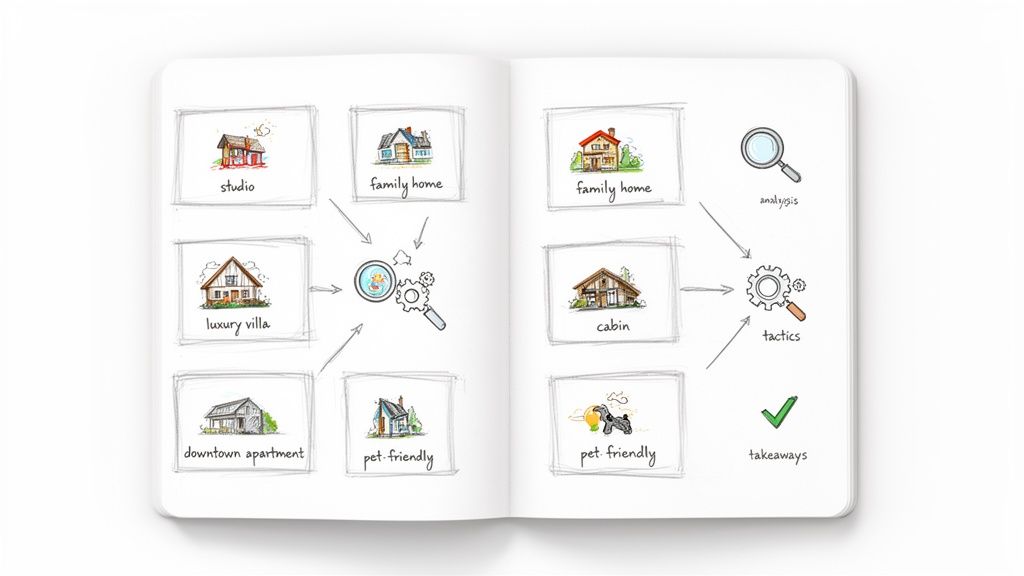
Yet, many hosts struggle with finding the right words, structure, and tone to capture what makes their property special. This guide is designed to solve that exact problem. We will dissect seven distinct, high-converting property description sample formats, moving beyond basic templates to provide a deep strategic analysis of what makes each one effective. You will see examples ranging from immersive, lifestyle-focused narratives to data-driven, SEO-optimized powerhouses.
For each example, you'll get:
- A detailed strategic analysis breaking down the psychology and sales tactics at play.
- Actionable tactical takeaways you can apply immediately.
- Customizable copy templates for short, medium, and long formats.
By the end of this article, you won't just have seen a good property description sample; you'll have a replicable playbook to write descriptions that don't just describe your space, but sell an unforgettable experience. This is your blueprint for transforming your listing from just another option into a must-book destination, driving more revenue and building a stronger rental brand.
1. Lifestyle-Focused Narrative Description
A lifestyle-focused narrative description moves beyond a simple list of amenities to sell an experience. Instead of stating "2 bedrooms, 1 bath," it paints a vivid picture of the life a guest will lead during their stay. This storytelling approach connects with travelers on an emotional level, helping them envision themselves creating memories in your space. It's about showcasing the feeling of the stay, not just the features of the property.
This method is exceptionally effective for vacation rentals because guests are purchasing an escape, an adventure, or a moment of peace. They aren't just booking a place to sleep; they are booking an emotional outcome. A powerful narrative property description sample helps them justify their choice by focusing on the benefits like relaxation, connection, or excitement.
Strategic Breakdown
The core strategy is to shift from a feature-based mindset ("what we have") to a benefit-driven one ("what you will experience"). This requires a deep understanding of your ideal guest. Are they a family seeking quality time, a couple looking for a romantic getaway, or a remote worker needing an inspiring "workcation"?
By defining your guest persona, you can craft a narrative that speaks directly to their desires. The language becomes more evocative, using sensory details and present-tense verbs to create a sense of immediacy and place the guest directly into the scene.
Key Insight: Guests often make booking decisions based on emotion and justify them with logic later. A lifestyle narrative targets the emotional decision-making process first, making your property more compelling than competitors who simply list facts.
Actionable Takeaways & Examples
To implement this style, focus on creating "micro-stories" within your description.
Create Immediacy with Present Tense:
- Instead of: "The balcony has ocean views."
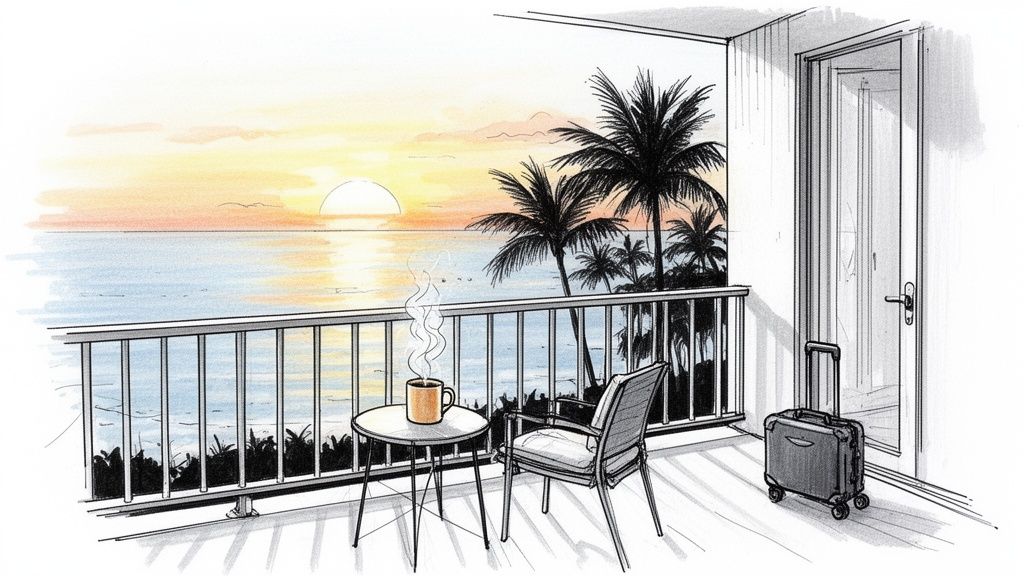
- Try: "You wake to the sound of waves, step onto your private balcony with a fresh cup of coffee, and watch the sun rise over the ocean."
Focus on Emotional Triggers:
- For a family cabin: "Gather the kids around the fire pit for s'mores under a blanket of stars, creating memories that will last long after you leave."
- For a downtown loft: "After a day exploring the city's best galleries and cafes, pour a glass of wine and watch the skyline glitter from your floor-to-ceiling windows."
Incorporate Seasonal Angles:
- Optimize your narrative for different times of the year. For a mountain cabin, describe the "cozy warmth of the fireplace after a day on the slopes" in winter and the "crisp mountain air on a morning hike" in summer. This is an excellent tactic for programmatic SEO.
This property description sample works best for properties where the location and atmosphere are major selling points, such as luxury villas, unique cabins, or beachfront homes. By selling the dream, you attract guests who are looking for more than just a place to stay, often leading to better reviews and higher booking values.
2. Feature-Rich Organized List Format
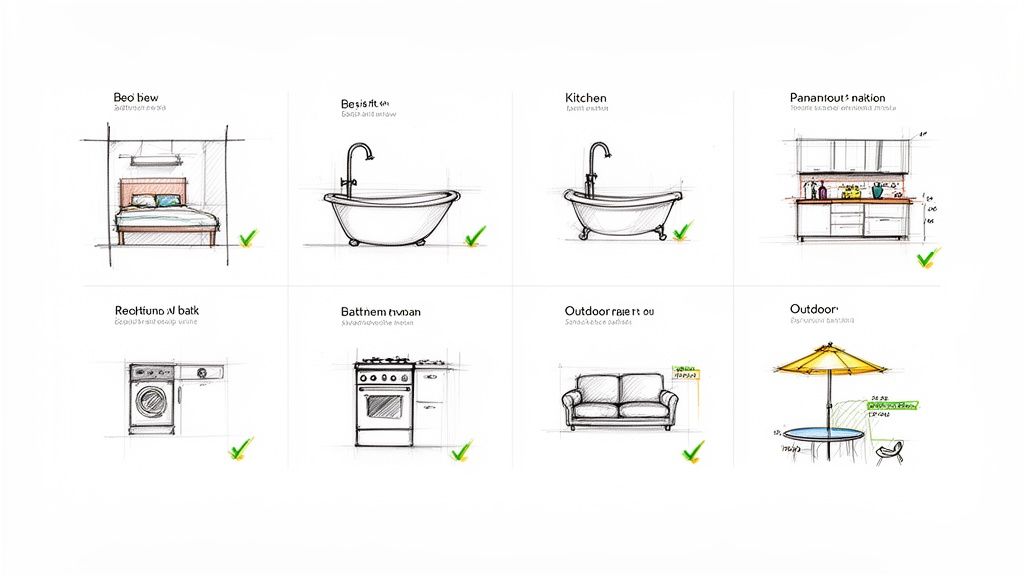
A feature-rich organized list format prioritizes clarity and scannability. Instead of weaving details into a narrative, this approach systematically organizes property features into logical categories like "Bedrooms," "Kitchen," and "Outdoor Space." It acts as a comprehensive checklist, allowing potential guests to quickly find the specific information they need and compare your property against others with ease.
This method is the backbone of most booking platforms for a reason: it's efficient, straightforward, and answers practical questions upfront. While a lifestyle narrative sells the dream, this format closes the deal by confirming the property meets the guest's logistical requirements. It's a foundational property description sample that builds trust through transparency and detail.
Strategic Breakdown
The core strategy here is to eliminate friction in the research process. Guests are often comparing dozens of listings, and they need to quickly verify essentials. Does it have a king bed? Is the Wi-Fi fast enough for remote work? Is there a fenced yard for the dog? This format provides direct answers.
The structure is designed for the modern user who skims content, especially on mobile devices. By using clear headers, bullet points, and bold text, you guide the reader's eye to the most relevant information. This organized presentation prevents guests from feeling overwhelmed and helps them make a confident, informed decision.
Key Insight: This format caters to the logical side of a guest's brain. After being hooked by compelling photos and a lifestyle narrative, guests use this structured list to confirm the practical details and justify their booking decision.
Actionable Takeaways & Examples
To implement this style, think like an architect organizing a blueprint. Group similar items and lead with your strongest assets.
Structure for Scannability:
- Instead of: "The kitchen has a coffee maker, blender, toaster, pots, and pans."
- Try:
KITCHEN & DINING:- Appliances: Refrigerator, stove, oven, microwave, dishwasher
- Coffee Bar: Drip coffee maker, Keurig, complimentary K-cups
- Essentials: Pots, pans, bakeware, utensils, oil, salt & pepper
Lead with High-Value Features:
- Place the most sought-after amenities at the top of their respective sections to grab attention immediately.
- OUTDOOR SPACE:
- Private Hot Tub: Professionally serviced weekly
- Gas BBQ Grill: Propane included
- Fenced-In Yard: Perfect for pets and children
Use Quantifiable Details:
- Be specific to build confidence and manage expectations.
- Instead of: "Fast Wi-Fi" --> Try: "High-Speed Wi-Fi (500 Mbps)"
- Instead of: "Sleeps 8" --> Try: "Sleeps 8 (Bedroom 1: King, Bedroom 2: Queen, Loft: 2 Twin Bunks)"
This approach is essential for every property type but is particularly critical for larger homes, family-oriented rentals, and properties targeting long-term or "workcation" stays where specific amenities are non-negotiable.
3. Hybrid Descriptive-Plus-Features Format
The hybrid descriptive-plus-features format is a powerful, balanced approach that marries the emotional pull of a narrative with the clarity of a scannable, feature-based list. It starts with an engaging, story-driven paragraph to hook the reader and then transitions into organized, bulleted sections that detail the property’s amenities. This property description sample is widely regarded as one of the highest-converting formats because it caters to two types of bookers simultaneously: the dreamer who buys the experience and the planner who needs to know the logistical details.
This method leverages the best of both worlds. The opening narrative captures the guest's imagination and sells the "why" behind their stay, while the structured features provide the logical justification they need to confirm their choice. It answers key questions quickly without sacrificing the aspirational quality that makes a property stand out in a crowded marketplace.
Strategic Breakdown
The strategy behind the hybrid format is to guide the guest through a logical booking journey within a single description. It first addresses their emotional desires (relaxation, adventure, connection) and then immediately provides the practical information (bed configuration, kitchen amenities, Wi-Fi speed) needed to resolve any potential booking friction. This two-step process makes the decision to book feel both inspired and smart.
By separating the narrative from the features, you make your listing easily digestible for skimmers and deep-readers alike. The initial paragraph acts as a compelling "hook," while the clear headings and bullet points allow guests to find specific information without reading every word. This efficiency is crucial on booking platforms where users quickly compare multiple listings.
Key Insight: This format minimizes booking hesitation. A guest might be sold on the "dream" from the narrative but hesitate if they can't quickly confirm a key feature, like a king-sized bed or a dedicated workspace. The hybrid model presents both, seamlessly.
Actionable Takeaways & Examples
Implementing this format requires a clear separation between the creative introduction and the factual list.
Craft a Compelling Opening Hook (2-3 Sentences):
- Instead of: "This is a 3-bedroom home with a pool."
- Try: "Escape to your private desert oasis where modern luxury meets serene mountain landscapes. Spend your days floating in the saltwater pool and your evenings stargazing from the hot tub, creating memories just minutes from downtown."
Organize Features into Benefit-Driven Categories:
- Instead of a single long list, use headings:
- LIVING SPACES & ENTERTAINMENT: Open-concept living area with a 65" Smart TV, Sonos sound system, and a collection of board games for family nights.
- KITCHEN & DINING: A fully-equipped chef's kitchen featuring a gas range and everything you need to host a memorable dinner party.
- BEDROOMS & BATHS: Three serene bedrooms, each with a memory foam mattress and luxury linens. The master ensuite boasts a spa-like rain shower.
- Instead of a single long list, use headings:
Update Quarterly with Testimonials and Seasonal Angles:
- Refresh your opening narrative to reflect the current season. In the winter, mention the "cozy fireplace," and in summer, highlight the "shady patio."
- Weave in a quote from a 5-star review: "As one guest recently said, 'This home was the perfect backdrop for our unforgettable family reunion!'"
This property description sample is the most versatile and effective for nearly all property types on platforms like Airbnb and Vrbo. It provides the perfect blend of inspiration and information, making it the gold standard for hosts aiming to maximize conversions.
4. Guest Persona-Targeted Descriptions
A guest persona-targeted description is a sophisticated marketing approach that tailors your property's narrative to specific types of travelers. Instead of a one-size-fits-all message, you create multiple versions of your description, each designed to resonate with a particular guest segment like families, couples, or digital nomads. This strategy acknowledges that different guests prioritize different features and experiences.
This method is highly effective because it speaks directly to a potential guest’s specific needs and desires, making them feel understood and catered to. For a family, you might highlight the fenced-in yard and bunk beds; for a remote worker, you’d emphasize the high-speed Wi-Fi and dedicated workspace. This level of personalization makes your listing stand out in a crowded market by showing you've anticipated what matters most to them.
Strategic Breakdown
The core strategy here is segmentation and personalization. It moves beyond a general description to create targeted messages that address the unique "jobs to be done" for each guest persona. The first step is to identify your 2-3 most common guest types by analyzing past booking data and reviews. Who stays with you most often and why?
Once you have defined your personas (e.g., "The Adventurous Couple," "The Multi-Generational Family," "The Focused Digital Nomad"), you can craft a unique property description sample for each one. This involves re-framing your property's existing features through the lens of that persona's priorities, effectively showing them how your space is the perfect solution for their specific trip. This is a core concept of effective website personalization. For a deeper dive into this topic, you can learn more about how website personalization can enhance the user experience and drive bookings.
Key Insight: Personalization increases conversion rates because it reduces the mental effort a guest needs to determine if a property is right for them. When the description explicitly solves their problems and speaks to their desires, the booking decision becomes faster and easier.
Actionable Takeaways & Examples
To implement this style, focus on creating distinct narratives for each defined persona.
Reframe Amenities for Different Personas:
- Instead of: "Fast Wi-Fi and an extra bedroom."
- For Digital Nomads: "Blazing-fast 500 Mbps fiber optic internet and a private office with an ergonomic chair ensure your workcation is productive and seamless."
- For Families: "The bonus room doubles as a kids' paradise with board games and a smart TV, giving parents a quiet moment to themselves."
Create Persona-Specific Headlines:
- Family Version: "Your Ultimate Family Beach Getaway: Steps from the Sand with Room for Everyone!"
- Couples Version: "Secluded Romantic Retreat: Private Hot Tub & Sunset Ocean Views."
Highlight Relevant Local Attractions:
- In the description for families, mention the nearby playgrounds, ice cream shops, and kid-friendly beaches.
- For couples, highlight romantic restaurants, wineries, or scenic viewpoints for two.
This targeted approach works best for properties that attract a diverse mix of travelers throughout the year. It allows you to dynamically appeal to the most relevant audience, whether you're targeting families during summer break or couples during the romantic fall season, ultimately maximizing your occupancy and revenue.
5. Social Proof & Review-Integrated Descriptions
A social proof and review-integrated description builds trust by weaving actual guest testimonials directly into the property narrative. Instead of simply making claims about your property, you let past guests do the selling for you. This approach leverages the power of authentic endorsements, which potential travelers find far more credible and persuasive than standard marketing copy.
This method is highly effective because modern consumers rely heavily on peer reviews before making purchasing decisions. Integrating glowing quotes and specific praise into your main description addresses potential concerns upfront and validates your property's best features through the voices of satisfied guests. It transforms your listing from a monologue into a conversation backed by a chorus of happy customers.
Strategic Breakdown
The core strategy here is to leverage psychological principles of trust and conformity. When potential guests see that others have had a wonderful experience, it reduces their perceived risk and increases their desire to book. The key is to select reviews that highlight your unique selling points and address common guest questions or hesitations.
Instead of just having a separate review section, you strategically place powerful quotes within the body of your description. For example, alongside your description of the kitchen, you might insert a quote from a guest who raved about how well-equipped it was for cooking family meals. This contextual placement makes the social proof more impactful and relevant.
Key Insight: A host's claim that a bed is "comfortable" is a marketing statement. A guest's quote calling it "the most comfortable bed I've ever slept in" is a powerful, unbiased endorsement that builds immediate trust and overcomes booking friction.
Actionable Takeaways & Examples
To implement this style, you need a system for collecting and curating your best reviews.
Integrate Quotes Contextually:
- Instead of: "The hot tub is clean and private."
- Try: "Unwind in our private, sparkling-clean hot tub. Don't just take our word for it; as our recent guest Sarah mentioned, it was the 'perfect way to relax under the stars after a long day of hiking!'"
Highlight Specific, Benefit-Driven Praise:
- For fast WiFi: "Need to work remotely? Our high-speed fiber internet has you covered. As John from Austin noted in his May review, 'The WiFi was faster than my connection at home-flawless for all my Zoom calls.'"
- For cleanliness: "We pride ourselves on our 5-star cleanliness. As the Miller family shared last month: 'The entire cabin was immaculately clean, which made us feel safe and comfortable from the moment we arrived.'"
Systematize Your Review Collection:
- Actively request feedback post-stay, specifically asking for permission to feature guests' comments. For more insights on this, you can learn more about how to optimize your vacation rental reviews.
- Rotate your featured reviews every few months to keep the description fresh and showcase recent positive experiences, which also helps with SEO.
This property description sample is ideal for any host with a strong track record of positive feedback. It is especially powerful for new listings trying to build credibility or for properties in competitive markets where trust is a key differentiator.
6. SEO-Optimized Long-Form Description
An SEO-optimized long-form description is a comprehensive, keyword-rich format engineered to capture high-intent search traffic directly from engines like Google. Rather than focusing solely on guest persuasion, this method strategically weaves in keywords, location modifiers, and semantically related terms to achieve high organic visibility. It's about treating your property listing as a primary marketing asset that can attract direct, commission-free bookings.
This approach is crucial for vacation rental managers who want to reduce their reliance on online travel agencies (OTAs) and build a sustainable direct booking channel. By ranking for specific search queries like "pet-friendly cabin near hiking trails in Asheville" or "ski-in/ski-out condo Breckenridge December," you position your property in front of potential guests at the exact moment they are looking to book. This is a powerful property description sample for driving unpaid, targeted traffic.
Strategic Breakdown
The core strategy here is to answer the questions potential guests are asking search engines. This involves thorough keyword research to understand user intent and structuring the description with a clear heading hierarchy (H1, H2, H3) that is both human-readable and search-engine-friendly. It’s a blend of compelling copywriting and technical SEO.
The description is written for humans first, ensuring it remains engaging, but it is optimized for search bots. This means naturally including keywords related to the property type, amenities, location, nearby attractions, and seasonal events. The goal is to create a comprehensive resource that satisfies both the guest's need for information and the search engine's need for context.
Key Insight: OTAs dominate broad search terms, but individual properties can win by targeting long-tail keywords. A detailed, SEO-focused description allows you to rank for highly specific phrases that indicate strong booking intent, giving you a competitive edge.
Actionable Takeaways & Examples
To implement this style, think like a content marketer, not just a property manager.
Structure with Logical Headings:
- Instead of: A single block of text.
- Try: Using H2s and H3s like "About Our Lakeside Cabin," "Amenities for a Perfect Family Getaway," "Things to Do in Lake Arrowhead," and "Frequently Asked Questions."
Incorporate Location Modifiers:
- Don't just say "Los Angeles." Be specific: "Our Venice Beach bungalow is just steps from the boardwalk and a short drive from Santa Monica Pier." Mention neighborhoods, landmarks, and "near me" phrases.
Target Seasonal and Event-Based Keywords:
- Optimize your description ahead of time for high-demand periods. For example, add a section about being the "perfect rental for the Sundance Film Festival" in Park City or a "cozy home for viewing fall foliage in the Berkshires." To find the right terms, it is essential to conduct in-depth research; you can explore a guide to vacation rental keywords on gethostai.com for more insights.
This method works best for property managers with direct booking websites or those using platforms that allow for rich, long-form content. It is a long-term investment that builds your brand's authority and drives valuable, direct traffic over time.
7. Multimedia-Rich Interactive Descriptions
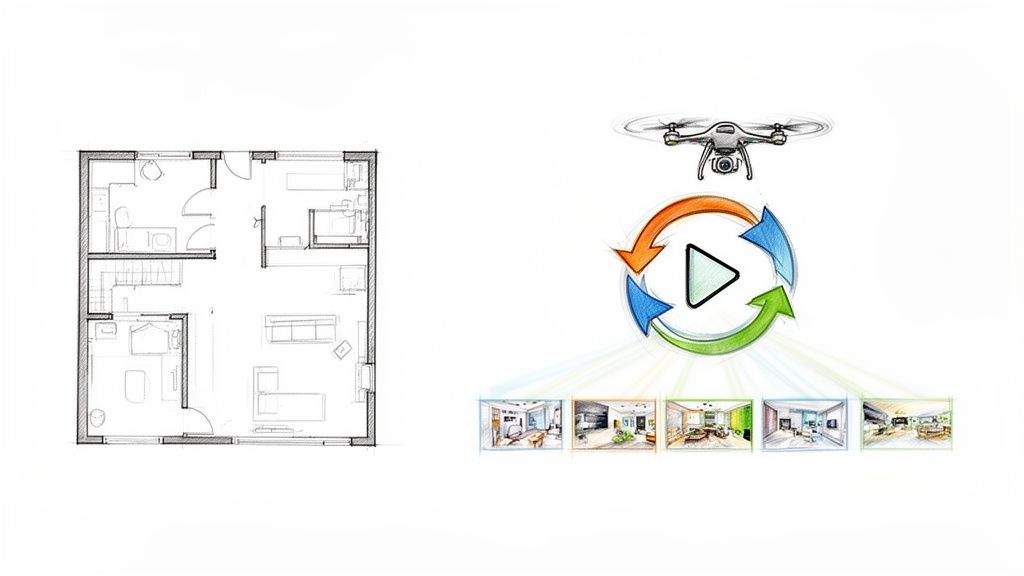
A multimedia-rich description moves beyond static text and photos to create an immersive digital experience. This modern approach integrates videos, 360° virtual tours, interactive floor plans, and comprehensive image galleries directly into the listing. This format empowers guests to explore the property visually and interactively before booking, which dramatically reduces uncertainty and builds trust. It is designed for the visual-first traveler who prefers to see and experience a space rather than just read about it.
This method is especially powerful for unique, spacious, or high-end properties where static images cannot fully capture the scale, flow, and ambiance. By providing a virtual walkthrough, you answer guest questions proactively, manage expectations accurately, and significantly boost booking confidence. It transforms a flat listing into a dynamic, engaging showcase.
Strategic Breakdown
The core strategy here is to show, don't just tell. By offering multiple visual formats, you cater to different guest preferences for information consumption and build a stronger, more transparent connection. A high-quality walkthrough video can convey the property's atmosphere, while a 360° tour allows guests to self-direct their exploration, focusing on the areas that matter most to them.
This approach effectively pre-qualifies guests. Those who take the time to engage with a virtual tour or detailed video are more invested and more likely to be a good fit for the property. This leads to higher-quality bookings and a lower likelihood of post-arrival issues related to unmet expectations.
Key Insight: Interactive media bridges the gap between online browsing and the real-world experience. It gives guests the confidence to book a property sight-unseen by providing an unparalleled level of transparency and detail.
Actionable Takeaways & Examples
Implementing a multimedia strategy requires an investment in quality assets, but the return on conversion is substantial.
Integrate a Walkthrough Video:
- Instead of: A simple slideshow of photos set to music.
- Try: A 2-3 minute narrated video tour that guides guests through the home, pointing out key features, amenities, and the overall flow of the space. "As we step into the living room, you'll see the vaulted ceilings and the gas fireplace, perfect for a cozy evening..."
Leverage 360° Virtual Tours:
- For a large family home: Use a tool like Matterport to create a "digital twin" of your property. This allows a family to virtually walk through, ensuring the layout works for their needs, from bedroom proximity to the kitchen-to-patio flow.
- For a luxury villa: Showcase the seamless transition from indoor living spaces to the outdoor pool and entertainment areas, giving guests a true sense of the property's grandeur.
Use Drone Footage for Context:
- For a property with a great location, drone shots are non-negotiable. Show the home's proximity to the beach, its secluded position in the mountains, or the stunning views of the city skyline. This contextualizes the property in a way ground-level photos cannot.
This type of property description sample is essential for luxury rentals, large multi-family homes, and properties with unique architectural features or stunning natural surroundings. It justifies a premium price point and attracts discerning guests who value transparency and detail.
7-Style Property Description Comparison
| Format | Implementation complexity | Resource requirements | Expected outcomes | Ideal use cases | Key advantages |
|---|---|---|---|---|---|
| Lifestyle-Focused Narrative Description | Medium–High (creative writing skills) | Skilled copywriter, time for testing | Strong emotional engagement; higher direct booking conversion; supports premium pricing | Vacation rentals, boutique or luxury properties focused on experiences | Emotional connection; differentiation; storytelling-driven appeal |
| Feature-Rich Organized List Format | Low (structured data entry) | Minimal copy effort; regular updates | Clear comparability; good baseline SEO; fewer basic inquiries | Standard listings, high-volume channels, guests comparing options | Scanability; SEO-friendly; easy to maintain |
| Hybrid Descriptive-Plus-Features Format | Medium (blends narrative and structure) | Copywriting plus structured sections; moderate maintenance | Balanced high conversions and SEO performance | Most vacation rentals aiming to maximize direct bookings | Best of both worlds: emotional hook + clear details |
| Guest Persona-Targeted Descriptions | High (segmentation and content variants) | Analytics, CRM integration, multiple content versions | Higher conversion by segment; improved guest satisfaction | Properties with diverse guest types (families, couples, nomads) | Personalization; reduced mismatched bookings; targeted pricing |
| Social Proof & Review-Integrated Descriptions | Medium (curation and integration) | Review collection, permissions, moderation workflows | Increased trust and booking confidence; fresh content for SEO | Established properties with many reviews and repeat guests | Authentic endorsements; higher credibility; improved conversions |
| SEO-Optimized Long-Form Description | High (SEO expertise required) | SEO specialist, research, ongoing optimization | Higher organic visibility and long-term traffic; captures high-intent queries | Property managers using programmatic SEO and content scale | Organic search authority; scalable, cost-effective traffic |
| Multimedia-Rich Interactive Descriptions | High (production and technical integration) | Professional photo/video, 360° tours, hosting and bandwidth | Highest conversion rates; fewer expectation-related cancellations | Premium properties, visually compelling listings, social-first marketing | Immersive experience; shareability; reduces uncertainty |
Putting Your Best Description Forward: Your Action Plan for Higher Bookings
Throughout this guide, we've deconstructed a wide range of high-performing property description sample formats, moving far beyond generic templates. From weaving lifestyle-focused narratives that sell an experience to structuring feature-rich lists for skimmers, the central theme is clear: strategic communication is your most powerful booking tool. You now have a comprehensive playbook filled with actionable tactics, analysis, and replicable strategies to elevate your listings from simple advertisements to compelling invitations.
The journey from a blank page to a conversion-optimized description doesn't have to be intimidating. By understanding the core principles behind each format, you can confidently select and adapt the right approach for any property in your portfolio. Whether it's a cozy cabin needing a story or a downtown loft demanding a feature-forward breakdown, the key is to align your words with your ideal guest's deepest desires and practical needs.
Your Immediate Action Plan: From Insight to Implementation
Merely reading about a great property description sample is one thing; implementing the strategy is what drives results. Here is a clear, step-by-step action plan to put these insights to work immediately and start seeing an impact on your booking calendar.
Audit Your Current Listings: Start by reviewing your existing descriptions. Which format do they most resemble? Are they achieving their goal? Use the analysis frameworks from this article to identify weak points and opportunities for a quick, impactful refresh.
Define Your Ideal Guest Persona: For each property, take ten minutes to write down who you are speaking to. Is it a "Digital Nomad," a "Family on Holiday," or a "Luxury Seeker"? This simple exercise, as highlighted in our persona-targeted examples, will instantly clarify your tone, focus, and feature prioritization.
Choose Your Primary and Secondary Formats: You don't have to stick to just one style. The most effective listings often use a hybrid approach. For instance, lead with a powerful Lifestyle-Focused Narrative to capture emotion, then follow up with a Feature-Rich Organized List to provide scannable details and answer practical questions.
Integrate Social Proof: Scour your reviews for golden nuggets. Pull direct quotes or recurring themes (e.g., "the amazing sunset view," "the sparkling clean kitchen") and weave them into your description. This builds instant trust and validates your claims with authentic guest experiences.
Elevating the Guest Experience Before They Arrive
A truly exceptional property description sets the stage for an equally exceptional stay. The words you choose and the details you highlight create a promise to your guests. Fulfilling that promise begins with how your property is presented not just in text, but visually. As part of your comprehensive action plan for higher bookings, understanding how to stage a house to sell for maximum profit can significantly enhance the narrative you present in your property description. The principles of creating an inviting, aspirational space are directly transferable to short-term rentals, ensuring your photos perfectly match the compelling story you're telling.
Ultimately, mastering the art of the property description is about more than just filling a text box on a listing site. It's about connecting with people, building a brand, and creating a sustainable, profitable rental business. Each property description sample we've explored is a testament to the power of thoughtful, guest-centric marketing. By embracing these diverse strategies, testing what works for your unique audience, and continuously refining your approach, you are building an invaluable asset that works tirelessly to turn browsers into bookers and first-time guests into loyal, repeat customers.
Ready to automate your success and craft perfect, persona-targeted descriptions in minutes? hostAI uses advanced AI to analyze your property details and generate high-converting copy tailored to your ideal guest, ensuring every listing puts its best foot forward. Stop guessing and start converting with a hostAI solution built for modern rental managers.