
multi channel distribution
What Is Multi Channel Distribution in Vacation Rentals
Posted on Jan 10, 2026
Think of multi-channel distribution this way: it’s the simple practice of listing and selling your short-term rentals on multiple online platforms at the same time. Instead of banking everything on a single channel like Airbnb, you’re putting your properties out there wherever potential guests are looking, from the big booking sites to your very own website.
What Is Multi Channel Distribution in Vacation Rentals
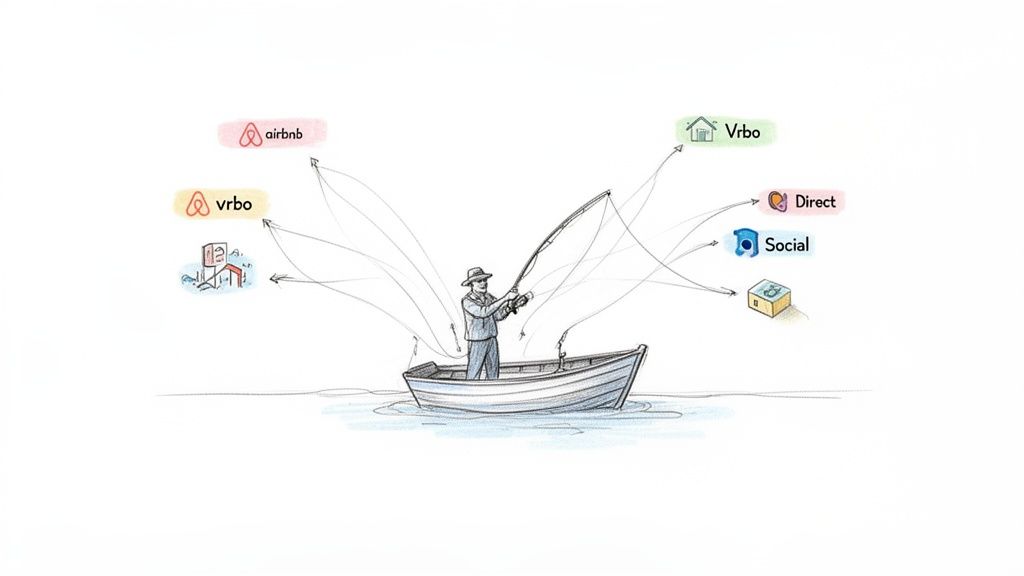
Imagine you’re trying to catch fish in a massive lake, but you only cast a single line from one spot on the shore. Sure, you might get a bite now and then, but you're completely missing all the fish swimming just out of reach. That’s what it's like listing your vacation rental on only one platform.
Multi-channel distribution, on the other hand, is like casting a wide net or setting up multiple fishing lines in all the best spots around the lake. It's a strategy that puts you everywhere your ideal guests might be searching for their next stay.
The core idea is simple: don’t put all your eggs in one basket. By spreading your properties across different channels, you build a more resilient, more profitable rental business that isn't at the mercy of a single platform's algorithm or policy changes.
To make this concept even clearer, let's break down the essential ideas you'll need to master.
Key Multi Channel Distribution Concepts at a Glance
| Concept | Description for STR Managers | Primary Goal |
|---|---|---|
| Visibility Maximization | Listing your properties on a variety of OTAs, your direct booking site, and other relevant platforms. | Be seen by the largest possible audience of potential guests. |
| Channel Mix | Strategically selecting a blend of different channel types (e.g., global OTAs, niche sites, direct). | Attract diverse traveler segments and balance booking sources. |
| Rate Parity | The practice of maintaining consistent pricing for the same property across all distribution channels. | Build trust with guests and avoid penalization by OTAs. |
| Centralized Management | Using a channel manager or PMS to sync calendars, rates, and listings from a single dashboard. | Prevent double bookings, save time, and maintain consistency. |
| Brand Building | Using each channel not just for bookings, but to funnel guests toward your brand and direct website. | Increase high-margin direct bookings and own the guest relationship. |
Understanding these core principles is the first step toward building a distribution strategy that doesn't just get you more bookings, but also gives you more control over your business's future.
The Strategic Advantage of Wider Reach
A smart multi-channel strategy isn't just about listing everywhere you can; it's about being deliberate. It’s about choosing the platforms that actually align with your properties and your business goals. Different channels attract different kinds of travelers, and each one offers a unique opportunity to fill up your calendar.
This approach goes beyond just managing listings. To make it work, your operations have to be rock-solid. For example, a thorough vacation rental turnover cleaning process becomes absolutely critical to keep your standards high across every single platform. Great reviews are your currency, and consistency is how you earn them.
A multi-channel strategy is your defense against market volatility. If one channel experiences a downturn or changes its policies, your other channels provide a stable stream of bookings, safeguarding your revenue.
This guide will give you a clear roadmap, walking you from the foundational concepts to advanced, actionable strategies. Our goal is to give you the knowledge you need to take back control, drive more direct bookings, and build a rental business that truly thrives.
How Multi-Channel Distribution Works in Practice
Juggling your listings across a dozen different platforms probably sounds like a logistical nightmare. And a few years ago, it was. But today's tech makes it surprisingly straightforward.
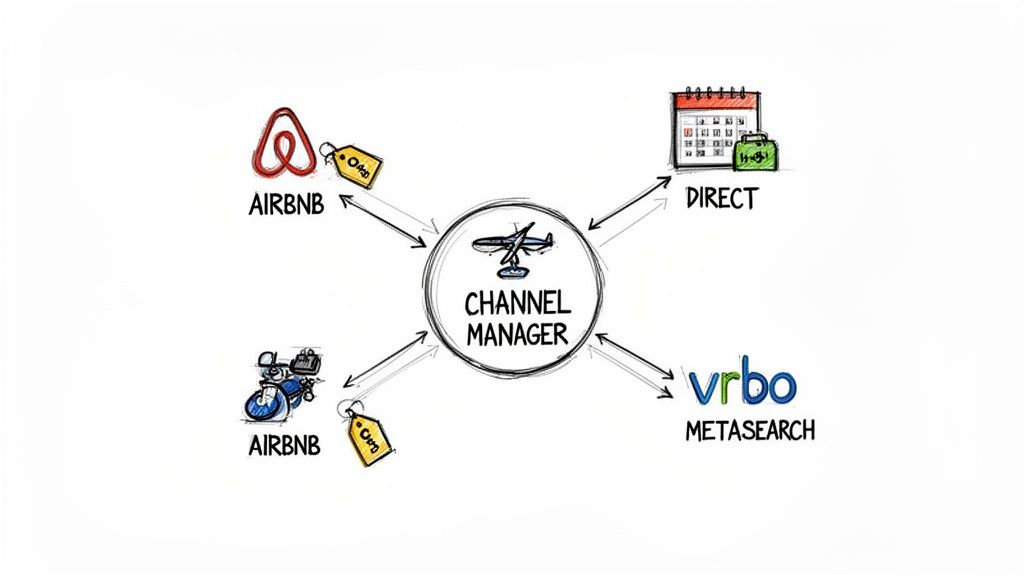
Think of a multi-channel distribution system as the air traffic control tower for your properties. Its main job is to keep every listing—whether it's on Airbnb, Vrbo, or your own website—perfectly in sync. This prevents catastrophic collisions, like the dreaded double booking.
At the center of this whole operation is a channel manager. This could be a standalone tool or a feature built into a modern Property Management System (PMS). This software becomes your command center, your single source of truth. Instead of logging into five different sites to block off a weekend, you make one change in your central hub, and it instantly pushes that update to all your connected channels.
So, when a guest books your cabin on Booking.com for a long weekend, the channel manager gets the signal. It then immediately tells Airbnb, Vrbo, and your direct booking site to block those dates. This all happens in a matter of moments, virtually eliminating the risk of two different guests booking the same night.
Tracing the Flow of Information
This real-time data flow is about much more than just calendars. A proper multi-channel setup automates the exchange of all kinds of critical information, creating one cohesive system that saves you from endless hours of mind-numbing manual updates.
Here’s a quick breakdown of what gets synced up:
- Availability Calendars: This is the big one. A booking on one channel instantly blocks those dates everywhere else. It's the core function that prevents the operational chaos and guest frustration of a double booking.
- Rates and Pricing: Thinking about raising your nightly rate for a big holiday weekend? You change it once in your PMS or channel manager. The system then ripples that price update across every single one of your listings, ensuring you have consistent pricing everywhere.
- Listing Content: Many systems now let you sync property descriptions, photos, and lists of amenities. This means a guest looking at your place on Vrbo sees the same professional, accurate information as someone on your own website, which is huge for building trust.
The Magic Behind the Scenes: API Connections
This seamless, two-way communication is powered by something called an Application Programming Interface, or API. You can think of an API as a digital translator that lets different software programs talk to each other in a language they both understand. Your channel manager uses these API connections to link directly into each OTA's system.
An API connection is like having a dedicated, secure hotline between your software and each booking site. It’s a two-way street—it sends your updates out and pulls new booking information in, all automatically and without any delay.
This is the technical backbone that transforms multi-channel distribution from a chaotic mess into a powerful, automated growth strategy. It allows you to be everywhere your guests are looking without being buried in admin work. By centralizing all the controls, you can finally step back from tedious data entry and focus on the bigger picture: your strategy, your guest experience, and scaling your business.
Choosing the Right Channels for Your Properties
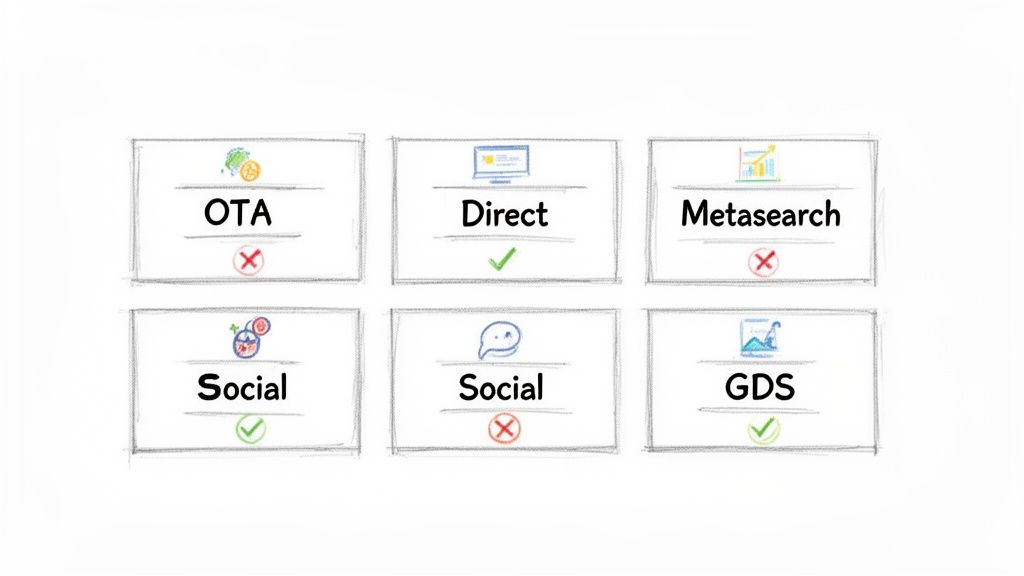
Once you've wrapped your head around how multi-channel distribution works, the real work begins: picking the right mix of platforms for your specific properties. Let's be clear, not all channels are created equal. Each one attracts a different kind of traveler, plays by its own rules, and brings something unique to the table. A winning strategy isn't about being everywhere—it's about being in the right places.
Think of your channel mix like a diversified investment portfolio. You wouldn't dump all your cash into one stock, right? The same logic applies here. The goal is to blend high-reach, high-commission channels with lower-cost, brand-building ones to create a steady and profitable stream of bookings.
The OTA Giants: Airbnb, Vrbo, and Booking.com
For almost every property manager, the big Online Travel Agencies (OTAs) are the bedrock of their distribution strategy. Powerhouses like Airbnb, Vrbo, and Booking.com have marketing budgets that are practically impossible for an independent operator to match.
Listing on these sites is like opening a shop in the world's busiest mall. You get instant access to a massive global audience of travelers actively looking for a place to stay. This is hands-down the fastest way to get heads in beds and fill your calendar, especially when you're starting out or heading into a slow season.
Of course, that firehose of traffic isn't free. OTAs charge hefty commissions or service fees that can take a serious bite out of your profit margins. You also have less control over the guest relationship and have to play by their rules, which can and do change without warning. Once you know the types of channels out there, the next step is figuring out the best ways for advertising rental properties effectively to bring in great guests.
Your Direct Booking Website
Your direct booking website is the single most important channel you have because it's the only one you truly own. It's your digital storefront, your brand headquarters, and your ticket to long-term profitability and freedom from the OTAs. While it lacks the built-in audience of a Booking.com, every single reservation you get here is 100% commission-free.
A direct booking website transforms you from just another listing on a crowded platform into a legitimate, trustworthy hospitality brand. It's where you own the guest data, control the entire guest experience, and build loyalty.
Yes, building a direct channel takes more upfront work in marketing and SEO, but the payoff is huge. It lets you build an email list, run retargeting ads, and turn happy guests into repeat customers, creating a sustainable, high-margin revenue stream that's all yours.
Metasearch Engines Like Google Vacation Rentals
Metasearch engines are the ultimate aggregators. They pull listings from dozens of sources—including OTAs and direct booking sites—and put them all in one place for travelers to compare. Google Vacation Rentals is the king of this space, displaying property options right in the main search results.
Getting your direct booking link to show up on these platforms is a game-changer. It puts your brand on a level playing field with the biggest names in the business, allowing travelers to see your direct rate and book right with you. This is a brilliant way to intercept guests while they're comparison shopping and drive more commission-free bookings.
Social Media and Niche Platforms
Don't sleep on channels like Instagram, Facebook, and even Pinterest. They can be incredibly effective for reaching specific types of guests. These platforms are less about the immediate transaction and more about building a brand, telling your story, and creating a community.
- Instagram: A must for visually stunning properties. Use high-quality photos, video tours, and Reels to build a loyal following.
- Facebook: Perfect for targeting niche communities (think "Family Travel to Florida" groups) and running laser-focused ad campaigns.
- Niche Listing Sites: Got a pet-friendly cabin or an eco-lodge? Listing on sites dedicated to specific interests connects you with highly motivated guests who are looking for exactly what you offer.
The Global Distribution System (GDS)
Often overlooked in the vacation rental space, the Global Distribution System (GDS) is a more traditional channel that connects your properties to a massive network of travel agents and corporate travel planners. While it's historically been the domain of hotels, a GDS can be a goldmine for high-value, longer-stay bookings, especially if your properties are in business hubs or luxury destinations. Connecting to the GDS requires specific tech, but it can unlock a lucrative market segment that you won't find on the usual OTAs.
Multi Channel vs Omnichannel Strategies
As you dig into multi-channel distribution, you're bound to run into another buzzword: omnichannel. They sound alike, but they represent two very different ways of thinking about how you reach guests. Nailing this distinction is crucial for building a strategy that actually fits your business goals and, just as importantly, your resources.
Think of it this way: multi-channel is about being present, while omnichannel is about being connected.
A multi-channel approach is like having several different storefronts in various locations. Each store—your Airbnb listing, your Vrbo page, your direct booking site—operates on its own to bring in guests and lock down bookings. They're all working toward the same goal, but they aren't really talking to each other.
The whole point is to maximize your visibility. You're casting a wide net, making sure that no matter where a potential guest is looking, they can find you. For most property managers, this is the essential first step. It provides the biggest and most immediate return by tapping into the massive audiences already using these different platforms.
The Leap to a Unified Guest Experience
An omnichannel strategy takes things a big step further. It's about connecting all those separate storefronts into one seamless, unified shopping experience. In this model, the guest is the absolute center of the universe, and all your channels work together to create a single, consistent conversation with them.
Here’s what that looks like in the real world:
- A guest spots your property in an Instagram ad and clicks through to your direct booking site.
- They get distracted and bounce, but an hour later they get a follow-up email with a small, tempting discount.
- They book through that email, and your system automatically triggers an SMS with check-in details the day before their trip.
- After their stay, another email lands in their inbox asking for a review and offering a loyalty discount for their next direct booking.
Every touchpoint knows about the others. It creates a smooth, personalized journey that builds deep brand loyalty and keeps guests coming back. It's a powerful, guest-centric approach that can seriously increase the lifetime value of each customer.
An omnichannel strategy doesn’t replace a multi-channel one—it builds on top of it. You can't create a connected guest journey without first being present on the channels where your guests are active.
Why Start with a Multi Channel Focus
While a true omnichannel experience is the holy grail for many, let's be realistic: it requires a significant investment in technology and data integration to pull off correctly. This is precisely why mastering a multi-channel approach first is so critical for your business. It builds the foundation by diversifying your booking sources and growing your overall revenue.
By focusing on a strong multi-channel strategy now, you start learning which platforms actually deliver for you and begin gathering the guest data you'll need for more advanced tactics down the road. To get started on the most crucial channel you own, check out our guide on the building blocks of successful direct distribution. Perfecting this is your first and most important move toward a more sophisticated distribution plan.
Measuring the Success of Your Distribution Strategy
Throwing your listings onto more channels is one thing, but making smart, data-driven decisions that actually grow your business is another. Without the right numbers, you're essentially flying blind. You have no real way of knowing which channels are bringing in the bacon and which are just eating up your time and money.
Tracking your success turns your distribution strategy from a hopeful guess into a powerful engine for profitability.
The most immediate win you'll see is a jump in your occupancy rates. It's simple math: by casting a wider net, you get in front of a larger, more diverse audience of potential guests. This increased visibility is a lifesaver for filling up your calendar, especially during those tricky shoulder seasons. It also means you're not putting all your eggs in one basket, making your revenue stream much more resilient.
That diversification is your best defense against the whiplash of the travel industry. When an OTA suddenly tweaks its algorithm or jacks up its commission, a solid multi-channel strategy means your business won't take a catastrophic hit. Your other channels will keep a steady stream of bookings flowing, protecting your income and giving you some much-needed stability.
Key Performance Indicators to Track
To really get what's working, you need to look past just occupancy. It's time to dig into the performance of each individual channel. These are the metrics that paint a clear picture of your return on investment and shine a spotlight on where you can do better.
Here are the essential KPIs every property manager should have on their radar:
- Revenue Per Channel: This is the big one. Track exactly how much booking revenue each platform (Airbnb, Vrbo, your own website, etc.) is bringing in. It’ll tell you who your heavy hitters are.
- Cost Per Acquisition (CPA): How much are you paying for a booking from each channel? For OTAs, this is mainly their commission. For your direct site, it's your marketing spend. The name of the game is to get this number as low as possible.
- Look-to-Book Ratio: This is the percentage of people who view your property on a channel versus those who actually book. If this ratio is low on a specific platform, it could be a red flag for your pricing, photos, or listing description there.
- Average Length of Stay (ALOS) by Channel: Do you notice that guests from certain channels tend to stay longer? Knowing this helps you pour your energy into the platforms that deliver more valuable, longer-term bookings.
By keeping a close eye on these numbers, you can start making strategic moves. You can put your time and budget into the channels that deliver the best guests for the lowest cost, which is the secret sauce to maximizing your overall profit.
The Role of Centralized Management in Measurement
Trying to measure all this without a central command center is next to impossible. This is where a modern reservation management platform becomes a non-negotiable tool.
The global multichannel order management market was valued at USD 4.13 billion and is projected to hit USD 9.12 billion by 2034, which just goes to show how crucial these systems are for handling complex operations across many channels. For vacation rentals, these platforms give you a real-time view of your inventory and keep all your bookings in one place, which is absolutely essential for collecting clean, accurate data. You can learn more about the growth of multichannel order management systems from Straits Research.
Ultimately, tracking these numbers is all about refining your game plan. For a deeper look at how to connect your marketing efforts to real-world results, check out our complete guide on what is marketing attribution. It’ll help you figure out which touchpoints actually convince a guest to click "book."
Building Your Multi-Channel Strategy with Modern Tools
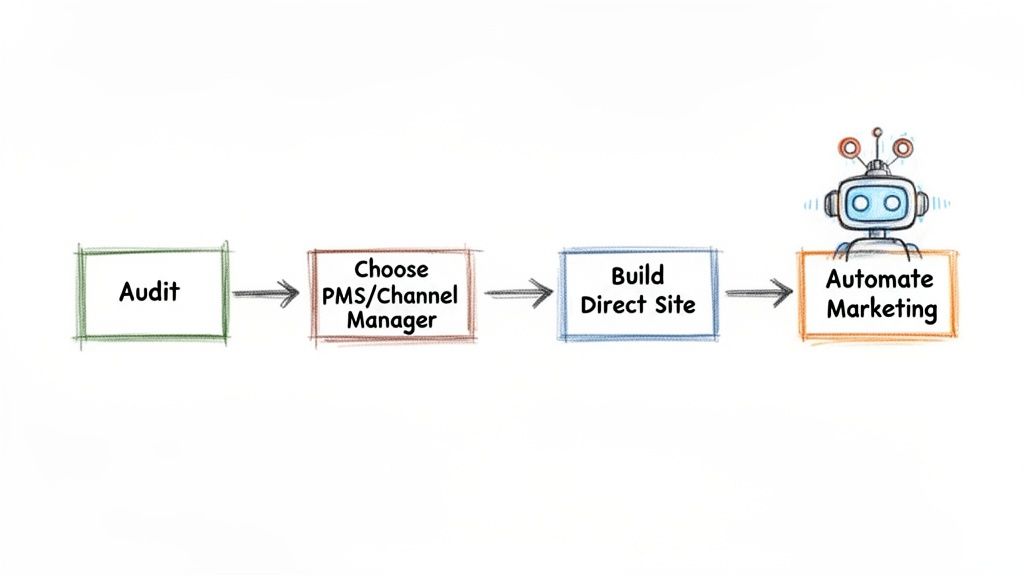
Alright, moving from theory to action is where the real growth sparks. The idea of launching a multi-channel strategy can feel like a massive undertaking, but today’s tools—especially those running on AI—have leveled the playing field for everyone.
The secret isn't trying to do everything at once. It's about following a smart, step-by-step process to build a solid foundation that can actually scale. This roadmap will walk you through launching a sophisticated strategy that’s both powerful and manageable, even for smaller operators. By leaning on the right technology, you can amplify your reach without drowning in spreadsheets and manual updates.
H3: First, Audit Your Current Channels and Performance
Before you can map out where you're going, you need an honest look at where you are right now. Kick things off with a deep dive into your existing distribution channels. Don't just make a list of where you're active; get into the numbers and see what's truly driving your business.
For each channel, ask yourself a few tough questions:
- Where are my bookings really coming from? Pinpoint which platforms are doing the heavy lifting.
- Which channel brings in the most revenue? This will tell you where your most valuable guests are finding you.
- What's my actual cost per acquisition? Once you subtract commissions and marketing spend, you'll see your true ROI.
This audit will shine a light on your strengths, weaknesses, and biggest opportunities for growth. You might be surprised to find that a channel you thought was a superstar is actually costing you a fortune, or that another platform has a quiet but loyal audience you've been overlooking.
H3: Next, Pick the Right Technology Stack
Your technology is the engine that powers your entire multi-channel strategy. Get this part wrong, and you're signing up for a future of manual updates, calendar chaos, and the dreaded double booking.
Your Property Management System (PMS) needs to be your command center, the single source of truth for everything. Your channel manager then acts as its trusted messenger, pushing out your rates and availability and pulling in bookings from every corner of the web.
When you’re vetting tech, make API integrations your top priority. You need seamless, real-time, two-way syncs between your PMS and your channels. It's also becoming clear that AI-powered features are no longer a "nice-to-have"—they're essential for getting a leg up on the competition.
The industry is rapidly adopting multi-channel marketing hubs for a reason. This global market, currently valued at USD 6 billion, is projected to explode at a 17.7% CAGR between 2025 and 2034, all thanks to AI and automation. As a property manager, these tools are gold for personalizing guest communication and coordinating your marketing efforts. You can learn more about the growth of these advanced marketing solutions from GM Insights.
H3: Then, Build Your High-Converting Direct Booking Website
In any multi-channel plan, your direct booking website is your single most valuable asset. It's the one channel you completely own and control. It's where you build your brand, cultivate guest loyalty, and truly maximize your profits. But a generic, slow, or clunky website will send potential guests running right back to the OTAs.
Your website isn't just another booking engine; it's your digital storefront. It has to earn trust, show off your properties beautifully, and make it ridiculously simple for guests to give you their money.
Modern tools are now using AI to build smarter, better-performing websites from the ground up. Take hostAI's hostFront, for example. It creates websites designed specifically for vacation rentals, packing them with features like programmatic SEO to pull in free organic traffic and personalized pricing that convinces visitors to book. If you're serious about growing commission-free revenue, investing in the right direct vacation rental software is a non-negotiable.
H3: Finally, Automate Your Marketing and Advertising
The last piece of the puzzle is automation. Trying to manually juggle marketing campaigns across a dozen different platforms is a recipe for burnout. It’s inefficient and, frankly, impossible to scale. AI-powered tools can now take over the heavy lifting, letting you run incredibly sophisticated campaigns with minimal hands-on effort.
Think about a platform like hostDistro. It automatically runs ads for you on Google and Facebook, driving qualified traffic straight to your direct booking site. These systems don't just set and forget; they analyze performance data in real time, smartly shifting your budget to the ads and audiences that are delivering the best results.
Pair that with automated email marketing from a tool like hostMail. Now you can nurture leads from every single channel, automatically reaching out to re-engage guests who abandoned their cart, welcoming new arrivals, and encouraging past guests to come back for another stay. This creates a powerful, self-sustaining growth loop that works for you 24/7.
To bring it all together, here’s a practical checklist for putting these pieces into action using an AI-powered approach.
Your AI-Powered Multi-Channel Implementation Checklist
This checklist breaks down the process into clear, manageable steps, showing you how technology can help you build an effective multi-channel system without getting overwhelmed.
| Step | Action Item | Recommended Tool/Approach |
|---|---|---|
| 1. Audit & Analyze | Conduct a deep dive into booking volume, revenue, and cost per acquisition for all current channels. | Use your PMS reports or a business intelligence tool to consolidate data and identify top performers and hidden costs. |
| 2. Centralize Operations | Select a PMS with robust channel management capabilities and strong API connections. | Choose a modern PMS that serves as your single source of truth for rates, availability, and guest data. |
| 3. Build Your Brand Hub | Launch a fast, mobile-friendly, and SEO-optimized direct booking website. | Use an AI-powered website builder like hostFront to create a high-converting site designed for vacation rentals. |
| 4. Drive Direct Traffic | Automate paid advertising campaigns to attract qualified guests to your new website. | Implement a system like hostDistro to manage Google and social media ads, optimizing budget for the highest ROI. |
| 5. Nurture & Retain | Set up automated email sequences to engage guests at every stage of their journey. | Connect a tool like hostMail to capture leads, follow up on abandoned carts, and run re-marketing campaigns. |
| 6. Monitor & Refine | Continuously track your key metrics (Direct Booking Ratio, CVR, ROAS) and adjust your strategy based on data. | Use a centralized dashboard that pulls data from all your tools to get a clear, real-time view of your performance. |
By following this checklist and leveraging the right AI tools, you can systematically build a multi-channel strategy that not only expands your reach but also drives more profitable, direct relationships with your guests.
Common Questions About Multi Channel Distribution
Even with a killer strategy and the right tech, going multi-channel can feel a little daunting. A few tricky questions always seem to pop up. Let's tackle the most common ones we hear from rental managers so you can move forward with confidence.
How Do I Handle Pricing Across Different Channels?
Ah, the million-dollar question. The short answer is you need to maintain rate parity, which is just a fancy way of saying your prices should look the same everywhere for the same property. Nothing sours a potential guest's trust faster than seeing a higher price on Airbnb than on your own website.
Beyond just confusing guests, major OTAs like Booking.com actually have rules against this and can penalize you if they find your property listed cheaper somewhere else.
This is where your channel manager becomes your secret weapon. You can set your base rate, then layer on specific markups or discounts for each channel automatically.
- For OTAs: You can automatically bake in a markup to cover their commission fees. This way, your net revenue stays consistent no matter where the booking comes from.
- For your direct site: You can offer a slightly better deal or a small perk, like a free bottle of wine, to nudge guests toward booking directly without breaking any parity rules.
This lets you keep your public-facing prices consistent while subtly steering guests to your most profitable channel—your own website.
Will I Become Too Dependent on Technology?
It's a fair question. Putting a PMS and channel manager at the heart of your operation means placing a lot of trust in software. But let's be honest about the alternative: manually juggling a dozen calendars and constantly updating rates. That's not just inefficient; it's a direct route to double bookings, angry guests, and total burnout.
The right technology doesn't make you dependent; it makes you efficient. It frees you from the five hours a day you'd spend on manual data entry and lets you focus on high-value tasks like guest communication and business strategy.
The trick is to choose a reliable, well-supported tech stack. Look for providers with a solid track record and real human support. When you do that, technology becomes less of a crutch and more of a powerful assistant that flawlessly executes your strategy.
Can a Multi Channel Strategy Work for a Small Operator?
Absolutely. In fact, it's arguably more critical for smaller operators.
When you only have a handful of properties, every single booking is vital. Putting all your eggs in one OTA basket is a huge gamble. One little algorithm change, a sudden policy shift, or a string of unfair reviews could wipe out your income overnight.
Modern, AI-powered tools have leveled the playing field, making this approach accessible to everyone, not just the big property management companies. You no longer need a huge team to manage listings, run effective ad campaigns, or handle marketing emails. Smart automation does the heavy lifting, allowing a solo host or a small team to compete head-to-head with the big guys.
By diversifying where your bookings come from, you build a much more stable and resilient business that can handle whatever the market throws at it.
Ready to build a resilient, profitable, and automated distribution strategy? hostAI provides the complete toolkit to maximize your visibility and drive more direct bookings. With AI-powered tools like hostFront, hostDistro, and hostMail, you can stop juggling platforms and start growing your brand. See how leading managers are doubling their direct revenue at https://gethostai.com.