
becoming an airbnb host
A Modern Guide to Becoming an Airbnb Host
Posted on Jan 4, 2026
Becoming an Airbnb host is about way more than just listing a spare room. If you want to succeed, you have to treat it like a real business from day one. That means digging into local regulations, getting the right insurance, and running the numbers to see if it’s even profitable before your first guest walks through the door. This solid business foundation is what separates a side hustle from a scalable, profitable enterprise.
Your Foundation for a Thriving Airbnb Business
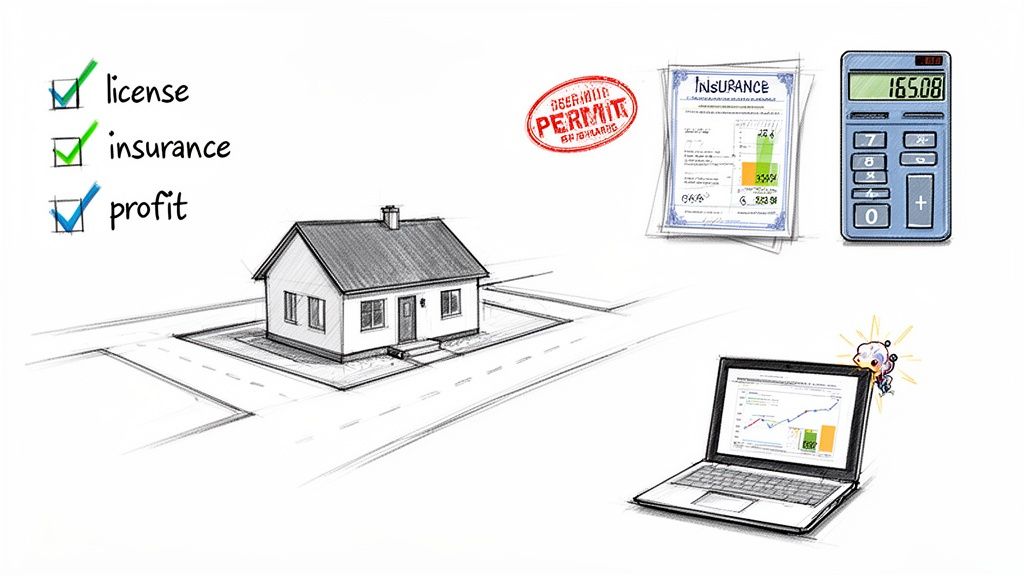
Turning your hosting idea into a successful reality starts by building a rock-solid business framework. So many new hosts get caught up in the fun stuff—decor, amenities, catchy listing names—while completely overlooking the boring-but-critical pieces that protect their investment.
Viewing your rental through a business lens from the get-go is the only way to set yourself up for long-term success. And no, your first step isn't buying fluffy new towels; it's understanding the rules of the game. The regulations for short-term rentals (STRs) can be a tangled mess, varying wildly from one city, county, or even neighborhood to the next.
Navigating Local Laws and Licensing
Before you do anything else, you need to become an expert on your local government's website. Seriously. Search for terms like "short-term rental ordinance," "vacation rental permit," or "hotel occupancy tax." What you discover here will dictate your entire strategy.
- Permits and Licenses: Most cities will require you to get a specific business license or STR permit. Expect an application process that might involve fees, inspections, and even proof of residency.
- Zoning Restrictions: Don't get tripped up by zoning. Some areas flat-out prohibit or restrict STRs in residential zones. Ignoring this is a quick way to get hit with massive fines.
- Occupancy Taxes: Get ready to play hotel. You'll almost certainly need to collect and remit local and state occupancy taxes. While Airbnb often automates this, the ultimate responsibility to make sure it's being done correctly is yours.
Blowing off these rules is the fastest way to get your operation shut down before it even gets started. This is a non-negotiable part of the deal.
Securing the Right Insurance Coverage
Let's be crystal clear: your standard homeowner's or renter's insurance policy is not going to cut it. Not even close. Nearly all of these policies include a "business activity exclusion," which means any claim related to your Airbnb—from a guest injury to property damage—will likely be denied.
Your standard insurance policy sees commercial hosting as a completely different category of risk. Relying on it is a huge financial gamble. Proper STR insurance isn't just a good idea; it's essential asset protection.
You need a specific short-term rental insurance policy. These are built from the ground up to cover the unique risks that come with paying guests. And while Airbnb provides its Host Protection Insurance, you should only view it as secondary coverage, not a replacement for your own policy. A dedicated STR policy offers far more comprehensive protection for both liability and your property itself.
Conducting a Realistic Profitability Analysis
With the legal and insurance boxes checked, it's time for the moment of truth: will this actually make money? A real profitability analysis is much deeper than just guessing at a nightly rate. To build a successful business, you have to constantly look for new strategies to increase Airbnb bookings and keep your calendar full, just like seasoned hosts do.
Get granular with your forecast and factor in everything:
- Startup Costs: This includes furniture, professional photography (a must!), smart locks, and that initial big shop for all your amenities.
- Recurring Expenses: Think mortgage or rent, utilities, insurance, cleaning fees between guests, restocking supplies, and routine maintenance.
- Market Rates: Dive into data from tools like AirDNA. You need to understand the real occupancy rates and average daily rates (ADRs) for comparable listings in your area—and how they change with the seasons.
- Contingency Fund: Stuff will break. It's not a matter of if, but when. Set aside a rainy-day fund for those inevitable, unexpected repairs.
By treating these steps as the bedrock of your business, you're not just getting ready to host; you're building a sustainable operation designed to last. If you're looking for a deeper dive, our guide on starting a vacation rental business offers a complete roadmap. Embracing professional practices and tools from the beginning, including AI for things like marketing, will give you an immediate edge.
Preparing Your Property for Five Star Stays
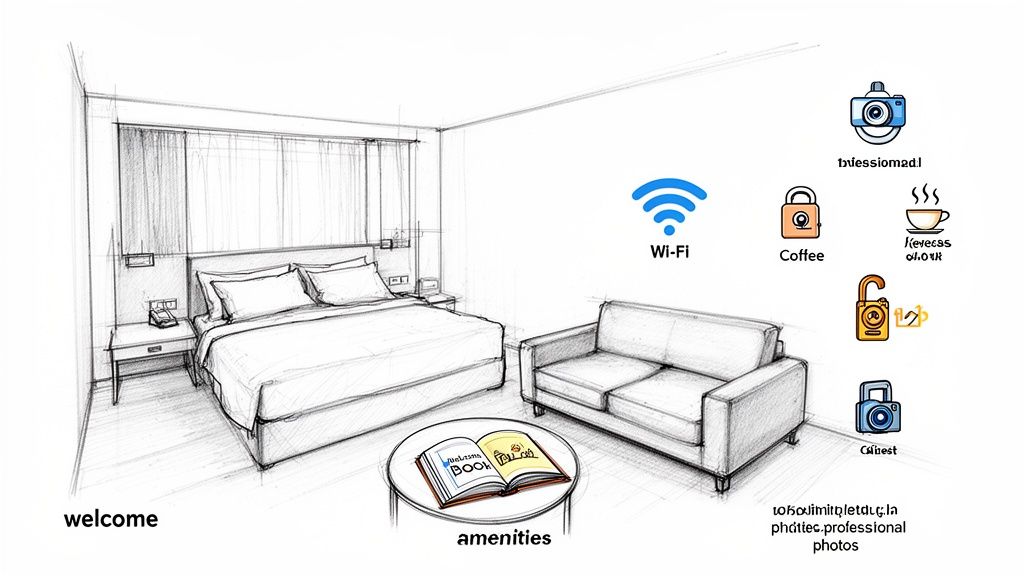
With the legal and tax paperwork squared away, it’s time to shift gears to the fun part: the physical space. Turning a house into a destination that consistently pulls in five-star reviews is a bit of an art form. It's all about blending smart design with practical, guest-focused details to create an experience that feels special.
Forget just giving the place a quick clean. You need to think of it as a high-performing asset. Every single decision—from the sofa you pick to the coffee you provide—impacts the guest experience, your durability, and, ultimately, your bottom line. Nail this phase, and you're well on your way to becoming a host who gets rave reviews and repeat bookings.
Furnishing for Photos and Durability
Let's be real: your furniture has two jobs. It needs to look incredible in photos, and it needs to survive the reality of constant guest turnover. A cheap, flimsy piece might seem like a win for your budget upfront, but it'll cost you dearly in the long run with replacements and the inevitable bad review when it breaks.
Instead, invest in pieces that are both stylish and sturdy. Think solid wood dining tables, commercial-grade bed frames, and sofas upholstered in performance fabric that can handle a spill or two. These items create that polished, "wow" factor that stops scrollers in their tracks while ensuring your investment lasts for years, not just a few booking cycles.
When you're shopping for furniture, ask yourself two simple questions: "Will this photograph well?" and "Can this survive a year of guests?" If the answer to either is no, walk away. You're looking for that perfect sweet spot where aesthetic appeal meets commercial-grade resilience.
The goal is a cohesive, inviting space that feels intentional. A well-designed room doesn't just look better; it communicates a level of care and professionalism that guests absolutely notice and frequently mention in their reviews.
Stocking Amenities That Earn Mentions
The difference between a perfectly fine stay and a truly great one often comes down to the little things. Of course, essentials like clean towels and Wi-Fi are non-negotiable. But it's the thoughtful extras that really elevate the experience and get those coveted shout-outs in five-star reviews. These are the "surprise and delight" items that show you've anticipated your guests' every need.
Think about what makes a stay genuinely convenient and comfortable:
- A well-stocked kitchen: Don't stop at salt and pepper. Include a bottle of quality olive oil, a decent variety of spices, and good coffee with a couple of brewing options, like a drip machine and a French press.
- Convenience items: A universal phone charger by the bed, a portable Bluetooth speaker for some tunes, and a full-size hair dryer (not a tiny travel one!) make a huge impact for very little cost.
- Family-friendly touches: If you're aiming for the family market, providing a high chair, a pack-n-play, and a few simple toys or books can be an absolute game-changer for parents on the road.
Always consider your ideal guest persona and what would make their stay just a little bit easier. It's these thoughtful amenities that transform a basic rental into a memorable hospitality experience. Here’s a quick checklist to help you distinguish the basics from the standouts.
Essential vs. Standout Amenities Checklist
| Category | Essential Amenity | Standout Amenity (to boost appeal) |
|---|---|---|
| Kitchen | Basic cookware, dishes, salt, pepper | Quality coffee maker, sharp knives, olive oil, spices |
| Bathroom | Towels, soap, toilet paper | Makeup towels, quality shampoo/conditioner, hair dryer |
| Bedroom | Clean linens, extra pillows, hangers | Blackout curtains, sound machine, bedside charging station |
| Tech | Wi-Fi, Smart TV with streaming apps | High-speed Wi-Fi, Bluetooth speaker, smart home controls |
Stocking up on a few of those "standout" items is a small investment that pays off big in guest satisfaction and glowing reviews.
Streamlining the Guest Experience with Smart Tech
Modern tech can smooth out so many of the little friction points in a guest's stay, making their experience seamless and your management process way easier. The single most impactful and common upgrade you can make is installing a smart lock.
This simple piece of hardware eliminates the entire hassle of key exchanges, makes lockouts a thing of the past, and seriously boosts security. You can issue each guest a unique access code that is only active for the duration of their stay, which then automatically expires at checkout. This level of automation provides peace of mind for everyone involved and immediately signals to your guests that you’re a professional, tech-savvy host.
Crafting a Listing That Converts Browsers Into Bookers
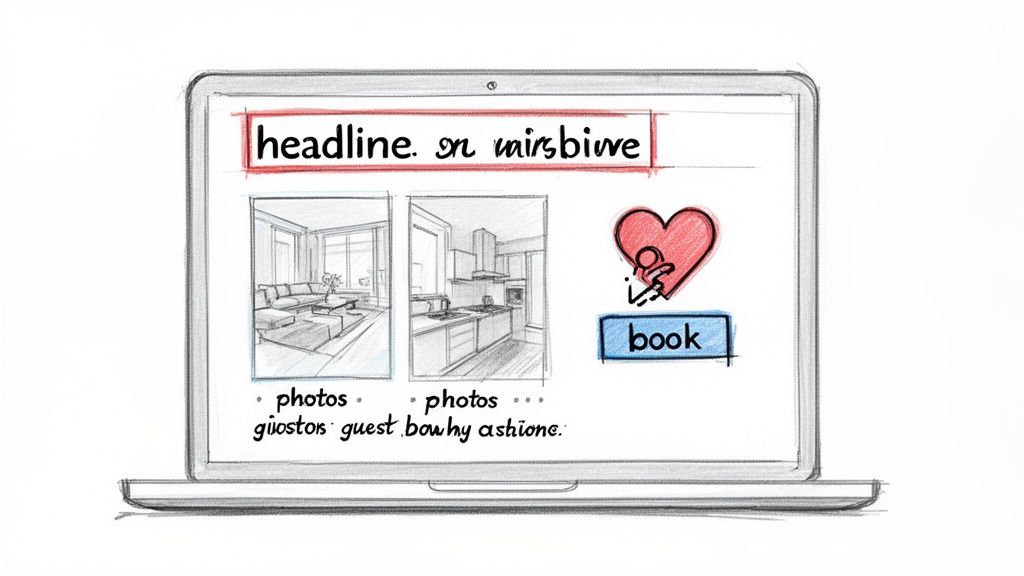
You’ve done the hard work. The property is prepped, cleaned, and ready for its first five-star review. But here’s the thing: none of that matters if your online listing is dead on arrival.
Think of your Airbnb or Vrbo listing as your digital storefront. It's your single most important marketing asset, where potential guests will decide—in just a few seconds—whether to book your place or keep on scrolling.
Creating a listing that turns lookers into bookers is less about listing features and more about selling an experience. It’s about weaving a story with compelling words and stunning photos that builds trust from the very first click. This is the final, make-or-break step to becoming a host who doesn't just get by, but absolutely thrives.
Writing Headlines and Descriptions That Actually Sell
Your headline is your first, and maybe only, chance to make an impression. Generic titles like "2BR Condo with Pool" are totally forgettable. They do nothing to showcase what makes your property special. You need to lead with the experience.
A title like "City-View Oasis with Rooftop Hot Tub & Fast WiFi" is infinitely more powerful. It instantly paints a picture and flags key amenities that appeal to specific traveler types, whether it’s a remote worker needing reliable internet or a couple looking for a romantic escape. The goal is to be specific, evocative, and laser-focused on the benefits.
Then, your description is where you seal the deal. Don't just list what you have; tell the guest how it makes their stay better.
- Instead of this: "We have a coffee maker."
- Try this: "Start your morning with a freshly brewed coffee from our Nespresso machine. We keep it fully stocked with a variety of pods for you to enjoy on the balcony."
See the difference? That small shift in language transforms a boring feature into an irresistible experience. It shows you’ve put thought into their comfort and helps them mentally place themselves in your home.
The Psychology of Photo Selection and Ordering
We're visual creatures. On booking platforms, your photos are doing 90% of the heavy lifting. High-quality, professional photography isn't a luxury; it's a non-negotiable requirement for success.
But it’s not just about quality. The order of your photos is just as critical. You have to tell a visual story that pulls the guest through your space.
Here’s a sequence that I’ve seen work time and time again for the first five photos:
- The "Hero" Shot: This is your absolute best, scroll-stopping photo. It could be a stunning living room, an epic view from the balcony, or a unique feature like a fire pit. This is what makes them click.
- The Main Living Space: Show them the heart of the home, where they'll likely spend most of their time relaxing.
- The Kitchen: A bright, clean shot that highlights its best features. Make it look ready to use.
- The Primary Bedroom: This needs to scream comfort and restfulness.
- The Primary Bathroom: Show them a sparkling clean and inviting bathroom. No one wants to see a grim, poorly-lit space.
This flow logically guides a potential booker through the core areas of your property, building their excitement and confidence with every image. Don't forget to use captions to add context and answer questions before they're even asked ("Yes, the hot tub is private and for your use only!").
Let AI Optimize Your Listing Copy
Struggling to find the right words? This is where AI tools built specifically for hosts can be a game-changer. Platforms like hostAI can analyze the top-performing listings in your specific market and then generate optimized headlines and descriptions just for you.
This technology helps you write like a seasoned pro by suggesting powerful, benefit-driven language that connects with travelers. It’s like having an expert copywriter on call, 24/7.
You just input your property’s key features and amenities, and these tools will spit out multiple versions of compelling text. It saves hours of frustrating guesswork and helps you launch with a listing that’s engineered to convert from day one.
Building Trust with Your Profile and House Rules
Your host profile and house rules might seem like an afterthought, but they are absolutely crucial for building trust. A friendly, professional profile photo and a short bio sharing a little about yourself makes a world of difference. It reminds guests they're booking with a real person, not some faceless company.
House rules are just as important for protecting your property. The key is to be clear and direct, but without sounding hostile.
- Be Specific: Instead of a generic "No parties," try "We welcome quiet gatherings but do not allow parties or unapproved events. For the peace of our neighbors, a noise monitoring device is installed."
- Explain the "Why": People respond better to rules when they understand the reason. "Please remove your shoes inside to help us keep the new carpets clean for all our guests" is much more effective than a blunt "No shoes allowed."
Well-defined rules attract the kind of respectful guests you want and set clear expectations from the start, paving the way for a smoother, five-star stay for everyone.
Mastering Your Pricing and Revenue Strategy
Let’s be honest: setting your price is the moment your Airbnb venture goes from a side hustle to a real business. If you get it wrong, you’re either leaving a ton of cash on the table or staring at a painfully empty calendar. But when you nail it, you unlock a steady flow of bookings and maximize what you can earn.
A "set it and forget it" approach to pricing just won't cut it. The market is alive, constantly reacting to local festivals, holiday weekends, and seasonal demand. This is where dynamic pricing becomes your most powerful tool.
Get to Know Your Market and Your Competition
Before you can even think about picking a number, you have to become an expert on your local market. The easiest way to start is by doing a little old-fashioned snooping. Pop open an incognito browser window and search for listings just like yours, right in your neighborhood.
Look at what your direct competitors are charging for upcoming weekends, major holidays, and even a few months down the road. This quick manual check gives you a real-time pulse on what's happening. But to build a truly solid strategy, you need to go deeper than just a surface-level glance.
The numbers tell a compelling story. Becoming an Airbnb host can be a serious money-maker, with the average U.S. host pulling in $44,235 a year. Across the country, occupancy rates are holding at 56.2%, and the average daily rate (ADR) is a healthy $173, even as more properties enter the market. What's really interesting is that hosts managing 3-10 properties are outperforming single-unit owners, proving that a professional, data-driven approach pays off. You can find more insights on these Airbnb market trends at hometeamluxuryrentals.com.
Don’t just copy what the host next door is doing. Their property might have a killer view that you don’t, or maybe their calendar is wide open because they’ve overpriced themselves into oblivion. Your goal is to pinpoint the perfect price for your specific property using real data.
Let Dynamic Pricing Tools Do the Heavy Lifting
Trying to manually adjust your rates every single day is a fast track to burnout. This is exactly why automated dynamic pricing tools are a non-negotiable for any serious host. These platforms plug right into your Airbnb calendar and use powerful algorithms to crunch massive amounts of market data on your behalf.
They automatically fine-tune your nightly rate based on dozens of factors, including:
- Seasonality: Your price should climb during peak season and dip during the slow months, all without you lifting a finger.
- Day of the Week: Weekend nights almost always command a higher price than a Tuesday—the software handles that for you.
- Local Events: Is a huge conference, concert, or festival coming to town? Your rates should surge automatically to match that spike in demand.
- Booking Lead Time: The tool can adjust prices to fill last-minute gaps or charge a premium for dates booked far in advance.
Using a tool like this ensures you’re never underpriced when demand is high or overpriced when things are quiet. To really get into the weeds of how this technology works, check out our full guide on what is dynamic pricing and how it can increase your revenue. It's the single most effective way to automate and optimize your income.
Smartly Structure Your Fees and Discounts
Your nightly rate is just one part of the equation. The way you handle fees and discounts can dramatically affect both your bottom line and how attractive your listing is to potential guests.
Cleaning Fees This is one of the hottest debates in the hosting world. The key is to find a balance. Your fee needs to cover the actual cost of your cleaner's time and supplies, but it shouldn't be so high that it scares away guests looking for a shorter stay. A solid rule of thumb is to charge what you pay. Guests are savvy—they can spot a padded cleaning fee from a mile away, so don't treat it as a second profit center.
Strategic Discounts When used thoughtfully, discounts are a powerful psychological tool. Offering a small price break for weekly (5-10%) or monthly (15-25%) stays is an incredibly effective tactic. It encourages longer, more stable bookings, which for you means less turnover, lower cleaning costs, and fewer empty nights. It's a simple win-win for you and your guests.
Scaling Your Operations and Driving Direct Bookings
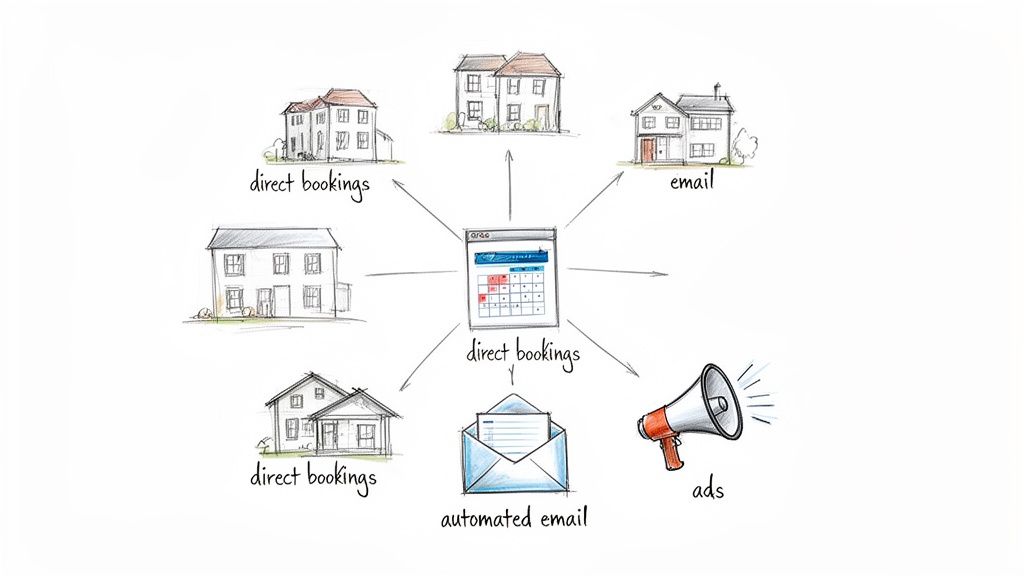
Getting that first listing up and running is a huge win, but let's be honest, it's just the beginning. To build a truly sustainable short-term rental business, you have to think bigger. The real goal is to evolve from being just another host into a genuine hospitality brand.
What does that mean? It means taking back control. It means reducing your reliance on third-party platforms and owning the relationship with your guests—and your revenue. The key to unlocking this next level of growth is building your own independent sales channel. This is the move that turns you from a host on Airbnb into a host who owns a scalable, professional operation.
Why You Need a Direct Booking Website
Relying completely on platforms like Airbnb or Vrbo is like building a beautiful house on rented land. You're at the mercy of their algorithm changes, their ever-increasing commission fees, and their rules. Launching your own direct booking website is the single most powerful step you can take to secure your business's future and build real brand equity.
Right off the bat, a dedicated site lets you sidestep the hefty service fees that Online Travel Agencies (OTAs) charge. We're talking anywhere from 15% to 20% of your booking revenue. Just imagine adding that chunk of cash directly back to your bottom line with every single reservation.
But owning your booking channel does more than just pad your profit margins. It puts you in the driver's seat. You get complete control over your brand, your cancellation policies, and—most importantly—your direct relationship with your guests. You're no longer just a listing number; you're a distinct brand they know, trust, and can book with again and again.
This independence is absolutely crucial for long-term stability. It turns one-time visitors into a reliable stream of repeat business that belongs entirely to you.
Building Your Brand and Driving Traffic
Of course, a website is just an empty storefront without visitors. Once your digital front door is open, the real work of marketing begins. This is where you start building a loyal following and actively pulling traffic away from the big platforms and straight to your site.
The foundation of this entire strategy is your email list. Every guest who stays with you, whether they booked through an OTA or directly, is an opportunity to capture an email address (just make sure you're following privacy rules).
- Automated Email Marketing: You don't need anything fancy. Set up a simple, automated email sequence. A post-stay "thank you" message that includes a small discount for their next direct booking can work wonders.
- Targeted Ad Campaigns: Get smart with platforms like Facebook and Google. You can run hyper-targeted ads, creating "lookalike" audiences based on your past guests or zeroing in on users who have shown interest in traveling to your area.
- Content and Social Proof: Use a blog and your social media channels to show off what makes your property and your location special. Share those glowing five-star reviews and photos guests have tagged you in. This builds trust and entices new visitors like nothing else.
These efforts combine to create a marketing engine that consistently funnels new and returning guests directly to your website, bypassing the OTAs completely. For a deeper dive, we've laid out more advanced strategies in our guide to creating a high-converting Airbnb direct booking website.
Let AI Automate Your Growth
Feeling overwhelmed? Building a website, running ad campaigns, and managing email lists can feel like a separate full-time job. This is exactly where host-focused AI tools come in to supercharge your efforts. They can automate the entire growth playbook, letting you get back to what you do best: providing an incredible guest experience.
Modern platforms now offer a whole suite of integrated tools designed to do the heavy lifting for you. Picture a system where you can:
- Instantly Generate a Website: AI-powered tools like hostFront can spin up a professional, search-engine-optimized direct booking website in minutes. It intelligently pulls your existing listing details and photos to create a site that's built from the ground up to turn lookers into bookers.
- Automate Email Outreach: Forget manual follow-ups. Tools like hostMail can take over your email marketing, automatically sending personalized messages, re-engaging past guests with special offers, and building that all-important loyalty without you lifting a finger.
- Run Hands-Free Advertising: The most complex piece of the puzzle—ad management—can now be automated. Services such as hostDistro create and manage targeted ad campaigns across multiple platforms, intelligently shifting your budget to the channels that deliver the best return on investment.
By plugging into an integrated system, you're not just saving a ton of time. You're deploying a professional-grade marketing strategy that was once only accessible to massive hotel chains. This is how modern hosts scale their operations, boost profit margins, and build a brand that lasts.
Got Questions? Let's Talk Real Answers for New Hosts
Jumping into the world of short-term rentals feels a lot like opening a fire hydrant of questions. That’s completely normal. As you get started on this journey, let's clear up some of the most common uncertainties with straight-up, practical answers.
What Kind of Money Can I Actually Make?
This is the big one, isn't it? Your earning potential is all over the map, depending heavily on your property’s location, size, and how sharp you are at managing it. You might see reports claiming U.S. hosts average around $44,000 annually, but honestly, that number is pretty misleading. A rustic cabin near a national park is playing a completely different game than a chic apartment in the city center.
Real success comes down to three things: optimizing your listing until it sings, using dynamic pricing like a pro, and consistently earning those precious five-star reviews. Your first move should be to forget the national averages and do some local recon. Use a tool like AirDNA to see what comparable properties in your neighborhood are actually charging per night, what their occupancy rates look like, and what they’re pulling in. That’s how you build a financial projection based in reality.
What Are the Biggest Legal Landmines I Should Know About?
The two legal hurdles that trip up new hosts the most are ignoring local regulations and not having the right liability coverage. Getting either of these wrong can lead to some seriously painful financial penalties or legal headaches.
Your absolute first priority is to dig into your city's specific short-term rental laws. We're talking zoning, permits, lodging taxes—the whole shebang. Do it right from day one. Second, you absolutely must get proper short-term rental insurance. Your standard homeowner's policy almost certainly won’t cover business activities, which leaves you dangerously exposed if something goes wrong.
Think of your rental agreement and house rules as your first line of defense. A clear, legally-sound agreement manages guest expectations, creates a contractual understanding, and can be your saving grace if there's ever a dispute or damage.
How Can I Put My Airbnb on Autopilot and Get Some Time Back?
Automation is the secret weapon for scaling your business without completely burning out. You don't need to go all-in at once. Start with a few simple, high-impact tools that take care of the repetitive stuff, freeing you up to focus on what really matters—the guest experience.
- Smart Locks: Seriously, stop messing with key handoffs. Give guests a unique, temporary access code and never worry about a lost key again.
- Scheduled Messages: Use Airbnb's own built-in tool. Automate your check-in instructions, a quick mid-stay check-in ("How's everything going?"), and check-out reminders. It’s a game-changer.
- Dynamic Pricing Tools: Let an algorithm do the heavy lifting. These tools adjust your rates daily based on real market demand, saving you hours of manual guesswork.
When you're ready to really level up, platforms like hostAI can put your marketing and direct booking strategy on autopilot. This means AI-powered websites (hostFront), automated email campaigns (hostMail), and even running your digital ads (hostDistro).
Should I Manage This Myself or Hire a Property Manager?
This really boils down to a classic trade-off: your time versus your profit margin.
If you self-manage, you keep a much bigger slice of the revenue pie. The catch? You're on the hook for everything—late-night guest calls, coordinating cleaners, fixing the Wi-Fi. It’s a great option if you live nearby and have the flexibility to be hands-on.
Hiring a property manager essentially turns your rental into a passive investment. They'll handle the entire operation, but it'll cost you, typically somewhere in the 20-30% range of booking revenue. This is perfect for hosts who live far away or simply want a hands-off experience.
There's also a popular middle ground: a hybrid approach. You self-manage the core business using powerful automation tools but outsource the on-the-ground tasks like cleaning and maintenance. It strikes a fantastic balance between control and convenience.
Ready to stop leaving money on the table and build a scalable, professional STR brand? hostAI provides the tools you need to automate your marketing, drive more direct bookings, and take back control of your business. Discover how our AI-powered platform can double your direct revenue.