
dynamic pricing
What is Dynamic Pricing? A Practical Guide to Maximizing Rental Revenue
Posted on Jan 2, 2026
Dynamic pricing isn't some complex, abstract concept. At its core, it's about adjusting your rental rates in real time based on what's actually happening in the market—think demand, seasonality, and local events.
It’s a lot like how airlines price tickets. The cost for the exact same seat on the same plane can vary wildly depending on when you book and how popular that flight is. This is the complete opposite of a static, "one-price-fits-all" approach that never changes, no matter what.
Unlocking Revenue with Smart, Flexible Rates
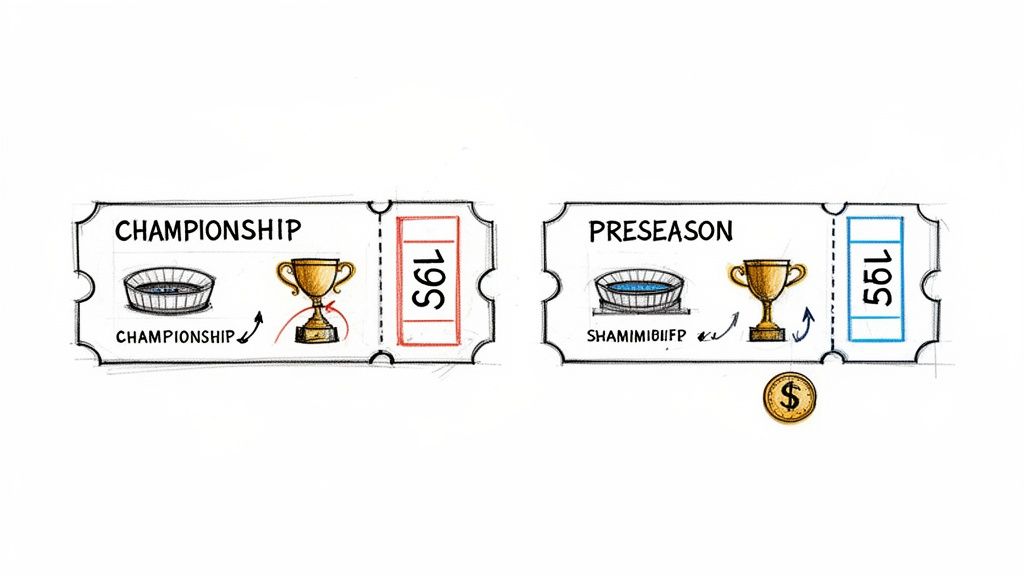
Imagine trying to sell every ticket to a championship game for the same price as a preseason match. You'd leave a staggering amount of money on the table for the championship and be lucky to sell a single ticket for the preseason game. This is the fundamental flaw of using static pricing in the short-term rental world.
Dynamic pricing completely flips this outdated model on its head. Instead of a "set it and forget it" rate, it treats each night at your property as its own unique product with its own distinct value.
How It Works in Practice
At its heart, this strategy uses data to find the perfect price for any given night, automatically. It's a smart system that's constantly analyzing real-world signals to keep your rates competitive and, most importantly, profitable.
Here are the key factors it's always watching:
- Local Demand: A big concert, a major conference, or a popular festival can make a stay at your property exponentially more valuable.
- Seasonality and Holidays: It's a no-brainer that a beach house should command a much higher rate in July than it does in January.
- Competitor Pricing: The system keeps an eye on what similar properties in your area are charging, so you're never priced out of the market.
- Day of the Week: Weekend nights are almost always in higher demand and can support higher prices than a Tuesday night.
But this isn't just about jacking up prices during peak season. It's also about strategically lowering them during slower periods to capture bookings you would have otherwise missed entirely. By constantly adapting to the market, you ensure you're capturing the maximum possible revenue every single day of the year.
A quick side-by-side comparison makes the difference crystal clear.
Static Pricing vs Dynamic Pricing at a Glance
| Feature | Static Pricing (The Old Way) | Dynamic Pricing (The Smart Way) |
|---|---|---|
| Rate Strategy | One price for all seasons. | Prices change based on real-time data. |
| Revenue Potential | Leaves money on the table. | Maximizes revenue on every booking. |
| Occupancy | Inconsistent; empty during slow periods. | Higher occupancy year-round. |
| Competitiveness | Quickly becomes uncompetitive. | Always aligned with the market. |
| Manual Work | "Set it and forget it." | Automated, data-driven adjustments. |
The takeaway is simple: one approach is reactive and leaves you guessing, while the other is proactive and lets data do the heavy lifting.
The goal is simple: stop guessing what a night is worth and start letting data-driven insights dictate the optimal price, ensuring you never leave money on the table again.
Platforms like hostAI take this a step further by applying this pricing intelligence directly to your own booking website. This allows you to offer personalized rates that can seriously boost your direct bookings and build lasting guest loyalty, giving you a powerful edge over the competition.
How the Engine Behind Smart Pricing Actually Works
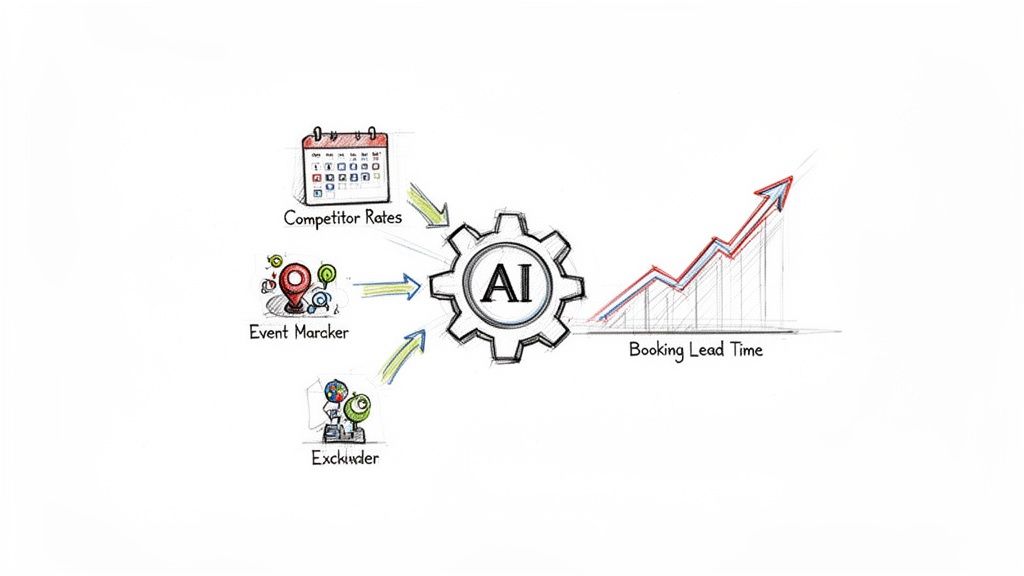
To really get what dynamic pricing is, we have to look under the hood. It’s not just a fancy calculator. Think of it more like a sophisticated data analysis machine that’s constantly learning, adjusting, and getting smarter over time.
This engine is hungry for information, crunching multiple data points at once to land on the perfect price for every single night at your property. It’s a massive leap from the old way of just setting a "weekday rate" and a "weekend rate."
The Key Data Inputs Fueling the Engine
The system's real power comes from its ability to analyze a wide mix of constantly changing data. Without these inputs, any pricing engine is just guessing in the dark.
Here are the crucial pieces of information it uses to make smart decisions:
- Real-Time Competitor Rates: It keeps a close eye on what similar properties in your neighborhood are charging. This ensures your rates are always competitive but never leave money on the table.
- Local Demand Signals: The system is always on the lookout for local events—concerts, big conferences, holidays, and even school breaks—that send demand soaring and justify higher rates.
- Booking Lead Times: It analyzes how far out guests are booking. A sudden rush of long-range bookings is a clear signal of strong demand, giving you the green light to raise prices early.
- Historical Performance Data: Your own property’s history is a goldmine. Past booking patterns, occupancy rates, and pricing wins create a vital baseline for predicting what’s next.
By weaving all these elements together, the engine builds a complete, real-time picture of the market. This is what allows it to stop reacting to the market and start proactively shaping your pricing strategy.
Rules vs. Algorithms: The Two Faces of Automation
It's important to know that not all automated pricing tools are the same. The difference between a basic rule-based system and a true AI-driven model is night and day.
A rule-based system runs on simple "if-then" commands that you set up yourself. For example, you might create a rule like, "If a weekend is unbooked 7 days out, drop the price by 15%."
Sure, it's better than doing nothing, but it's incredibly rigid. It can’t react to a surprise event and is completely dependent on your ability to predict every single possible scenario.
A true dynamic pricing algorithm, however, doesn't just follow rules—it learns. It analyzes vast datasets to identify complex patterns and correlations that a human would never spot, allowing it to adapt its strategy in real-time.
An AI-driven algorithmic model is a different beast entirely. It uses machine learning to understand the subtle connections between all those data points. It might notice, for example, that bookings for your three-bedroom home spike the moment a specific annual conference is announced—long before hotels even think about raising their prices.
This ability to learn gives it a massive advantage. To see how these different pricing methods fit into a bigger picture, check out our detailed guide on building a comprehensive vacation rental pricing strategy. The system is always adapting, fine-tuning its recommendations to become more accurate and effective over time.
How the Technology Thinks and Adapts
Let’s walk through a quick example. Imagine a huge music festival is announced for a weekend six months from now.
A simple rule-based system would sit on its hands until one of your pre-set triggers is hit, like occupancy reaching 70%. By then, you've already missed out on the initial wave of die-hard fans booking way in advance.
An AI-driven system, on the other hand, would spot the event announcement and the instant jump in travel searches for your area. It would immediately analyze competitor rate shifts and pull historical data from similar events to intelligently raise your prices, capturing maximum revenue from those super-motivated early bookers.
This is the heart of modern dynamic pricing: the ability to learn, predict, and adapt. It’s not about sticking to a script; it’s about having a pricing co-pilot that truly understands the market’s rhythm and keeps your property perfectly priced for peak performance.
Why Dynamic Pricing Is a Necessity, Not a Luxury
Let's move past the technical stuff and get straight to the bottom line. In the cutthroat world of short-term rentals, dynamic pricing isn't some fancy add-on for the big players anymore—it’s a basic requirement for survival and growth.
Sticking with a static, set-it-and-forget-it price is like trying to drive down the highway while only looking in your rearview mirror. You’re always reacting to what’s already happened, not positioning your property for what’s coming next.
This reactive approach leads to two massive, revenue-killing mistakes. Either you leave your rates too low for a high-demand weekend and let money slip through your fingers, or you keep them too high during a slow week and watch your calendar stay depressingly empty. Dynamic pricing fixes this, ensuring your property is always priced to make the most money possible, every single night.
Boosting Your Most Important Metrics
The real magic of dynamic pricing shows up in your key performance indicators (KPIs). For any property manager, the two metrics that matter most are your Average Daily Rate (ADR) and Revenue Per Available Night (RevPAN). A truly smart pricing strategy doesn't just improve one at the expense of the other; it lifts them both.
- Average Daily Rate (ADR): This is the average you earn for every night a guest actually stays with you. Dynamic pricing naturally pushes this number up by cashing in on peak demand, making sure you aren't leaving money on the table when people are willing to pay more.
- Revenue Per Available Night (RevPAN): This gives you the bigger picture. It's your total revenue divided by all the nights you had available, occupied or not. Dynamic pricing boosts RevPAN by smartly dropping rates just enough to fill those awkward calendar gaps that would otherwise earn you nothing.
A huge piece of this puzzle is figuring out strategies to raise prices without alienating guests. This is where dynamic pricing shines, because every price increase is backed by hard market data, not just a hunch. It gives you a solid, defensible reason for your rates.
The Quantifiable Impact of Switching
Moving from static to dynamic pricing isn't just a theoretical win; the results are real, measurable, and often massive. It transforms pricing from a gut-feel guessing game into a data-driven science that consistently delivers.
In today's market, manual pricing means you are either underpriced during peak demand or overpriced in the slow season. Dynamic pricing ensures you capture the maximum possible revenue every single night.
The proof is in the numbers. A wide-ranging study of 541 listings across 34 countries found that hosts who switched to dynamic pricing saw an incredible 46.2% jump in gross bookings. This happens because the algorithm knows precisely when to raise prices for a big event and when to drop them just enough to snag a last-minute booking during a quiet spell.
Even better, these properties saw their revenue increase by up to 36.3%, showing that this strategy hits the bottom line, hard. The data makes it crystal clear: the question is no longer if you should use dynamic pricing, but how fast you can get it running to stop leaving cash on the table.
Avoiding the Common Pitfalls of Automated Pricing
Bringing a dynamic pricing tool into your business is a huge step forward, but it’s not a magic wand. Like any powerful tool, its real value comes from knowing how to use it right. There's a bit of a learning curve, but getting past it is what unlocks its full revenue-generating power.
The biggest hurdles usually come from a reluctance to fully trust the data. The most successful property managers learn to collaborate with their pricing engine, not fight against it. If you can steer clear of a few key mistakes from the get-go, your switch to automated pricing will be smoother and a whole lot more profitable.
Setting Unrealistic Price Boundaries
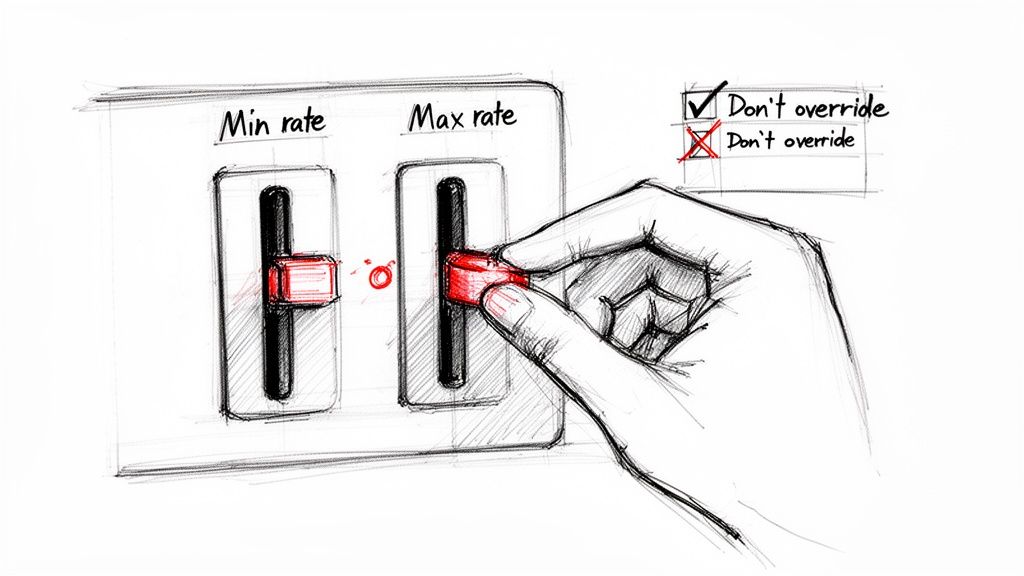
One of the fastest ways to hamstring your pricing strategy is to set your rate boundaries too tight. This usually means setting your minimum rate way too high or your maximum rate way too low, which basically ties the algorithm's hands behind its back.
Think of it like putting a speed limiter on a race car—it’s never going to perform at its peak.
- A High Minimum Rate: If your floor price is too ambitious, you're going to kill your occupancy during the slow season. The algorithm might see a chance to snag a last-minute booking that keeps a night from going empty—it's still profitable, just lower than usual. But it can't make that move if your minimum is set too high.
- A Low Maximum Rate: On the flip side, capping your max rate too low means you're just leaving cash on the table during peak demand. When a huge festival is announced and demand goes through the roof, a low ceiling prevents the system from capturing the real market value of your property at that moment.
The trick is to set a true floor price (the absolute lowest you’re willing to accept) and a realistic, even aspirational, ceiling. Then, step back and let the algorithm do its work within that range.
Constantly Overriding the System
It's tempting to jump in and manually override a suggested price based on a gut feeling. We've all been there. But making a habit of it completely defeats the purpose of having a data-driven strategy in the first place.
Your pricing engine is crunching hundreds of data points—competitor rates, booking pace, local events, historical trends—to land on a number. A manual override is often based on just one: your intuition.
Remember, the system is built to spot opportunities and trends that are nearly impossible for a person to see. Trusting the process, especially when you're starting out, gives the algorithm the data and freedom it needs to learn and optimize for your specific properties.
Forgetting to Update Property Information
A dynamic pricing tool is only as smart as the data you feed it. A classic, and often overlooked, mistake is failing to tell the system about important updates to your properties.
Did you just install a brand-new hot tub, add a slick fire pit, or finish a stunning kitchen renovation? These are the kinds of upgrades that directly boost your property's value and its earning potential. If you forget to log these changes, your pricing engine is working with old news, likely undervaluing your rental and setting rates lower than they should be.
It’s just as important to make sure your pricing strategy lines up with your booking rules. For example, if you require a strict seven-night minimum during a holiday week, the algorithm needs to know that. This allows it to price the week as a single, high-demand block instead of as seven individual, less appealing nights. Keeping your system in the loop ensures its recommendations are always accurate and in sync with how you actually run your business.
To help you get started on the right foot, we've put together a quick guide on the do's and don'ts of dynamic pricing.
Dynamic Pricing Do's and Don'ts
| Do | Don't |
|---|---|
| Set wide price boundaries to give the algorithm flexibility. | Set a minimum rate that's too high for the low season. |
| Trust the data, especially during the initial learning period. | Constantly override the system based on gut feelings. |
| Regularly update property info, including new amenities. | Forget to input changes that increase your property's value. |
| Align pricing with booking rules like minimum night stays. | Let your pricing and booking rules get out of sync. |
| Monitor performance and make small, strategic adjustments. | Make drastic, frequent changes without letting the system adapt. |
Following these simple guidelines will help you avoid the most common frustrations and get the most out of your investment from day one.
Driving More Direct Bookings with Personalized Pricing
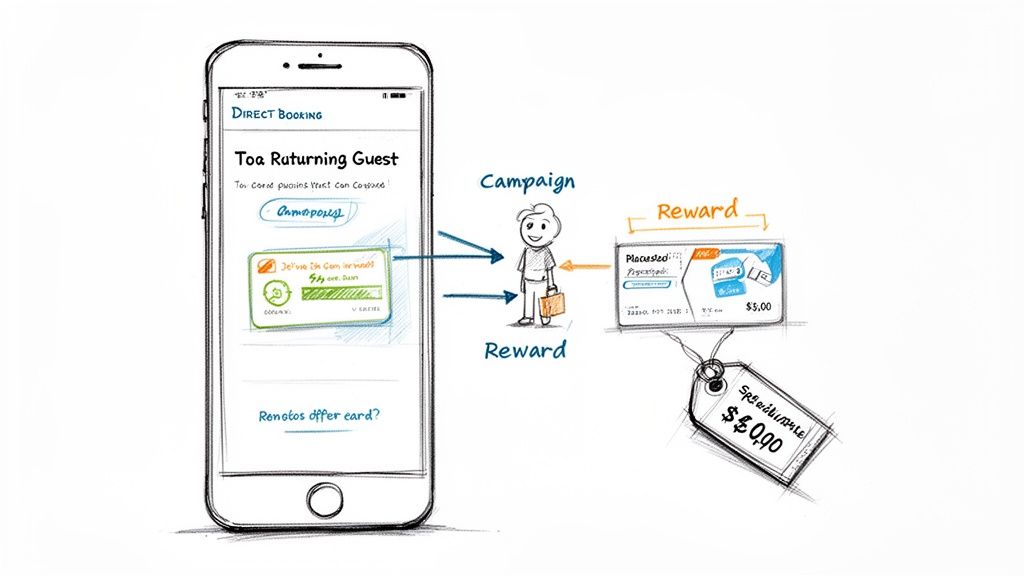
Standard dynamic pricing is a must-have for keeping your listings competitive on the big OTAs like Airbnb and Vrbo. It ensures you’re capturing market rates and keeping your calendar full across all channels.
But the real game-changer—the strategy that separates the fast-growing brands from everyone else—is taking that pricing intelligence and applying it to your most valuable asset: your direct booking website.
This is where dynamic pricing transforms from a simple revenue tool into a powerful engine for building guest loyalty and long-term profitability. Instead of just reacting to market-wide demand, you can create proactive, personalized prices that speak directly to individual guests. You stop just filling rooms and start building a sustainable, commission-free business.
The goal shifts from just hitting occupancy targets to actively shaping your revenue mix, pulling more bookings away from commission-heavy platforms and into your own ecosystem.
Beyond One-Size-Fits-All Pricing
Your direct booking site is your home turf, and that gives you a massive advantage: you know who's visiting. Unlike the anonymous traffic on an OTA, you can identify repeat guests, see who came from a specific marketing campaign, or even track who abandoned a booking at the last minute. This data is gold.
With a platform like hostAI, you can use this information to create targeted offers that feel exclusive and valuable. It’s about making your website the most attractive place to book your property, not just another listing in a sea of options. Suddenly, your pricing becomes a strategic marketing tool.
Here are a few ways this works in the real world:
- Reward Loyal Guests: Automatically offer a 5% discount to guests who have stayed with you before. It’s a simple gesture that builds incredible loyalty and makes them feel truly valued.
- Targeted Campaign Offers: Running a campaign on social media? Create a unique promo code just for visitors who click through from that ad.
- Cart Abandonment Incentives: If a guest starts to book but gets distracted, you can trigger an automated email with a small, time-sensitive discount to nudge them over the finish line.
By personalizing rates on your own website, you transform pricing from a blunt instrument into a precision tool. It allows you to reward the right behaviors, build lasting guest relationships, and directly influence booking decisions.
Creating Irresistible Direct Booking Packages
Personalized pricing isn't just about shaving a few dollars off the nightly rate. Your direct channel gives you the freedom to get creative and bundle stays with unique local experiences—creating packages that OTAs simply can't compete with. This strategy adds immense perceived value and gives guests a compelling reason to skip the third-party sites entirely.
Imagine offering a "Wine Lover's Weekend" that includes a two-night stay plus a curated tour of a local vineyard. Or a "Family Adventure" bundle that pairs your property with discounted tickets to a nearby attraction. These offers aren't just about saving money; they're about selling a complete experience.
This approach lets you partner with other local businesses, elevate the guest experience, and build a powerful competitive moat around your brand. You’re not just a place to stay; you become the gateway to an unforgettable trip. For a deeper dive, explore how the right short-term rental booking software can make managing these complex offers simple and effective.
The Financial Impact of Shifting Your Channel Mix
At the end of the day, every direct booking represents a significant financial win. By avoiding OTA commissions, which can easily eat up 15% to 20% of your revenue, you dramatically increase your net profit on every single stay. This isn't just a small saving; it's a fundamental shift in your business's profitability.
When you use personalized pricing to nudge even a small percentage of bookings from OTAs to your direct site, the impact on your bottom line is immediate and substantial. The money saved on commissions can be reinvested into property upgrades, marketing, or simply enjoyed as higher profit.
This strategy empowers you to build a resilient, independent brand that owns its guest relationships and controls its own financial destiny.
The Future of Vacation Rental Revenue Management
The era of “set it and forget it” seasonal rates is officially over. Today, data-driven, automated pricing isn’t some high-tech advantage reserved for massive operators—it’s the new standard for anyone serious about professional vacation rental management.
Making the switch from guesswork to an informed, responsive strategy is the single most powerful move you can make to secure your business’s financial health and stay ahead of the curve. It’s about stopping the constant reaction to the market and starting to anticipate its next move.
When you truly understand what dynamic pricing is and get it right, your properties are always positioned to capture their true value. No more leaving money on the table during peak holidays or letting your calendar sit empty in the slow season. It’s about making smarter, faster decisions backed by real-time data, not just a gut feeling.
Embracing Data-Driven Success
The most successful operators have already made this leap, and the numbers don't lie. This isn’t a passing trend; it's a fundamental change in how our industry works.
A recent Hostaway report revealed that a staggering 62% of vacation rental managers now use dynamic pricing software to adjust their rates. Even more telling, the same report found that 40% of hosts using this tech successfully boosted both their occupancy and their Average Daily Rate (ADR). This shatters the old belief that you have to sacrifice one for the other. You can dig into more insights from the Hostaway Summer Report here.
This rapid, widespread adoption sends a clear signal: pricing your properties by hand is quickly becoming a liability. The question is no longer if you should automate, but how you can master this technology to outmaneuver the competition.
This strategic shift does more than just boost your numbers; it transforms your entire operation. By automating the heavy lifting of market analysis, you free up precious time. Time you can now spend on what really matters—enhancing the guest experience, marketing your brand, and growing your portfolio. It's the cornerstone of any modern, resilient vacation rental revenue management system.
Your Path to Optimized Revenue
Getting started with this technology is the first step, but truly mastering it is what sets your brand apart from the crowd. An integrated solution like hostAI gives you the tools not just to implement dynamic pricing, but to perfect it for maximizing your direct revenue.
By combining broad market data with personalized offers on your own direct booking site, you build a powerful, future-proof business. It's a two-pronged approach that ensures you capture maximum revenue from every channel while building a brand that guests trust and return to again and again.
When you move beyond simple automation and toward a truly intelligent pricing strategy, you’re not just making more money today. You're building a more profitable, resilient, and successful vacation rental business for years to come.
Frequently Asked Questions About Dynamic Pricing
Even when the benefits seem clear, jumping into a new pricing technology can stir up some practical questions. Let's tackle the most common concerns we hear from property managers, so you can move forward with confidence.
Will Dynamic Pricing Devalue My Brand by Making Rates Too Low?
That's a fair question, but a well-built dynamic pricing system is designed to protect your brand, not hurt it. You always set a rock-solid minimum price floor, which acts as your safety net. This is your guarantee that rates never, ever dip below a level you're comfortable with.
The real goal here is total revenue growth, not just filling rooms on the cheap. In fact, it often means the opposite: hiking prices significantly during peak demand to capture what your property is truly worth. It’s all about earning more over the entire year, not just chasing low-ball bookings.
How Much Control Will I Have Over the Automated Pricing?
You're always in the driver's seat. Think of a dynamic pricing tool less like a full-blown autopilot and more like a data-savvy co-pilot. It gives you expert navigation based on millions of data points, but you set the destination and the no-go zones.
You set the high-level strategy, and the AI handles the tactical, moment-to-moment execution. The system works for you, not the other way around.
This means you're still in charge of the big picture:
- Setting your non-negotiable minimum and your "best-case scenario" maximum rates.
- Creating custom rules for specific holidays, local festivals, or even just weekends.
- Blocking off any dates you need for personal use or maintenance.
The AI takes these guardrails and then works its magic, optimizing the price for every single day. With a platform like hostAI, you can easily see every suggestion and—more importantly—the data behind it, ensuring the automation always lines up perfectly with your business goals.
Is Dynamic Pricing Only Effective for Large Portfolios?
Not at all. While managers with huge portfolios see massive efficiency gains, the core benefits are just as powerful for hosts with one or two properties. The fundamental advantage is the same for everyone.
It automates the incredibly complex and time-sucking work of analyzing the market to price every single night correctly. This kills the guesswork and saves you a ton of time, no matter how many properties you manage. It truly levels the playing field, letting smaller operators use the same sophisticated pricing strategies as the big players, all without needing a dedicated revenue manager on staff.
Ready to stop guessing and start earning what your property is truly worth? With hostAI, you can implement a powerful, personalized pricing strategy that boosts both revenue and direct bookings. Discover how hostAI can transform your revenue management today.