
airbnb
8 Airbnb Title Formulas That Win Bookings (2026)
Posted on Dec 26, 2025
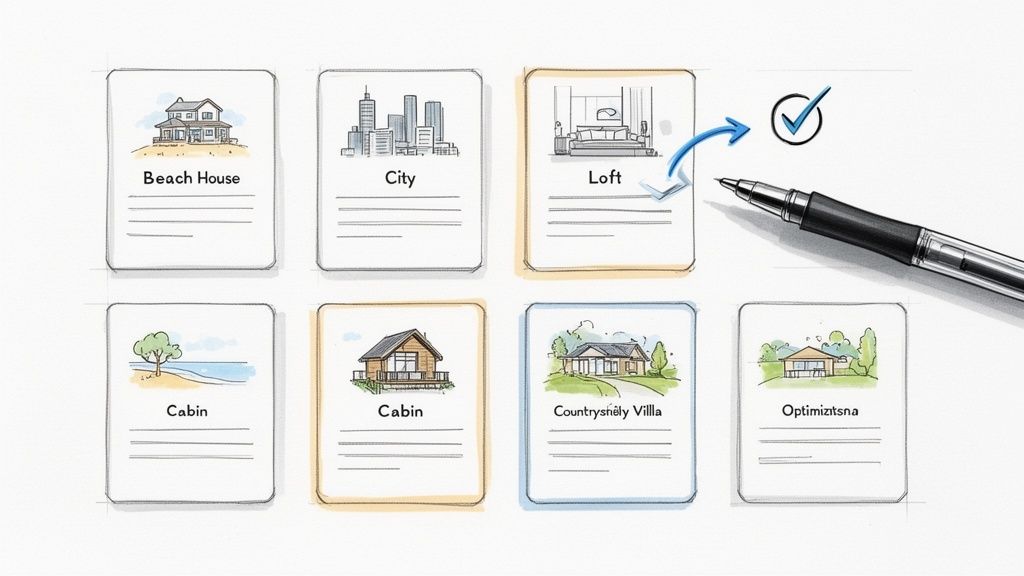
TL;DR: Your Airbnb title is the one piece of copy that decides whether a guest clicks or scrolls past. Below are eight title formulas that consistently outperform generic "Cozy Apartment in the City" listings — with plug-and-play examples for every property type. Each is built to satisfy both human readability and Airbnb's search index, and most examples fit within Airbnb's 50-character display limit — aim to keep yours under 50 so nothing important gets cut.
Why your title does more work than any photo
If you run a portfolio, you already know the math. Airbnb's search results page shows a thumbnail and a title — that's it. The title is the single line of copy a guest reads before deciding whether you're worth a tap. Get it wrong and your photos never load, your reviews never get seen, and your nightly rate never gets considered.
Two things make a title work at once: human readability (does a guest instantly understand where it is, what it is, and why it's special?) and algorithmic clarity (can Airbnb's search index categorize it on location, type, and amenity keywords?). The formulas below are built to satisfy both — they're not clever wordplay, they're structured marketing.
One caveat worth stating up front, because plenty of "Airbnb hacks" content gets this wrong: Airbnb does not offer a native A/B testing tool for titles. "Testing" on the platform means changing your title, watching your views and conversion in your own performance dashboard over a few weeks, and keeping what wins. Real, but manual.
What makes a strong Airbnb title? (the short answer)
A strong Airbnb title front-loads a searchable location, names the property type, and leads with your single most valuable, verifiable differentiator — all within Airbnb's 50-character display limit, with the most important words first because titles truncate on mobile. Everything below is a variation on that core principle, tuned to a different guest motivation.
1. Location + Standout Descriptor + Property Type
The workhorse formula. It answers the three questions every guest has before anything else: Where is it? What's the vibe? What kind of place is it? Combining a specific location, a high-value descriptor, and a clear property type gives you a title that's both findable and appealing.
Why it works
It pre-qualifies guests from the first impression. The location captures geo-focused searches, the descriptor adds the emotional hook that justifies your rate, and the property type gives practical context. Examples:
Aspen Mtn-View Cabin w/ Hot TubDowntown Austin Modern Loft near 6th StMiami Beachfront Condo + BalconyJoshua Tree Desert Dome under the Stars
How to apply it
- Be hyper-specific with location. Instead of "Austin," try "South Congress" or "Near Zilker Park." Neighborhood and landmark terms catch the high-intent searcher who already knows where they want to be.
- Lead with one high-value feature. "Ocean View," "Ski-In/Ski-Out," or "Private Pool" outperform vague terms like "Nice" or "Great" every time. For more on translating features into copy that converts, see our guide on digital marketing for STR brands.
- Watch the truncation point. Mobile cuts titles short, so the first 30 characters carry the load. Put location and your best feature there.
2. Experience + Lifestyle Benefit + Property Feature
This formula shifts from what the property is to what the guest will do. It sells the trip, not the square footage — and it matches how modern travelers search: by feeling and experience, not just bed count.

Why it works
It creates an instant emotional connection and answers the unasked question: "What kind of memories will I make here?" The experience is the hook, the lifestyle benefit is the value, and the feature is the proof that makes the promise believable. Examples:
Wake Up to Wine Country Views - Sonoma VillaBeachfront Living - Costa Rica RetreatWork Remote from Paradise - Bali Villa, Fiber WiFiRomantic Forest Getaway - Cabin w/ Fireplace
How to apply it
- Find your guests' "why." Mine your existing reviews and message history. What do guests actually mention — romance, adventure, recharge, remote work? Build the title around the pattern you already see.
- Connect every experience to a real feature. If you advertise "Stargazing," you need a telescope or a dark-sky deck. The promise has to be backed by the property.
3. Unique Selling Proposition + Quick Benefit + Location Anchor
For properties with a genuine standout feature. Lead with what makes you different, connect it to a benefit, then anchor with a location for searchability. This answers the only question that matters in a crowded market: "Why this place over all the others?"
Why it works
Instead of competing on standard features, you lead with your differentiator. The USP grabs attention, the benefit translates it into value, the location anchor keeps you in geo searches. Examples:
Treehouse w/ Hot Tub - Forest Retreat Near AustinTesla Included - EV-Ready Home in Santa MonicaPrivate Beach Access - Beachfront Villa in CaboHistoric 1820s Farmhouse - Modern Comforts, Vermont
How to apply it
- Identify your true USP. The one feature competitors can't easily copy — a historical detail, an exclusive amenity, a one-of-a-kind design. That's your headline.
- Turn the feature into a benefit. "Private Observatory" becomes "Stargazing from a Private Observatory." Help the guest picture themselves there.
- Keep it 100% honest. If you claim "Only Rooftop Pool Downtown," it had better be true. A one-star review for a misleading title costs you far more than the booking was worth, and Airbnb's ranking factors in review scores.
4. Problem-Solution + Guest Persona
This one solves a specific traveler's problem instead of listing features. Name the persona — digital nomad, family with toddlers, accessibility-focused guest — and frame your property as their answer. It makes the right guest feel understood immediately.
Why it works
Hyper-targeted relevance stops the scroll. A remote worker isn't looking for a "nice apartment" — they need a reliable workspace. A family isn't booking a "house" — they want a safe, stress-free environment. Examples:
Digital Nomad Haven: Fast WiFi & Standing DeskFamily-Ready: 4BR, Full Kitchen & Fenced YardStep-Free: Fully Accessible Ground-Floor HomePet-Friendly Escape w/ Yard & Dog Park Nearby
How to apply it
- Define your highest-value persona from past booking data, then build the title around their specific need.
- Frame the amenity as a solution. Not "Fast WiFi" but "Work-From-Home Ready: Fiber WiFi." Connect the feature to the goal.
- Align the whole listing. If you target families, your first photos should show the crib, high chair, and yard — the title sets an expectation the listing has to keep.
5. Superlative + Specific Feature + Location Keyword
For listings with a genuine, defensible edge. Superlatives like "Largest" or "Highest-Rated" grab attention and create a sense of exclusivity — but only when you can back them up.
Why it works
A bold, defensible claim cuts through a feed of sameness. The superlative is the hook, the specific feature is the proof, the location keyword reaches the right audience. Examples:
Largest Private Pool in Scottsdale - 5BR EstateBest Rooftop Views in Midtown - 2,000 Sq Ft PenthouseHighest-Rated Beachfront Cabin in TofinoOnly Ski-In/Ski-Out Chalet on the Mountain
How to apply it
- Stay honest and defensible. Biggest pool on the block, only direct beach access on your street — fine. Anything you can't defend invites a bad review.
- Back it with a number. "Largest Pool" lands harder as "45-Ft Pool"; "Highest-Rated" lands harder validated by "300+ 5-Star Reviews."
- Match your hero photo. Claim "Best Ocean View," and your first image had better be an unobstructed ocean shot.
6. Season/Time-Specific + Experience + Location
This taps the urgency of guests planning around a specific time of year. A seasonal hook aligns your listing with timely search intent — ski season, festival weekend, fall foliage.
Why it works
It matches the guest's mindset during planning. Most travelers book with a season or event in mind, and this title front-loads exactly that. Examples:
Fall Foliage Retreat near Blue Ridge PkwySki Season Chalet: Mtn-View & Hot Tub, WhistlerSummer Beach Escape - Direct Ocean Access, MauiWalk to ACL Fest - Festival Hub in Austin
How to apply it
- Build a seasonal title calendar. Map your key seasons, holidays, and local events, with 2–3 title variations prepped for each.
- Update 4–6 weeks ahead. Rotate titles before demand builds so you catch early planners.
- Sync pricing and photos. A "Winter Wonderland" title needs a snowy cover photo and rates that reflect peak demand.
7. Amenity Bundle + Lifestyle Outcome + Location Reference
Bundle 2–3 of your best amenities, connect them to the lifestyle they create, and tag the location. Guests aren't booking "a house with a hot tub" — they're booking a "Wellness Retreat."
Why it works
Grouped amenities paint a vivid picture and turn features into a single, emotionally resonant narrative. Examples:
Hot Tub + Sauna + Fire Pit - Wellness Retreat, Big SurHome Theater + Game Room - Family Fun House, OrlandoChef's Kitchen + Sunset Views - Napa Valley EscapeFast WiFi + Garden Office - Remote Worker's Base, Denver
How to apply it
- Find your amenity theme. Hot tub + sauna + massage table all say "wellness"; game room + pool + theater say "family fun." Group amenities that tell one story.
- Translate the bundle into an outcome. "Equipped Office + Fast WiFi" becomes "Remote Worker's Paradise" — the reframe captures imagination.
- Match the persona you actually want; a "Zen Retreat" and a "Party Pad" attract very different reviews.
8. Brand Name + Personalized Promise + Location Anchor
This is the formula that matters most for operators and portfolio managers. Lead with a distinct brand name, add a guest-centric promise, anchor with location. You're signaling reliability and a repeatable standard, not just one property.
Why it works
A brand name acts as a quality seal before the guest even clicks. It shifts the focus from a single stay to a repeatable, branded experience — which is exactly what makes guests come back and book you again. Examples:
The Sanctuary: Wellness Retreat in SedonaUrban Oasis Homes - Modern Living in MiamiMaria's Beachside Collection - Authentic Costa RicaSummit Stays: Mountain Elegance in Aspen
How to apply it
- Earn brand authority first. Use this only with a real portfolio, strong reviews, and ideally a direct-booking site. New single-listing hosts should start with formulas 1–5.
- Make the promise deliverable. If the brand promise is "Wellness & Serenity," every touchpoint — decor, comms, check-in — has to reflect it.
- Keep branding consistent across photos and listings so guests recognize you wherever they find you.
8-formula quick reference
| Formula | Best for | Key advantage |
|---|---|---|
| Location + Descriptor + Type | Any property; strong locations/views | Balances SEO and appeal; broad reach |
| Experience + Lifestyle + Feature | Unique, luxury, wellness stays | Differentiates by experience; memorable |
| USP + Benefit + Location | Rare/unique properties | Clear differentiation; commands premium rates |
| Problem-Solution + Persona | Accessible, remote-work, family, pet | Attracts self-selecting, high-fit guests |
| Superlative + Feature + Location | Genuinely top-ranked properties | Attention-grabbing when truthful |
| Season + Experience + Location | Ski/beach/festival markets | Matches seasonal search intent |
| Amenity Bundle + Outcome + Location | Strong amenity packages | Concrete, searchable benefits |
| Brand + Promise + Location | Operators, multi-property managers | Builds trust and repeat bookings |
FAQ
How long should an Airbnb title be?
Airbnb allows up to 50 characters and titles truncate on mobile, so put your location and most valuable feature in the first ~30 characters. Lead with what matters; let the rest get cut without losing meaning.
Can you A/B test Airbnb titles?
Not natively — Airbnb has no built-in title-testing tool. The practical approach is sequential testing: change one title, track views and conversion in your performance dashboard over 3–4 weeks, then keep the version that wins and move on to the next listing. Change one variable at a time so you can attribute the difference.
Do emojis help Airbnb titles?
Sparingly. A single relevant emoji can add visual contrast in a crowded feed, but stuffing titles with them reads as spammy and can hurt trust. Prioritize clear, searchable words first.
How often should I update my title?
Refresh for seasons and major local events 4–6 weeks ahead, and re-test whenever your views or conversion dip. Otherwise, once you've found a winner, leave it to accumulate ranking signal.
Bottom line
A great Airbnb title sells an experience, speaks to a specific guest, and leads with a verifiable differentiator — all in 50 characters. Audit your listings against these eight formulas, pick the one that fits your property and target guest, and track the results in your dashboard.
And once you've proven which brand and messaging convert at OTA scale, that work doesn't have to stay on rented land. hostFront by hostAI builds SEO-optimized direct-booking sites for STR operators and surfaces the analytics to run the continuous title and copy testing Airbnb can't — so the headlines you proved on Airbnb keep earning on a channel you own.