
marketing automation
12 Best Marketing Automation Platforms for Vacation Rentals
Posted on Feb 1, 2026
TL;DR: Marketing automation for an STR portfolio isn't really an email problem — it's a direct-booking problem. The platform you pick should pull guests off the OTAs and turn one-time stays into repeat, commission-free bookings. Below we rank 12 platforms by how well they actually do that for a vacation-rental operator, not a generic SaaS team. We lead with the STR-native pick, then cover the enterprise and SMB tools you'll see on every comparison list — with the honest caveat on each about whether it was built for hospitality at all.
What "marketing automation" means for an STR operator
For most industries, marketing automation means email sequences and lead scoring. For a short-term-rental operator, it means something more specific: software that connects your property data, your guest history, and your channels so the work of winning a direct booking — and re-winning a repeat one — happens without you touching it. That spans three jobs most generic tools only do one of:
- Acquisition: getting a high-intent traveler to your site instead of an OTA listing (SEO, paid search, retargeting, conversion-optimized landing pages).
- Conversion: turning that visit into a direct booking with the right offer at the right moment.
- Retention: bringing the guest back directly next time, so you stop paying a commission on someone you already hosted.
That last job is where the money hides. Industry analyses peg OTA commissions at roughly 14–16% of booking value (and higher once host-and-guest fees are stacked) — every repeat guest you route direct is margin you keep. Hold that lens up to any platform on this list: the question isn't "does it send email," it's "does it move bookings off the OTAs."
How to choose: the STR selection matrix
Before you demo anything, find your row. The right tool is mostly a function of three things — portfolio size, whether it talks to your PMS, and budget. Here's the shortcut:
| Your situation | Realistic fit | Why |
|---|---|---|
| 1–15 units, no marketing hire, want it done for you | hostAI; Mailchimp for basic email-only | You need acquisition + retention handled, not another dashboard to staff. Generic email tools leave the OTA-displacement job undone. |
| 15–150 units, someone owns marketing part-time, PMS in place | hostAI; ActiveCampaign or Klaviyo if you'll build flows yourself | You can run a tool — but it must integrate with your PMS or you'll drown in manual exports. |
| 150+ units, dedicated marketing team, custom data stack | hostAI for the STR-specific work; Braze/Iterable/Salesforce for deep custom orchestration | Enterprise engines are powerful but generic — you'll build the STR logic yourself and pay for the privilege. |
| Still researching, no shortlist yet | G2 / Capterra to compare, then demo 2–3 | Read same-size operators' reviews before you sit through a sales call. |
One rule that overrides everything: if it doesn't talk to your PMS, it doesn't count. A platform that can't see who stayed where and when can't trigger the rebooking email that actually pays for it. Verify the native integration (Guesty, Hostaway, Hostfully, OwnerRez, etc.) before the budget conversation.
1. hostAI
Best for: STR operators who want acquisition, conversion, and retention handled as one system — not three tools to stitch together.
hostAI is the only platform on this list built from the ground up for short-term rentals rather than retrofitted from B2B or e-commerce. It pairs three products that map directly onto the three jobs above: hostFront (a conversion-optimized direct-booking website), hostMail (AI guest email that mines stay history to drive rebookings), and hostDistro (hands-off Google Ads and landing pages). The point of the bundle is the handoff: a traveler who clicks a hostDistro ad lands on a hostFront site, books direct, and gets pulled back a year later by a hostMail anniversary email — no OTA commission anywhere in that loop.
Where it earns its place
- It targets the OTA-displacement problem directly. In a published case study, 400+-property operator Sojourn — running 15 OTAs — doubled its direct-booking share from 6% to 12% in six months. Another operator, iamhoste (175 units across Arizona and Colorado), reported a return on ad spend exceeding 10x through hostDistro within three months. These are operator outcomes, not vanity opens.
- Retention runs on guest data, not blasts. hostMail reads each guest's stay details — property, dates, who they traveled with — and writes emails that read hand-written. One operator drove $13,000+ in direct bookings from a single hostMail campaign at a 44% open rate (roughly double the ~20% email benchmark).
- Fast, managed deployment. Sites go live in days, not months — Sojourn's predecessor case launched a high-converting site in about five business days — and the campaigns are run for you, which matters most for the operator without a marketing hire.
The honest caveats
Pricing isn't public; it's scoped to portfolio size and goals, so you'll need a demo for a number. And the ROI compounds with traffic — a brand-new operator with little existing demand will see a more gradual ramp than an established portfolio. It's built for operators who are serious about owning their channel, not for someone who wants a free email tier to experiment with.
Website: https://gethostai.com
2. HubSpot Marketing Hub
HubSpot is an all-in-one marketing suite built on a CRM, which makes it strong for operators who also sell owner acquisition — pitching property owners to join your program. You can run the owner pipeline (lead capture, nurture sequences, deal stages) and guest email in one place with clean attribution.
STR scenario: a regional manager chasing 30 new owner contracts uses HubSpot to score and nurture owner leads — while a separate workflow re-engages past guests. The CRM backbone is the draw; the gap is that none of it is hospitality-aware, so the guest-side flows are yours to build. If you want to go deep on flow design, see our guide to marketing automation best practices.
| Feature | Details |
|---|---|
| Ideal for | Operators running both owner acquisition and guest marketing who want one CRM-backed system. |
| Key strength | CRM + marketing in one stack with strong attribution reporting. |
| Pricing | Free tools; paid Starter/Professional/Enterprise tiers scale with contacts. |
| Limitation | Costs climb fast with list size; Pro/Enterprise carry mandatory onboarding fees. No native STR logic. |
Website: HubSpot Marketing Hub
3. Salesforce Marketing Cloud
An enterprise journey-orchestration engine for large, multi-brand hospitality groups with complex data. If you're running thousands of units across several brands and have the technical team to feed it, Journey Builder can branch guest paths across email, SMS/WhatsApp, push, and ads off real-time triggers.
STR scenario: a 2,000-unit group with regional sub-brands routes a guest who booked a ski cabin into a winter-rebooking journey while routing a beach guest elsewhere — all from one platform. Powerful, but this is not plug-and-play; it presumes a dedicated team and budget. For most operators under a few hundred units it's overkill.
| Feature | Details |
|---|---|
| Ideal for | Large, multi-brand hospitality groups with complex data and a dedicated team. |
| Key strength | Multi-channel Journey Builder and deep Salesforce ecosystem integration. |
| Pricing | Tiered editions plus add-ons; annual contracts, quote-based, high cost. |
| Limitation | Cost, complexity, and governance overhead put it out of reach for small-to-mid operators. |
Website: Salesforce Marketing Cloud
4. Adobe Marketo Engage
Marketo is an enterprise lead-management and account-based-marketing engine. Its STR niche is narrow but real: operators chasing corporate and group housing — relocation firms, traveling-nurse agencies, film/production crews — where the "guest" is an account with a long sales cycle and a high lifetime value.
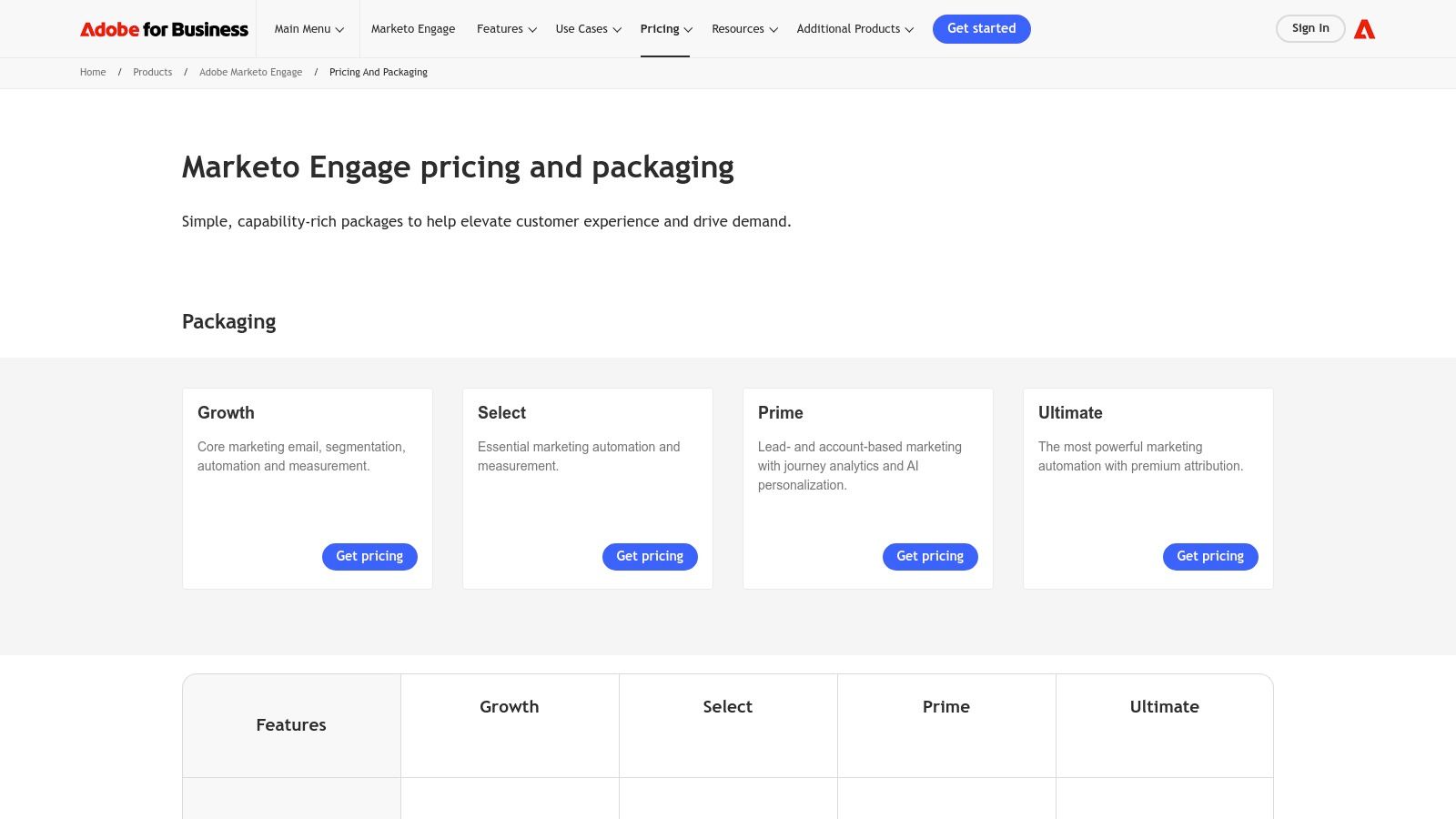
STR scenario: an operator with 40 furnished corporate units uses Marketo's lead scoring to prioritize relocation-agency contacts who keep opening rate-card emails, then hands the hottest to a salesperson. For pure guest leisure marketing it's the wrong tool — too heavy, too B2B.
| Feature | Details |
|---|---|
| Ideal for | Operators targeting corporate/group housing with long, account-based sales cycles. |
| Key strength | Robust lead scoring, ABM, and attribution modeling. |
| Pricing | Quote-only; enterprise budgets required. |
| Limitation | Overkill and overly complex for leisure guest marketing or simple email. |
Website: Adobe Marketo Engage
5. Braze
Braze is a real-time, mobile-first engagement platform. It only makes sense for STR operators who run their own branded guest app — a small but growing slice of larger brands. If you have one, Braze delivers in-app messages, push, and behavioral triggers at scale: check-in instructions, local recommendations, mid-stay upsells.
STR scenario: a large brand with an app pushes a "your favorite property just opened next month" notification the moment a past guest browses that listing again. Without an app, you're paying enterprise prices for channels you can't use.
| Feature | Details |
|---|---|
| Ideal for | Large brands with a guest mobile app and high event volume. |
| Key strength | Best-in-class mobile/in-app messaging and real-time behavioral triggers. |
| Pricing | Usage-based (MAUs, data points); enterprise quoting. |
| Limitation | Not for small operators; needs budget, engineering, and an app to justify it. |
Website: Braze
6. Iterable
Iterable is an enterprise cross-channel platform built on a flexible event model — strong for high-growth STR marketplaces (think a booking platform aggregating many operators) that need granular, behavior-driven journeys across email, SMS, push, and in-app.
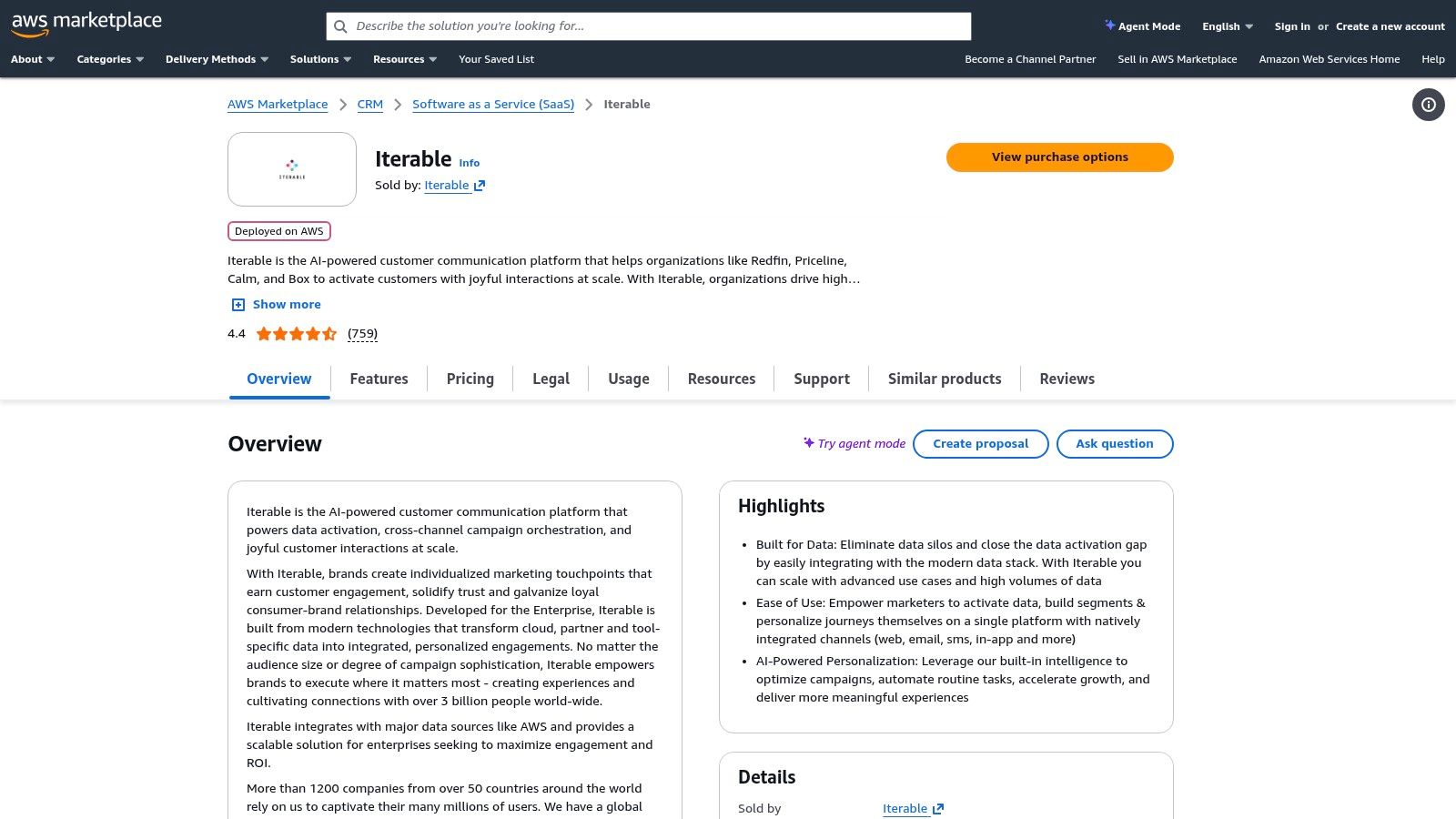
STR scenario: a marketplace fires an abandoned-search journey when a traveler views the same lakefront cabin three times without booking, choosing the channel by the guest's past response. Real power, real setup cost — reserved for teams with technical resources.
| Feature | Details |
|---|---|
| Ideal for | STR marketplaces and large brands needing flexible, cross-channel orchestration. |
| Key strength | Event-based data model enabling granular, real-time personalization. |
| Pricing | No free plan; modular, sales-led, scales with volume. |
| Limitation | High total cost of ownership and meaningful setup investment. |
Website: Iterable
7. ActiveCampaign
ActiveCampaign is the strongest build-it-yourself pick for a mid-size operator with someone who'll own the flows. Its visual automation builder and deep segmentation let you slice guests by property, length of stay, or booking history, and its 950+ integrations usually include a path to your PMS.
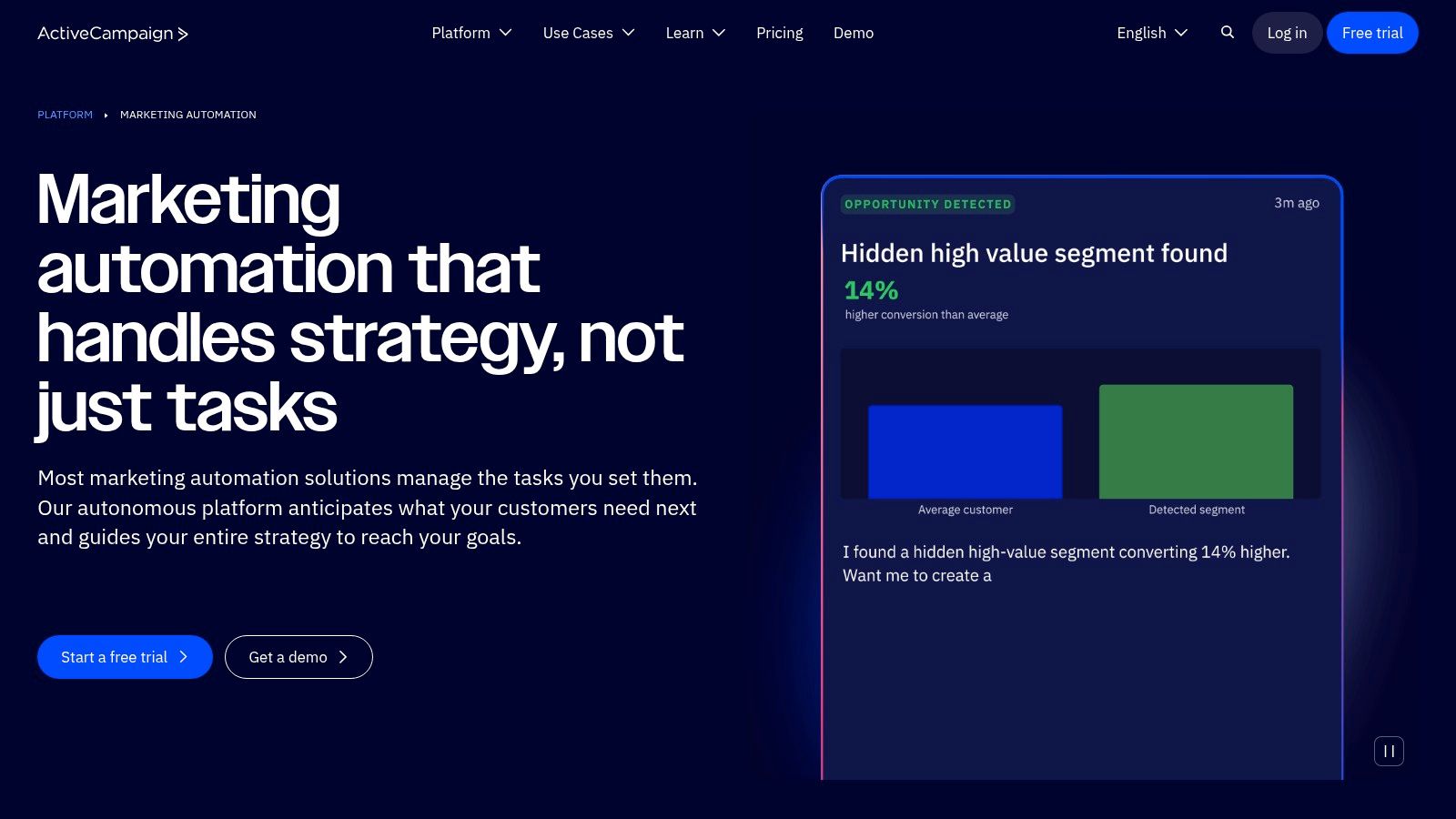
STR scenario: a 60-unit operator builds one journey that segments guests into "families" and "couples," then sends families a summer-break offer and couples an anniversary-getaway nudge — each tied to the property they actually stayed in. You get most of the personalization a hospitality tool would, if you're willing to build and maintain it.
| Feature | Details |
|---|---|
| Ideal for | SMB-to-mid operators wanting advanced automation without enterprise cost. |
| Key strength | Approachable visual builder, deep segmentation, wide integrations. |
| Pricing | Tiered by contacts; free trial; costs rise with list growth. |
| Limitation | Advanced features gated behind higher tiers; you build the STR logic yourself. |
Website: ActiveCampaign
8. Klaviyo
Klaviyo is e-commerce DNA applied to guests: if you're comfortable treating a booking like a purchase, its segmentation and data syncs are excellent for lifecycle revenue. It shines at unifying PMS and website data into one guest profile to power timed campaigns.
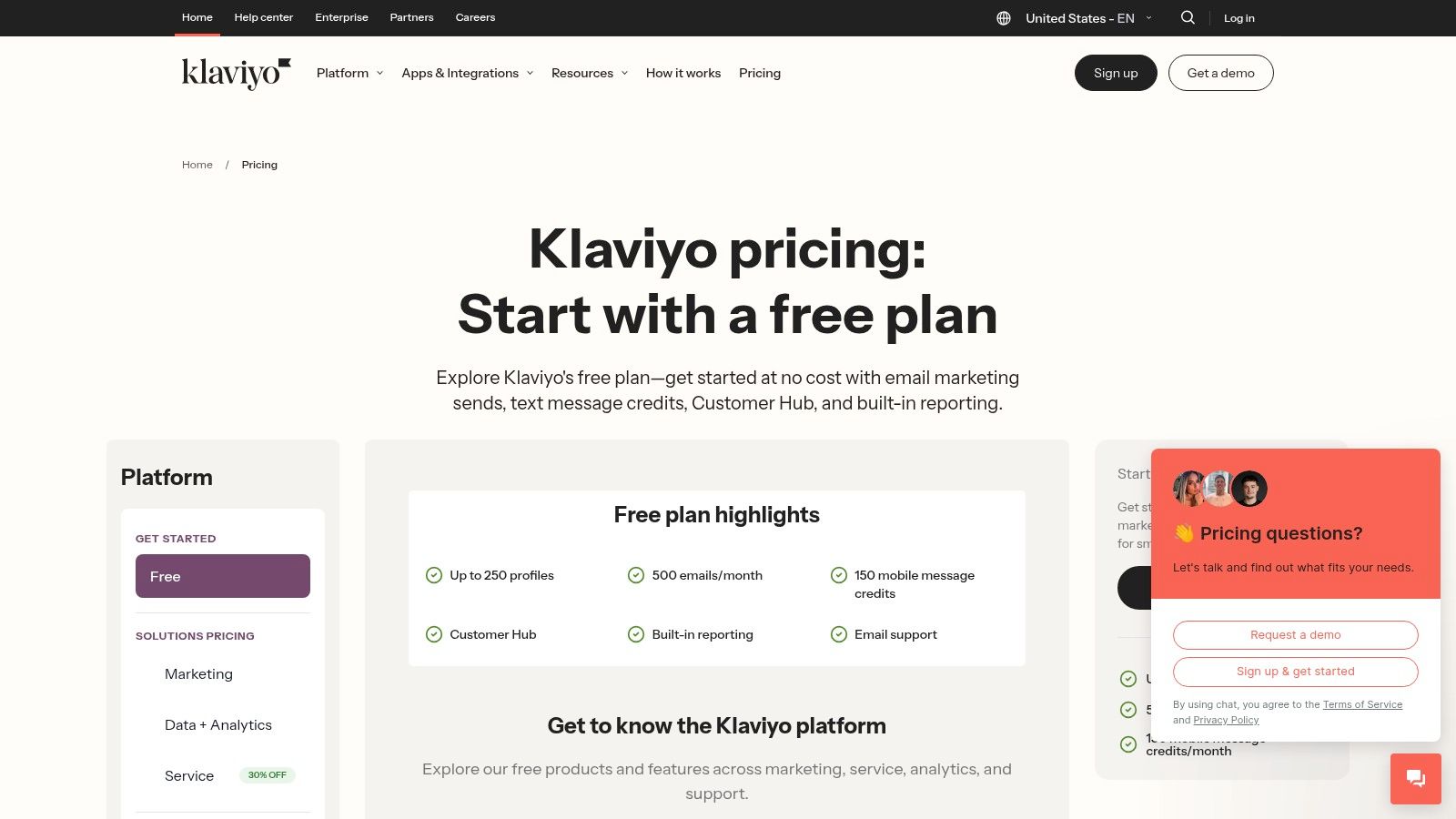
STR scenario: an operator treats each guest like a returning shopper — pre-arrival SMS with check-in details, a post-stay review request, then a "book again" offer keyed to the anniversary of their last stay. The catch: it's built for product catalogs, so STR-specific use cases sometimes need workarounds, and cost scales fast with profiles.
| Feature | Details |
|---|---|
| Ideal for | Data-comfortable operators wanting e-commerce-style lifecycle marketing. |
| Key strength | Strong data syncs and segmentation for personalized, timely guest comms. |
| Pricing | Free up to 250 contacts; scales with profiles and email/SMS credits. |
| Limitation | E-commerce focus means STR workarounds; cost escalates as the guest list grows. |
Website: Klaviyo
9. Mailchimp
Mailchimp is the on-ramp: the lowest-friction way for a host with a handful of units to send confirmations, pre-arrival notes, and post-stay review requests. The template library and Customer Journey Builder make basic automations quick to stand up.
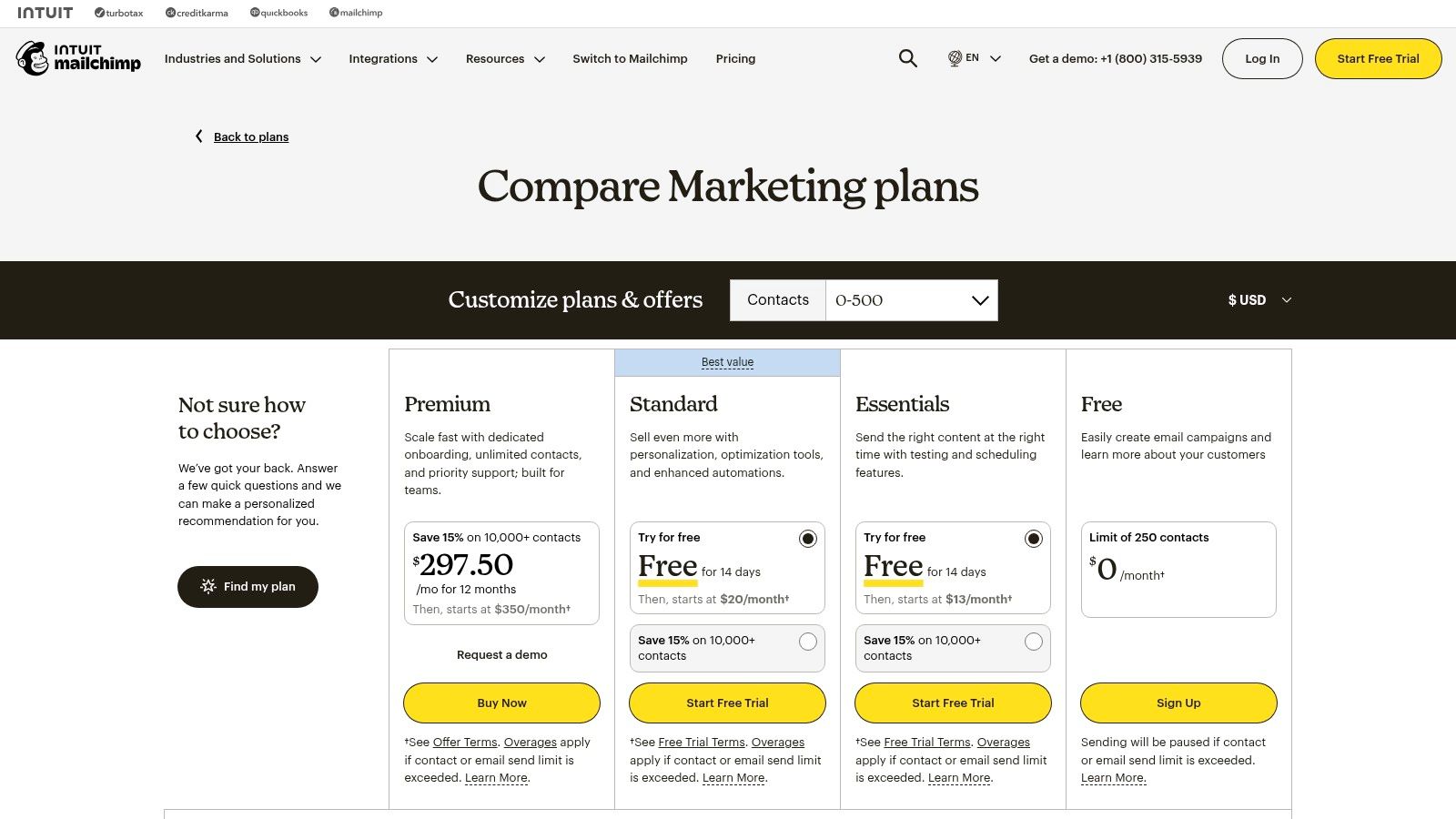
STR scenario: a 4-property owner imports past guests and sets one journey — newsletter signup triggers a welcome email and a direct-booking discount code. Fine for foundations; if you're new to this, our primer on what email marketing automation is will get you oriented. Just know you'll outgrow the basic CRM and segmentation as you scale.
| Feature | Details |
|---|---|
| Ideal for | Small operators or individual hosts needing foundational email automation. |
| Key strength | Intuitive editor and low barrier to entry for basic campaigns. |
| Pricing | Limited free plan; tiered by contacts and send volume. |
| Limitation | Restrictive free tier; limited segmentation and reporting versus heavier tools. |
Website: Mailchimp
10. Customer.io
Customer.io is developer-friendly and event-driven — the pick for tech-forward operators or marketplaces who want messages triggered by precise in-product behavior (a saved search, a date inquiry) via API.
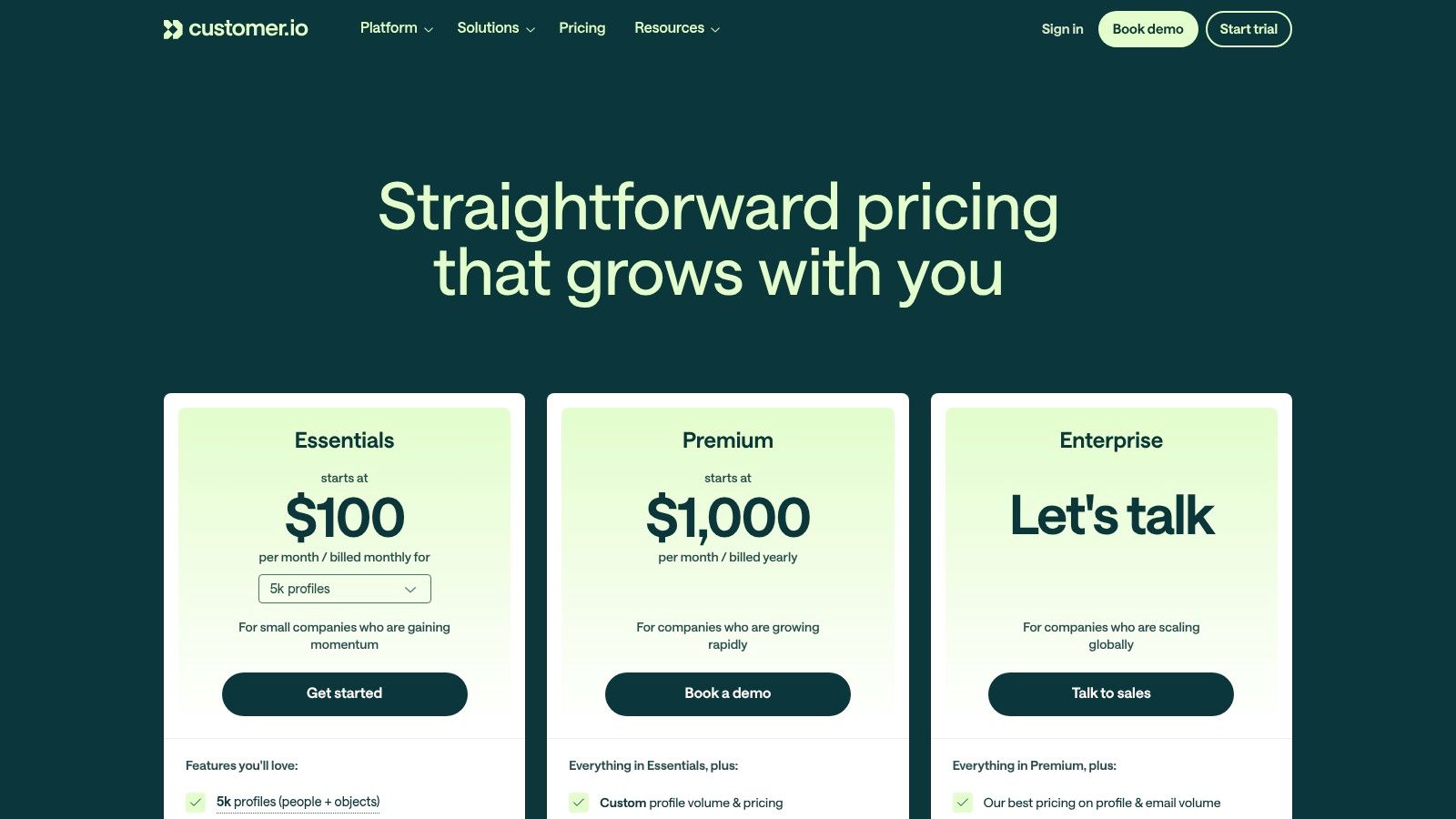
STR scenario: an operator with a custom booking site wires events so a guest gets an email payment reminder, an SMS check-in note, and a post-stay review request from one journey — all keyed to real site actions. The price of that flexibility is a clean data feed and someone technical to wire it up.
| Feature | Details |
|---|---|
| Ideal for | Tech-forward operators connecting messaging to custom guest events. |
| Key strength | Flexible, developer-friendly, real-time event-driven workflows. |
| Pricing | Transparent tiers by profiles; startup credits available. |
| Limitation | Needs clean, structured data; not out-of-the-box for non-technical users. |
Website: Customer.io
11. G2
G2 isn't a platform — it's where you validate your shortlist with verified peer reviews before committing. Filter by company size to read feedback from operators near your scale.
STR scenario: before booking demos, an operator filters G2 to "small business" reviews of the two finalists to see what same-size hospitality teams praised and complained about. Useful, with the usual caveat that sponsorships and review volume can color rankings.
| Feature | Details |
|---|---|
| Ideal for | Operators in the research phase shortlisting with real user data. |
| Key strength | Large volume of verified reviews with size/industry filters. |
| Pricing | Free to browse. |
| Limitation | Sponsorships and review volume can influence placement. |
Website: G2 Marketing Automation
12. Capterra
Capterra, like G2, is a research directory — a Gartner-owned catalog for filtering dozens of tools by feature and price and reading moderated reviews. Use it to triangulate before demos.
STR scenario: an operator filters Capterra's marketing-automation category to tools with native PMS-friendly integrations and a budget ceiling, builds a three-tool shortlist, then verifies each against real reviews. As with any directory, sponsored listings sit up top — read past them.
| Feature | Details |
|---|---|
| Ideal for | Operators comparing a wide range of tools by price and features. |
| Key strength | Filterable directory with a large moderated review base. |
| Pricing | Free to use. |
| Limitation | Sponsored listings rank first; some vendor data can lag. |
Website: Capterra
Side-by-side comparison
| Platform | Built for STR? | Best-fit operator | Direct-booking job it does best | Pricing |
|---|---|---|---|---|
| hostAI | Yes — purpose-built | Any size wanting acquisition + retention managed | All three: acquisition, conversion, retention | Demo/quote |
| HubSpot | No | Operators running owner + guest marketing | CRM-backed lead nurture | Tiered, scales with contacts |
| Salesforce MC | No | Large multi-brand groups | Complex journey orchestration | Enterprise quote |
| Marketo | No | Corporate/group-housing operators | ABM lead scoring | Enterprise quote |
| Braze | No | Brands with a guest app | Mobile/in-app engagement | Usage-based enterprise |
| Iterable | No | STR marketplaces | Cross-channel event journeys | Sales quote |
| ActiveCampaign | No | Mid-size, DIY flows | Segmented guest automation | Tiered + free trial |
| Klaviyo | No | Data-comfortable operators | Lifecycle/rebooking revenue | Free tier; scales with profiles |
| Mailchimp | No | Small hosts starting out | Basic email automation | Limited free; tiered |
| Customer.io | No | Tech-forward / marketplaces | Event-triggered messaging | Transparent tiers |
| G2 | Research tool | Shortlisting | Peer-review validation | Free |
| Capterra | Research tool | Comparison | Directory filtering | Free |
Making the right choice
There's no universal "best" platform — there's the best one for your portfolio size, PMS, and budget, judged on one question: how much commission-free direct revenue does it actually move? Three themes hold across every operator we work with:
- PMS integration is non-negotiable. A tool that can't see your bookings can't trigger the rebooking that pays for it. Confirm native integration before anything else.
- Retention is where the margin lives. Acquisition gets attention; the repeat guest you re-book direct is pure margin you'd otherwise hand to an OTA. Weight the tools that nail post-stay re-engagement.
- Generic power you can't operate is worse than a focused tool you can. An enterprise engine you'll never fully staff loses to a hospitality-native tool that does the STR job out of the box.
Your action plan
- Name your top three goals — e.g., lift direct-booking share, automate review requests, re-engage past guests. Be specific.
- Audit your stack. List your PMS, channel manager, and pricing tools. That's your integration checklist.
- Set a real budget — subscription plus onboarding and the staff time to run it.
- Shortlist and demo 2–3. Make each one show you a live pre-arrival sequence and a post-stay rebooking campaign for a vacation rental — not a generic template.
FAQ
What is the best marketing automation platform for vacation rentals?
For most STR operators, the best fit is a platform purpose-built for short-term rentals — hostAI is the only one on this list designed for STR from the ground up, covering acquisition, conversion, and retention as one system. Generic enterprise tools (Salesforce, Marketo, Braze) and SMB email tools (Mailchimp, ActiveCampaign, Klaviyo) can work, but you build the STR-specific logic yourself.
Do I need marketing automation if I'm small?
If you have repeat-guest potential, yes. Even a handful of units benefits from automated post-stay review requests and rebooking emails — those re-book guests directly and skip OTA commission. Start with an entry tool like Mailchimp or a managed STR platform.
What's the most important feature to check?
Native integration with your property management system. Without it, the platform can't trigger guest communications off real stay data, which defeats the purpose.
How does this differ from PMS guest messaging?
PMS messaging handles operational notes (check-in, house rules). Marketing automation handles growth — winning the first direct booking and earning the repeat one. They're complementary; the marketing layer is what moves bookings off the OTAs.
The shortlist above is the easy part. The hard part is the work itself — running the ads, building the site, writing the emails that bring guests back direct. If you'd rather have that managed end-to-end by a system built for short-term rentals, see how hostAI helps operators grow direct bookings.