

best website builders for small business
Best Website Builders for Small Business: Top Picks for 2026
Posted on Jan 17, 2026
Choosing the right website builder is a critical decision for any small business, but for short-term rental (STR) managers, it's the bedrock of a successful direct booking strategy. A great website isn't just a digital brochure; it's a powerful revenue engine that captures commission-free bookings, builds your brand identity, and reduces your dependence on costly online travel agencies (OTAs). This guide cuts through the noise to provide an in-depth analysis of the best website builders for small business, with a special focus on the features that matter most to vacation rental operators.
We'll move beyond generic feature lists and evaluate each platform on its practical utility for the STR industry. Our analysis dives deep into the specific tools you need, including robust booking engines, seamless channel manager integrations, local SEO capabilities, and secure payment processing systems. This comprehensive resource is designed to help you find the perfect platform to grow your direct revenue and take control of your business.
Inside this guide, you will find a detailed breakdown of 12 top-tier options, from versatile, all-in-one platforms like Wix and Squarespace to specialized, industry-specific solutions like hostAI. We'll explore how each one stacks up, providing clear pros and cons, pricing comparisons, and recommended use cases tailored for property managers. Each review includes screenshots and direct links, giving you everything you need to make an informed decision and select the ideal foundation for your online presence.
1. hostAI
Best For: Short-Term Rental Managers Seeking an All-in-One Growth Platform
hostAI distinguishes itself by moving beyond the scope of a typical website builder. It presents a comprehensive, AI-driven marketing stack meticulously engineered for the short-term rental (STR) industry. For property managers and hospitality brands aiming to scale direct bookings and diminish their reliance on online travel agencies (OTAs), hostAI offers an integrated, powerful solution that consolidates essential growth tools into a single, cohesive workflow. This platform is an exceptional choice for those seeking one of the best website builders for small business operations in the vacation rental space.
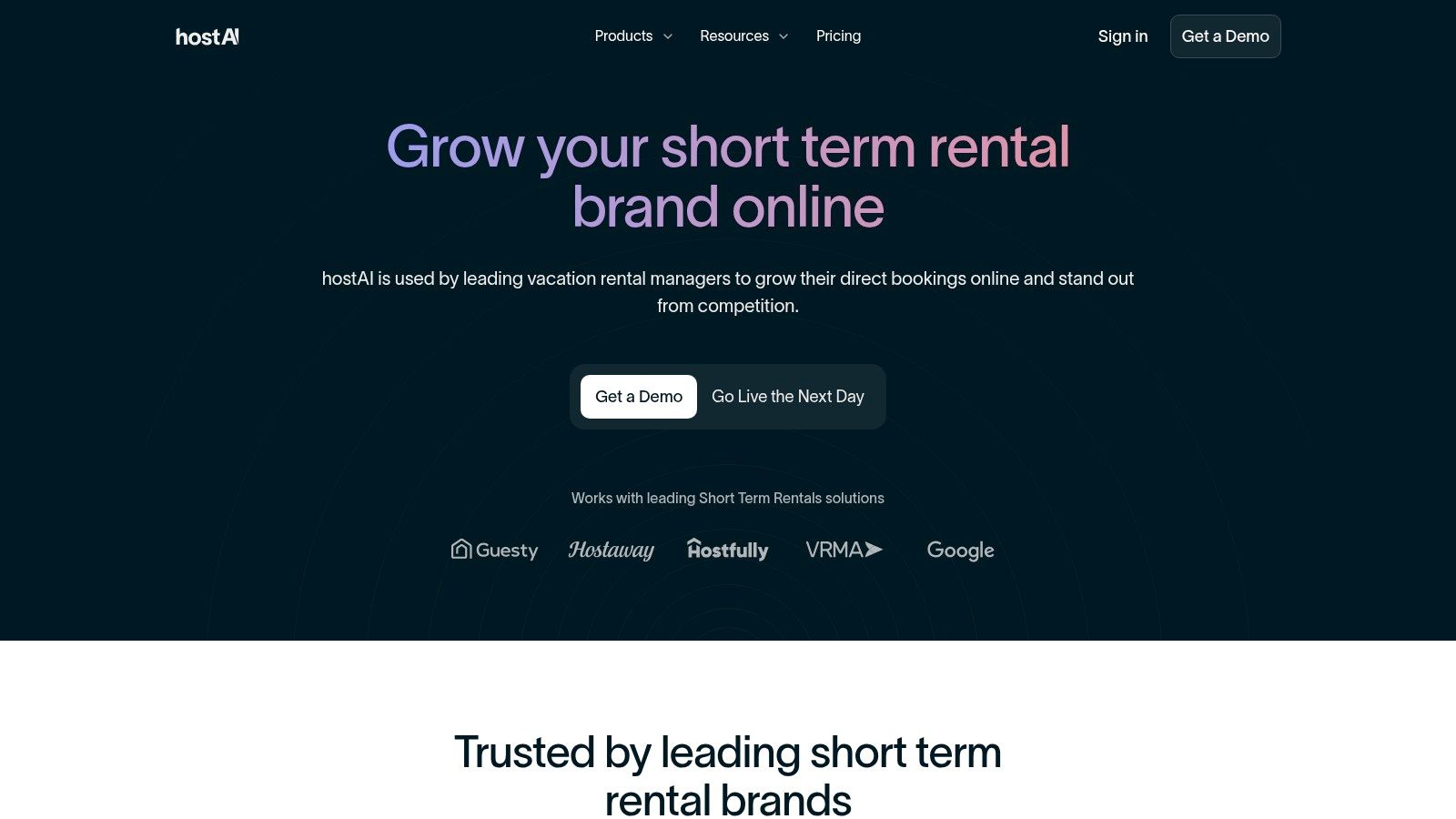
Unlike generic platforms adapted for hospitality, hostAI is purpose-built. It combines a conversion-focused website builder (hostFront) with automated email marketing (hostMail) and hands-free advertising (hostDistro). This synergy ensures brand consistency across every guest touchpoint, from initial discovery via search to post-stay re-engagement campaigns.
Key Strengths & Features
The platform’s primary advantage lies in its targeted, results-oriented features designed to reclaim revenue often lost to OTA commissions.
- Integrated Marketing Suite: The core offering combines three critical components:
- hostFront: Creates intelligent, mobile-first websites with a dedicated booking engine. It uses programmatic SEO to automatically generate location-specific pages, significantly boosting organic search visibility without manual effort.
- hostMail: Automates personalized email campaigns to nurture past guests, encouraging repeat bookings and building brand loyalty.
- hostDistro: Deploys AI-powered ad campaigns and dedicated landing pages, using smart retargeting to capture high-intent travelers who have previously shown interest.
- Proven ROI & Social Proof: hostAI substantiates its value with compelling case studies and client testimonials. Advertised results include direct booking revenue increases of up to $35K per month and a 5×–10× return on ad spend, backed by positive feedback from established STR brands like Sojourn DC and Misfit Homes.
- Rapid Implementation: A key promise is the ability to “Go Live the Next Day,” making it a practical and accessible option for busy managers who cannot afford lengthy development cycles.
Considerations & Pricing
While hostAI's integrated approach is powerful, it is best suited for managers with multiple properties or ambitious growth targets. Single-property owners might find the payback period slower. Pricing is not publicly listed; access requires requesting a personalized demo, where the team provides a quote based on portfolio size and growth objectives.
- Pros:
- AI-driven suite specifically for STRs reduces tool complexity.
- Documented client success stories and strong ROAS.
- Conversion-first features like programmatic SEO and smart retargeting.
- Fast deployment and automated ad management.
- Cons:
- Pricing is not transparent and requires a sales consultation.
- May be more than a single-property owner needs.
2. Wix
Wix stands out as one of the best website builders for small businesses that prioritize creative control and a vast ecosystem of features. Its powerful drag-and-drop editor allows for pixel-perfect design, giving you complete freedom to build a visually unique site without touching any code. Alternatively, its AI site creation tool, Wix ADI (Artificial Design Intelligence), can generate a professional website in minutes after you answer a few simple questions, making it ideal for those who need to get online quickly.
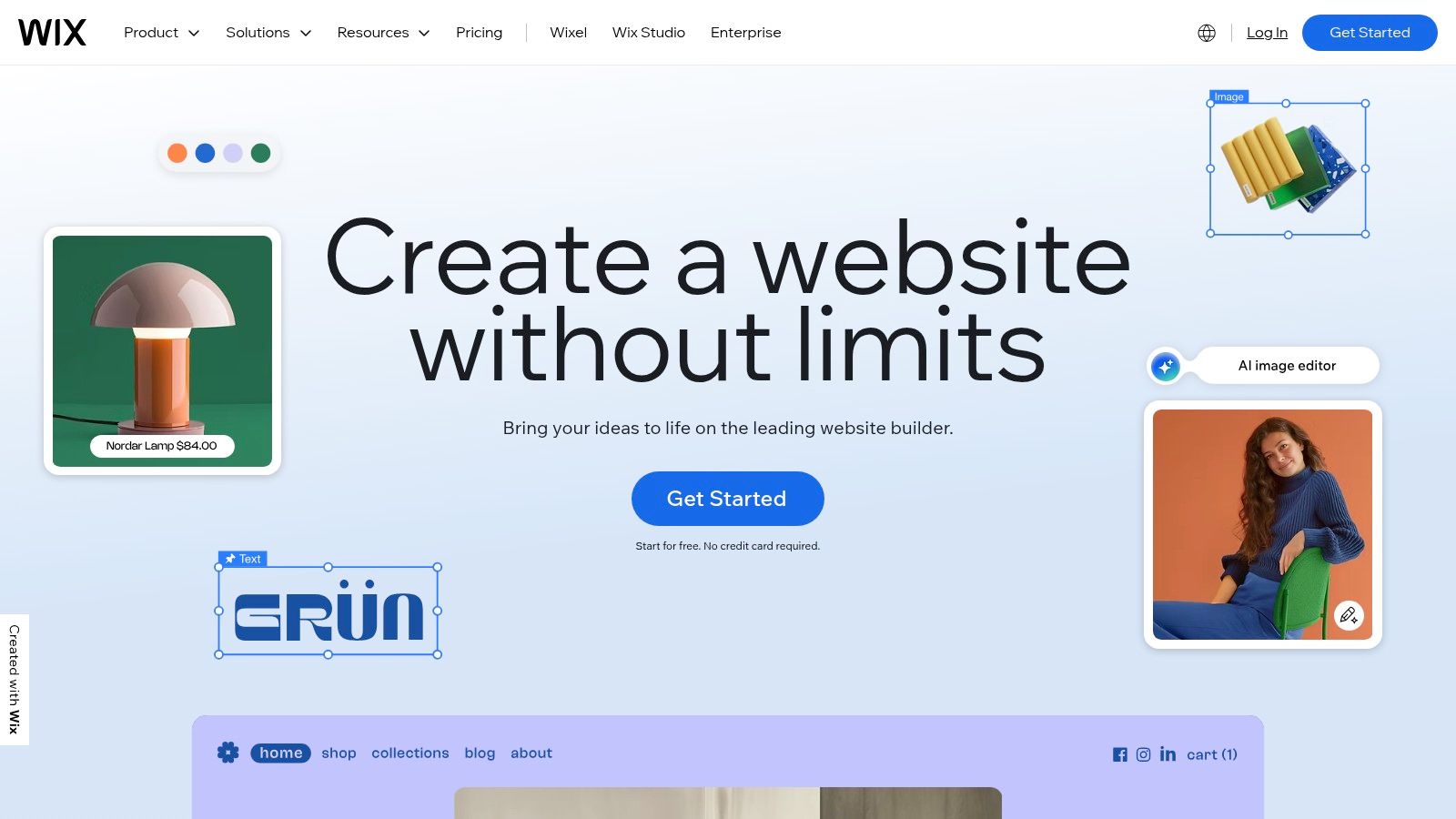
For short-term rental managers, Wix offers robust solutions through its large App Market. You can integrate powerful booking systems, calendars, and payment gateways. The platform's built-in SEO tools help your properties get found on search engines, a crucial step in driving direct bookings. This flexibility ensures your site has all the must-have features for a high-converting short-term rental website.
Core Features & Pricing
Wix’s pricing is tiered, with plans starting around $17/month for professional sites and increasing for business and e-commerce functionalities. While introductory prices are often attractive, be mindful of renewal rates which can be higher.
- Key Features: Drag-and-drop editor, Wix ADI for AI site creation, large App Market, built-in booking and e-commerce tools, and integrated SEO and marketing features.
- Best For: Small businesses, especially in hospitality, that want maximum design flexibility and access to a wide array of specialized apps.
Pros:
- Extremely flexible design editor and a huge template library.
- Easy onboarding with AI and template-driven options.
- Massive app market for extending functionality.
Cons:
- Pricing tiers can be complex, with renewal rates often higher than initial promotional prices.
- Once a template is chosen, you cannot switch to a different one without starting over.
Website: https://www.wix.com/
3. Squarespace
Squarespace is a design-forward, all-in-one platform known for its award-winning templates and streamlined user experience. It's one of the best website builders for small businesses that prioritize stunning aesthetics and an integrated feature set right out of the box. Its AI-powered design tools can help you generate a professional, polished website quickly, making it a strong contender for those who value both style and simplicity.
For short-term rental managers, Squarespace's built-in Acuity Scheduling is a major advantage for managing direct bookings and availability calendars. The platform also includes integrated e-commerce for processing payments, and its email marketing and social media tools help you nurture leads and promote your properties effectively. A visually appealing site built on Squarespace can significantly improve your website conversion rates by establishing a premium, trustworthy brand presence.
Core Features & Pricing
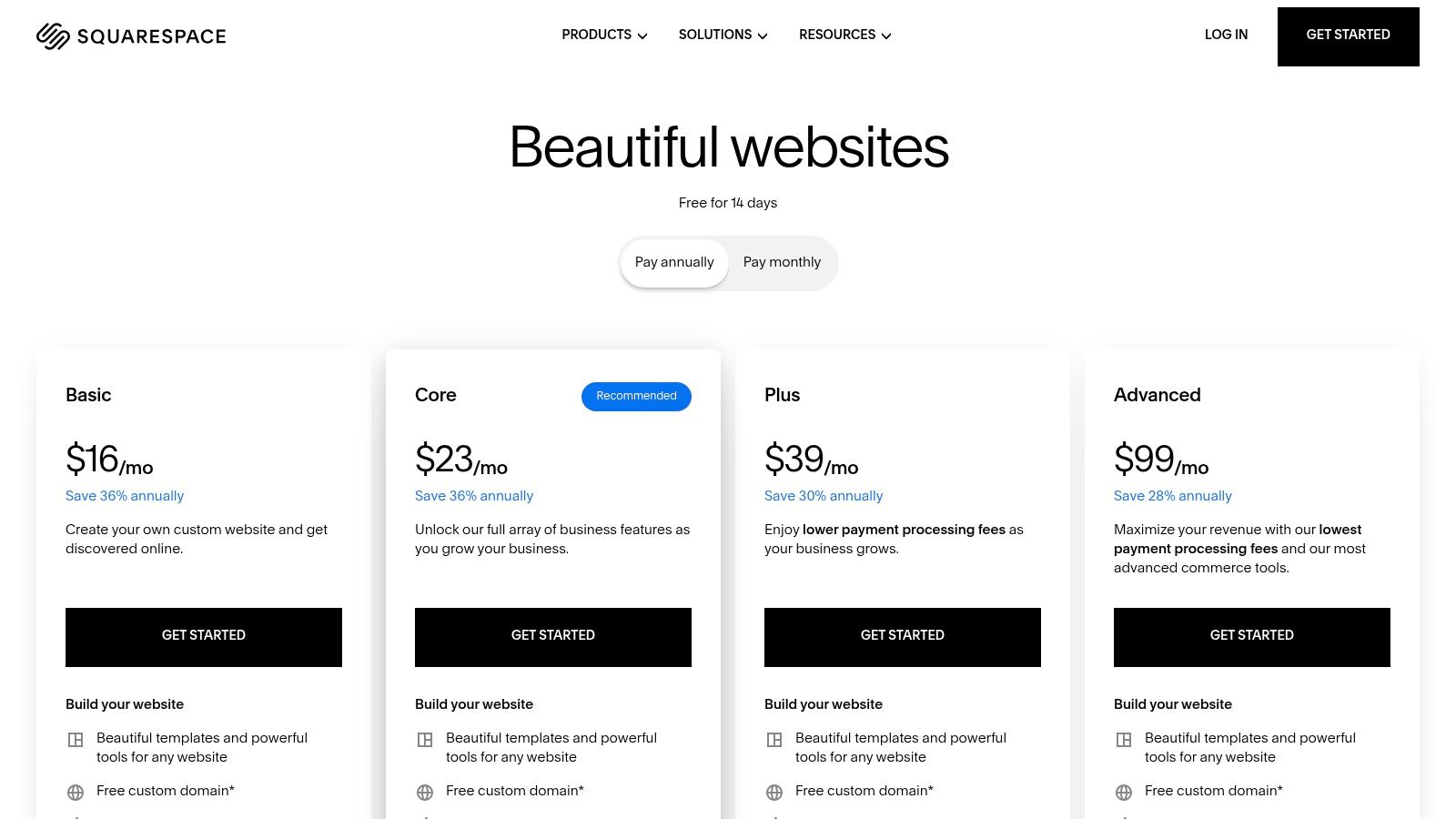
Squarespace offers a 14-day free trial, with paid plans starting at around $16/month (billed annually) for a personal site. Business and commerce plans, which are necessary for online payments and scheduling, range from approximately $23 to $49 per month.
- Key Features: Award-winning templates, AI Website Builder, integrated Acuity Scheduling for appointments, robust e-commerce and point-of-sale capabilities, and built-in email and social marketing tools.
- Best For: Businesses that want a high-end, professional look with minimal fuss, such as boutique hotels, luxury rentals, and service-based entrepreneurs.
Pros:
- Best-in-class template designs that look professional on any device.
- Excellent all-in-one platform with reliable, integrated tools.
- Simple setup and user-friendly interface.
Cons:
- No permanent free plan is available, only a 14-day trial.
- Less flexible for deep customization compared to platforms like WordPress.
Website: https://www.squarespace.com/pricing
4. Shopify
Shopify is the undisputed leader for small businesses where e-commerce is the primary focus. While often seen as a platform for selling physical goods, its powerful infrastructure for online transactions, inventory management, and multi-channel selling makes it a surprisingly robust choice for service-based businesses too. It’s renowned for its secure, high-converting checkout process and an ecosystem built entirely around driving sales, whether online or in-person with its Point of Sale (POS) system.
For a short-term rental manager, Shopify can be adapted to sell nights or bookable experiences as "products." Its extensive App Store offers integrations for booking calendars and service-based scheduling, while its marketing tools facilitate selling across platforms like Instagram and TikTok. The platform's strong analytics provide deep insights into sales trends and customer behavior, making it one of the best website builders for small business owners who are data-driven and focused on scaling their revenue streams.
Core Features & Pricing
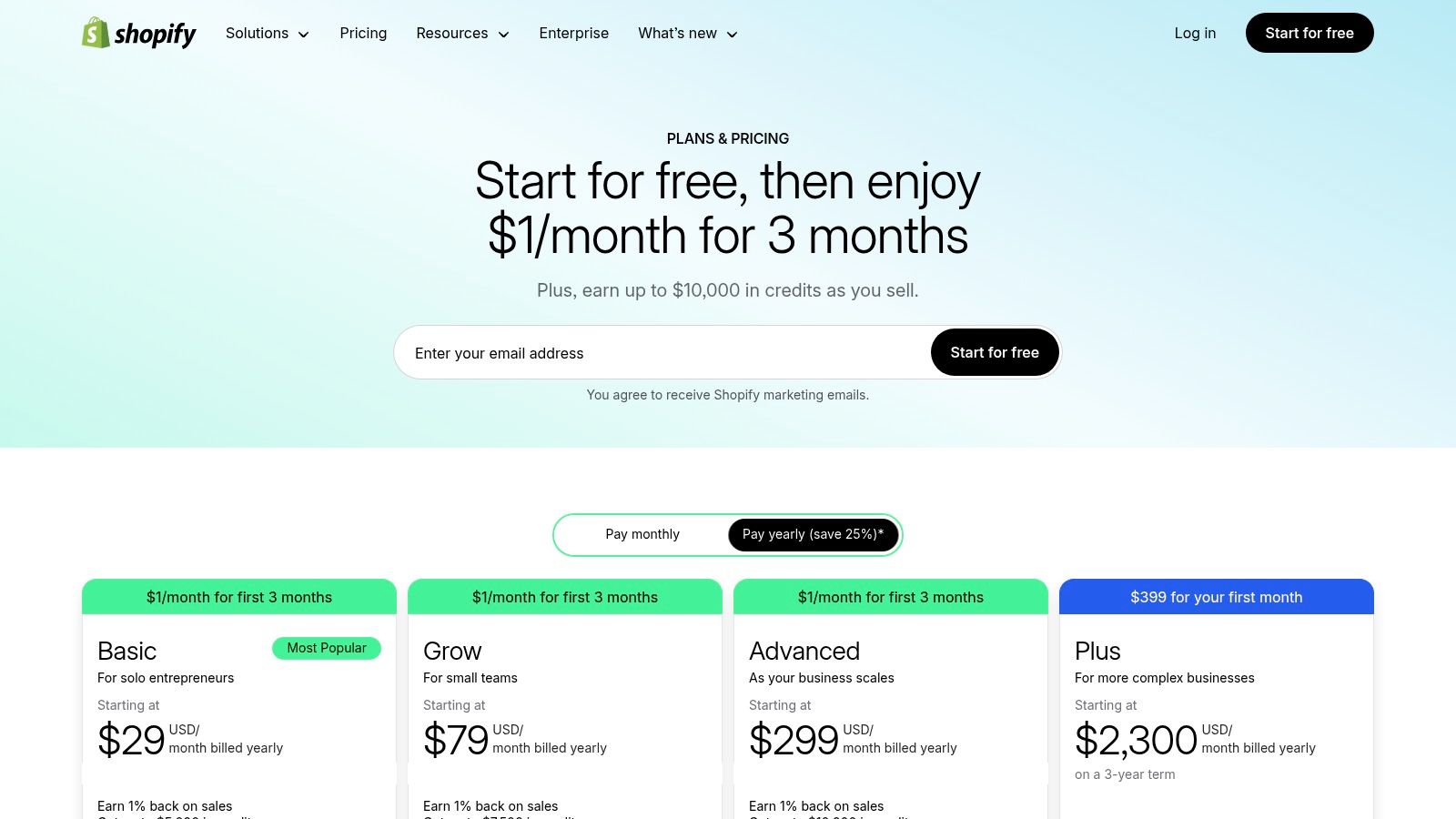
Shopify's pricing begins with a basic plan around $29/month (billed annually) and scales up to Advanced and Shopify Plus tiers for larger enterprises. Transaction fees apply unless you use Shopify Payments, and many essential apps come with their own monthly subscription costs.
- Key Features: Integrated online store and POS, multi-channel sales capabilities, a world-class checkout experience, powerful analytics, and an extensive app marketplace.
- Best For: Businesses of any size that are primarily focused on e-commerce, including selling merchandise, add-on services, or direct booking experiences.
Pros:
- Excellent e-commerce tooling and checkout conversion benchmarks.
- Widely supported by a massive ecosystem of third-party apps and development agencies.
- Highly scalable, from a small startup to a large enterprise.
Cons:
- Transaction and payment processing rates, along with app fees, can accumulate quickly.
- Can be more complex and costly than necessary if you don't need its deep e-commerce features.
Website: https://www.shopify.com/pricing
5. WordPress.com
WordPress.com offers a streamlined entry into the world’s most popular content management system, providing the power of WordPress without the complexities of self-hosting. It is an excellent choice for small businesses that plan to scale, starting with a simple blog or portfolio and potentially growing into a full-fledged e-commerce operation. The platform uses a modern block editor, allowing for intuitive drag-and-drop page layouts within a vast library of professional themes, making the initial stages of website development straightforward.
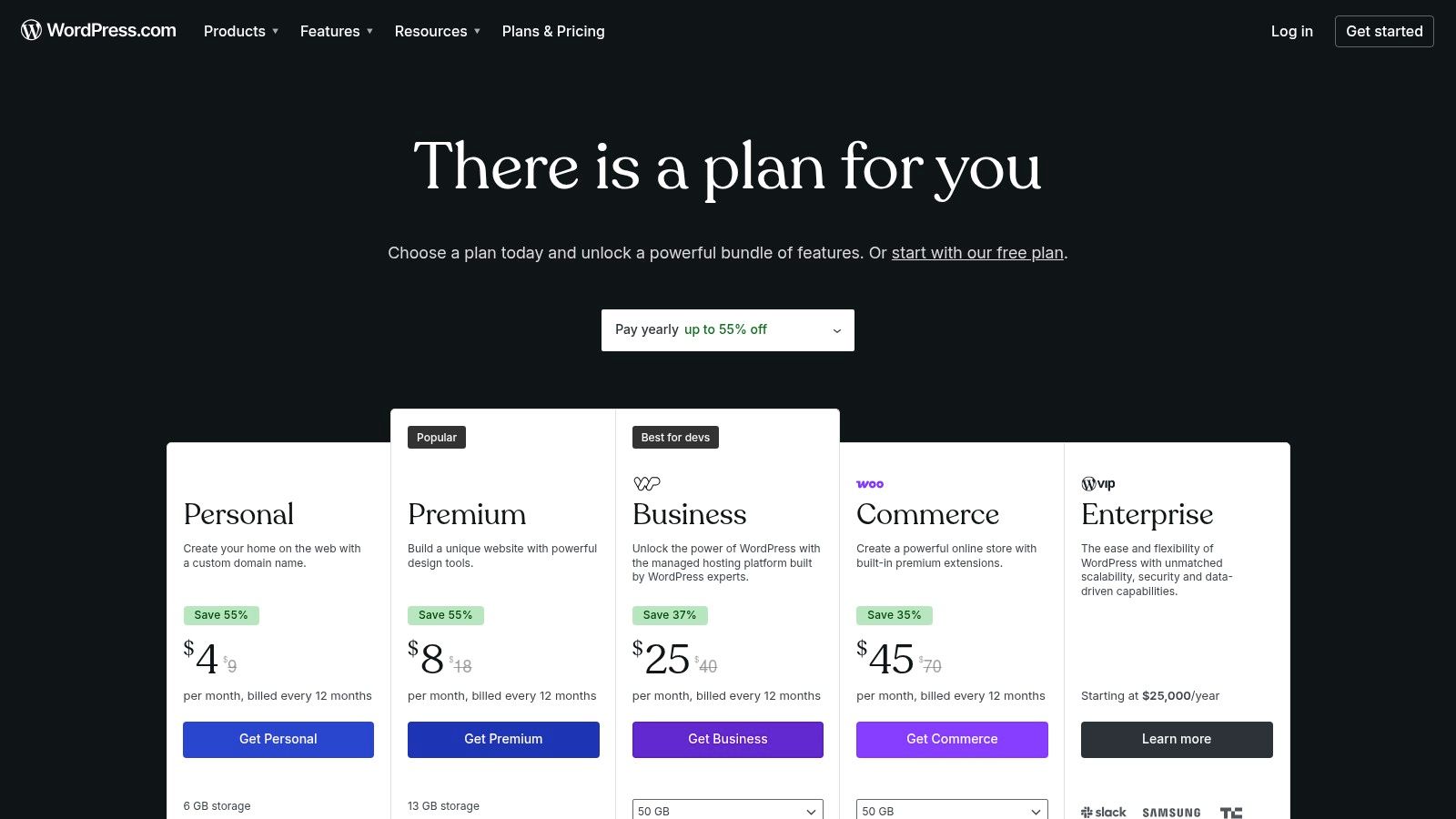
For short-term rental managers, WordPress.com becomes a powerhouse on its higher-tier plans. The ability to install plugins unlocks access to thousands of specialized tools for bookings, availability calendars, and direct payment integrations. You can install dedicated vacation rental themes and plugins to create a bespoke booking experience, giving you unparalleled control over your brand and operations compared to more restrictive builders. This level of customization is a key advantage for a growing rental business.
Core Features & Pricing
WordPress.com offers a free plan with basic features, but for business use, paid plans are essential. The Business plan (around $25/month billed annually) is required to install plugins, and the Commerce plan (around $45/month) adds powerful WooCommerce tools for e-commerce. These higher tiers unlock the true potential of the platform for a small business.
- Key Features: Block editor with drag-and-drop layouts, extensive theme library, plugin installation on Business+ plans, built-in analytics and marketing tools, and WooCommerce integration.
- Best For: Businesses that want the long-term flexibility and scalability of WordPress but prefer a managed, all-in-one solution to handle hosting and security.
Pros:
- Incredible scalability, from a simple blog to a complex booking and e-commerce site.
- Access to the vast WordPress ecosystem of themes and plugins (on higher plans).
- Your site is portable and can be migrated to a self-hosted solution later.
Cons:
- The most crucial features, like plugins and e-commerce, are locked behind more expensive plans.
- The sheer number of options can feel overwhelming for complete beginners.
Website: https://wordpress.com/pricing/
6. Square Online (Square/Weebly)
Square Online, born from Square's acquisition of Weebly, excels as one of the best website builders for small businesses already invested in the Square ecosystem. Its primary strength lies in the seamless integration between online and in-person sales. If you use Square's Point of Sale (POS) system for your local retail store, cafe, or service business, this builder allows you to manage inventory, sales, and customer data in one unified dashboard, making it incredibly efficient for omnichannel operations.
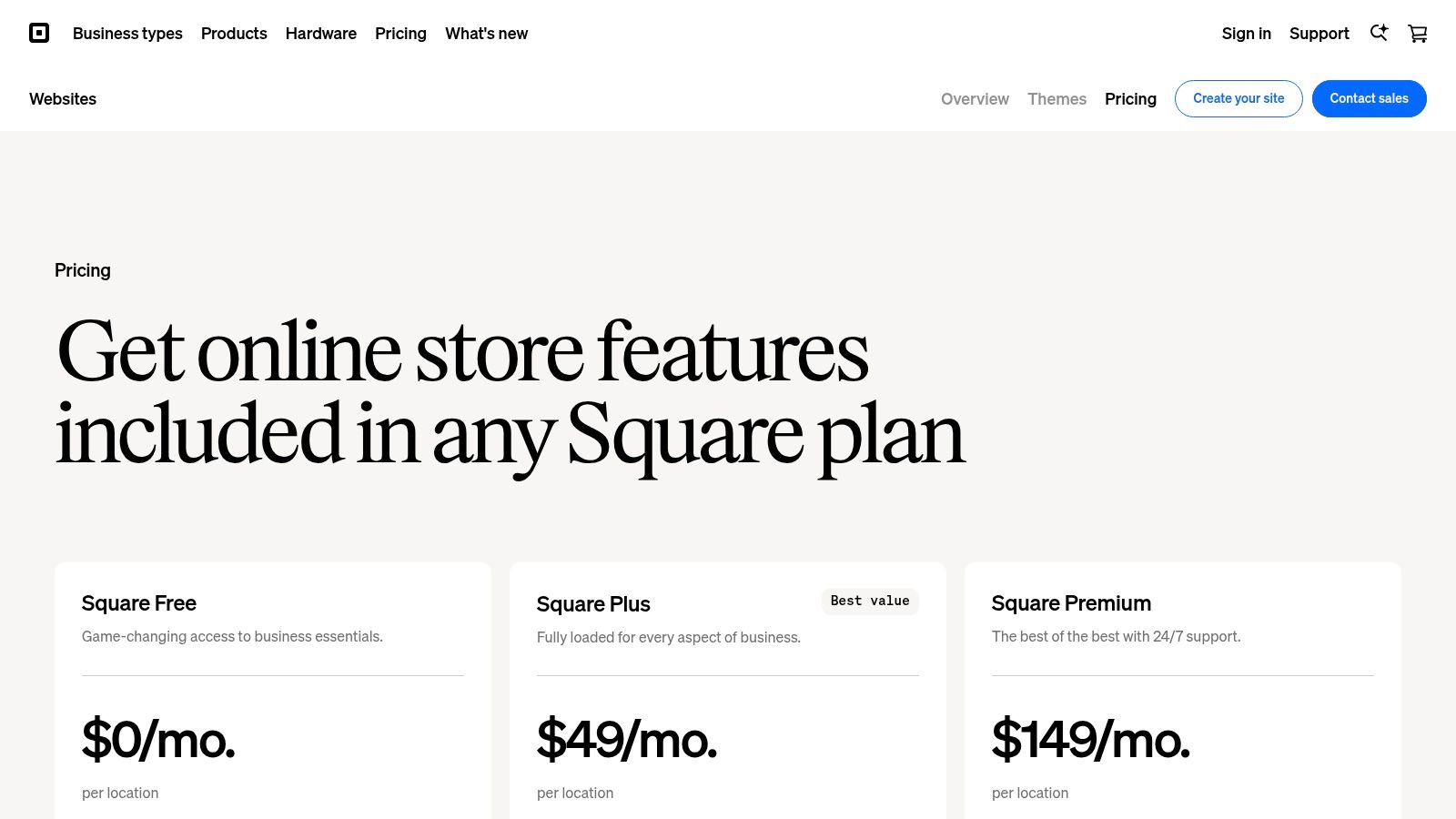
For service-based businesses like tour operators or experience providers in the hospitality sector, Square Online's built-in appointment booking is a major advantage. It syncs directly with your Square calendar and payments, simplifying the process for both you and your customers. While not designed specifically for multi-property short-term rentals, its ease of use and integrated payment processing make it a viable option for businesses offering bookable services or selling merchandise alongside their rentals. The setup is straightforward, prioritizing function over extensive design customization.
Core Features & Pricing
Square Online offers a compelling free plan that lets you sell online with basic features, only paying for transaction fees. Paid plans, starting with the Plus and Premium tiers, unlock advanced features like custom domains, expanded marketing tools, and lower processing rates. Pricing is often tied to your Square account and can include per-location fees for higher-tier plans.
- Key Features: Fully integrated with Square POS, built-in appointment scheduling, online ordering for pickup/delivery, social media selling tools, and transparent payment processing.
- Best For: Existing Square users, service businesses, restaurants, and local retailers who need a simple, unified system for online and offline commerce.
Pros:
- Seamless integration for in-person and online selling if you already use Square POS.
- Excellent free plan to get started with e-commerce.
- Simple and very easy setup process.
Cons:
- Design and customization options are more limited than competitors.
- Per-location fees on higher-tier plans can increase costs for growing businesses.
- Less suited for complex needs like multi-property vacation rental management.
Website: https://squareup.com/us/en/online-store/plans
7. Webflow
Webflow bridges the gap between simple drag-and-drop builders and custom-coded websites, positioning itself as one of the best website builders for small businesses that demand total design control. It provides a visual canvas that writes clean, semantic code as you design, offering the power of front-end development without the need to learn HTML, CSS, or JavaScript. This makes it an exceptional tool for designers and tech-savvy business owners who want a truly custom, high-performance site.
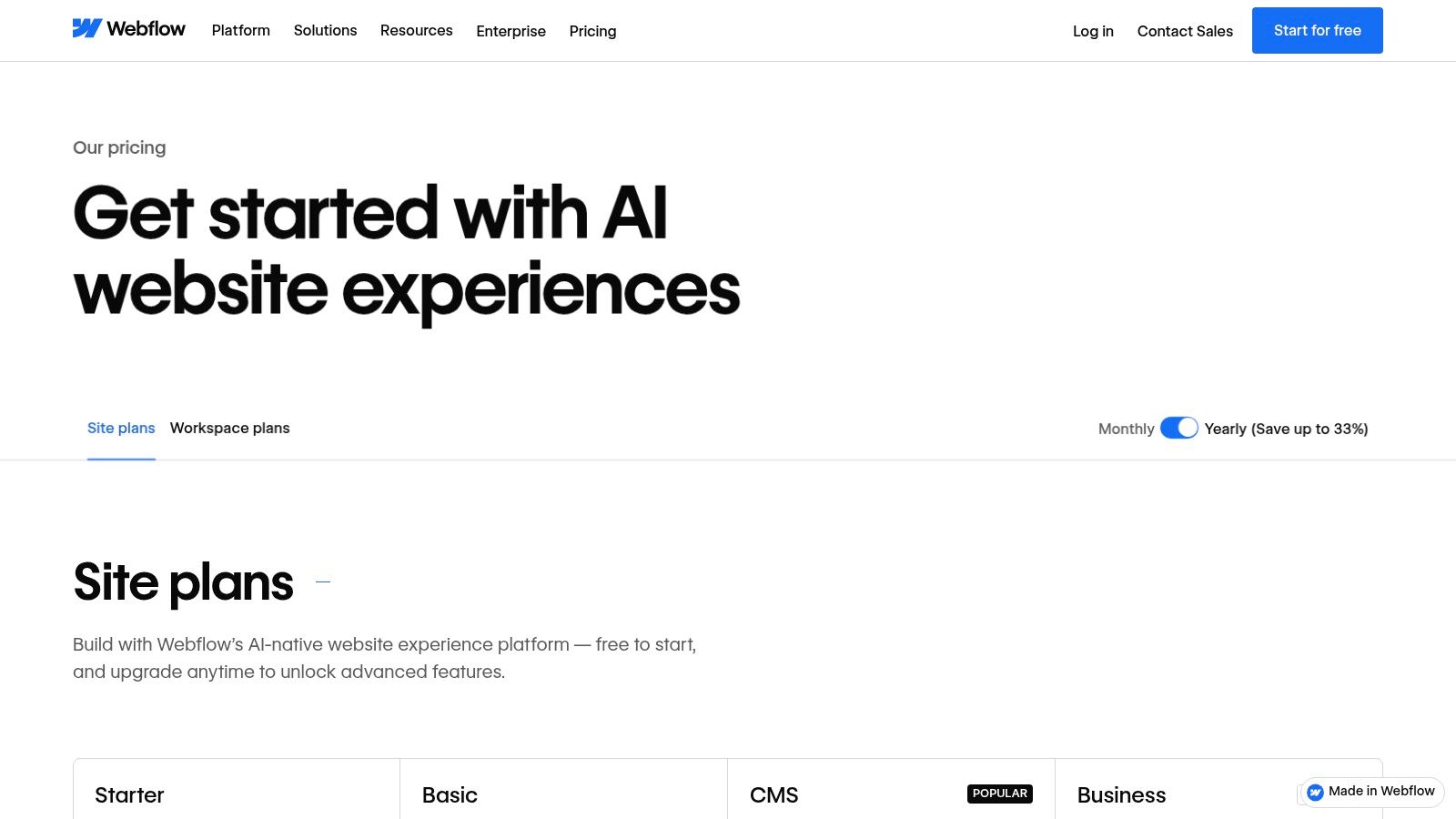
For short-term rental managers, Webflow's power lies in its robust Content Management System (CMS). You can create structured collections for properties, amenities, and blog posts, allowing for dynamic and easily updatable content across your site. While it doesn't have a native booking engine, its flexibility allows for seamless integration with third-party booking systems and APIs. This advanced customization is perfect for creating a premium, brand-focused direct booking experience that stands out from template-based competitors.
Core Features & Pricing
Webflow offers a free plan to build and learn the platform. Paid Site Plans for live websites start at around $14/month (billed annually) for basic sites and increase for CMS and Business-level features. E-commerce and Workspace plans for teams come with their own pricing structures, which can add up depending on your needs.
- Key Features: Visual no-code/low-code designer, powerful CMS for structured content, clean code output, advanced animations and interactions, and integrated hosting.
- Best For: Design-focused businesses, marketing agencies, and STR managers who need a highly custom, scalable website and are comfortable with a more technical platform.
Pros:
- Unmatched design control and customization without hand-coding.
- Excellent for creating fast, responsive, and professional marketing sites.
- Powerful CMS allows for scalable and dynamic content management.
Cons:
- Has a significantly steeper learning curve than simpler builders like Wix or Squarespace.
- Pricing can become complex with separate costs for the site, e-commerce, and team workspaces.
Website: https://webflow.com/pricing
8. GoDaddy Website Builder
GoDaddy Website Builder is engineered for speed and simplicity, making it one of the best website builders for small businesses that need to establish an online presence with minimal effort. Its AI-powered tool, Airo, helps generate initial site content and imagery, drastically reducing setup time. The platform bundles everything a new business needs, including hosting, an SSL certificate, and often a free domain for the first year, creating an all-in-one package for rapid deployment.
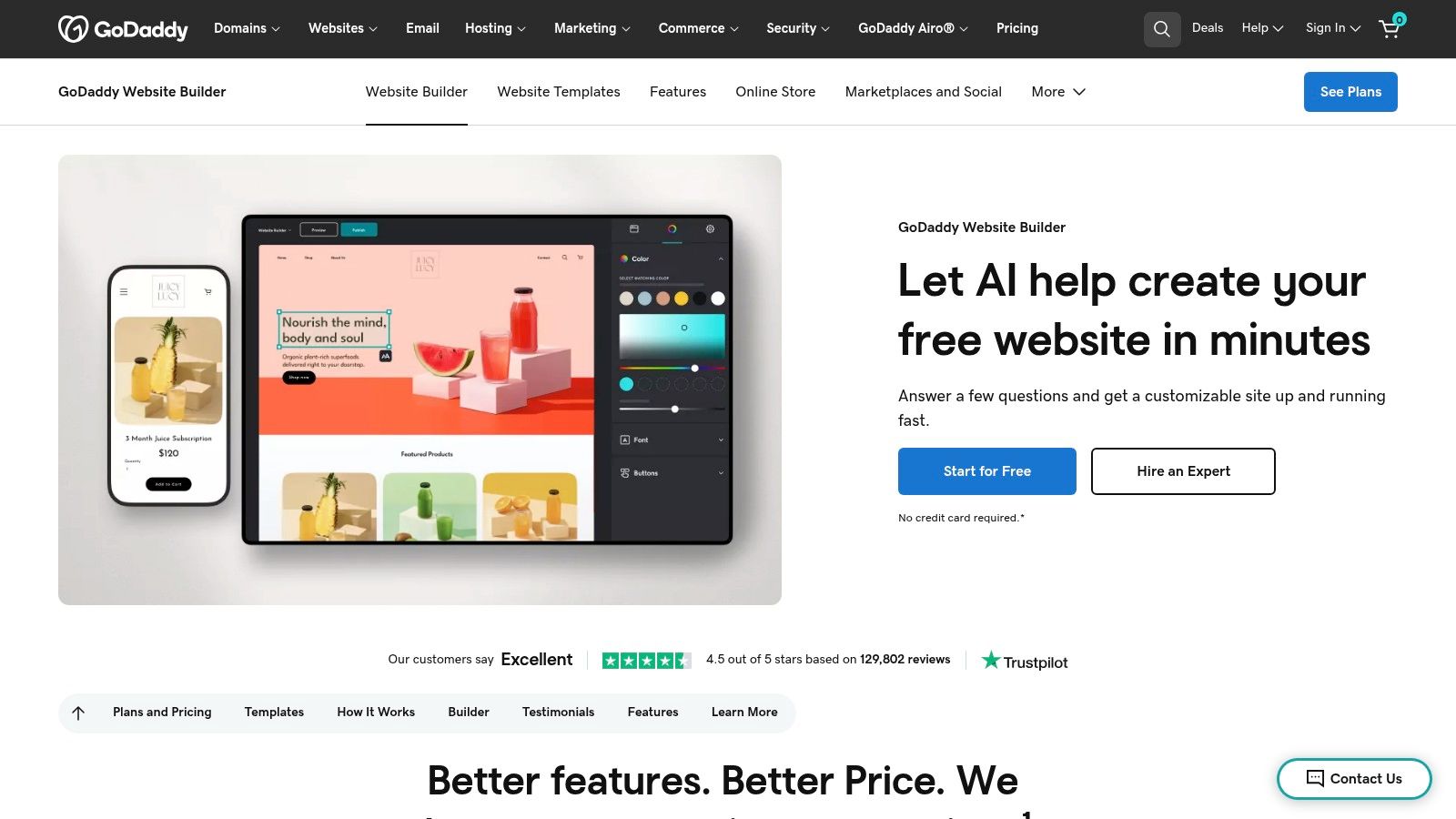
While not specifically designed for short-term rentals, its built-in appointment booking feature can be adapted for simple, single-property reservations. For more robust functionality, managers would need to integrate a third-party booking widget. GoDaddy's strength lies in its integrated marketing suite, which includes email marketing and social media posting tools directly within the dashboard, helping property managers attract guests and build their brand from a single platform.
Core Features & Pricing
GoDaddy offers a 7-day free trial and aggressive introductory pricing, often starting under $10/month. The Commerce plan is particularly notable for charging 0% platform transaction fees, though standard payment processor fees still apply. Be aware that renewal prices are significantly higher than the first-year promotional rates.
- Key Features: AI-assisted setup (Airo), professionally designed templates, bundled hosting and SSL, integrated email and social marketing tools, and an e-commerce plan with 0% transaction fees.
- Best For: Solopreneurs and very small businesses, including single-property hosts, who prioritize a fast, easy, and affordable launch over advanced design customization.
Pros:
- Extremely simple and fast setup process, ideal for beginners.
- Affordable introductory pricing with a free domain often included.
- All-in-one platform with built-in marketing tools.
Cons:
- Renewal prices are much higher after the initial promotional period ends.
- Limited design flexibility and customization compared to competitors like Wix or Webflow.
Website: https://www.godaddy.com/websites/website-builder
9. Hostinger Website Builder
Hostinger Website Builder (formerly Zyro) makes its mark as one of the best website builders for small businesses operating on a tight budget. It provides an all-in-one package that includes hosting, a free domain for the first year on certain plans, and a suite of AI-powered tools to accelerate the creation process. Its AI site generator, copywriter, and even logo maker can help entrepreneurs launch a professional-looking online presence with minimal initial investment and technical skill.
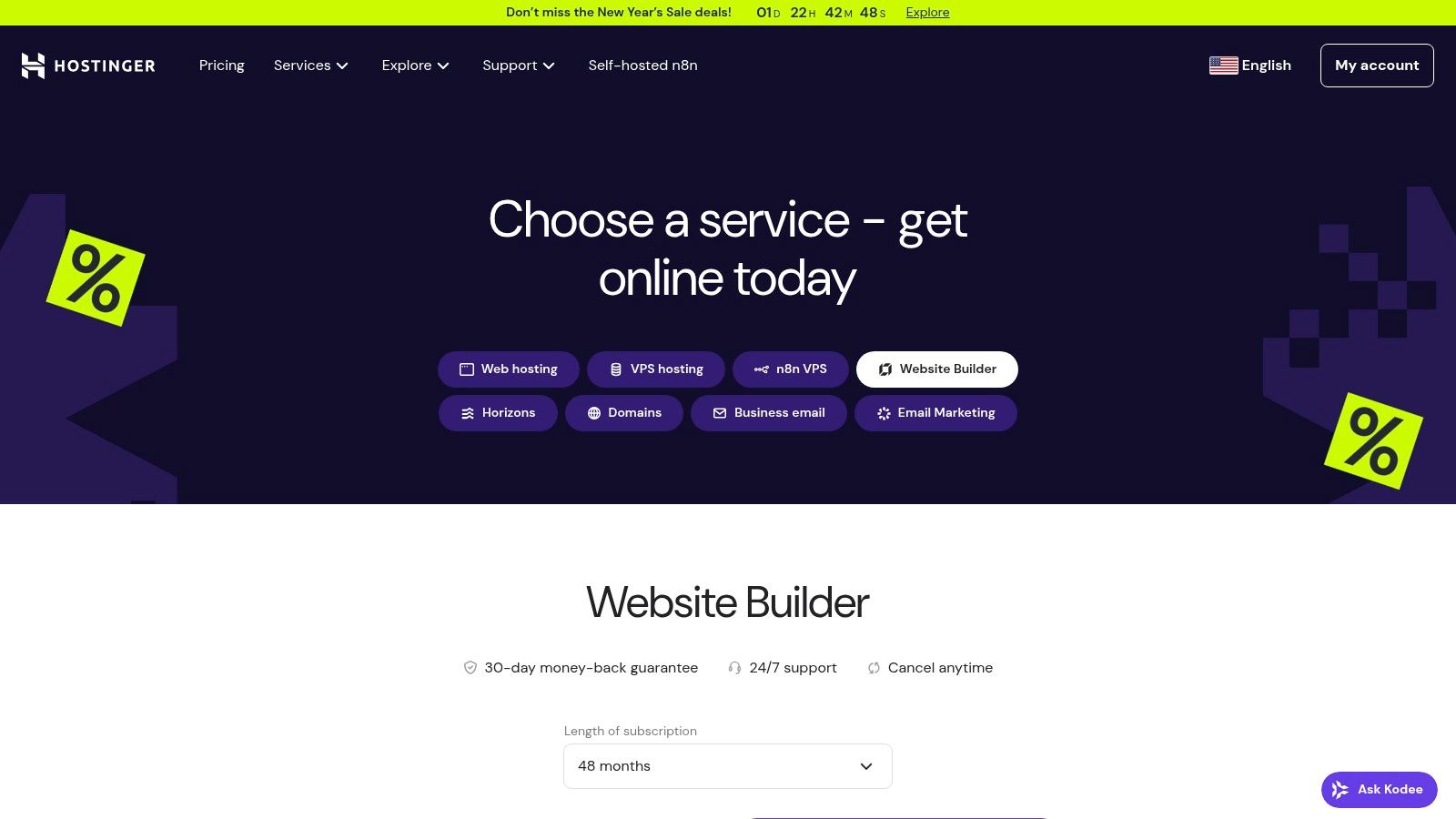
For short-term rental managers looking for a cost-effective direct booking site, Hostinger offers a compelling starting point. Its e-commerce functionality supports up to 1,000 products, which can be adapted for individual property listings, and integrates with over 100 payment gateways. While it lacks native channel management, its affordability allows you to create a simple, branded booking site to complement your listings on major OTAs, capturing direct revenue without significant overhead. The platform’s included marketing and SEO tools also provide a solid foundation for driving traffic.
Core Features & Pricing
Hostinger’s primary appeal is its aggressive introductory pricing, often available for just a few dollars per month when committing to a multi-year plan. These plans bundle hosting, the builder, a domain, and email. However, it's crucial to note that renewal rates are substantially higher than the promotional prices.
- Key Features: AI-powered site, copy, logo, and blog generators; integrated e-commerce with support for 100+ payment gateways; built-in SEO and marketing tools; free domain and email on qualifying plans.
- Best For: Startups, solopreneurs, and small rental businesses seeking an extremely low-cost entry point for building a functional website with modern AI assistance.
Pros:
- Very low entry price on multi-year promotional terms.
- Fast setup with a comprehensive suite of built-in AI tools.
- Bundles hosting, domain, and email for an all-in-one solution.
Cons:
- Promotional rates require long-term commitments (e.g., 48 months) to get the best price.
- Renewal rates jump significantly after the initial promotional term expires.
Website: https://www.hostinger.com/pricing/website-builder
10. Duda
Duda is a professional website builder engineered specifically for digital agencies and freelancers who manage multiple client websites. Its platform is built around efficiency and scale, featuring powerful team collaboration tools, client management permissions, and white-label capabilities that allow you to present the builder as your own. This makes it an excellent choice for property management companies or marketing agencies serving the short-term rental industry, providing a streamlined workflow for creating and deploying numerous branded sites.
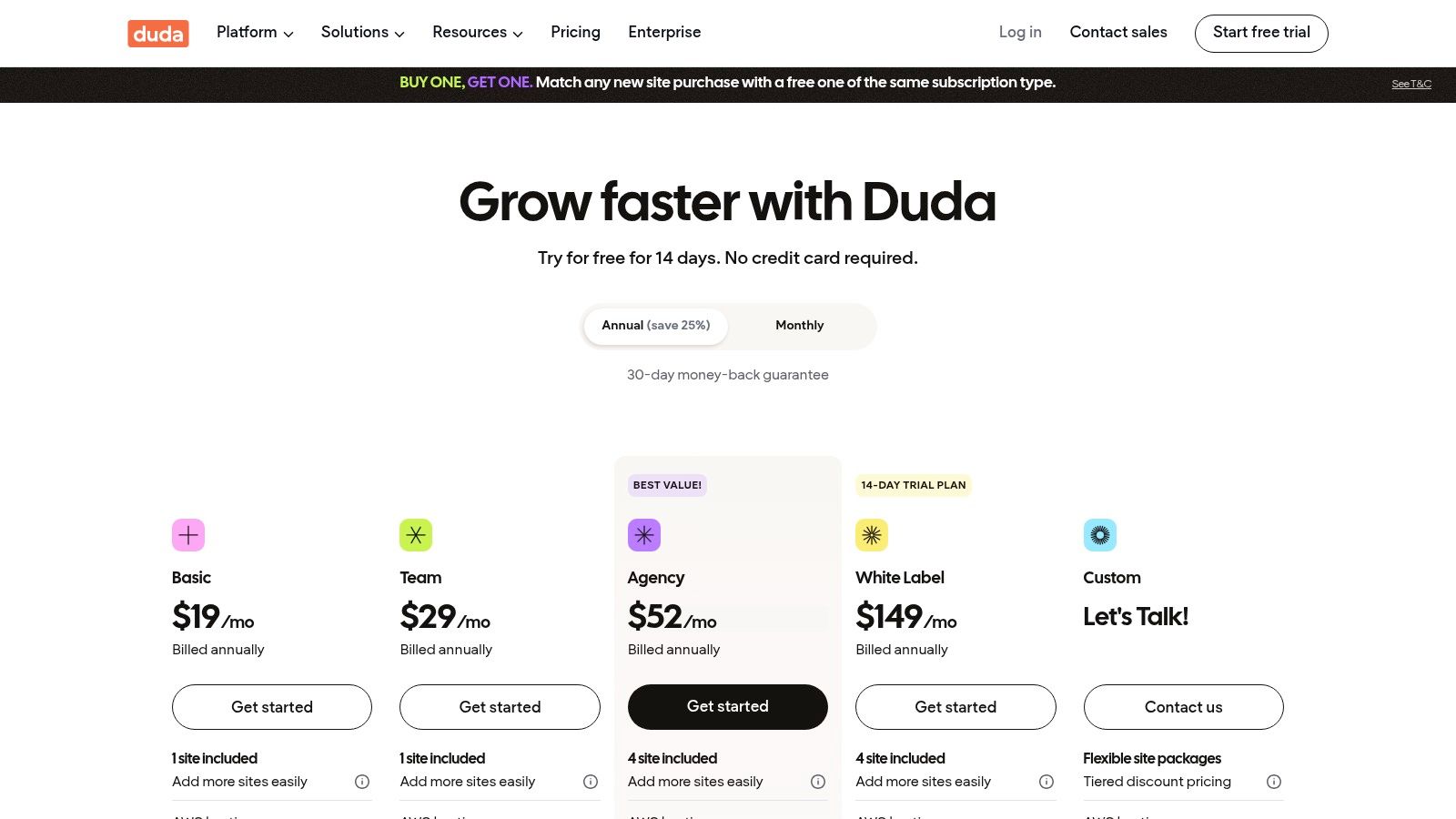
For operators managing a portfolio of distinct properties, Duda's model simplifies multi-site operations. You can create a master template for your rental business and quickly duplicate and customize it for each new property, ensuring brand consistency while saving significant development time. The platform’s focus on site speed and core web vitals also gives it an SEO advantage, helping your individual property sites rank better. Its widget builder and app store offer further customization for adding booking functionalities.
Core Features & Pricing
Duda's pricing is agency-focused, starting with a "Basic" plan around $25/month which includes one website and AWS hosting. Higher-tier plans reduce the per-site cost and add more team and client management features. E-commerce is available as a paid add-on.
- Key Features: Agency-grade client and team collaboration, white-labeling, fixed per-site rates beyond plan allocation, robust template and widget builder, and a strong focus on site performance.
- Best For: Digital agencies, freelancers, and large-scale property managers who build and manage websites for multiple clients or properties.
Pros:
- Purpose-built for agencies and multi-site management.
- Clear workflow for client approvals and collaboration.
- Excellent site speed and performance metrics out of the box.
Cons:
- Pricier than mainstream DIY builders for a single site.
- E-commerce functionality is an add-on rather than a core feature in base plans.
Website: https://www.duda.co/pricing
11. Strikingly
Strikingly is a simple, fast builder ideal for one-page or lightweight small-business sites, offering a free-forever plan that makes it easy to get started. Its editor prioritizes speed and simplicity, allowing users with no technical background to launch a professional-looking landing page or a simple multi-page site in minutes. This makes it an excellent choice for businesses that need a clean online presence without the complexity of more advanced platforms.
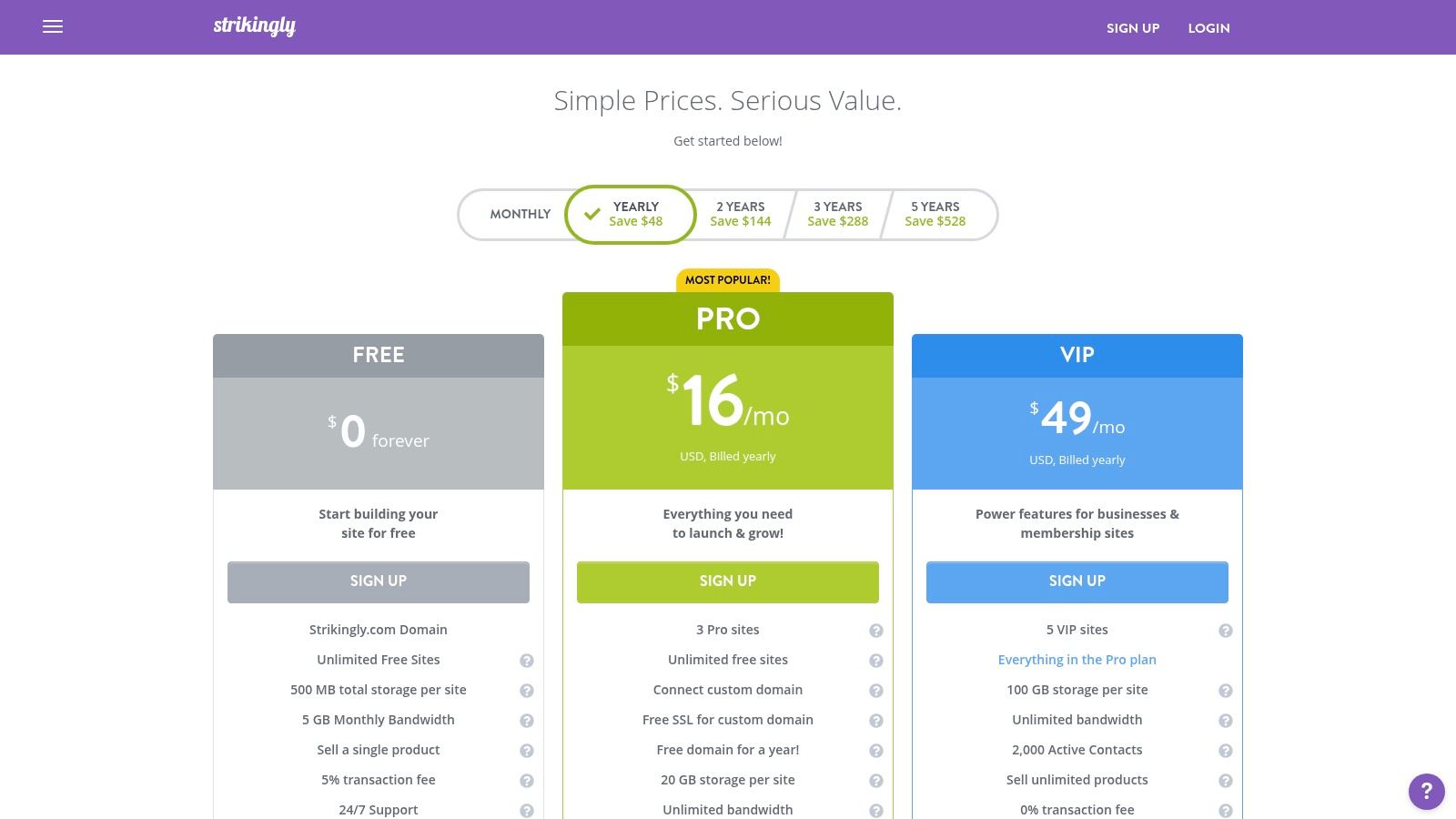
For short-term rental managers just starting, Strikingly can be a great way to create a digital business card or a single property showcase. While it lacks dedicated booking engines, you can use its simple store feature to take reservation deposits or embed third-party booking widgets. Its straightforward approach ensures you can create a mobile-responsive site quickly, focusing on essential information and high-quality photos to attract potential guests.
Core Features & Pricing
Strikingly offers a generous free-forever plan. Paid plans like Pro (from around $16/month) and VIP add custom domains, more pages, memberships, and e-commerce features with lower transaction fees. Significant discounts are available for multi-year commitments, making it an affordable option.
- Key Features: Free-forever plan, built-in store with tiered transaction fees, simple membership and blog features, and a user-friendly single-page site editor.
- Best For: Entrepreneurs and small businesses needing a simple, fast, and affordable web presence, particularly for single-page or portfolio-style sites.
Pros:
- Very quick to publish with an extremely low learning curve.
- Affordable Pro tier provides solid features for growing simple sites.
- Generous free plan for testing the platform or running a basic site.
Cons:
- Less flexible for complex, content-heavy, or multi-page websites.
- Advanced e-commerce and marketing features are reserved for the top-tier VIP plan.
Website: https://www.strikingly.com/s/pricing
12. G2 — Website Builder Software category
G2 is not a website builder itself, but a crucial research platform for any small business vetting their options. It's a vendor-neutral marketplace and review site where you can compare the best website builders side-by-side based on verified user ratings, feature filters, and comprehensive reports. This makes it an invaluable first stop before committing to a specific provider, allowing you to see how real-world users rate different platforms on ease of use, customer support, and specific functionalities.
For short-term rental managers, G2's detailed filters are particularly useful. You can narrow down choices based on essential criteria like e-commerce capabilities, built-in booking engines, or SEO tools. The platform’s quadrant reports and comparison charts provide a clear visual snapshot of market leaders versus niche players, helping you discover alternatives you might have otherwise missed. It’s the perfect tool for creating a data-driven shortlist.
Core Features & Pricing
G2 is free to use for research. It provides pricing snapshots and links directly to vendor trial and pricing pages, but you should always verify the most current details on the builder’s official website.
- Key Features: Verified user reviews, detailed feature comparison charts, G2 Grid reports, filters for business size and specific needs, and pricing overviews.
- Best For: Any small business, especially STR managers, in the initial research phase of selecting a website builder to make an informed, unbiased decision.
Pros:
- Excellent for side-by-side, vendor-neutral comparisons.
- Surfaces emerging tools and alternatives beyond the big, well-known names.
- Reviews from verified users provide authentic, real-world insights.
Cons:
- Sponsored placements can appear in search results.
- Always click through to vendor sites to confirm the most current pricing and feature sets.
Website: https://www.g2.com/categories/website-builder
Top 12 Small-Business Website Builders — Quick Comparison
| Product | Core features | Target audience | Unique selling point | Pricing & ROI |
|---|---|---|---|---|
| hostAI (recommended) | STR-focused site (programmatic SEO + booking engine), automated email, AI ad campaigns, dynamic pricing & retargeting | Vacation-rental/property managers, multi-listing operators | Purpose-built for STRs, conversion-first workflow, proven client ROI (claims up to $35K/mo uplift, 5–10× ROAS), fast go-live | Demo/quote only; ROI-driven claims (aims to double direct revenue) |
| Wix | Drag‑and‑drop editor, AI site creation, App Market, bookings, built‑in SEO | Small businesses, DIY builders, flexible design needs | Large template/app ecosystem, easy onboarding with AI | Tiered plans; promos common, pricing/renewals can be confusing |
| Squarespace | Polished templates, integrated commerce, email & scheduling, AI Design Intelligence | Design-first SMBs, boutique properties | Best-in-class aesthetics and integrated marketing tools | Paid plans only (14‑day trial); predictable tiers |
| Shopify | Online store, POS, multi-channel selling, robust checkout & analytics | Merchants prioritizing e‑commerce & in-person sales | Industry-leading e‑commerce and checkout conversion tools | Tiered pricing; app and transaction fees can increase cost |
| WordPress.com | Managed WordPress, block editor, themes, Business+ plugins, WooCommerce support | Sites needing WordPress flexibility without hosting management | Massive plugin/theme ecosystem and portability | Free to paid tiers; higher tiers required for plugin/e‑commerce |
| Square Online (Weebly) | Square payments + online store, social/text marketing, free tier | Restaurants, local retail, businesses needing POS integration | Seamless in-person + online selling via Square | Free tier available; paid plans and per-location fees for scale |
| Webflow | Visual designer, CMS, hosting, e‑commerce, localization & AI features | Designers, marketing teams, agencies wanting pixel control | Designer-grade control without hand-coding, modern performance | Site/e‑commerce plans; steeper learning curve, added seats/features cost |
| GoDaddy Website Builder | AI content (Airo), templates, bundled hosting & SSL, basic commerce | Very small businesses needing fast launch | Fast setup, low introductory pricing, simple workflow | Promo pricing available; renewal rates typically higher |
| Hostinger Website Builder | AI site/copy/image tools, SEO assistant, e‑commerce support, domain/email bundles | Budget-conscious SMBs and startups | Very low entry price with built-in AI tools | Very low promo rates on long terms; renewal jump after promo |
| Duda | Agency-grade client permissions, white-labeling, AWS hosting, widget/app store | Agencies and operators managing many branded sites | Purpose-built multi-site/agency workflow and client controls | Pricier than DIY builders; per-site add-ons beyond plan |
| Strikingly | One-page focus, free-forever plan, simple store & memberships | Single‑page sites, micro businesses, personal projects | Extremely quick to publish, very low learning curve | Free forever with Pro/VIP upgrades; limited for complex sites |
| G2 — Website Builder category | Verified reviews, comparison filters, quadrant reports, vendor links | Buyers shortlisting website builders and reading user reviews | Vendor-neutral comparisons and high review volume | Free to use; vendor pricing/details vary per listing |
Making the Right Choice: From Builder to Booking Engine
Navigating the landscape of the best website builders for small business can feel overwhelming, but the journey to establishing a powerful online presence is a crucial one. We’ve explored a dozen powerful platforms, from the all-in-one simplicity of GoDaddy and Hostinger to the design-forward flexibility of Webflow and the e-commerce dominance of Shopify. Each tool offers a unique pathway to creating a digital storefront, blog, or portfolio. However, the most critical takeaway is that the "best" builder is never a one-size-fits-all solution; it is entirely dependent on your specific business model, technical comfort level, and long-term growth ambitions.
For general small businesses, platforms like Wix and Squarespace present an excellent balance of user-friendliness and creative control. Their drag-and-drop editors and extensive template libraries make it possible for anyone to launch a professional-looking site without writing a single line of code. For those with a heavy focus on selling physical products, Shopify remains the undisputed champion, providing a robust, scalable e-commerce ecosystem. But what about businesses with more specialized needs, like short-term rental management?
The Specialist vs. The Generalist: A Critical Decision for STRs
This is where the distinction between a general-purpose tool and a specialized solution becomes paramount. While you can certainly adapt a platform like Wix or WordPress.com for your vacation rental business by adding booking widgets and plugins, you are essentially patching together a system. This approach often leads to disjointed user experiences, data silos, and a constant struggle to integrate essential industry tools like dynamic pricing engines, channel managers, and automated guest communications. You spend more time managing the technology than you do managing your properties and delighting your guests.
A purpose-built platform like hostAI is engineered from the ground up to solve the unique challenges of the STR industry. It’s not just a website builder; it's an integrated direct booking engine designed to convert lookers into bookers. It understands the nuances of nightly rates, availability calendars, and the programmatic SEO needed to rank for location-specific keywords. This specialization moves you from merely having a website to owning a powerful, automated direct revenue channel that reduces your reliance on high-commission Online Travel Agencies (OTAs).
Your Action Plan for Selecting the Right Platform
To make your final decision, move beyond feature lists and consider the strategic implications of your choice. Here’s a clear action plan to guide you:
- Define Your Core Need: Are you primarily selling products (Shopify), offering services (Wix/Squarespace), or driving direct bookings for properties (hostAI)? Your core business function should be the primary driver of your decision.
- Assess Your Technical Skill: Be honest about your comfort level with technology. If you want maximum ease of use, a builder like Square Online or Strikingly is a great starting point. If you crave total design freedom and have the time to learn, Webflow offers unparalleled control.
- Map Your Growth Trajectory: Think about where your business will be in one, three, or five years. Will you need advanced marketing automations, multi-property management, or complex integrations? Choosing a platform that can scale with you, like WordPress.com or a specialized tool like hostAI, will prevent a costly and time-consuming migration down the road.
- Evaluate the Design Potential: Your website's visual appeal is non-negotiable for building trust and credibility. When selecting a website builder, it's crucial to understand the key elements of modern website design to ensure your platform provides the aesthetics and functionality needed to impress visitors. A great design is not just about looks; it’s about creating a seamless user journey that guides visitors toward your booking or checkout page.
Ultimately, choosing from the best website builders for small business is an investment in your brand's future. By aligning your selection with your specific business model, particularly in a niche like short-term rentals, you empower yourself to build a more profitable, resilient, and independent brand.
Ready to move beyond a generic website and build a powerful direct booking engine? See how hostAI combines an intelligent, high-converting website with automated marketing tools specifically designed for short-term rental managers. Explore hostAI and start turning website traffic into commission-free bookings today.