

marketing campaign management tools
12 Best Marketing Campaign Management Tools for STRs in 2025
Posted on Dec 16, 2025
Running a successful vacation rental business means more than just managing properties; it requires a strategic approach to marketing to keep bookings high and occupancy rates optimized. Juggling email newsletters, social media updates, targeted ads, and guest follow-ups can quickly become overwhelming without the right systems. This is where dedicated marketing campaign management tools become essential, acting as a central hub to orchestrate, automate, and analyze all your promotional efforts. These platforms solve the critical problem of fragmented marketing, saving you time and providing clear data on what's actually driving new and repeat bookings.
This guide is designed to cut through the noise and help you select the best marketing stack for your short-term rental business. We've moved beyond generic descriptions to provide a detailed breakdown of the top tools available, from all-in-one powerhouses like HubSpot and Salesforce to specialized solutions for email, social media, and advertising. For those specifically looking to streamline their social presence, you can explore comprehensive reviews of the best social media management platforms to understand the full scope of available solutions.
Here, you will find a thoroughly vetted list organized into clear categories. Each entry includes:
- Key Features: A focused look at the functionalities most relevant to a property manager.
- Pros & Cons: An honest assessment based on real-world application.
- Pricing Tiers: A clear breakdown of costs to fit your budget.
- Integration Notes: How each tool connects with your existing software, including our own hostAI.
- Screenshots & Links: Visual aids and direct access to explore each platform.
Our goal is to equip you with the information needed to build an efficient, scalable marketing engine that keeps your properties booked year-round. Let's find the right tools for your business.
1. hostAI
hostAI stands out as a premier all-in-one marketing campaign management tool specifically engineered for the vacation and short-term rental (STR) industry. It moves beyond single-point solutions by bundling a suite of AI-powered products into a unified platform, allowing property managers to drive direct bookings, enhance their brand presence, and automate complex marketing workflows from a single dashboard. This integrated approach is its core differentiator, connecting the dots between a high-converting website, automated email outreach, and data-driven ad campaigns.
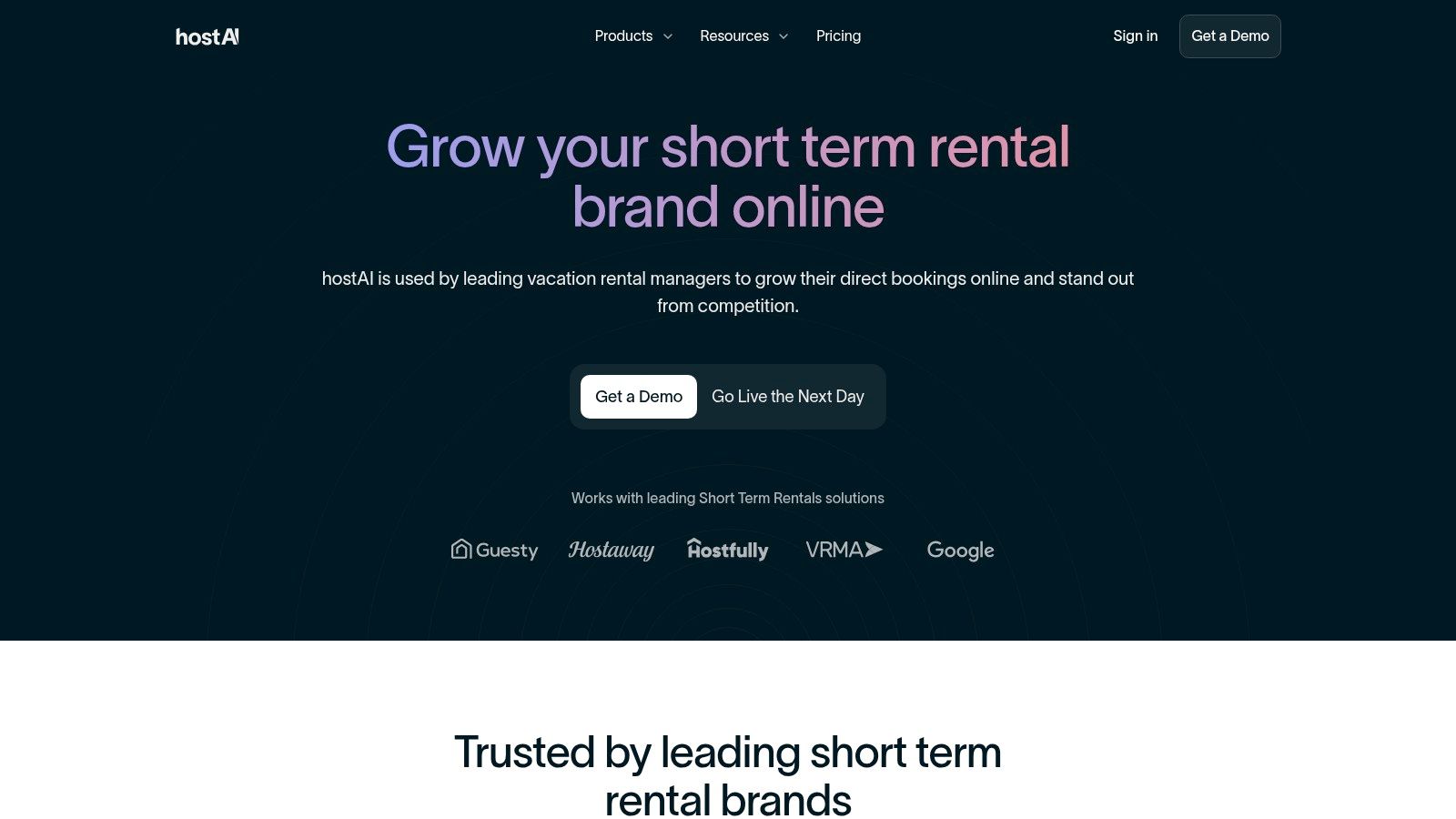
The platform is built on three pillars: hostFront for intelligent websites with a dedicated booking engine, hostMail for personalized email marketing automation, and hostDistro for hands-free, AI-powered advertising. This structure enables managers to launch sophisticated strategies like programmatic SEO to capture organic search traffic and smart retargeting to re-engage potential guests, all aimed at reducing reliance on costly online travel agencies (OTAs).
Key Features & Use Cases
- Integrated AI Marketing Suite: The true power lies in the synergy between its components. For example, website visitor data from hostFront can trigger automated retargeting ads via hostDistro and personalized follow-up emails through hostMail, creating a cohesive and highly effective guest journey. This unified system eliminates the data silos common with using separate tools for each function.
- Revenue and Brand Focused: hostAI is unapologetically focused on measurable ROI. Features like dynamic, personalized pricing, modern brand-centric designs, and a streamlined booking engine are all geared toward increasing guest trust and maximizing direct revenue. Case studies from clients like Sojourn DC and Misfit Homes report tangible results, including 5x-10x return on ad spend and significant monthly increases in direct bookings.
- Rapid Deployment: A key advantage for busy operators is the platform’s promise of a quick launch, often with a "Go Live the Next Day" timeline. This allows managers to start seeing an impact on their direct booking numbers without a lengthy and complicated implementation process.
Pricing and Onboarding
hostAI does not offer public pricing, opting for a demo-based sales model where plans are tailored to a company's portfolio size and specific needs. While this makes upfront budgeting difficult for smaller operators, it ensures the solution is customized. The onboarding process is designed to be swift, leveraging your existing property data to populate the platform quickly.
Pros:
- Unified Platform: Combines website, email, and ad management to ensure all marketing efforts are coordinated.
- Direct Booking Focus: Every feature is optimized to drive direct revenue and reduce OTA dependency.
- Fast Implementation: Designed for a quick go-live, delivering faster results than traditional marketing stacks.
- Proven Results: Client testimonials highlight significant uplifts in bookings and impressive return on ad spend.
Cons:
- Opaque Pricing: Requires a demo to get a quote, which can be a hurdle for initial research.
- Performance Variability: ROI can depend heavily on portfolio size, market dynamics, and data quality.
Website: https://gethostai.com
2. HubSpot Marketing Hub
HubSpot Marketing Hub is an all-in-one platform that brings your marketing, sales, and service activities into a single, unified system. For vacation rental managers, this means you can manage guest communications, ad campaigns, social media, and email marketing without juggling multiple disconnected tools. Its core strength lies in its tight integration with the free HubSpot CRM, providing a comprehensive view of the entire guest journey, from their first website visit to their post-stay follow-up.
This platform excels at automating guest nurturing sequences. For example, you can create a workflow that automatically sends a series of pre-stay emails with property details and local recommendations, triggered by a booking confirmation. HubSpot’s robust analytics and attribution reporting (especially in higher tiers) make it one of the most powerful marketing campaign management tools for understanding which channels drive the most valuable bookings.
Key Features & Use Cases
- Omnichannel Automation: Build workflows to automate guest communication across email, social media, and paid ads. Trigger a retargeting ad campaign on Facebook for users who visited a specific property page but didn't book.
- Integrated CRM: Every marketing interaction is logged against a contact record, giving your team full context on past inquiries, stays, and communication history.
- Landing Pages & Forms: Quickly create high-converting landing pages for special offers or lead magnets (e.g., "Top 10 Family-Friendly Activities in [Your City]") to capture potential guest emails.
- Extensive Integrations: The marketplace of over 1,800 apps ensures it connects with most property management systems (PMS) and other essential software.
Pros and Cons
| Pros | Cons |
|---|---|
| Excellent for teams wanting a unified system | Can become expensive as contact lists grow |
| Free tier is perfect for testing core features | Mandatory onboarding fees for Pro & Enterprise |
| Scales effectively from small to large businesses | Advanced features are locked in higher tiers |
Pricing
HubSpot offers a "Free Tools" plan, with paid tiers starting at $18/month for the Starter plan, $800/month for Professional, and $3,600/month for Enterprise, billed annually. Note that costs increase with the number of marketing contacts.
Website: https://www.hubspot.com/products/marketing/pricing
3. Salesforce Marketing Cloud
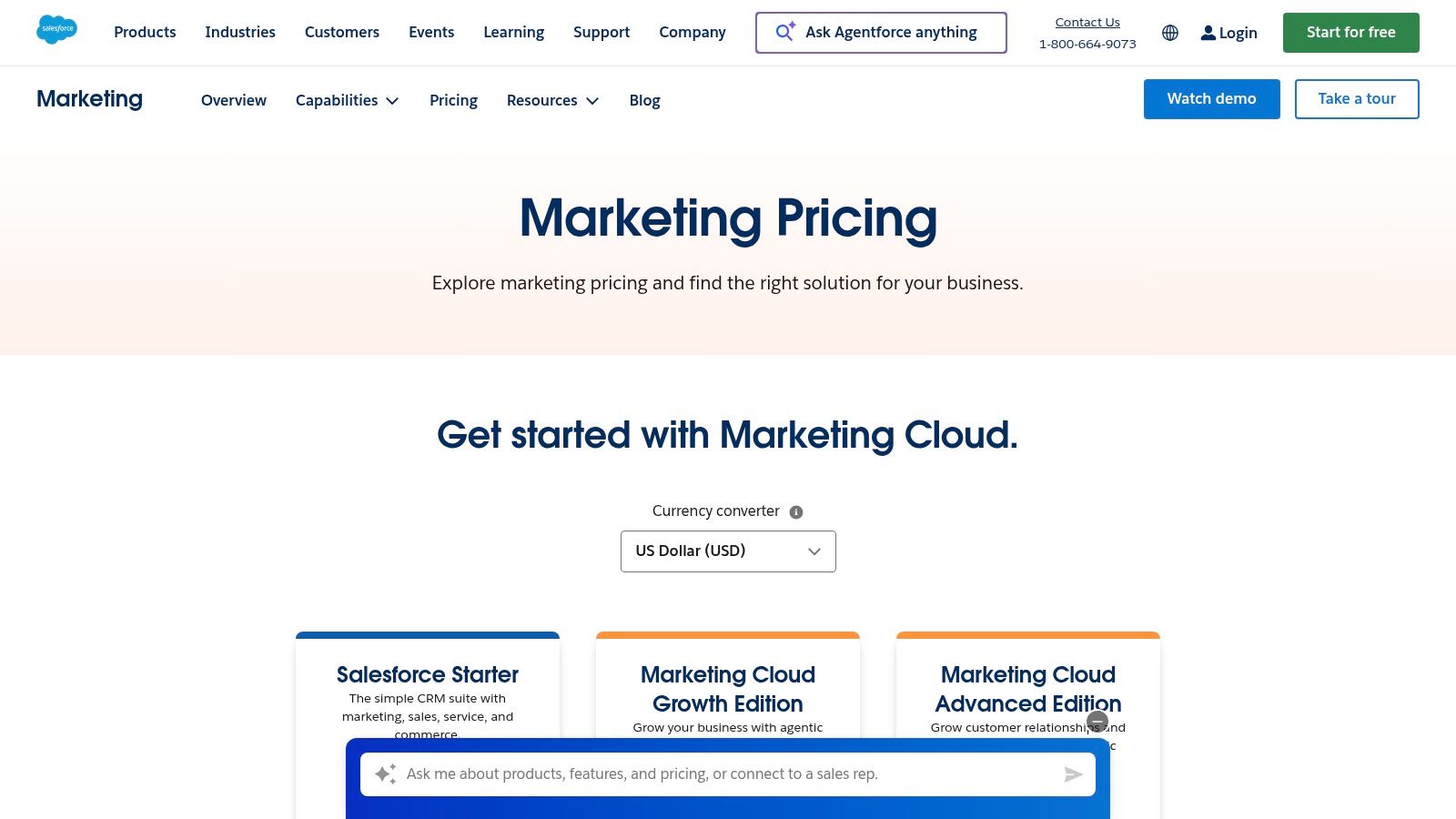
Salesforce Marketing Cloud is an enterprise-grade platform designed for complex, large-scale marketing operations. For established vacation rental brands managing extensive guest databases and sophisticated multi-channel campaigns, it offers unparalleled depth. Its core value comes from its native integration with the Salesforce CRM, allowing marketers to leverage deep guest data for hyper-personalized communication across email, mobile, SMS, and advertising.
This platform excels at building intricate guest journeys. A property manager could design a workflow that sends a personalized upsell offer for a longer stay via SMS to a past guest who has previously booked during the same season, all while using AI to determine the optimal send time. As one of the most powerful marketing campaign management tools, its strength lies not just in automation but in its advanced intelligence and personalization modules, making it ideal for data-driven teams aiming to maximize guest lifetime value.
Key Features & Use Cases
- Journey Orchestration: Map out and automate complex, multi-step guest journeys that react to guest behavior in real-time across email, SMS, and social ads.
- Deep CRM Data Access: Utilize rich data from Salesforce CRM to segment audiences with extreme precision, such as targeting past guests who stayed in pet-friendly properties with a new "Paws & Relax" package.
- Personalization and AI: Leverage Einstein AI to predict guest engagement, personalize content on the fly, and optimize campaign performance automatically.
- Advanced Analytics: Access detailed intelligence reports and dashboards to track campaign ROI, guest lifetime value, and channel effectiveness at a granular level.
Pros and Cons
| Pros | Cons |
|---|---|
| Extensive enterprise capabilities and ecosystem | Higher total cost of ownership versus SMB tools |
| Rich add-on modules for analytics and personalization | Implementation is typically required |
| Unmatched scalability for large operations | Typically sold on annual contracts |
Pricing
Salesforce Marketing Cloud pricing is customized based on the specific modules, contact volume, and features required. Plans like Pro, Corporate, and Enterprise are available, with pricing typically starting in the thousands of dollars per month, structured via annual contracts. A formal quote is necessary.
Website: https://www.salesforce.com/marketing/pricing/
4. Adobe Marketo Engage
Adobe Marketo Engage is an enterprise-grade automation platform designed for complex, large-scale marketing operations. While its roots are in B2B, its powerful segmentation and journey-building capabilities are well-suited for sophisticated vacation rental brands managing extensive guest databases. Its core strength lies in its ability to handle deep personalization and lead scoring, allowing managers to identify and prioritize high-value potential guests based on their on-site behavior and engagement history.
This platform excels at building intricate, multi-channel guest journeys. For example, a user who views luxury properties could be entered into a high-end nurture sequence featuring exclusive offers, while a user looking at pet-friendly units receives a different, tailored content stream. For property managers focused on data-driven decisions, Marketo is one of the most powerful marketing campaign management tools for advanced multitouch attribution, connecting every marketing touchpoint directly to booking revenue.
Key Features & Use Cases
- Advanced Segmentation: Create highly specific audience segments using a combination of demographic data, booking history, and website behavior to deliver hyper-personalized email and ad campaigns.
- Lead & Account Scoring: Assign scores to potential guests based on actions like opening emails, visiting a specific property page multiple times, or downloading a local guide, helping your team focus on the warmest leads.
- Multitouch Attribution: (Available in upper tiers) Gain deep insights into which marketing channels and campaigns are truly driving bookings, from the first click to the final confirmation.
- Dynamic Content: Automatically change email content, images, and calls-to-action based on the recipient’s profile, ensuring maximum relevance for every potential guest.
Pros and Cons
| Pros | Cons |
|---|---|
| Deep automation and personalization capabilities | Requires experienced administrators to manage |
| Powerful analytics and ROI reporting tools | Pricing is high and not publicly available |
| Scales to handle millions of contacts and data points | Can be overly complex for smaller operators |
Pricing
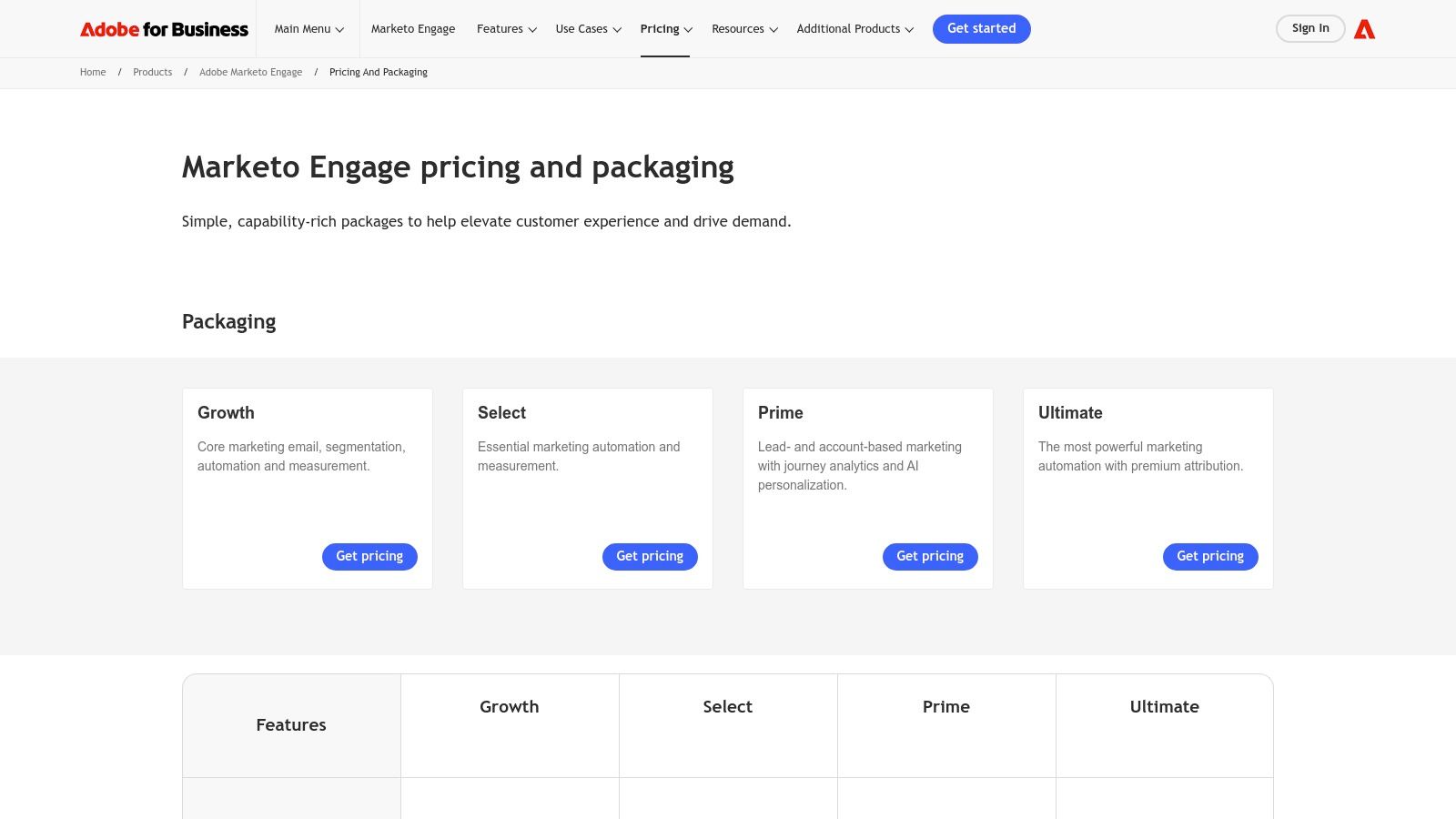
Marketo Engage pricing is quote-based and tailored to your specific needs, such as database size and feature requirements. You must contact their sales team for a custom quote.
Website: https://business.adobe.com/products/marketo/pricing.html
5. Mailchimp (by Intuit)
Mailchimp is a widely recognized email marketing and automation platform, making it an accessible entry point for vacation rental managers new to building guest communication funnels. Its user-friendly interface simplifies the process of creating email newsletters, abandoned cart reminders for direct booking sites, and automated welcome series for new subscribers. For property managers, this means easily sending beautifully designed emails to past guests with special offers or updates on new properties.
While not as comprehensive as an all-in-one CRM, Mailchimp provides strong audience management tools and integrates seamlessly with many e-commerce and booking platforms. Its strength lies in its simplicity and vast library of templates, allowing managers to launch professional-looking campaigns quickly. This makes it one of the most practical marketing campaign management tools for those prioritizing email and straightforward automations without the complexity of larger systems.
Key Features & Use Cases
- Email Campaigns & Journeys: Design and send one-off campaigns for holiday promotions or build multi-step automated journeys, such as a post-stay sequence that requests a review and then offers a discount for a future booking.
- Landing Pages & Forms: Create simple landing pages to capture leads from social media campaigns (e.g., "Download Our Free Guide to Local Hiking Trails") and embed signup forms directly on your website.
- Audience Segmentation: Group contacts based on their booking history, property interests, or engagement level to send highly targeted and relevant marketing messages.
- E-commerce Integrations: Connect with direct booking engines or platforms like Shopify to trigger emails based on booking activity, such as abandoned cart reminders or booking confirmations.
Pros and Cons
| Pros | Cons |
|---|---|
| Very easy to start with extensive tutorials | Advanced automation is limited to higher-priced tiers |
| Generous free plan for getting started | Can become expensive as your contact list grows |
| Excellent email builder and template library | Reporting capabilities are less robust than competitors |
Pricing
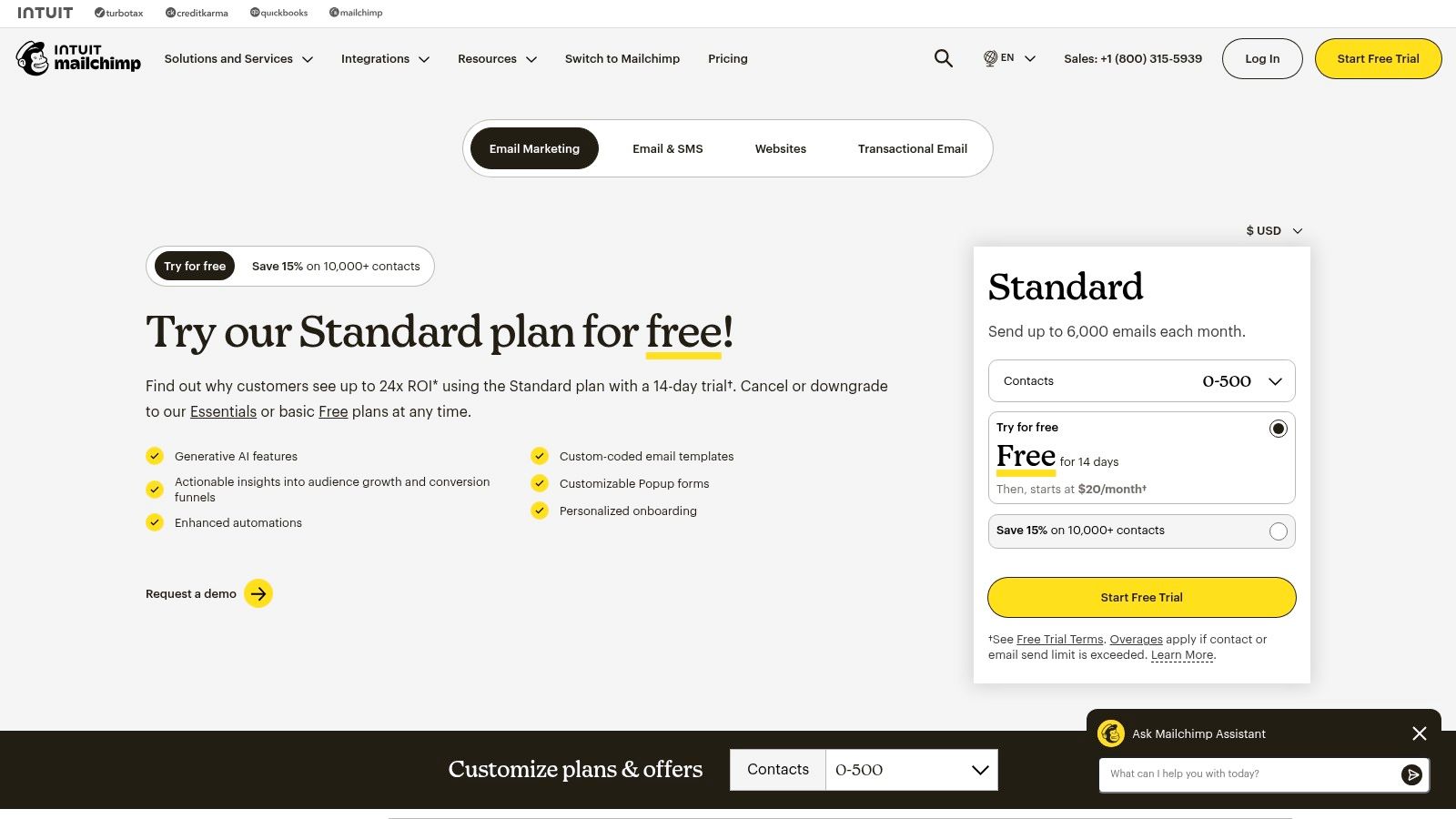
Mailchimp offers a Free plan for up to 500 contacts. Paid plans include Essentials starting at $13/month, Standard starting at $20/month, and Premium starting at $350/month. Costs are determined by the number of contacts and the feature set of each tier.
Website: https://mailchimp.com/pricing/
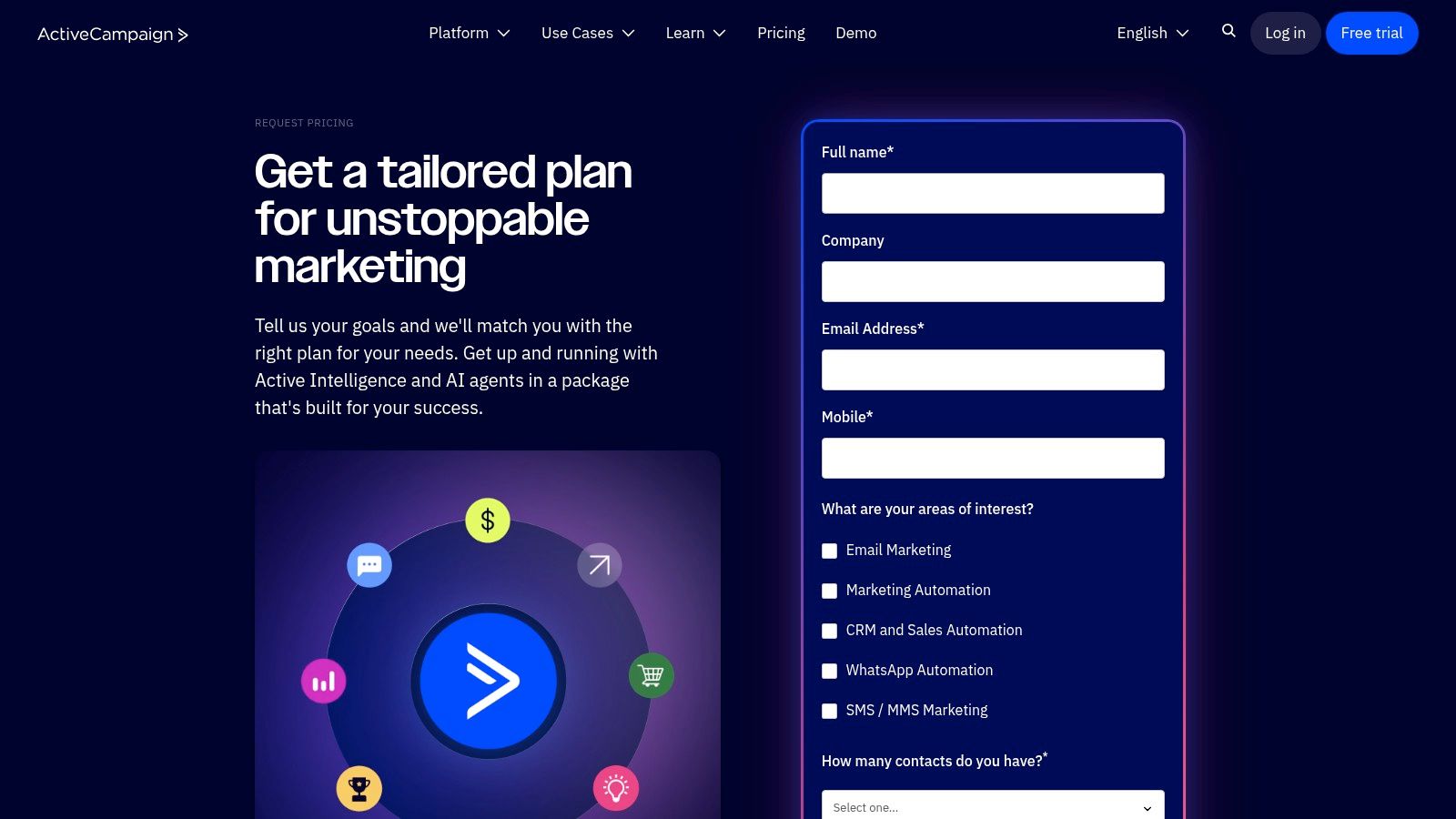
6. ActiveCampaign
ActiveCampaign is a powerful customer experience automation platform that combines email marketing, marketing automation, and a CRM. For vacation rental managers, its strength lies in creating sophisticated, personalized guest journeys that extend beyond just email. It enables you to automate communication based on guest behavior, such as a website visit, a past booking date, or an inquiry, ensuring timely and relevant messaging across multiple channels.
What sets ActiveCampaign apart is its visual automation builder, which allows for complex, logic-based workflows without requiring deep technical skill. You can design a path that sends a welcome email, followed by an SMS with check-in details two days before arrival, and then a post-stay review request. This level of granular control makes it one of the most flexible marketing campaign management tools for nurturing guest relationships from initial interest to repeat bookings.
Key Features & Use Cases
- Visual Automation Builder: Map out entire guest communication journeys with if/then logic. For example, if a guest opens a "special offer" email but doesn't click, send a follow-up SMS reminder 24 hours later.
- Multi-Channel Messaging: Engage guests where they are, using email, SMS, site messages, and even WhatsApp within a single automated workflow.
- Integrated CRM & Lead Scoring: Track every guest interaction and automatically score leads based on their engagement, helping you identify high-intent potential bookers for personalized follow-up.
- Dynamic Content: Personalize email content based on guest data, such as showing different local recommendations for family travelers versus couples.
Pros and Cons
| Pros | Cons |
|---|---|
| Powerful automation at an SMB-friendly price | Feature tiers based on contact volume can be complex |
| Excellent multi-channel messaging capabilities | Pricing is often "request a quote" in many regions |
| Intuitive visual workflow editor simplifies setup | Can have a steeper learning curve than simpler tools |
Pricing
ActiveCampaign's pricing is based on features and contact list size. The Marketing Lite plan starts at $29/month, Plus at $49/month, and Professional at $149/month, all billed annually for 1,000 contacts. Prices increase with contact volume, and many plans now require a direct quote.
Website: https://www.activecampaign.com/pricing/
7. Klaviyo
Klaviyo is a powerful email and SMS marketing platform primarily built for ecommerce, but its data-driven approach is highly adaptable for vacation rental managers using modern booking engines. Its strength lies in using guest data and booking behavior to trigger highly personalized, automated communication sequences. Unlike general-purpose email tools, Klaviyo is designed from the ground up to track revenue and attribute it directly to specific campaigns and automations.
This makes it one of the best marketing campaign management tools for hosts who want to prove the ROI of their marketing efforts. For instance, you can create a flow that automatically targets guests who stayed in a pet-friendly unit last year with a special offer for a similar property, then see exactly how much booking revenue that specific campaign generated. Its deep segmentation capabilities allow for hyper-targeted messaging that drives repeat bookings and ancillary revenue.
Key Features & Use Cases
- Behavior-Triggered Automation: Create automated email/SMS flows based on guest actions, such as viewing a specific property, abandoning a booking, or completing a stay. This is ideal for post-stay review requests or re-engagement campaigns.
- Advanced Segmentation: Segment your guest list based on booking history, total spend, stay dates, or property preferences to send incredibly relevant offers (e.g., "Last-minute deals for beach-front properties for past summer guests").
- Predictive Analytics: Use Klaviyo’s AI to predict a guest's next likely booking date or lifetime value, helping you focus marketing efforts on the most valuable contacts.
- Direct Revenue Attribution: Every campaign and automation flow reports the exact dollar amount of bookings it generated, providing clear insight into what marketing strategies are working.
Pros and Cons
| Pros | Cons |
|---|---|
| Excellent revenue tracking and ROI reporting | Pricing scales with contact count and SMS usage |
| Powerful segmentation and personalization tools | Best results require a modern direct booking site |
| Fast to implement with modern booking engines | Can have a steeper learning curve than simpler tools |
Pricing
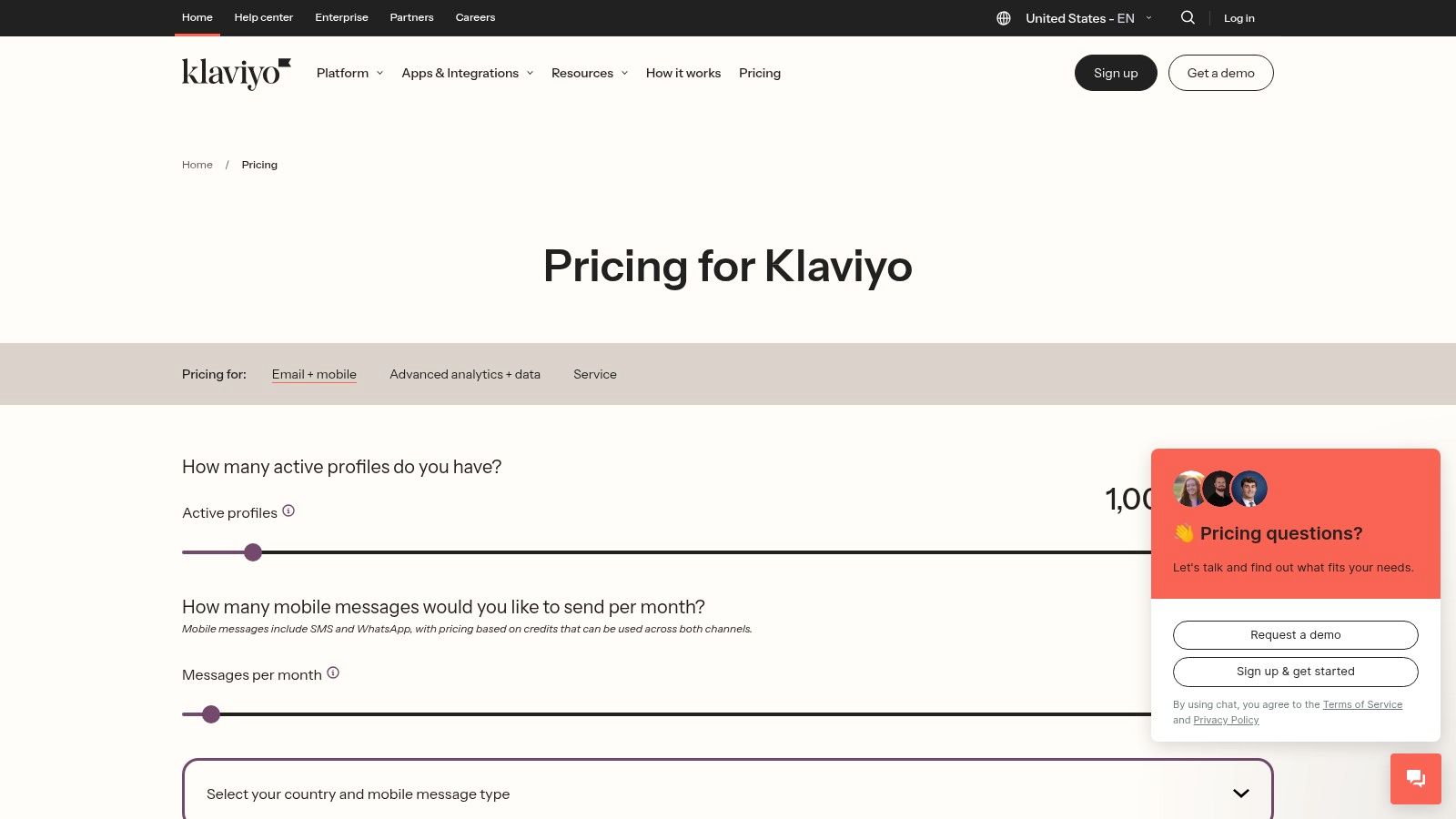
Klaviyo offers a free plan for up to 250 contacts and 500 email sends. Paid plans are flexible and scale based on the number of contacts and SMS credits needed. For example, the Email plan for 5,000 contacts is around $100/month, while the combined Email and SMS plan for the same number of contacts starts at $115/month.
Website: https://www.klaviyo.com/pricing
8. Sprout Social
Sprout Social is a comprehensive social media management platform designed for teams that need to execute both organic and paid campaigns with precision. For vacation rental managers, it consolidates publishing, engagement, analytics, and social listening into a single, collaborative dashboard. Its primary advantage is its ability to streamline complex social media workflows, making it easier to manage multiple property profiles across networks like Instagram, Facebook, and TikTok.
This platform shines in its reporting and team collaboration features. You can assign incoming guest inquiries from your social inbox to specific team members, ensuring prompt responses. Sprout Social also offers advanced listening tools, allowing you to monitor conversations about your brand, competitors, or local area to find booking opportunities. It’s one of the more robust marketing campaign management tools specifically tailored for social media, providing enterprise-level data to refine your STR digital marketing strategy.
Key Features & Use Cases
- Unified Smart Inbox: Manage all incoming messages, comments, and mentions from every social channel in one stream. Assign tasks to team members to handle guest questions or booking inquiries.
- Advanced Publishing & Calendar: Visually plan and schedule content for all your properties across multiple networks. Use the asset library to store approved photos and videos for easy access.
- Social Listening & Monitoring: Track keywords like "places to stay in [Your City]" or mentions of your brand to engage with potential guests and manage your online reputation proactively.
- Robust Analytics & Reporting: Generate detailed reports on post performance, audience growth, and campaign ROI to understand what content drives engagement and bookings.
Pros and Cons
| Pros | Cons |
|---|---|
| Enterprise-grade reporting and collaboration | Per-seat pricing can add up for large teams |
| 30-day free trial for extensive testing | Add-ons like listening are not in base plans |
| Excellent user interface and team workflows | Can be more complex than needed for solo managers |
Pricing
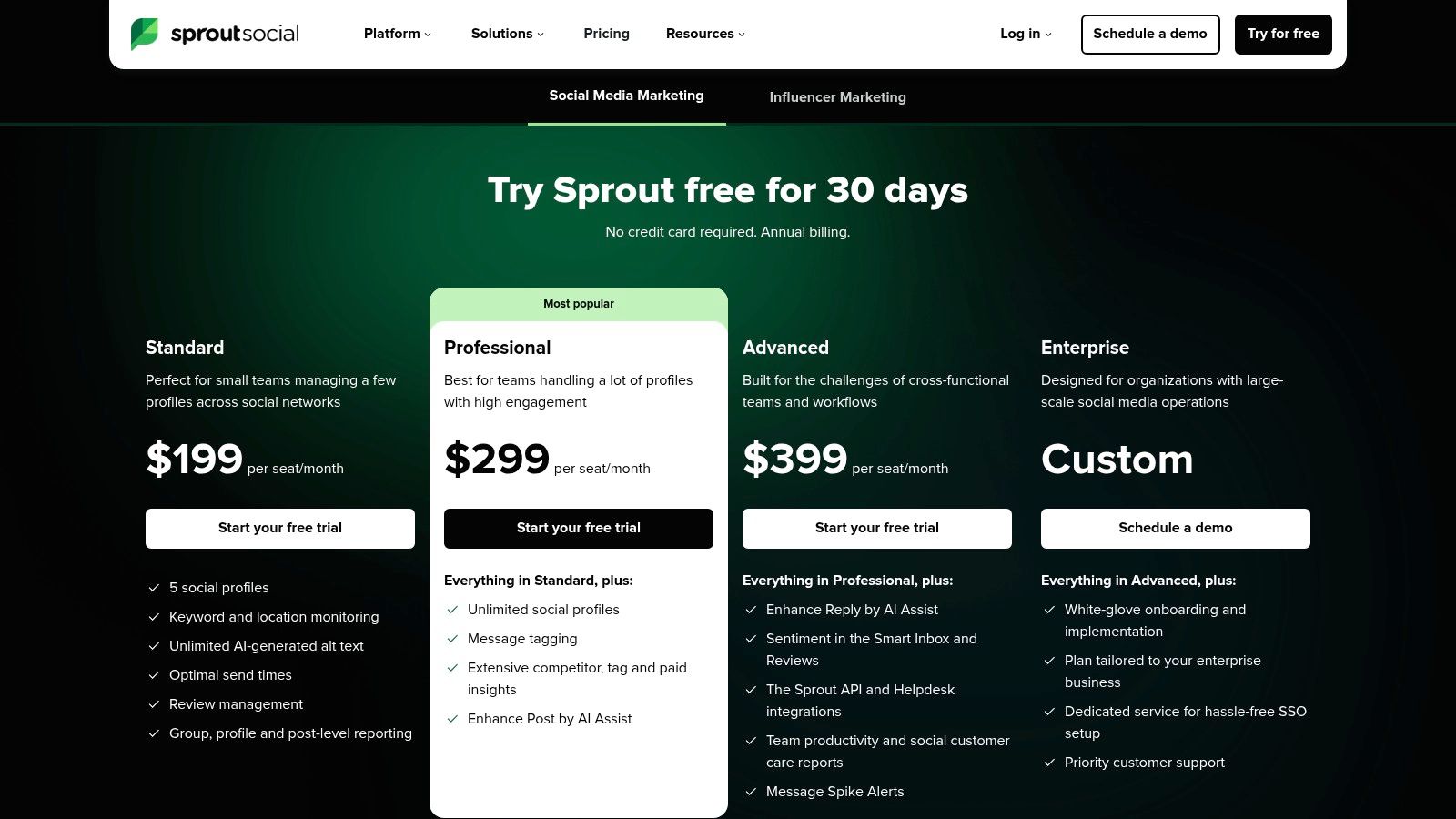
Sprout Social offers a 30-day free trial. Paid plans include Standard at $249/month per user, Professional at $399/month per user, and Advanced at $499/month per user. Enterprise-level plans are also available with custom pricing.
Website: https://sproutsocial.com/pricing/
9. Hootsuite
Hootsuite is one of the most established players in social media management, allowing vacation rental managers to centralize their social media presence across multiple channels and property brands. Its power lies in its comprehensive scheduling, monitoring, and analytics capabilities, which transform scattered social media efforts into a cohesive strategy. Instead of logging into Facebook, Instagram, and X (formerly Twitter) separately, you can plan, create, and schedule all your content from a single dashboard.
For property managers, this means efficiently promoting last-minute availability, sharing guest testimonials, and running targeted social ad campaigns without leaving the platform. Hootsuite’s unified inbox pulls all direct messages and comments into one stream, ensuring prompt guest service. As a dedicated social media tool, it's one of the most focused marketing campaign management tools for building brand awareness and engaging with past and potential guests directly on their preferred social networks.
Key Features & Use Cases
- Multi-Account Scheduling: Plan and schedule posts for all your property profiles weeks or months in advance. Use the "best time to post" suggestions to maximize reach and engagement.
- Unified Social Inbox: Manage all incoming messages, comments, and mentions from one place. Assign conversations to team members to ensure no guest inquiry is missed.
- Social Listening: Set up streams to monitor mentions of your brand, local competitors, or keywords like "vacation rental in [your city]" to find engagement opportunities.
- Analytics & Benchmarking: Generate reports to track follower growth, engagement rates, and post performance, helping you understand what content resonates most with your audience.
Pros and Cons
| Pros | Cons |
|---|---|
| Broad network coverage and template integrations | Advanced listening and reporting require higher tiers |
| Mature workflow features and a generous 30-day trial | Pricing can be confusing and varies by region |
| Nonprofit discounts are available on specific plans | Primarily focused on social, lacks broader marketing tools |
Pricing
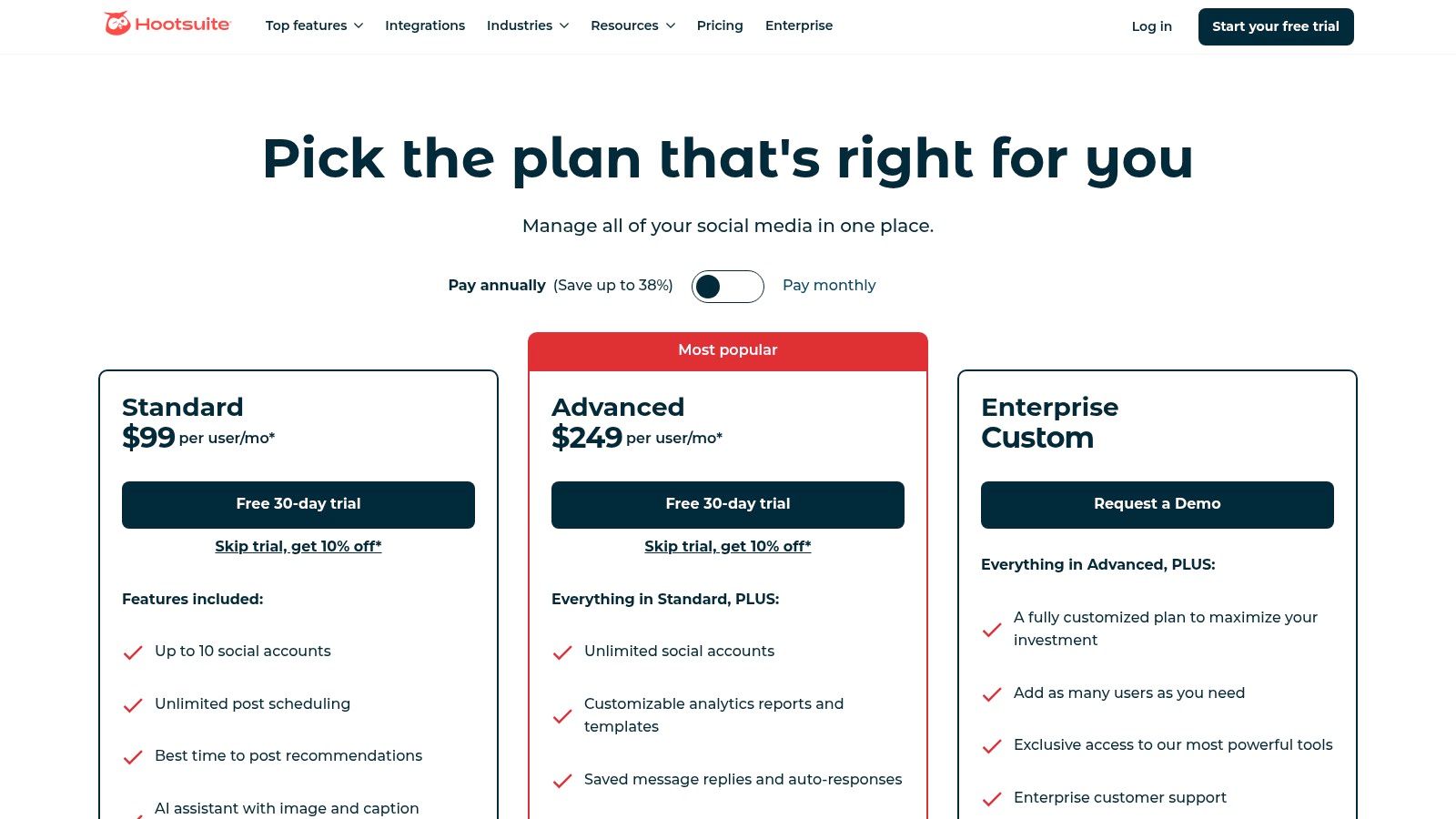
Hootsuite offers a 30-day free trial. Paid plans include Professional at $99/month, Team at $249/month, and custom pricing for Enterprise plans. Annual billing provides a discount.
Website: https://www.hootsuite.com/plans/
10. Zoho Marketing Plus
Zoho Marketing Plus is a unified marketing platform that consolidates numerous Zoho applications into a single, cohesive interface for managing campaigns. For vacation rental managers already invested in the Zoho ecosystem, this platform offers exceptional value by connecting email marketing, social media management, surveys, and analytics under one roof. It simplifies the tech stack, allowing you to orchestrate a guest journey from a central command center without extensive custom integrations.
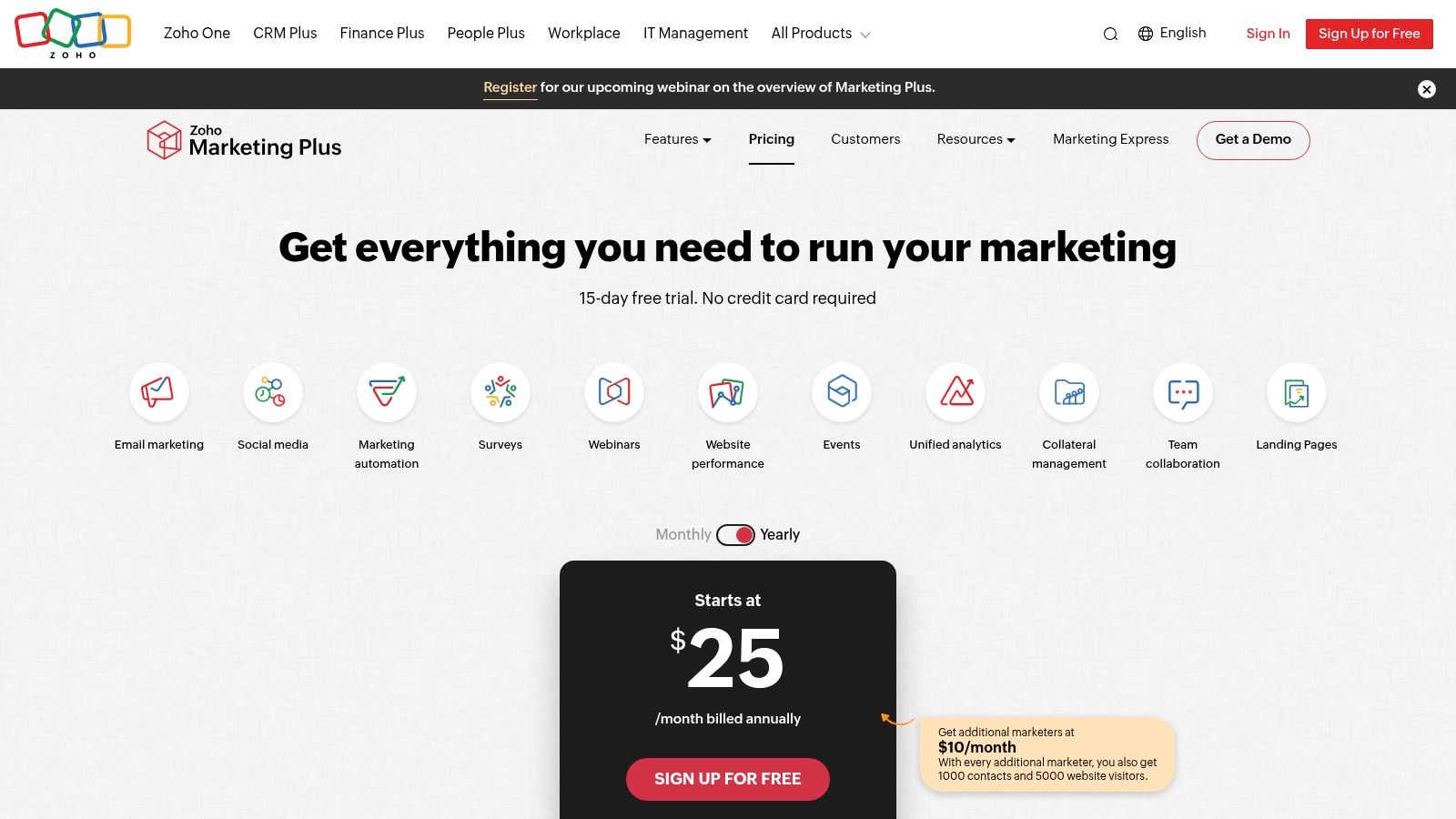
The platform's primary strength is its seamless integration with Zoho CRM, providing deep insights into how marketing efforts translate into bookings and revenue. Unlike standalone solutions, Zoho’s approach creates a powerful, interconnected system. This makes it one of the most cost-effective marketing campaign management tools for operators seeking an all-in-one suite without the enterprise-level price tag.
Key Features & Use Cases
- Central Campaign Hub: Plan, execute, and monitor campaigns across email, social media, and webinars from a single dashboard. For instance, launch a "shoulder season" promotion via email and simultaneously schedule social posts about it.
- Shared Brand Asset Libraries: Maintain brand consistency by storing logos, property photos, and templates in a central library with approval workflows, ensuring all team members use the correct assets.
- Cross-Channel Analytics: Utilize built-in analytics with UTM tracking to understand which channels are driving traffic and bookings, helping you optimize your marketing spend.
- Tight Zoho Ecosystem Integration: Connect marketing activities directly to guest records in Zoho CRM, enabling personalized follow-ups based on past stays or inquiries.
Pros and Cons
| Pros | Cons |
|---|---|
| Competitive and transparent pricing with add-ons | UI depth and integrations outside Zoho can require setup |
| A great fit if you already use the Zoho ecosystem | Enterprise-level reporting is not as deep as top-tier suites |
| Unified platform simplifies the marketing stack | May offer more features than a small operator needs |
Pricing
Zoho Marketing Plus offers a straightforward pricing model starting at $25/month, billed annually. This plan includes 2,000 contacts and 10,000 website visits/month, with flexible add-ons available for scaling contacts and traffic as your business grows.
Website: https://www.zoho.com/marketingplus/pricing.html
11. Google Ads
Google Ads is the definitive self-serve platform for launching paid search, display, and video campaigns directly on Google’s massive network. For vacation rental managers, it’s a primary tool for capturing high-intent traveler demand, placing your properties in front of users actively searching for accommodations in your area. Its core advantage lies in its unparalleled reach and the ability to target users with precision based on keywords, location, and demographics.
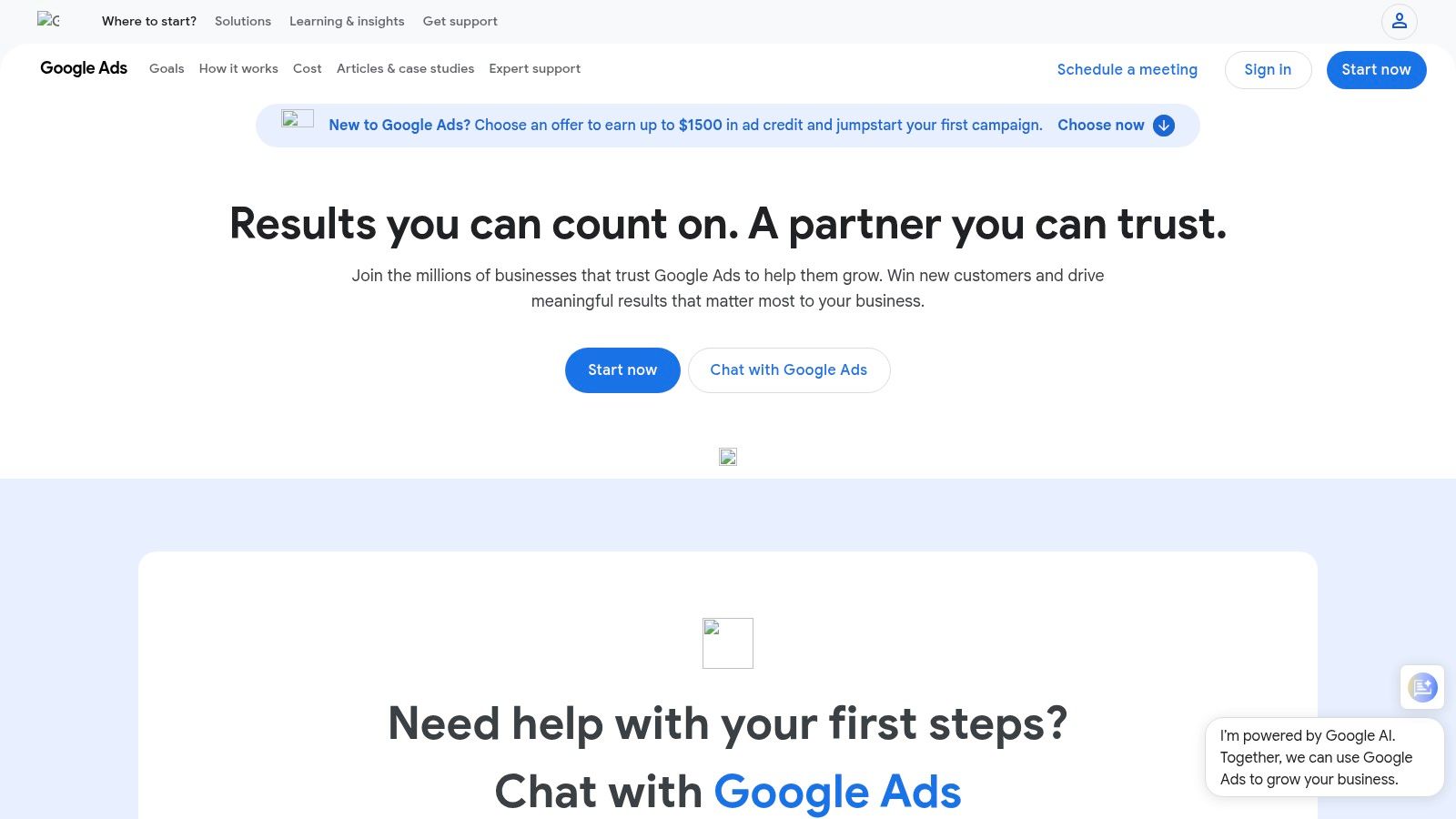
While not a full-suite management platform, Google Ads is a foundational component of any direct booking strategy. It provides robust tools for budget control, performance tracking, and ad creation, including AI-assisted responsive search ads. Understanding its bidding mechanisms is crucial, which is why it’s one of the most essential marketing campaign management tools for direct acquisition. To get the most out of your budget, it's wise to learn more about Google Ads bidding strategies before launching a major campaign.
Key Features & Use Cases
- Keyword & Location Targeting: Run ads targeting specific searches like "beachfront condo in Miami" or "pet-friendly cabin in Asheville" to capture travelers at the moment they are ready to book.
- Performance Max Campaigns: Use Google’s AI to find converting guests across all its channels, including YouTube, Display, Search, and Gmail, from a single campaign setup.
- Budget & Bidding Controls: Set precise daily budgets and choose from various bidding strategies (e.g., maximize conversions, target cost-per-acquisition) to control ad spend and optimize for bookings.
- Conversion Tracking: Implement tracking to measure direct bookings, inquiry form submissions, and phone calls originating from your ads to accurately calculate your return on investment.
Pros and Cons
| Pros | Cons |
|---|---|
| Immediate access with pay-as-you-go budgeting | Steeper learning curve; requires ongoing optimization |
| Precise budget control and massive reach | Competitive markets can have high costs-per-click |
| Targets users with high booking intent | Can be complex to manage without expertise |
Pricing
Google Ads operates on a pay-per-click (PPC) model, meaning you only pay when a user interacts with your ad. There are no platform fees or monthly subscriptions. You set your own daily budget, which can be as low as a few dollars per day, and can pause or adjust spending at any time.
Website: https://ads.google.com/
12. Meta Ads Manager (Facebook & Instagram)
Meta Ads Manager is the native platform for creating, managing, and analyzing ad campaigns across Facebook, Instagram, Messenger, and the Audience Network. For vacation rental managers, it's an indispensable tool for both finding new potential guests (prospecting) and re-engaging past website visitors (retargeting). Its power lies in its massive user base and sophisticated audience-building capabilities, allowing you to target users based on demographics, interests, and on-platform behaviors.
This platform is one of the most direct and scalable marketing campaign management tools for driving direct bookings through social media. You can run campaigns to showcase a new luxury property to users interested in high-end travel or retarget visitors who viewed your booking page but didn't complete a reservation. To maximize your impact on these platforms, understanding how to effectively use Meta Ads Manager is crucial for detailed campaign execution and tracking.
Key Features & Use Cases
- Advantage+ Automation: Use Meta's AI to automatically optimize budget allocation, audience targeting, and ad placements across its family of apps, simplifying campaign setup.
- Detailed Audience Building: Create custom audiences by uploading past guest lists or build lookalike audiences to find new users who share characteristics with your best guests.
- Event Tracking with Meta Pixel: Install the pixel on your website to track conversions like bookings, measure ad ROI, and build powerful retargeting lists based on user actions.
- Flexible Budget & Schedule Controls: Set daily or lifetime budgets that fit your marketing spend, allowing you to test campaigns with as little as a few dollars per day.
Pros and Cons
| Pros | Cons |
|---|---|
| Unmatched reach with granular audience options | Performance varies with creative quality |
| Flexible budgets allow starting with small spend | Privacy changes can impact targeting & attribution |
| Powerful for both prospecting and retargeting | Steep learning curve for advanced features |
Pricing
Meta Ads Manager is free to use; you only pay for the ad spend you choose to run. You have full control over your budget, with the ability to set daily or lifetime limits for your campaigns.
Website: https://www.facebook.com/business/ads/pricing
Top 12 Marketing Campaign Management Tools Comparison
| Product | Core features | Performance & UX | Value proposition / USP | Target audience | Price & setup |
|---|---|---|---|---|---|
| hostAI (Recommended) | hostFront sites + booking engine, hostMail automation, hostDistro ads & landing pages, programmatic SEO, dynamic pricing | Conversion-focused design, fast deployment ("Go Live the Next Day"), client-reported uplifts (direct bookings, ROAS) | AI-first suite tailored for STRs — unified SEO, ads, pricing & email to boost direct revenue and reduce OTA fees | STR managers, vacation rental brands, multi-property portfolios | Custom pricing (demo/quote); quick setup and managed launch |
| HubSpot Marketing Hub | Email, automation, ads, landing pages, native CRM, integrations | Smooth UX, built-in analytics, scalable from free tier to enterprise | Single system for marketing + CRM, easy to get started | SMBs and mid-market teams seeking all-in-one marketing/CRM | Free tier available; costs rise with contacts/seats; onboarding fees on higher tiers |
| Salesforce Marketing Cloud | Cross-channel journeys, personalization, real-time decisioning, analytics | Enterprise-grade orchestration, powerful but complex UX | Deep CRM integration and high-scale personalization for complex programs | Large enterprises with rich CRM data and complex needs | Annual contracts typical; higher TCO; implementation required |
| Adobe Marketo Engage | Advanced segmentation, dynamic content, attribution, high API limits | Mature automation for complex journeys, steep admin learning curve | Robust ABM and lead/account-based automation for B2B/B2C | Enterprise B2B teams and marketers needing advanced ABM | Pricing via sales (custom); requires experienced admins |
| Mailchimp (by Intuit) | Email campaigns, automations, landing pages, basic CRM, templates | Easy onboarding, lots of tutorials, user-friendly UI | Quick start for small businesses and e‑commerce integrations | Small businesses, startups, e‑commerce beginners | Free and paid plans; pricing scales with contacts |
| ActiveCampaign | Visual automation builder, email, SMS/WhatsApp, built-in CRM | Powerful automation with SMB-friendly complexity | Lifecycle-focused messaging and multichannel journeys without enterprise bloat | SMBs wanting advanced automation and messaging channels | Public tiers; some regions require request pricing; costs scale with contacts |
| Klaviyo | Email & SMS flows, ecommerce triggers, predictive analytics, product recommendations | Fast Shopify integration, strong revenue attribution | Ecommerce-first marketing with deep product & revenue analytics | DTC brands, Shopify/BigCommerce merchants | Pricing scales with contacts and SMS usage; transparent online |
| Sprout Social | Social publishing, scheduling, inbox, listening, reporting | Enterprise reporting, collaborative workflows, clear per-seat pricing | Centralized social management with robust analytics | Teams running paid & organic social at scale | Per-seat pricing; 30-day trial; add-ons increase cost |
| Hootsuite | Multi-account scheduling, social inbox, listening, analytics | Mature workflow features, broad network support | Established social planning and monitoring across channels | Agencies and brand teams centralizing social | Tiered plans; 30-day trial; advanced features on higher tiers |
| Zoho Marketing Plus | Email, web, social, events, asset library, cross-channel analytics | Unified hub within Zoho ecosystem, competitive UX for price | Cost-effective, integrated suite especially if using Zoho apps | Small–mid teams in Zoho ecosystem | Transparent pricing with add-ons; affordable entry point |
| Google Ads | Search, Performance Max, YouTube, display, budget controls | Immediate activation, powerful targeting, steeper optimization curve | Pay-as-you-go acquisition with precise budget control and massive reach | Advertisers focused on direct acquisition and scale | Pay-as-you-go; flexible budgets; learning curve for optimization |
| Meta Ads Manager (Facebook & Instagram) | Audience building, Advantage+ automation, placements, tracking | Flexible budgeting, performance tied to creative & signal quality | Essential social prospecting & retargeting with large audience pools | Brands aiming for social acquisition and retargeting | Self-serve budgets; start with small spend; performance varies with setup |
Final Thoughts
Navigating the landscape of marketing campaign management tools can feel like mapping an uncharted territory, especially within the dynamic vacation rental industry. We've explored a wide array of platforms, from comprehensive all-in-one solutions like HubSpot and Zoho Marketing Plus to specialized powerhouses like Klaviyo for email and Sprout Social for social media. Each tool offers a unique set of features, strengths, and potential drawbacks, underscoring a critical truth: there is no single "best" tool for everyone.
The right choice is deeply personal to your business. It depends on your property portfolio size, your team's technical expertise, your growth ambitions, and, most importantly, your budget. A small operator with five properties will have vastly different needs and resources than a large-scale property management company overseeing hundreds of listings. The key is to move beyond the marketing hype and focus on the practical application of these tools to solve your specific challenges, whether that's automating guest communication, retargeting potential bookers, or analyzing campaign performance to maximize ROI.
Key Takeaways: Your Strategic Roadmap
As you move forward, keep these core principles at the forefront of your decision-making process. They will serve as your compass in selecting and implementing the right marketing campaign management tools for your vacation rental business.
Start with Strategy, Not Software: Before you even look at a demo, define your marketing goals. Are you trying to increase direct bookings, build guest loyalty for repeat stays, or expand your brand presence on social media? Your strategy dictates the tools you need, not the other way around. A clear objective prevents you from investing in a feature-rich platform you’ll never fully utilize.
Integration is Non-Negotiable: Your tech stack should work as a cohesive unit, not a collection of siloed parts. Prioritize tools that integrate seamlessly with your existing Property Management System (PMS), channel managers, and other essential software. Strong integrations eliminate manual data entry, reduce errors, and provide a unified view of your guest journey.
Scalability is Future-Proofing: The tool that fits your business today might not be adequate a year from now. When evaluating options, consider your growth trajectory. Choose platforms that offer tiered plans and advanced features you can grow into. This foresight prevents the costly and disruptive process of migrating your entire marketing operation down the line.
Don't Underestimate Onboarding: The most powerful software is useless if your team doesn't know how to use it. Investigate the quality of a vendor's customer support, training resources, and onboarding process. A smooth implementation is just as crucial as the tool's features.
Your Next Steps: From Selection to Success
Armed with this knowledge, your path forward should be deliberate and methodical. Begin by conducting a thorough audit of your current marketing efforts. Identify the biggest pain points and opportunities for improvement. Are you spending too much time manually posting on social media? Are your email campaigns failing to convert?
Once you've identified your primary needs, shortlist two or three top contenders from our list that align with your goals and budget. Take advantage of free trials and schedule live demos. During these demos, come prepared with specific use-case scenarios relevant to the vacation rental industry. Ask pointed questions: "How can your platform help me retarget website visitors who viewed a specific property but didn't book?" or "Can I segment my email list based on past booking dates to send re-engagement campaigns?"
Finally, remember that implementation is a process, not an event. Start small by focusing on mastering one or two key features that will deliver the most immediate impact. As your team gains confidence, you can gradually roll out more advanced functionalities. By thoughtfully selecting and strategically implementing the right marketing campaign management tools, you can transform your marketing from a series of disjointed tasks into a powerful, automated engine that drives direct bookings and fuels sustainable growth for your vacation rental business.
Ready to unify your marketing efforts with an AI-powered platform built specifically for the vacation rental industry? hostAI centralizes your guest communication, automates marketing campaigns, and provides deep analytics to help you make smarter decisions. Explore how hostAI can become the central nervous system of your marketing tech stack.