

vacation rental maintenance checklist
Vacation Rental Maintenance Checklist for 2026
Posted on Feb 15, 2026
TL;DR: Reactive maintenance is the most expensive maintenance you will ever pay for. One after-hours HVAC failure during a peak-season stay can cost you an emergency call-out, a partial refund, a blocked calendar, and a one-star review that suppresses bookings for months. A proactive maintenance program turns that unpredictable downside into a scheduled, budgeted line item. This is the 10-point checklist we'd run if we managed your portfolio — built around your turnover cycle, not a generic homeowner's calendar.
What is a vacation rental maintenance checklist?
A vacation rental maintenance checklist is a recurring, scheduled set of inspections and servicing tasks an STR operator runs across a property — broken into three cadences: per-turnover (every checkout, owned by your cleaner), seasonal (quarterly, owned by you or a handyman), and annual (licensed pros: HVAC, electrical, plumbing). The point isn't to "keep the house nice." It's to catch the small failures that become refund-and-review events before a guest does.
That distinction matters because short-term rentals fail differently than long-term ones. A long-term tenant tolerates a slow drain for a week and texts you. A guest who paid a $400 nightly rate for a weekend treats a slow drain as a defect in the product they bought — and says so publicly, on the listing that feeds your direct and OTA channels alike. Your maintenance program is really a review-protection program.
The economics: preventive vs. emergency
Run the math on a single system. A routine HVAC tune-up runs roughly $75–$200, scheduled in the off-season when no booking is at stake. An emergency after-hours diagnostic and repair during a heat wave — when every HVAC tech in your market is slammed — routinely runs several times that, plus the costs that don't show up on the invoice: the night you refund, the nights you block while you wait for parts, and the review that drags your conversion rate. The repair is the cheap part. Proactive servicing isn't an expense to minimize; it's the cheaper of two prices for the same outcome.
How to use this checklist
Each of the 10 items below is tagged with a cadence. Build the per-turnover items into your cleaner's checkout checklist (your cleaning team is your highest-frequency set of eyes on the property — use them). Put seasonal items on a recurring calendar. Lock annual licensed-pro visits into the off-season so they never collide with a paid stay.
1. HVAC system — annual service + per-turnover check
A reliable HVAC system is the single highest-leverage item on this list, because temperature complaints are both common and instantly review-worthy. A guest can forgive a lot; they cannot forgive a freezing or sweltering bedroom at 2 a.m.
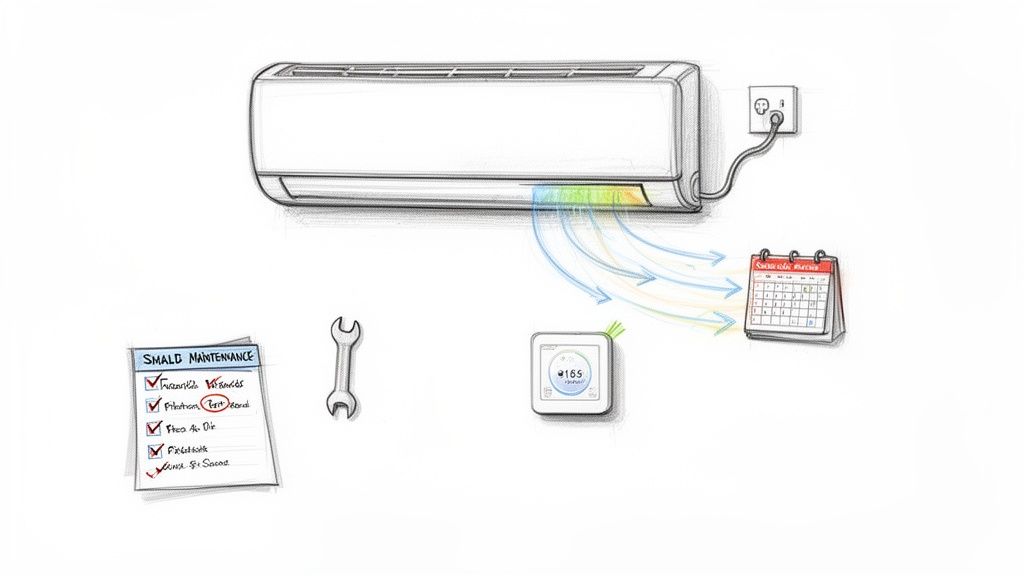
- Per-turnover: Cleaner confirms the unit cools/heats to the set point and resets the thermostat to your default. Thirty seconds.
- Seasonal: Change filters every 1–3 months depending on traffic and pets. Clear the condensate drain line to prevent water backups.
- Annual (pro): Two tune-ups — before peak cooling and before peak heating. Refrigerant, coils, electrical components.
- Smart layer: A connected thermostat (Ecobee, Nest) lets you set guardrail temperatures and get an alert before the guest notices drift — so you dispatch a tech proactively instead of fielding a midnight complaint.
2. Plumbing — per-turnover visual + annual water heater service
No hot water on a Friday check-in is a relocation-and-refund event, not an inconvenience. A burst supply line in an unoccupied gap night is a five-figure water-damage claim. Plumbing is where small neglect compounds fastest.
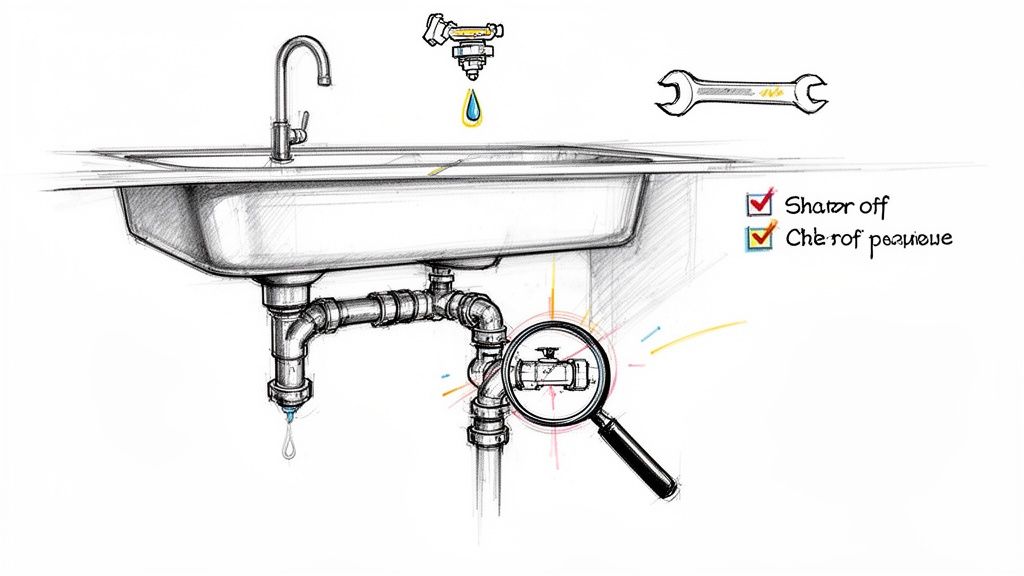
- Per-turnover: Cleaner runs every faucet and shower, flushes every toilet, and checks under each sink for drips. Logs anything off.
- Seasonal: Bio-enzyme drain treatment quarterly. Verify water pressure sits in the safe 40–60 PSI range.
- Annual (pro): Flush the water heater to clear sediment; test the temperature/pressure relief valve.
- Insurance you'll be glad you bought: A smart leak detector with auto-shutoff (e.g., Flo by Moen) on the main line turns a catastrophic gap-night flood into a phone alert. Label the main shutoff and document its location for guests and cleaners.
3. Roof and gutters — seasonal, climate-dependent
The roof is the item you never think about until a guest is photographing a ceiling stain. A storm leak mid-stay produces the worst review category there is: "we didn't feel safe."
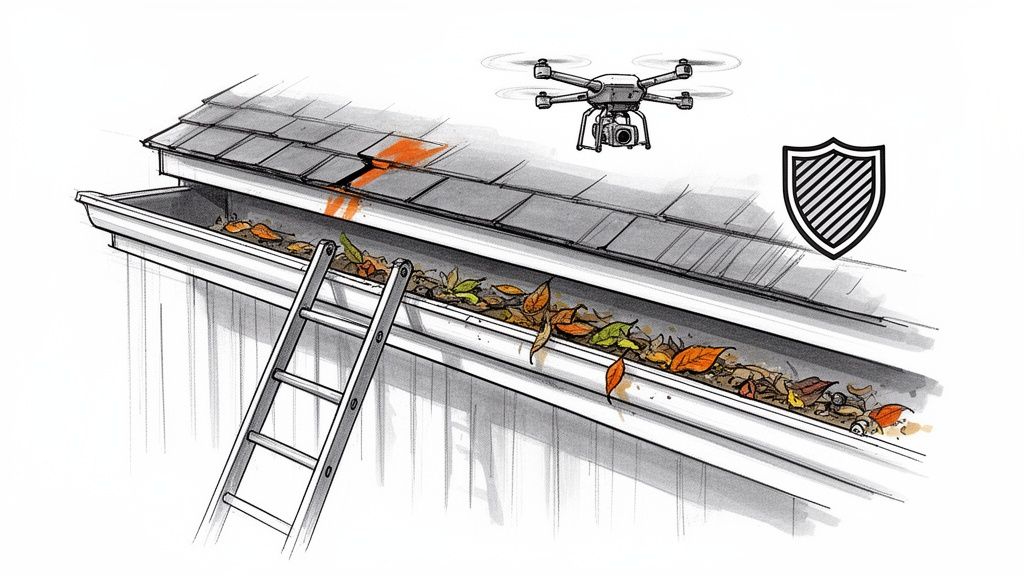
- Seasonal: Clean gutters twice a year — late spring and late fall after leaf drop. Clear roof debris and treat moss/algae before it traps moisture.
- After every major storm: Visual check for missing, cracked, or curling shingles and damaged flashing around chimneys and skylights.
- Efficiency tip: A drone inspection beats a ladder for multi-story properties — faster, safer, and you get dated photos for your records.
4. Appliances — per-turnover function test
Every appliance you advertise is a promise. A dead dishwasher or a fridge that quietly stopped cooling between guests doesn't just annoy — it can spoil a grocery run and derail the trip the guest planned around your kitchen.
- Per-turnover: Cleaner confirms fridge temp, runs a quick check on oven, microwave, dishwasher, washer, and dryer. The lint trap and vent duct get cleared every time — dryer-vent lint is a genuine fire risk in high-turnover properties.
- Seasonal: Descale coffee makers, clean refrigerator coils.
- Annual (pro): Service high-use washers and dishwashers in the off-season.
- Records: Keep model numbers, warranty dates, and service history in one place per property — when something fails, you want the part number in 30 seconds, not 30 minutes.
5. Electrical and safety — annual pro inspection + monthly GFCI test
Guests load your outlets unpredictably — chargers, hair dryers, space heaters, all at once. That dynamic load is exactly why electrical issues carry the highest liability ceiling on this list. This is a duty-of-care item, not a comfort item.
- Per-turnover: Visual check of outlets and cords for scorch marks, cracks, or fraying. No permanent extension-cord wiring, ever.
- Monthly: Test every GFCI outlet (kitchens, baths, exterior) — TEST to trip, RESET to restore.
- Annual (pro): Licensed electrician verifies code compliance, wiring condition, and the main panel. Keep the breaker panel labeled and accessible.
6. Flooring and carpet — per-turnover stain response + seasonal deep clean
Floors take constant rolling-luggage and shoes-on abuse that a long-term rental never sees, so wear that's annual elsewhere is continuous here. Floors are also the first thing a guest's eyes hit on arrival.
- Per-turnover: Cleaning team carries enzyme-based stain remover for immediate wine/coffee/food response — a set stain is a replaced rug. Dated photos of flooring condition at every turnover give you airtight damage-claim evidence.
- Seasonal: Professional carpet shampoo or hard-floor deep clean twice a year, more in peak season — scheduled into turnover gaps.
- Capex tip: When you replace, buy commercial-grade or solution-dyed carpet and luxury vinyl tile. Stylish runners in high-traffic lanes are cheaper to replace than the floor under them.
Floor care lives inside your broader cleaning system — fold these tasks into your vacation rental cleaning checklist so nothing slips between guests.
7. Air quality and filters — seasonal, marketable
The filter is a $15 part with outsized impact: airflow drives HVAC efficiency, and stale air or allergens drive complaints. It also sells.
- Seasonal: Filters every 1–3 months; monthly for high-traffic or pet-heavy properties. Automate the reminder so it never depends on memory.
- Upgrade play: A MERV 11–13 filter captures pollen, pet dander, and finer particles — and "high-quality air filtration" is a real listing line for allergy-sensitive and health-conscious guests.
- Supply chain: A subscription filter service that ships the right sizes to each property kills the "we're out of filters" failure mode.
8. Pest control — seasonal treatment + per-turnover spotting
A guest's pest tolerance is zero. One ant trail or one spider in the bedroom reads as "this place is dirty," and that review is brutally hard to recover from. Prevention here is one of the highest-return dollars you'll spend.
- Per-turnover: Train cleaners to spot and report early signs — droppings, nests, fresh damage — immediately.
- Seasonal: Quarterly or bi-annual preventive treatment from a licensed company, scheduled into turnover windows. Seal exterior cracks, gaps around windows/doors, and utility-line openings.
- Guest-side: A line in your digital guidebook about food storage and keeping screen doors shut prevents more problems than you'd expect.
- Landscaping link: Trim foliage off the structure to remove pest "bridges"; fix drainage to kill standing water.
9. Smoke and CO detectors — per-turnover test (legal + life-safety)
This is non-negotiable and, in many jurisdictions, legally mandated. A dead detector is a liability you cannot afford; a chirping low-battery alarm is a ruined night's sleep and a guaranteed review complaint.
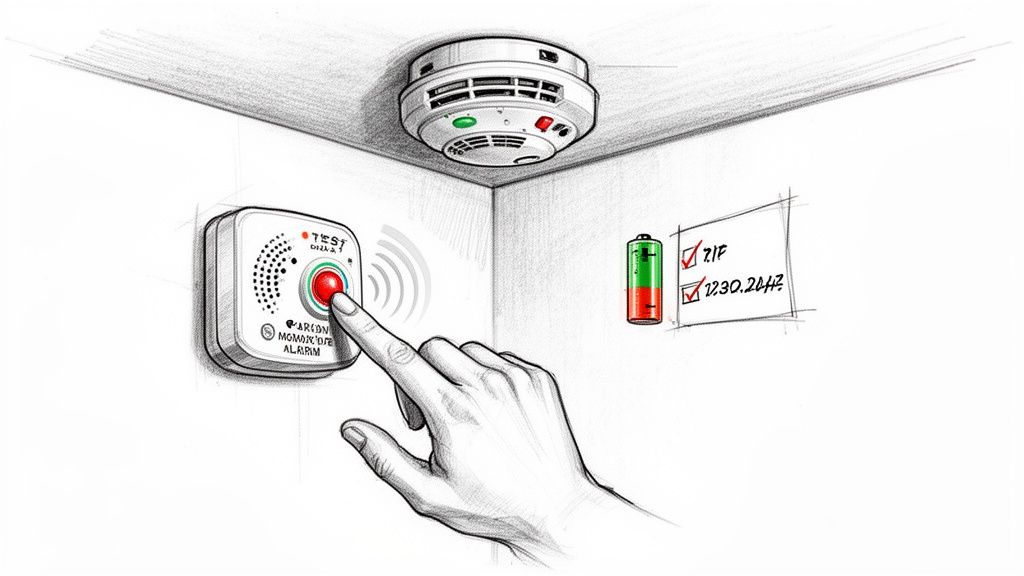
- Per-turnover: Physical test button on every unit — standard line on the cleaner's checklist.
- Seasonal: Replace batteries every 6–12 months on a fixed date (Daylight Saving is a useful anchor) regardless of charge.
- Lifecycle: Detectors expire in 5–10 years — log install dates and replace before expiry. Smart detectors that push low-battery alerts to your phone let you fix it before the guest hears a chirp.
10. Exterior and landscaping — seasonal, photo-driven
The exterior is your first impression twice: in the listing photos that drive the booking, and in person at arrival. Overgrown weeds or a grimy facade signal neglect before the guest opens the door.
- Seasonal: Weekly mowing, weeding, and trimming in growing season; pressure-wash driveways, decks, and siding once or twice a year. Native, low-maintenance plantings cut water and labor cost.
- Safety: Trim branches off the roof and windows ahead of storm season.
- Marketing tie-in: After major landscaping, refresh your listing photos — a lush summer yard or tidy fall scene keeps the listing converting year-round.
Exterior upkeep is part of running the asset like a business — more on that in our guide to managing a vacation rental property.
Sample seasonal cadence
| Cadence | Tasks | Owner |
|---|---|---|
| Every turnover | HVAC set-point reset, plumbing run-through, appliance function test, detector test, stain response, pest spotting, cord/outlet visual | Cleaning team |
| Monthly | GFCI outlet tests, filter check | You / handyman |
| Quarterly | Drain treatment, pest treatment, deep clean of floors | Handyman / vendor |
| Spring (pre-cooling) | HVAC tune-up, gutter clean, pressure wash, AC-side check | Licensed pros |
| Fall (pre-heating) | HVAC tune-up, gutter clean, roof inspection, water heater flush | Licensed pros |
| Annual | Electrical inspection, detector lifecycle audit, capex flooring review | Licensed pros |
Note climate shifts this: a Phoenix property weights everything toward pre-summer HVAC and pushes filter changes monthly; a Gulf Coast property prioritizes storm-season roof and drainage checks; a mountain cabin front-loads heating and freeze-protection before the first cold snap. Adapt the cadence to the failure modes of your market, not the calendar.
From checklist to system
A checklist saved in a Google Doc and a checklist running inside your operation are different things. The operators who actually capture the ROI here do four things:
- Assign by cadence. Per-turnover items go to cleaners; seasonal items to a handyman; annual items to licensed pros booked in the off-season.
- Automate the reminders. Filter changes, detector batteries, and pro visits should fire on a recurring schedule, not depend on anyone remembering.
- Log every service. Date, vendor, cost, photos, per property. This is your warranty record, your damage-claim evidence, and your due-diligence proof.
- Tie maintenance to the turnover. The checkout already happens between every guest — that's your free, recurring inspection window. Use it.
FAQ
How often should I service a short-term rental? Run per-turnover checks at every checkout, light seasonal/quarterly tasks four times a year, and licensed-pro inspections (HVAC, electrical, plumbing) annually — booked into the off-season so they never collide with a paid stay.
What maintenance should my cleaner do? Your cleaner is your highest-frequency inspector. Fold these into the checkout checklist: test detectors, run faucets and toilets, confirm HVAC and appliances work, reset the thermostat, clear the dryer vent, respond to stains immediately, and report any pest signs or damaged cords.
Is preventive maintenance worth the cost? Yes. The servicing invoice is almost always smaller than the emergency repair, the refunded night, the blocked calendar, and the review damage that a failure causes — especially when it happens during a peak-season stay.
The hardest part of all this isn't knowing what to check — it's making sure it actually happens across every property, every turnover, without living in a spreadsheet. hostAI lets you build these checks into your turnover workflow, fire recurring reminders for seasonal and annual tasks, and keep each property's service history in one place — so your team runs the program on autopilot and you spend your time on bookings, not chasing a forgotten filter change. See how hostAI fits into your operation.