

vacation rental occupancy rates
Vacation rental occupancy rates: Boost profits with proven strategies
Posted on Dec 28, 2025
Staring at an empty booking calendar is a feeling every host knows and dreads. What if you could turn those empty nights into a steady stream of revenue? The secret lies in mastering your vacation rental occupancy rates. This single metric is more than just a number; it's the very heartbeat of your business, signaling its health and pointing the way to growth.
Why Occupancy Rate Is Your Most Important Metric
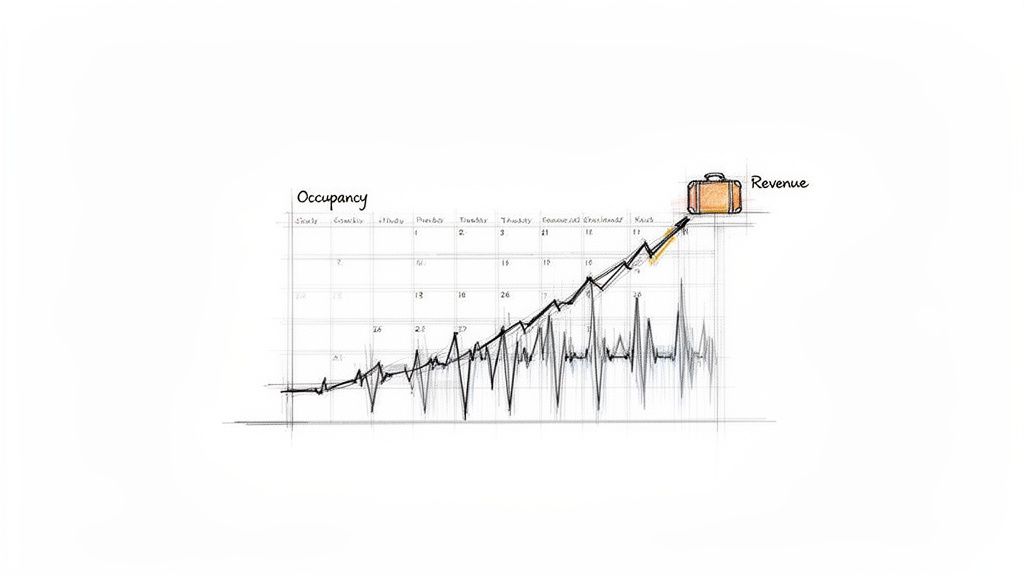
Think of your vacation rental like a shop. The available nights on your calendar are your products, sitting on a shelf. An empty, unbooked night is unsold inventory—a missed chance for income you can never get back. Your occupancy rate is simply a measure of how much of that "inventory" you actually sold over a specific time. It gives you a clear, unfiltered view of your property’s performance and how much demand there is for it.
Of course, other metrics like Average Daily Rate (ADR) and Revenue Per Available Room (RevPAR) are important. But occupancy is the foundation everything else is built on. A high nightly rate means nothing if your property sits empty week after week. On the flip side, a completely full calendar might feel like a win, but if your rates are too low, you're leaving a lot of money on the table.
Key Insight: A healthy occupancy rate isn't about being 100% booked. It's about finding that sweet spot—the strategic balance between demand and pricing that maximizes your total revenue. Chasing full occupancy often leads to underpricing and killing your profit potential.
The Foundation of Smart Decisions
Getting a handle on your occupancy rates is what moves you from guesswork to making sharp, data-driven decisions. It’s the starting point for building a stronger, more profitable business strategy.
More specifically, it empowers you to:
- Set Realistic Goals: You can’t set a target for where you want to go until you know exactly where you are right now.
- Spot Performance Gaps: It shines a light on when your property is underperforming. Is it a particular season, a specific month, or even just midweek lulls?
- Fine-Tune Your Pricing: A stubbornly low occupancy rate might be a red flag that your prices are too high for the market. A calendar that’s always full? That’s a sign you probably have room to raise your rates.
- Measure Marketing Impact: You can track how your occupancy changes after you launch a new ad campaign or update your listings, giving you a clear picture of your ROI.
Ultimately, mastering this one metric is the critical first step. It gives you the essential data you need for smart vacation rental revenue management and allows you to build a resilient, profitable operation. This guide will break down what occupancy rate is, how to calculate it, and—most importantly—how to improve it.
How to Accurately Calculate Your Occupancy Rate
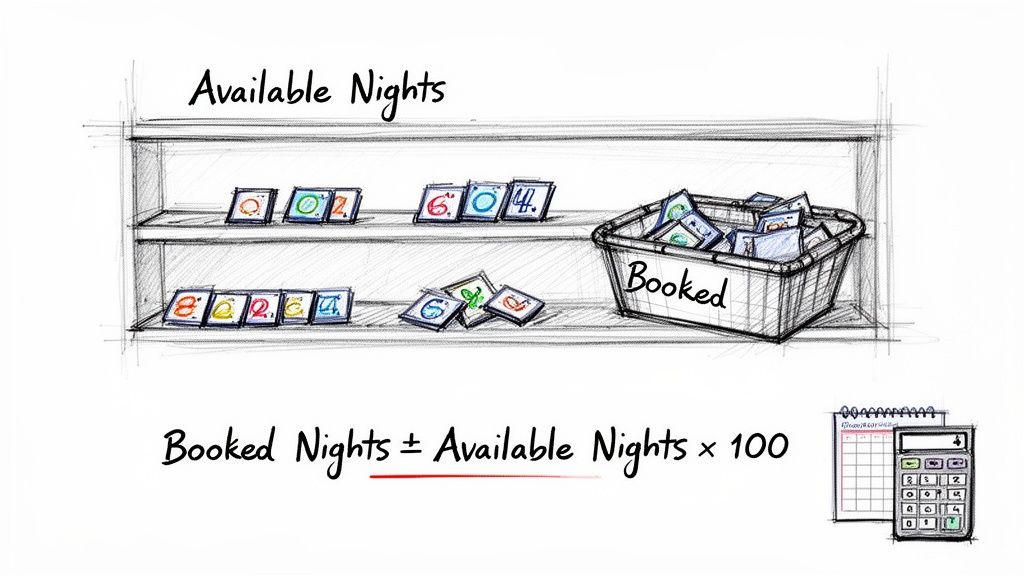
Before you can boost your occupancy rate, you have to know how to measure it correctly. The basic formula seems simple enough, but the devil is in the details—and those details are what separate a fuzzy, misleading number from a powerful business insight.
Getting this right is your first real step toward setting goals you can actually hit and tracking how your business is truly performing.
Think of your rental's availability like inventory on a store shelf. You wouldn't judge your sales performance based on products that weren't even for sale, right? The same logic applies here, and it's the key to an honest calculation.
The Core Occupancy Rate Formula
At its heart, the formula is straightforward. It’s simply the percentage of nights your property was available that it was actually booked by a guest.
Here's the math:
(Booked Nights ÷ Available Nights) × 100 = Occupancy Rate (%)
So, if your property was available for 25 nights in April and you booked 20 of them, your occupancy rate would be 80% (20 ÷ 25 × 100). Easy. But the million-dollar question is: what really counts as an "available" night?
This is where so many hosts trip up. To get a true sense of your performance, you have to subtract any nights your property wasn't genuinely on the market for guests to book.
What to Exclude From Available Nights
A truly accurate occupancy calculation only includes nights that were actually open for bookings. Nights you block for yourself or for repairs aren't part of your rentable inventory, so they shouldn't count against you.
You should always exclude:
- Owner Stays: Any time you, your family, or your friends are using the property.
- Maintenance Blocks: Dates you’ve set aside for repairs, deep cleaning, or renovations.
- Mandatory Closures: Any period your property can't be legally rented due to local rules or even extreme weather events.
By pulling these dates out of your "Available Nights" total, you get a clear, honest picture of how your property performs when it’s competing in the market. This simple adjustment stops your personal use from artificially dragging down your business metrics.
Key Takeaway: Your goal is to measure market demand for your property, not your personal usage. Excluding blocked dates ensures your occupancy rate reflects how well your rental attracts paying guests, which is the only way to make smart pricing and marketing decisions.
A Practical Calculation Example
Let's walk through a more realistic scenario to see how this plays out. To make this crystal clear, we'll create a simple table that breaks down the calculation for a single property over a 30-day month like June.
Sample Occupancy Rate Calculation
| Metric | Value | Explanation |
|---|---|---|
| Total Nights in Period | 30 | The total number of days in the month (June). |
| Nights Booked by Guests | 21 | The number of nights paying guests stayed. |
| Owner Stay Nights | 3 | The owner used the property for a long weekend. |
| Maintenance Block Nights | 1 | The property was blocked for a plumbing repair. |
| Total Unavailable Nights | 4 | The sum of owner stays and maintenance blocks (3 + 1). |
| True Available Nights | 26 | Total nights minus all unavailable nights (30 - 4). |
| Accurate Occupancy Rate | 80.7% | The correct rate, calculated as (21 ÷ 26) × 100. |
See the difference? If you had mistakenly included those blocked nights in your total, your math would look like this: (21 ÷ 30) x 100 = 70%. That’s a 10.7% gap! This could easily mislead you into thinking your property is underperforming, potentially causing you to panic and slash your rates when you don't need to.
Understanding your true performance is vital for benchmarking against your market. You can explore our deep dive into Airbnb stats by city to see how your accurately calculated rates compare to others in different locations. With a reliable metric in hand, you can confidently begin to analyze your performance and identify opportunities for growth.
What Is a Good Occupy Rate for Vacation Rentals?
If you're asking, "What's a good occupancy rate?" you're asking the wrong question. It’s a bit like asking "how long is a piece of string?" The real answer is always, it depends. A 60% occupancy might feel like a huge win for a ski chalet in Breckenridge during the muddy shoulder season, but it would be a crushing defeat for a Miami beachfront condo during spring break.
There’s simply no magic number that works for every vacation rental. Forget chasing some vague industry average. The real goal is to get in sync with the unique rhythm of your own market. A winning occupancy rate is one that crushes the competition right in your specific location, for your property type, at this time of year.
The Story Behind the Numbers
A good occupancy rate isn't just a percentage; it’s a story told with context. Several key factors shape what success looks like, and wrapping your head around them is the first step to setting goals you can actually hit.
Think of these factors as creating a unique performance fingerprint for every property:
- Location: An urban apartment in a city that never sleeps has a totally different demand curve than a remote cabin tucked away in the mountains. One gets a steady stream of business travelers and event-goers, while the other lives and dies by peak vacation season.
- Seasonality: A beach house in a summer town might hit 80-90% occupancy from June to August, only to plummet to 20% in the dead of winter. The annual average is meaningless here; success is measured one season at a time.
- Property Type: A sprawling five-bedroom house is fishing for a different type of guest than a cozy studio for two. You have to compare your performance to similar properties—apples to apples—not every rental in a ten-mile radius.
Key Takeaway: Stop worrying about national averages. The only benchmark that matters is your direct competition: properties of a similar size, with similar amenities, right in your neighborhood. That’s your true battlefield.
Reading the Market and Setting Smart Targets
The short-term rental market is always in motion. Traveler tastes shift, creating new hot spots and cooling off others. Just look at the recent data showing a massive comeback for urban markets. It's a perfect example of how different environments create wildly different ceilings for occupancy.
After a few years where rural and resort towns were all the rage, big cities are roaring back. In January 2025, U.S. urban markets saw a +7.2% jump in year-over-year occupancy—the first increase since 2021. The trend kept rolling into spring break, with U.S. demand in April climbing 10.1% YoY. Meanwhile, European cities like Rome and Athens have seen supply and performance explode by over 20%. This is a world away from some U.S. markets drowning in oversupply, where occupancy rates are struggling to break the low 30s. You can dig deeper into these trends by reading the full research on vacation rental statistics.
The lesson here is crystal clear: a "good" occupancy rate is tied directly to the health of your market. In a booming city, shooting for 75% might be perfectly reasonable. In an oversupplied rural area, hitting 40% could be a major victory.
Defining What Success Looks Like for You
So, how do you figure out what a good rate is for your specific property? It all boils down to some good old-fashioned recon on your local market.
- Identify Your Real Competitors: Hop on Airbnb and Vrbo and find 5-10 properties that are practically twins of yours—same location, size, and must-have amenities like a pool or hot tub.
- Spy on Their Calendars: Manually check their availability for the next few months. If you can, look back at their past calendars, too. This gives you a real-time, ground-level view of how they're actually performing.
- Map Out Seasonal Benchmarks: Take note of their occupancy during your high, low, and shoulder seasons. This helps you build a baseline of what's possible throughout the year.
When you do this homework, you stop guessing with vague national numbers and start working with hard, local data. This is how you set targets that actually make sense for your business, turning a fuzzy question into your sharpest strategic tool.
Actionable Strategies to Increase Your Occupancy Rate
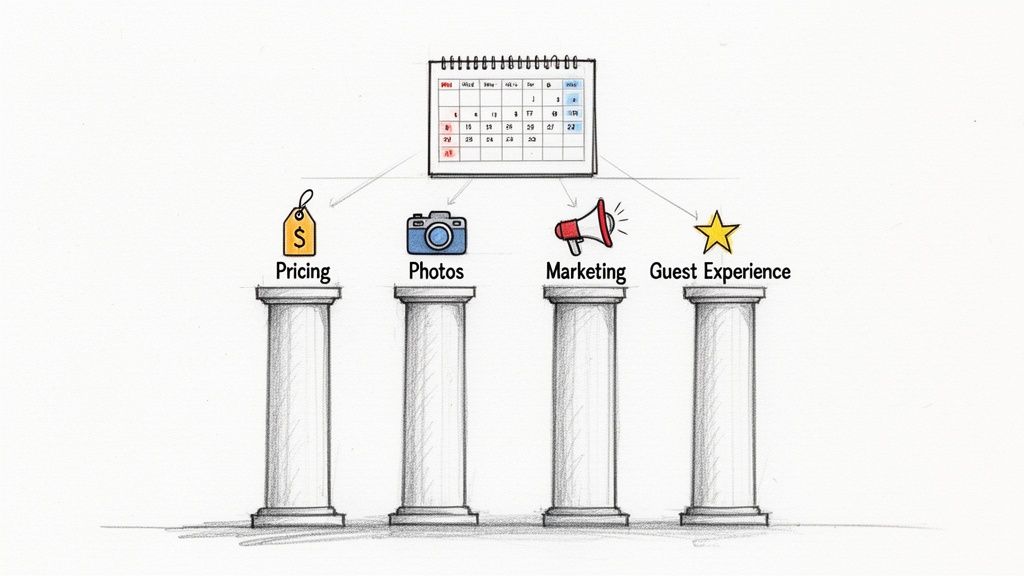
Knowing your numbers is one thing, but the real magic happens when you turn those insights into a booked-up calendar. Getting more heads in beds isn't about finding a single silver bullet. It's about a coordinated effort across four critical areas of your business.
We're going to break down some proven, no-fluff strategies you can put into action right away. Think of them as the four pillars of a successful rental: smart pricing, listings that sell, targeted marketing, and a guest experience that people rave about.
Master Your Pricing Strategy
Pricing your rental feels like walking a tightrope, doesn't it? Go too high, and you'll hear crickets. Go too low, and you might hit 100% occupancy but leave a ton of cash on the table. The sweet spot is dynamic pricing—letting your rates ebb and flow with the market's pulse.
It’s time to ditch the "set it and forget it" mindset. Your pricing should breathe with the market, climbing for peak demand and dipping just enough to entice guests during slower periods.
Think about these factors when building your pricing model:
- Seasonality: Your rate for a Fourth of July weekend should look wildly different from a random Tuesday in February.
- Local Events: Is there a huge festival, concert, or conference rolling into town? That’s a surge in demand you should be capitalizing on with higher rates.
- Day of the Week: Weekends are your bread and butter. They almost always justify a higher price than a midweek stay.
- Booking Window: Reward the early birds with a small discount to lock in those future dates, and use last-minute deals to patch up any unexpected holes in your calendar.
Optimize Your Listings to Convert
Your online listing is your digital handshake. In an ocean of options on Airbnb and Vrbo, a bland or unprofessional listing gets scrolled past in a heartbeat. To stop the scroll and get the click, your property has to pop off the screen.
It all begins with incredible photos. Seriously. Properties with professional photography can snag up to 26% more bookings. High-quality photos aren't a splurge; they're an investment that pays for itself over and over.
But great photos are only half the battle. Your words need to sell an experience, not just rent out a space.
Don't just say, "a deck with a grill." Instead, paint a picture: "Imagine grilling burgers on the private deck while the sun dips behind the mountains." You're helping potential guests see themselves there, creating an emotional hook that makes them want to book.
Launch Targeted Marketing Campaigns
Relying only on the big OTAs means you’re just one of hundreds of listings all screaming for attention. To really move the needle on your occupancy rate, you need to get proactive and market your property yourself. This is absolutely essential for driving direct bookings and dodging those painful commission fees.
A simple first step is building an email list from your past guests. Every so often, send them a newsletter with a special offer for a return visit or a heads-up about cool local events. It's a cheap, effective way to build a loyal following that books directly with you, year after year.
To truly fill your calendar, it's crucial to optimize your website for conversions. This is how you turn casual lookers into confirmed guests, which flows directly to your bottom line.
Elevate the Guest Experience
In the vacation rental world, reviews are pure gold. A steady stream of five-star reviews is the best marketing you can't buy, building trust and convincing new travelers to take a chance on you. And the only way to get those reviews is by delivering an exceptional guest experience.
This doesn't mean you need to roll out the red carpet. More often than not, it’s the small, thoughtful details that leave the biggest impression and inspire those glowing reviews.
Here are a few simple ways to make your guests feel special:
- A Welcome Basket: A small basket with some local coffee, a few snacks, or a bottle of wine makes a fantastic first impression.
- A Local's Guidebook: Share your insider knowledge. Where’s the best breakfast spot? What’s a hidden gem tourists miss? This personal touch beats a generic brochure any day.
- Spotless Cleanliness: This one is non-negotiable. A sparkling clean property is the absolute minimum expectation for a positive stay.
- Proactive Communication: Send clear check-in instructions before they have to ask, shoot them a quick message mid-stay to see if they need anything, and thank them for choosing your place afterward.
When you nail these four pillars—pricing, presentation, marketing, and guest happiness—you create a powerful cycle. A great stay leads to a great review, which boosts your listing’s visibility, which allows you to charge better rates, ultimately driving both your occupancy and your revenue sky-high.
Using AI to Fill Your Calendar and Boost Direct Revenue

Let's be honest: constantly tweaking your pricing, running marketing campaigns, and delivering a five-star experience is a massive time sink. It requires a ton of data and even more hands-on effort. This is exactly where technology steps in, transforming these complex, manual jobs into smooth, automated systems.
AI-powered platforms like hostAI are built to run these winning strategies for you, basically putting your occupancy growth on autopilot. It’s all about using tech to do the heavy lifting 24/7, connecting all the dots so you don't have to.
Automate Pricing with AI Precision
Manually keeping up with seasonal shifts, local events, and optimal booking windows is a full-time job in itself. AI-driven dynamic pricing tools take this entire burden off your shoulders. Think of it as having an expert revenue manager who never sleeps.
These systems crunch millions of data points in real time—competitor rates, market demand, historical trends, you name it. The result? A pricing strategy that’s always dialed in to capture the most revenue for every single night. It knows when to push rates up for a big event and when to drop them just enough to fill a last-minute gap in your calendar.
Key Insight: AI pricing isn't just about changing numbers on a screen; it's about outsmarting the market. This automated agility means you never leave money on the table during a high-demand weekend or price yourself out of a booking on a slow Tuesday.
Drive More Bookings with Smarter Marketing
To build a real brand, you can't just rely on the big OTAs. AI tools can put your marketing outreach on autopilot, engaging potential guests without you having to constantly press "send." This is how you build a powerful direct booking engine that puts more revenue straight into your pocket.
Imagine an automated email going out to a guest exactly one year after their last stay, offering them a special return discount. Or smart retargeting ads that gently nudge visitors who checked out your property but didn't book. These are the kinds of high-impact tasks that AI can handle effortlessly.
- hostMail: Puts your email marketing on autopilot, sending personalized messages to past guests to encourage repeat visits and build loyalty.
- hostDistro: Manages your advertising campaigns for you, making sure your property gets in front of the right travelers at the right moment.
While AI is a game-changer, it’s smart to pair it with other proven digital advertising methods. There are many strategies to boost direct revenue using platforms like Google Ads that can round out your approach. You can get a deeper dive into how to use AI to automate your short-term rental business in our detailed guide.
Build Your Brand and Ditch the Commissions
A professional, high-converting website is the bedrock of any successful direct booking strategy. It’s your own digital storefront, where you build trust, own the entire guest relationship, and—most importantly—cut out those hefty OTA commissions.
Tools like hostFront use intelligent design to build websites that don't just look pretty; they're engineered to turn visitors into booked guests. With a seamless booking process and a polished, professional look, you project a trustworthy brand that gives travelers the confidence to book directly with you.
The vacation rental market is absolutely booming, projected to hit $108 billion by 2025. We're seeing a huge rebound in city markets, with U.S. demand in April jumping +10.1% year-over-year. For hosts and managers, this is a massive opportunity. Standing out with the right tools is no longer a "nice-to-have"—it's how you win.
Ultimately, bringing AI into your business is about giving yourself more power. It’s the power to execute expert-level strategies at scale, turning your properties into fine-tuned, revenue-generating machines.
Taking Control of Your Booking Calendar
Mastering your vacation rental occupancy rates isn’t something you do once and forget about. It’s an ongoing commitment—a strategic part of running your business. We’ve walked through everything from the basic math of calculating occupancy to advanced, AI-powered tactics that can truly maximize your bookings and revenue. The common thread here is simple: you are in the driver's seat.
You're no longer just a host hoping for the best and reacting to whatever the market throws at you. You are the manager of a valuable business asset. By using data to guide your pricing, marketing, and guest experience, you can turn a calendar full of question marks into a reliable, predictable source of income. That proactive mindset is what separates the hosts who just get by from those who truly thrive.
Final Takeaway: The goal here isn't just about filling empty nights. It's about building a more resilient, more profitable business from the ground up. The tools and insights we've covered give you a clear roadmap to take command of your booking calendar and build real, sustainable growth.
Turning Insight Into Action
Think of the strategies in this guide as your personal playbook for success. Every single step, from getting professional photos for your listings to using automated tools that work for you around the clock, is designed to give you an edge. It's all about making smarter, informed decisions that build on each other over time, leading to higher occupancy and more direct revenue.
Remember, every unbooked night is a missed opportunity you can never get back. The knowledge you’ve picked up here is your best defense against seeing those empty nights pop up on your calendar.
The next step is straightforward but absolutely critical: put these ideas into action. Start by taking a hard look at your current performance. Pinpoint your biggest opportunities for improvement, and then start implementing these strategies one by one. It’s time to take control of your booking calendar and build a stronger, more profitable future for your vacation rental business.
Your Top Occupancy Questions, Answered
Even the sharpest hosts run into questions when trying to dial in their occupancy rate. Let's tackle some of the most common ones that come up, clearing the air on how to think about your property's performance and profitability.
What’s the Real Relationship Between Price and Occupancy?
Think of price and occupancy like two ends of a seesaw. If you slash your prices, your booking calendar will probably fill up fast, but you might be leaving a ton of money on the table. On the flip side, if you price too high, you're just staring at an empty calendar, earning nothing.
The real magic isn't in maxing out one side or the other. It's about finding that perfect balance—the sweet spot where your nightly rate is high enough to make a great profit but still competitive enough to keep guests walking through the door. This equilibrium is what truly drives your revenue up.
Should I Be Aiming for a 100% Occupancy Rate?
Definitely not. It’s a classic rookie mistake. While a completely full calendar feels like a huge win, it's usually a giant red flag that your prices are way too low. Chasing 100% occupancy is a race to the bottom that almost guarantees you’re undervaluing your property.
A much smarter goal is to hit the highest possible revenue, not just the highest occupancy. A property that’s 80% booked at a premium rate will almost always make you more money than one that’s 100% booked at a bargain-basement price. Plus, those few empty nights are your golden ticket for essential maintenance, deep cleaning, and upgrades.
How Often Should I Actually Check My Occupancy Rate?
Your occupancy rate is a living, breathing metric—not something you can set and forget. Staying on top of it is how you get ahead of market shifts and squeeze every last drop of potential revenue out of your property.
Here's a simple rhythm to follow:
- Weekly Glance: Take a quick peek at your calendar for the next two weeks. This is your chance to spot any last-minute gaps you can plug with a quick promotion or a small price tweak.
- Monthly Deep Dive: At the end of every month, it’s time to get serious. Compare this month’s performance to last month and, more importantly, to the same month last year. Did your pricing experiments pay off? How are you stacking up against the local competition?
- Quarterly Strategy Review: Every three months, zoom out. Look at the big picture. Are your seasonal strategies actually working? Is it time to finally invest in that new hot tub or update your listing photos based on what the data is telling you?
This regular check-in cadence lets you be proactive instead of reactive. You’ll be making small, smart adjustments that add up to massive gains over the year.
Ready to stop guessing and start growing? hostAI uses advanced AI to automate your pricing, marketing, and direct booking website, helping you increase your occupancy and double your direct revenue. Learn how hostAI can fill your calendar today.