
vacation rental website create
Vacation Rental Website Create A Site That Books Solid
Posted on Feb 13, 2026
To really win in this business, you need to create a vacation rental website that’s more than just a pretty online brochure. It has to be a strategic booking engine. I see it all the time—property managers have a website, but a shocking number of them see little to no actual revenue from it. This guide is all about shifting your mindset from just having a website to building a high-trust, conversion-focused machine that becomes your most valuable asset.
Going Beyond A Basic Vacation Rental Website
Let's be real for a second—simply having a website isn't enough anymore. Not even close.
The market is flooded with competitors and dominated by the big OTAs. In this environment, a basic site with nice photos and a "Contact Us" form is practically invisible. It ends up being a cost center, a digital placeholder that does absolutely nothing to fill your calendar or boost your bottom line.
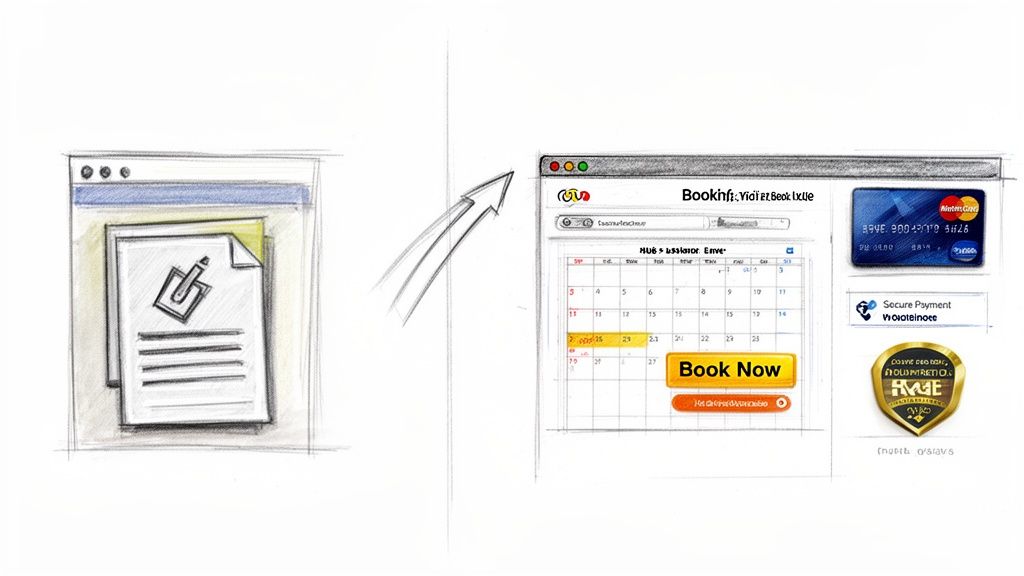
The core problem is a massive disconnect. Too many operators treat their website like a passive art gallery for their properties, somehow expecting visitors to stumble upon it and book. This completely ignores the sophisticated, trust-based journey a guest goes on before they ever pull out their credit card for a direct reservation.
The Real Reason Most Direct Booking Sites Fail
The challenge isn't just getting online; it's about earning attention and, more importantly, trust. Your potential guests have been trained by the seamless, secure, and feature-rich experience of giants like Airbnb and Vrbo. To convince someone to book directly with you, your independent site has to meet—and honestly, exceed—those expectations.
This isn't just a hunch; the data backs it up. Despite most operators having direct booking sites, a staggering number are just spinning their wheels. Industry analysis reveals that nearly two-thirds of operators generate less than 25% of their bookings from their own websites, and many get no direct bookings at all. You can read the full short-term rental report to see just how deep this problem runs.
The goal is to transform your online presence from a simple digital brochure into an automated, high-conversion booking machine. It must actively build trust, answer questions before they're asked, and make the booking process easier than using an OTA.
From Digital Brochure To Strategic Booking Engine
So, what separates a website that just sits there from one that’s a revenue-driving powerhouse? It’s all about the strategic integration of features—every single element is designed to guide a visitor from casual browsing to a confirmed booking. A successful site doesn't just display information; it persuades, reassures, and closes the deal.
To build a website that performs, you need a different mindset:
- You're building an experience, not just a listing. Your site needs to tell your brand's story. It should showcase the unique vibe you offer and sell the dream of that perfect getaway.
- Trust is everything. Every single element, from professional photography and glowing guest reviews to secure payment gateways, must work in harmony to build confidence.
- Eliminate all friction. The booking process has to be dead simple, fast, and flawless on a phone. Any hint of confusion or delay is an open invitation for a guest to click away and book on an OTA.
This simple table highlights the difference between a standard, brochure-style website and one that's built to drive revenue.
Standard Features vs Conversion-Driving Upgrades
| Standard Feature (The Bare Minimum) | High-Conversion Upgrade (The Revenue Driver) |
|---|---|
| Basic property photos and descriptions. | Professional photography, 3D tours, and compelling, story-driven copy. |
| A simple calendar showing availability. | An integrated, real-time booking engine with dynamic pricing and instant confirmation. |
| A generic "Contact Us" form. | Prominently displayed guest reviews, trust badges (like secure payment logos), and a detailed "About Us" page. |
| A list of amenities. | Rich local area guides, blog posts with travel tips, and curated experiences that add value beyond just the stay. |
| A mobile-responsive layout. | A lightning-fast, mobile-first design with a booking process optimized for small screens (fewer clicks, easy input). |
| A link to your social media profiles. | Social proof widgets that pull in live feeds of positive guest mentions and user-generated content. |
The features on the left get you a website. The upgrades on the right get you bookings.
By focusing on these principles, your website evolves. It stops being a liability and starts becoming your single most powerful tool for attracting guests, building brand loyalty, and taking back your revenue from third-party commissions.
Building The Foundation Of Your Booking Engine
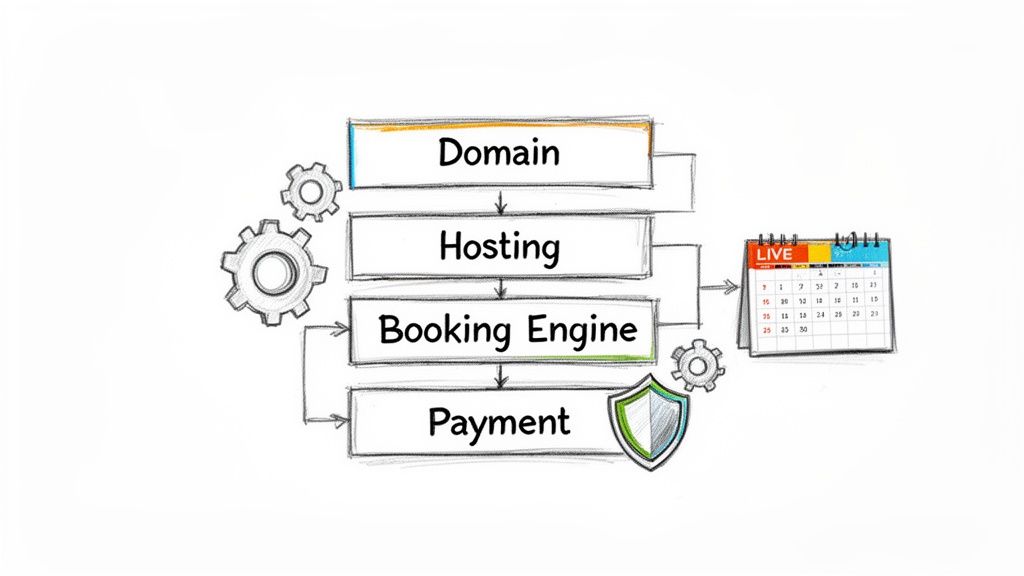
Before you start obsessing over color palettes and font choices, let's nail down the technical core of your direct booking site. This foundation—your platform, domain, and booking tools—is what makes the difference between a powerful asset and a frustrating money pit. Getting this right from the start is non-negotiable.
The first big decision you'll make is your platform. This is where your website will live, and it impacts everything from design flexibility to your long-term costs. You've basically got three paths to choose from.
Comparing Website Platform Options
Each option comes with its own set of trade-offs. What’s perfect for a single-property owner probably won't scale for a manager juggling 20+ listings.
- All-in-One Vacation Rental Builders: Think platforms like Lodgify or Hostfully. They're built specifically for our industry, packing in integrated booking engines, channel manager sync, and rental-focused templates. This is usually the quickest way to get a fully functional site up and running.
- General Website Builders: Tools like Wix or Squarespace offer incredible design freedom with easy drag-and-drop interfaces. The catch? You have to integrate third-party booking plugins, which can add complexity and cost.
- WordPress: For ultimate control and customization, WordPress is king, but it has the steepest learning curve. You're on the hook for everything: choosing hosting, themes (like WP Rentals or Homey), and plugins for bookings (like HBook), security, and more.
Honestly, for most operators, an industry-specific builder is the most efficient route. It bundles all the essentials without the technical headache of a self-hosted WordPress site.
Choosing Your Domain And Hosting
Your domain name is your digital address and a huge part of your brand identity. Keep it short, memorable, and easy to say out loud. Steer clear of hyphens and numbers—they just create confusion. For instance, "BlueRidgeCabins.com" is way stronger than "Blue-Ridge-Cabins-8.com."
Your domain isn't just a URL; it's a signal of trust and professionalism. A clean, branded domain tells guests you're a legitimate business, not just a casual listing on a massive OTA.
Once you’ve got your domain, you need solid hosting. This is the service that keeps your site online. It might seem like a small detail, but slow or unreliable hosting can absolutely tank your SEO rankings and send potential guests running. A site that takes more than three seconds to load loses about 40% of its visitors.
Most all-in-one platforms and general site builders roll hosting costs into their monthly fees, which simplifies things. If you go the WordPress route, you’ll need to pick a provider like SiteGround or Bluehost and make sure they include an SSL certificate to keep your site secure.
Integrating A Seamless Booking Engine
The booking engine is the heart of your website. It’s what turns a "looker" into a "booker." A clunky, confusing, or untrustworthy booking process is the number one reason people abandon a direct booking.
Your booking engine needs to have a few non-negotiable features:
- Real-Time Availability Calendar: This is critical. It must sync instantly with your other channels (like Airbnb and Vrbo) via iCal or a direct API to prevent the nightmare of double bookings.
- Dynamic Pricing Sync: Your engine has to pull rates from your pricing tool or PMS, automatically reflecting any seasonal, weekend, or last-minute adjustments you've set.
- Secure Payment Gateway: Integrating with trusted processors like Stripe or PayPal is essential. Simply displaying their logos is a powerful trust signal that tells guests their financial info is safe.
- Clear Rate Breakdown: All fees, taxes, and the final total should be laid out transparently before the guest hits "pay." Surprises at checkout are a massive conversion killer.
The goal here is to eliminate friction. The entire journey—from a guest picking dates to entering their payment info—should feel intuitive, fast, and flawless. This is especially true on mobile, where most travel research starts. For a deeper dive, our guide on essential direct booking tools covers selecting the right software in more detail.
Designing An Experience That Turns Lookers Into Bookers
Got the technical stuff sorted? Great. Now for the fun part: turning that solid foundation into a website that actually convinces people to book. This is where we move beyond code and plugins and focus on the human element—the design, the photos, the words—that guides a casual browser to confidently smash that ‘Book Now’ button.
This whole process really kicks off with your brand story. In a world of a million generic listings, what makes your properties yours? Are you all about luxury getaways for couples? Or maybe you're the go-to for chaotic, memory-making family trips. Whatever your flavor, it needs to be in everything from your logo to the way you describe the master bedroom.
This is what separates you from the faceless megacorps and OTAs. It's how you build real loyalty and get those all-important repeat guests. If you need a hand nailing down your visual identity, our complete guide on vacation rental website design is packed with ideas.
Sell The Sizzle, Not The Steak
Nobody books a "three-bedroom cabin." They book cozy nights by the fire after a long day of hiking. They don't want a "condo with a pool"; they want to picture their kids splashing in the water while they relax with a cold drink. Your website has to sell that dream, not just list the features.
This starts with your photography. I’ll say it once: if you're going to spend money anywhere, spend it here. Grainy, poorly-lit smartphone photos are an instant trust-killer. They scream "amateur," and guests will click away without a second thought.
Your single most important investment for a direct booking site is professional photography. Period. The data is overwhelming: listings with high-quality photos get more bookings at higher rates. It’s not even a debate.
Once your photos are killer, your property descriptions are next in line. Ditch the boring spec sheets and start telling a story.
- Get Emotional: Use language that makes people feel something. Instead of just "balcony," try "your own private balcony, the perfect spot to sip morning coffee and watch the sunrise."
- Benefits Over Features: A "fully stocked kitchen" is a feature. The benefit is "whipping up easy family meals so you don't have to drag everyone out to a restaurant every single night."
- Paint a Picture: Walk them through a perfect day at your place. Describe the morning, the afternoon adventures, and the relaxing evening. Help them imagine themselves there.
Build a Layout That Actually Converts
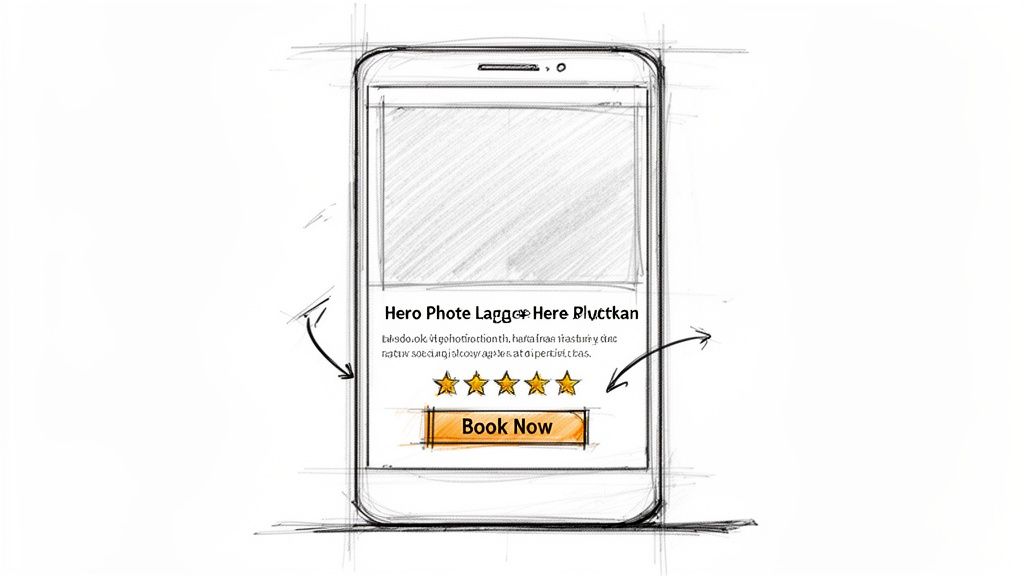
Your website layout needs to be clean, simple, and above all, mobile-first. The overwhelming majority of people start their vacation planning on their phone. If your site is a clunky, hard-to-navigate mess on a small screen, you've already lost. Think big, tappable buttons, easy-to-read fonts, and a booking process that doesn’t require a magnifying glass and a surgeon's steady hand.
Beyond the main pages, your individual property pages are where the magic happens. This is the final battleground where the "book" or "bounce" decision is made. Learning how to build high-converting landing pages for each property is a skill that directly translates into more revenue.
Your goal here is to remove every shred of doubt. That’s where trust signals come in. These are little visual cues that reassure visitors your business is legit and their money is safe with you.
The Power of Trust Signals
Let's be real: when a guest books direct, they're taking a little leap of faith. You don't have the billion-dollar brand name of Airbnb backing you up. Your website has to do the heavy lifting to build that confidence from scratch. Sprinkle these elements liberally, especially near your "Book Now" buttons.
Essential Trust Signals for Your Site:
| Signal Type | Example | Why It Works |
|---|---|---|
| Social Proof | A dedicated "Reviews" page and snippets of 5-star testimonials on property pages. | Shows that real people have stayed with you and had a great experience. |
| Security | Logos of your payment processor (e.g., Stripe, PayPal) and SSL certificate badges. | Reassures guests that their personal and financial information is safe and encrypted. |
| Transparency | A clear breakdown of all fees and taxes before the final booking step. | Prevents checkout surprises, which are a top reason for cart abandonment. |
| Authenticity | An "About Us" page with a photo of you or your team and your story. | Puts a human face to the business, making it feel more personal and less corporate. |
| Urgency | A simple "This property is in high demand" notice for popular dates. | Gently encourages hesitant bookers to make a decision without being overly pushy. |
By weaving together a strong brand, magnetic copy, a flawless mobile design, and these crucial trust signals, you create an online experience that doesn't just display your properties—it actively sells them. This is how you stop being just another listing and start building a real, revenue-generating direct booking business.
Advanced Strategies For Driving Targeted Traffic
Your stunning new website is live—a beautiful, conversion-focused machine ready for guests. Fantastic. But simply hitting "publish" isn't the finish line. Now you have to get the right people to actually see it.
This is where you shift gears from a website owner to a strategic marketer. It’s the part of the process that truly lets you break free from OTA dependency and build a resilient direct booking business.
Effective marketing isn’t about shouting into the void and hoping for the best. It's about precision, data, and smart automation. You're competing for attention in a crowded space, and generic tactics just won't cut it anymore. If you want a broader look at what's possible, reviewing some actionable digital marketing strategies for small businesses can spark some great ideas.
Scaling Your Reach With Programmatic SEO
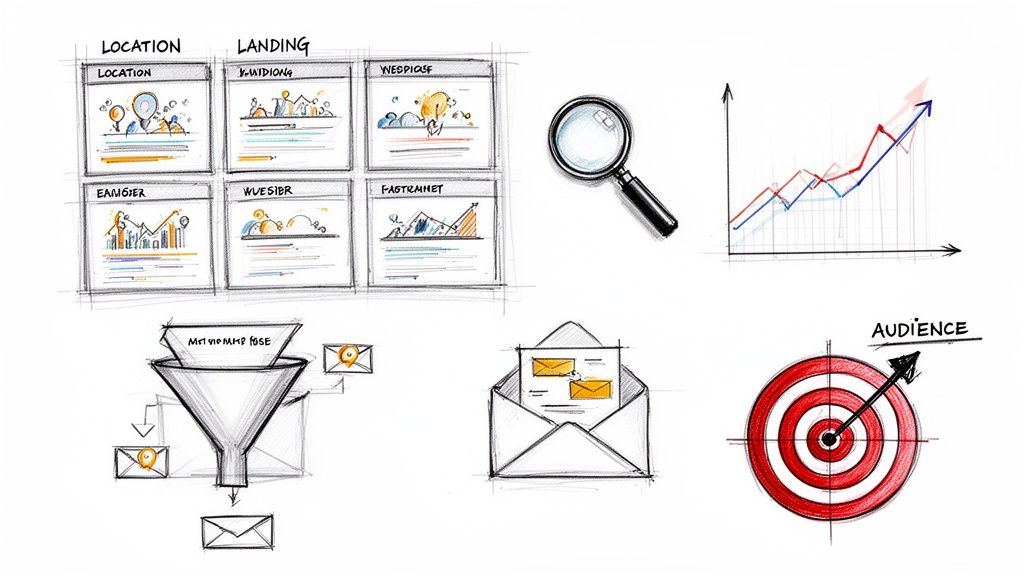
One of the most powerful—and surprisingly underused—strategies in the vacation rental world is programmatic SEO. It sounds technical, but the idea is actually quite simple. Instead of writing one generic blog post about your location, you systematically create dozens, or even hundreds, of hyper-specific landing pages targeting long-tail keywords.
Think about how potential guests really search. They don't just type "cabin in Asheville." They get specific. They search for things like "Asheville cabin with hot tub for couples" or "pet-friendly rental near downtown Asheville." Programmatic SEO is your ticket to creating dedicated pages for each of these high-intent searches, and doing it at scale.
Let's look at a real-world example. Say you manage 10 properties in Scottsdale, Arizona. You could programmatically generate pages like:
- Scottsdale vacation rentals with a private pool
- Scottsdale condos for a bachelorette party
- Family-friendly homes near Old Town Scottsdale
Each page would only show the relevant properties and would feature unique content tailored to that specific experience. This hyper-targeted approach dramatically boosts your odds of ranking on Google for those valuable, booking-ready search terms. For a deeper dive into the basics, our guide on vacation rental SEO covers the essentials you need to get started.
Making Data-Backed Decisions With Analytics
Guesswork is the enemy of growth. To market your site effectively, you need to know exactly what’s working and what isn’t. This is why setting up web analytics is non-negotiable. Free tools like Google Analytics 4 (GA4) give you an incredible window into how visitors behave on your site.
Getting it installed is the first step. From there, you can start tracking key performance indicators (KPIs) that tell a clear story about your website's health. Don't let all the data overwhelm you; just focus on the metrics that directly impact bookings.
Key Metrics to Track:
- Traffic Sources: Where are your visitors coming from? Is it organic search, social media, or your email list? This tells you which marketing channels are actually worth your time and money.
- Bounce Rate: What percentage of people leave after viewing only one page? A high bounce rate might mean your landing page content isn't matching what they expected to find.
- Conversion Rate: This is the big one. What percentage of your visitors end up booking? Tracking this lets you measure the real impact of any change you make to your site.
- Booking Funnel Drop-off: At what stage are people abandoning the booking process? Is it when they see the total price? Or on the payment page? This helps you pinpoint and fix friction points.
By tracking these metrics, you move from "I think this is working" to "I know this is working." Data allows you to double down on successful strategies and cut your losses on things that aren't driving revenue.
Building An Automated Email Marketing Funnel
Your email list is one of the only marketing channels you truly own. You're not at the mercy of social media algorithms or Google updates. It's a direct line to your past and potential guests, and building an automated email funnel is how you nurture those relationships and drive repeat bookings on autopilot.
An effective funnel guides someone from initial interest to a confirmed booking—and then encourages them to come back—all without you lifting a finger for each individual message. It’s simply a sequence of pre-written emails that get sent automatically based on what a user does.
A Simple-Yet-Powerful Funnel Structure:
- The Lead Magnet: Offer something valuable in exchange for an email. A guide to the "Top 10 Local Hikes" or a simple "5% Off Your First Direct Booking" coupon works wonders.
- The Nurture Sequence: Once they're on your list, send 3-4 emails that introduce your brand, showcase your best properties, and feature glowing guest reviews to build trust.
- The Abandoned Cart Sequence: If someone starts booking but doesn't finish, automatically send them a reminder an hour later. You might even include a small incentive to nudge them over the finish line.
- The Repeat Guest Campaign: Months after a guest checks out, trigger a "Welcome Back" discount to encourage them to book their next trip directly with you.
This kind of automated system ensures no lead ever falls through the cracks and works 24/7 to fill your calendar. It's a cornerstone strategy for anyone serious about making their vacation rental website a long-term, profitable asset.
How To Launch And Continuously Optimize Your Website
Getting your website live is just the starting line, not the finish. A great launch isn’t about just flipping a switch; it's a carefully managed process to guarantee a flawless first impression.
From the moment you go live, your focus has to pivot immediately to the ongoing, data-driven work of optimization. This is how your website evolves from a static brochure into a powerhouse asset that consistently drives direct bookings.
The vacation rental market is more crowded than ever. In the United States alone, there were around 1.6 million vacation rental listings last year, a huge jump from 1.45 million the year before. With nearly three-quarters of operators saying their markets are getting tougher, a basic website just won't cut it. You need to create a standout digital experience to capture attention and convert lookers into bookers. You can dig into more stats about the competitive pressures in the vacation rental market here.
Your Pre-Launch Checklist For A Flawless Rollout
Before you pop the champagne and announce your new site, you need to run through a final quality control check. This step is non-negotiable. It prevents embarrassing glitches and ensures every visitor has a smooth, professional experience from their very first click.
- Test The Entire Booking Funnel: Seriously, act like you're a guest. Use your phone and your laptop to select dates, add a property to the cart, and go all the way to checkout. You need to test a real (and a failed) credit card transaction to be absolutely sure your payment gateway is working correctly.
- Verify Analytics And Tracking: Check that your Google Analytics code is installed and firing. You want to capture data from day one to see what people are actually doing on your site. Don't skip this.
- Double-Check All Links and Forms: Click everything. Every internal link, every social media icon, every link to a local attraction. Fill out your own contact form to make sure it actually lands in your inbox.
- Review Mobile Responsiveness: Don't just resize your browser window. Pull up your website on actual iPhones, Androids, and tablets. See how it truly looks and functions on the devices your guests are using.
A smooth launch sets the professional tone for your brand. Spending a few extra hours testing every single component can save you from lost bookings and bad first impressions you can't take back.
The Never-Ending Pursuit Of Optimization
Once you're live and people start showing up, the real work begins. Optimization is all about making small, continuous improvements that add up to significant gains in your conversion rate over time.
This whole process should be driven by data, not gut feelings. Your analytics will show you what is happening on your site, but testing is what helps you understand why. The best way to do this is through A/B testing, also known as split testing. It’s pretty simple: you show two different versions of a webpage element to different visitors to see which one performs better.
A/B Testing To Boost Your Booking Rate
You can test almost anything, but you should start with the elements that have the biggest impact on a visitor's decision to book.
- Headlines: Does "Luxury Scottsdale Villa with Private Pool" convert better than "Your Unforgettable Scottsdale Bachelorette Getaway"? Test different angles to see what language resonates with your ideal guest.
- Calls-to-Action (CTA): Experiment with the text on your main booking buttons. Does "Book Now" outperform "Check Availability" or "Reserve Your Dates"? Sometimes, even just changing the button color can make a surprising difference.
- Hero Images: This is a big one. Test different lead photos for your properties. A jaw-dropping shot of the pool area at sunset might be way more compelling than a standard exterior photo of the front of the house.
Keeping Your Content Fresh And Engaging
Finally, remember that a website is a living thing that needs regular care. Stale, outdated content tells both Google and your potential guests that you're not actively engaged in your business.
A simple content calendar can help keep you on track. Aim to refresh key elements on a regular schedule to stay relevant and build your authority. This continuous effort is a core part of any successful strategy to vacation rental website create and grow.
Ongoing Content Refresh Ideas:
- Seasonal Photo Updates: Your property looks different in the summer than it does covered in snow. Update your hero images to reflect the current season and help guests visualize their trip right now.
- New Local Guides: Add a new blog post or guide every quarter. Simple topics like "Our Favorite Family-Friendly Restaurants" or "The Best Fall Hikes Near Our Cabin" provide real value and start capturing valuable long-tail search traffic.
- Update Guest Reviews: Don't let your testimonials get stale. Regularly add new, glowing reviews to your homepage and property pages to provide fresh social proof that builds trust.
Got Questions? We've Got Answers
When you're diving into building your own direct booking website, a few key questions always pop up. It's totally normal. Let's tackle the big ones so you can move forward with confidence.
How Much Does It Cost To Create A Vacation Rental Website?
This is the million-dollar question, isn't it? The truth is, your investment can swing wildly depending on the route you take.
If you're scrappy and go the DIY route with a generic builder like Wix or Squarespace, you might only spend $20-$100 a month. But be warned: you'll be on the hook for piecing together the booking functionality, which can turn into a real headache.
On the complete opposite end of the spectrum, a fully custom-built site from a web developer can set you back anywhere from $3,000 to over $10,000 upfront.
That's why specialized platforms like Lodgify or Hostfully have become so popular. They're the perfect middle ground. You'll pay a monthly fee (and sometimes a small booking commission), but you get all the mission-critical tools—like a booking engine and channel manager sync—baked right in. This approach saves an incredible amount of time and technical frustration.
Can I Build A Vacation Rental Website Without Coding Skills?
Absolutely. The days of needing to be a code wizard to build a website are long gone. Thank goodness.
Modern website builders and platforms designed for our industry are built for people like us, not developers. They use intuitive drag-and-drop editors and beautiful, pre-made templates that let you create a professional-looking, fully functional booking site without touching a single line of code.
The real key is picking a platform that was built from the ground up for vacation rentals. That’s what ensures all the features you actually need are already there and easy to manage.
Your most important decision isn't whether to learn code—it's choosing a platform that truly understands the hospitality business. That choice alone will save you more time and money than anything else.
How Long Does It Take To Get Direct Bookings From A New Site?
Honestly, this one is all about your marketing hustle.
If you've been smart and have an email list of past guests, you could see direct bookings roll in within a few days of launch. Just send out a friendly announcement campaign, and you're in business.
But if you're starting from scratch and relying on Google to send you traffic (a strategy known as SEO), you need to play the long game. It realistically takes 3-6 months to start seeing any meaningful traffic for competitive keywords. A winning strategy mixes long-term SEO with quick wins from things like targeted social media ads and email marketing. That way, you can get cash flowing while your organic search presence builds up over time.
What Is The Most Important Element On My Website?
Easy. It's your photos. Not just any photos, but high-quality, professional photography. It's the single most critical element on your entire site, without a doubt.
Guests book with their eyes first. Nothing builds trust, creates desire, and sells the dream of staying at your property like stunning images. Your photos are your sales team. They need to show off your property's best angles, its sparkling cleanliness, and the unique vibe that makes it special.
The data doesn't lie: listings with professional photos earn more and book up faster. If there is one place you absolutely should not cut corners or skimp on budget, it's this. Think of it as an investment that will pay for itself over and over again.
Ready to build a vacation rental website that not only looks incredible but is also powered by smart automation to drive direct bookings? hostAI gives you the tools you need—from an AI-powered website builder to automated email marketing—all designed to help you double your direct revenue. Discover how hostAI can transform your business.