
how to increase airbnb bookings
How to increase airbnb bookings: Proven tips to boost occupancy
Posted on Dec 31, 2025
To really boost your Airbnb bookings, you need to nail four key things: a listing that’s fully optimized to sell, a smart, dynamic pricing strategy, a rock-solid 5-star reputation, and your own direct booking channel. When you get these right, your property goes from being just another option to a guest's first choice. That's how you keep your calendar full and your revenue climbing.
Craft a Listing That Turns Browsers Into Bookers
Think of your Airbnb listing as your digital storefront. It's your most powerful sales tool, period. In a world where travelers scroll and make snap judgments in seconds, a weak or generic listing is a death sentence. It gets ignored without a second thought.
Your goal isn't just to list facts about your property; it's to sell an experience. You want to make potential guests stop, click, and feel an immediate urge to book. Every single element, from the first word of your title to the last photo in your gallery, has to work together to grab their attention and earn their trust.
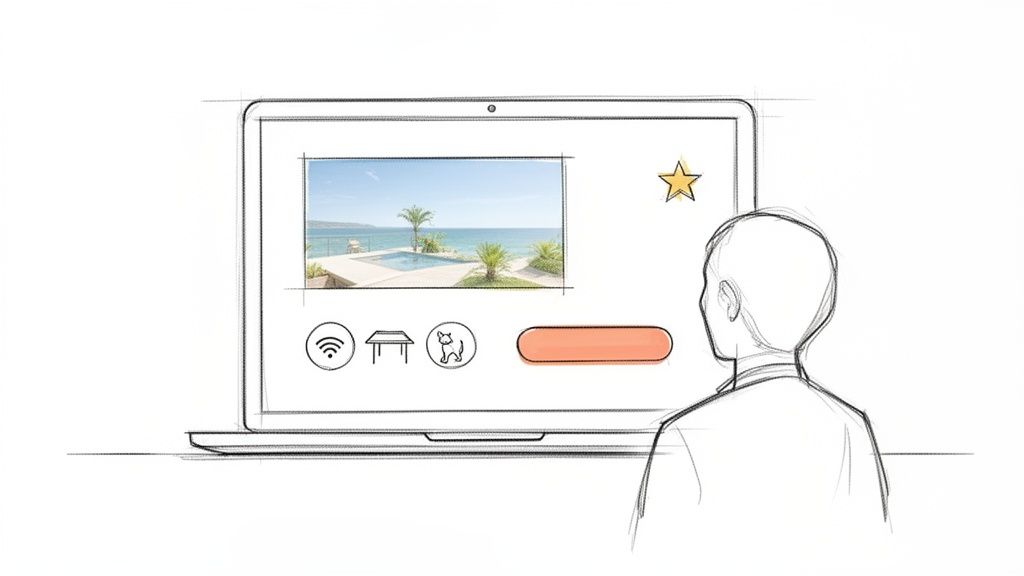
To make this crystal clear, let's break down the essential optimization tactics and why they matter.
Listing Optimization Tactics and Their Impact
| Listing Component | Optimization Tactic | Impact on Bookings |
|---|---|---|
| Listing Title | Use descriptive, benefit-driven language. Highlight unique features (e.g., "Hot Tub," "Ocean View"). | Captures attention in search results, leading to a higher click-through rate. |
| Photos | Invest in professional, high-quality images. Showcase the best features and lifestyle moments. | Builds trust and emotional connection. High-quality photos can increase bookings by over 20%. |
| Description | Sell the experience, not just the features. Use short, scannable paragraphs and bullet points. | Helps guests envision themselves at your property, making them more likely to book. |
| Amenities | List everything you offer, especially high-demand items like Wi-Fi, A/C, and pet-friendly options. | Improves visibility in filtered searches, ensuring you appear in front of qualified guests. |
By systematically improving each of these areas, you create a listing that doesn't just inform—it persuades.
Titles That Get the Clicks
Your title is the first thing a potential guest sees, making it the most important piece of marketing you'll write. A bland title like "2BR Apartment Downtown" is completely forgettable and does nothing to stand out. A great title, on the other hand, is specific, shouts a key benefit, and uses the exact keywords guests are searching for.
What's the one thing that makes your property special? Is it the jaw-dropping view, the private hot tub, or the fact that you're a short walk from a major landmark? Lead with that.
A title like "Cozy Cabin w/ Hot Tub Under the Stars" or "Sun-Drenched Loft ★ 5-Min Walk to Beach" instantly paints a picture and hooks the right kind of guest. If you're stuck, our guide on crafting the best Airbnb titles is packed with proven formulas you can adapt.
Sell an Experience, Not Just a Space
Once a guest clicks, your description has to reel them in. Too many hosts make the classic mistake of just listing features. Don't do that. You need to translate those features into benefits and experiences.
Instead of just saying you have a balcony, describe the feeling of "sipping your morning coffee on the private balcony while watching the sunrise over the mountains." See the difference?
Break up your text into short, easy-to-scan paragraphs. Use bullet points to call out the amenities that matter most to your ideal guest.
- For remote workers: Mention "Blazing-fast 500 Mbps Wi-Fi" and a "dedicated ergonomic workspace."
- For families: Highlight "a pack-n-play, high chair, and blackout curtains for easy travel with kids."
- For pet lovers: Emphasize "a fully fenced yard and complimentary dog bowls."
This approach helps guests quickly confirm that your place is the right fit for them, removing friction and making the decision to book that much easier.
Your Photos Are Everything—Invest Accordingly
Let’s be blunt: bad photos are the #1 reason guests scroll right past a listing. Dark, blurry, or cluttered images scream that a property isn't well-cared-for. Professional photography isn't a splurge; it's a non-negotiable investment that can dramatically boost your bookings.
A pro knows how to use light, stage rooms to feel spacious and inviting, and capture the little details that make your property shine. Your photo gallery should tell a story, starting with a killer "hero" shot and flowing logically through each room, ending with your best amenities or local scenery. And don't forget to refresh them seasonally to keep your listing looking current.
The market is more competitive than ever. In 2025, Airbnb's global active listings surpassed 8 million, yet U.S. occupancy rates stabilized at 56.2% due to expanded supply. Professional hosts are winning by optimizing every detail of their listings. Learn more about these market trends and statistics from HomeTeam Luxury Rentals.
Don't Underestimate the Power of Amenities
Amenities are way more than just perks; they're powerful search filters that directly control your visibility. When a guest filters for a "pet-friendly" place with a "hot tub," your listing will only show up if you've checked those boxes. If you haven't, you're invisible to that potential booking.
Do a full audit of your amenities. Go beyond the basics and think about what guests in your specific market are looking for. Things like a well-stocked kitchen, a smart TV with streaming apps, self-check-in, and free parking are often the deciding factors. Be meticulous and list everything—you never know what small detail will be the one to seal the deal.
Get Smart With Your Pricing—It’s Not Set-and-Forget
If you’re setting a single nightly rate and just letting it sit for months, you’re leaving serious money on the table. It's one of the fastest ways to kill your potential income. This “set it and forget it” approach completely ignores the natural ebb and flow of traveler demand, which means your calendar is either depressingly empty or you're underpriced when demand spikes.
To really move the needle on bookings and boost your revenue, you have to get smarter and more data-driven. A dynamic pricing strategy is all about adapting your rates in real time. Think of it less like a fixed price tag and more like the stock market—prices go up and down based on supply and demand. This keeps your property competitive and profitable every single day of the year.

The Key Factors That Should Drive Your Rates
Effective dynamic pricing isn't just guesswork; it's a calculated response to what the market is telling you. By keeping a close eye on these key signals, you can make intelligent adjustments that squeeze the most value out of every available night.
Your pricing model should automatically react to:
- Seasonality: This is the most obvious one. A beach house is going to command a much higher rate in July than in January. Start by mapping out your high, low, and shoulder seasons to create a solid baseline.
- Day of the Week: Weekend demand is almost always higher. It just is. Your Friday and Saturday rates should reflect that, often pulling a 15-30% premium over a quiet Tuesday night.
- Local Events: This is where the real opportunity lies. Concerts, festivals, big conferences, or major sporting events create massive, temporary spikes in demand. Get familiar with your local event calendar and bump your prices well in advance to capitalize on that wave of visitors.
- Booking Window: This is all about when a guest books. You can offer a small discount for the early birds booking months ahead (locking in that occupancy is valuable!), while charging a premium for last-minute bookings when travelers are desperate and have fewer options.
When you start layering these factors together, you move from a reactive stance to a proactive one, making sure you're never underpriced.
A smart pricing strategy isn't just about jacking up rates for big events. It's also about strategically lowering them to fill those awkward midweek gaps and avoid costly vacant nights. That flexibility can make a huge difference in your annual revenue.
Use Minimum Night Stays as a Strategic Tool
Your minimum night stay requirement is another powerful lever you can pull. A one-size-fits-all approach just doesn't cut it here. You need to adjust your minimums to attract the right kind of guest at the right time.
For instance, if there's a huge three-day music festival in town, setting a three-night minimum prevents your prime weekend dates from getting chopped up by one-night stays. But during a slow week, you might drop that minimum to one or two nights to snag a business traveler or a couple looking for a quick getaway.
Here’s how to think about it:
- High Season & Big Events: Go with a longer minimum stay (think 3-5 nights) to maximize revenue from a single booking and cut down on turnover costs.
- Midweek Gaps: Got an empty Tuesday and Wednesday sandwiched between two longer bookings? Offer a two-night special to fill that "orphan" gap.
- Long-Term Stays: Attract digital nomads or relocating families by offering attractive weekly or monthly discounts. This gives you stable income and way less cleaning.
Let Automation and Smart Tools Do the Heavy Lifting
Let's be real: manually tracking competitor rates, local events, and seasonal demand for even one property is a nightmare, let alone a whole portfolio. This is where technology becomes your best friend. Smart pricing tools plug directly into your Airbnb calendar and automate all these adjustments for you.
These platforms analyze billions of data points—everything from what your competitors are charging to historical booking trends and even local flight demand—to recommend and set the perfect price for every single night. This data-driven approach takes the guesswork out of the equation and keeps your property priced perfectly 24/7, even while you sleep.
While these tools are incredible, you still need a solid understanding of your market to set the right guardrails. You can dive deeper into building a complete framework by checking out our guide to creating a winning vacation rental pricing strategy.
Ultimately, dynamic pricing transforms your calendar from a static grid into a powerful profit-generating engine. It lets you respond intelligently to the market, hitting that sweet spot between high occupancy and maximum nightly revenue.
Build a 5-Star Reputation That Drives Bookings
In the short-term rental game, trust is everything. A slick listing and sharp pricing might get you the click, but your reputation is what closes the deal. It’s what turns a casual browser into a paying guest.
Let’s be honest, when was the last time you booked a place with zero reviews or a sketchy rating? Exactly.
Your reputation is built one stay at a time, and it has a direct line to your visibility on Airbnb. The platform's algorithm is smart—it actively rewards hosts who consistently deliver incredible experiences. More 5-star reviews bump you up in the search results, which naturally leads to more bookings. It's a powerful cycle you absolutely need to get in on.

This doesn't happen by accident. It’s the result of a deliberate, well-executed plan to create stays that people can't stop raving about.
Engineer a Flawless Guest Experience
A 5-star review is earned long before a guest even thinks about checking out. It all starts with seamless communication from the second they confirm their booking. Automating key messages—like the booking confirmation, pre-arrival details, and check-in instructions—takes the stress off both you and your guests. Nothing falls through the cracks.
But don’t just stop at the basics. The real magic is in genuine, thoughtful hospitality. A digital welcome guide is a game-changer here. Ditch the dusty old binder and send your guests a clean, beautifully designed link with everything they could possibly need.
Pack your guide with useful info like:
- The Essentials: Wi-Fi password, smart TV instructions, how to work the espresso machine—the little things that prevent frustrated texts.
- Your Insider Picks: Share your favorite under-the-radar coffee shop, the best spot for late-night tacos, or a scenic local hike that isn't swarming with tourists. This personal touch goes a long way.
- Emergency Info: List local emergency numbers and your own contact details for total peace of mind.
This kind of proactive care makes guests feel like you've truly thought of everything. It shows you’re a pro.
Your reviews are your most powerful marketing assets. Understanding why your business must have a robust reputation management strategy is the first step to turning positive feedback into a predictable stream of new bookings.
Master the Art of Review Management
Getting great reviews is only half the battle. You need a solid system for managing them, which means both encouraging feedback and responding to it with grace. The perfect time to ask for a review is shortly after check-out, while that warm, fuzzy feeling from their stay is still fresh.
A simple, automated message does the trick. "Thanks again for staying with us, [Guest Name]! We hope you had a fantastic trip. We'd be so grateful if you could take a moment to share your feedback in a review."
Responding to every single review is non-negotiable. It proves to future guests that you're an engaged and attentive host who actually cares.
How to Handle Every Kind of Review
Remember, your responses are public. They're a marketing tool for everyone else who is considering your property.
- For glowing 5-star reviews: Thank the guest by name and reference something specific they loved. For instance, "We're so glad you enjoyed the sunset from the balcony! It's our favorite part of the day, too."
- For good reviews with minor critiques: Always acknowledge the feedback and show you're taking action. "Thanks for the kind words! We've already added more hangers to the closet based on your suggestion." This shows you listen.
- For negative reviews: This is your moment to shine. Stay calm, respond publicly, and then offer to take the detailed conversation offline. Acknowledge their experience, apologize that your property didn't meet their expectations, and state the facts without getting defensive.
Believe it or not, a well-handled negative review can be more powerful than a dozen positive ones. It demonstrates your commitment to guest satisfaction even when things go wrong, building a level of trust that is absolutely essential for increasing your Airbnb bookings.
Launch a Direct Booking Channel to Own Your Business
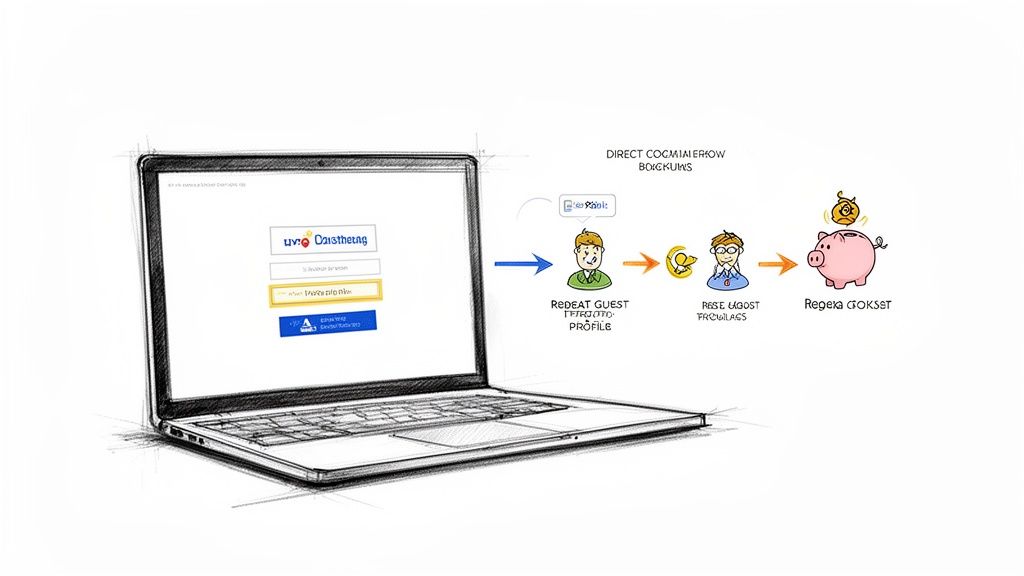
Relying solely on Airbnb is like building your business on rented land. While it's an incredible tool for visibility, true long-term growth comes from owning your guest relationships. Launching a direct booking channel is your path to breaking free from hefty commission fees and building a sustainable, more profitable business.
The goal is to shift your primary asset from just another listing on someone else's platform to a valuable brand that you control. This gives you complete ownership over your marketing, guest communication, and ultimately, your revenue. It's the single most powerful step you can take to secure your future in this industry.
Build a Website That Inspires Trust
Think of your direct booking website as your new digital storefront. It absolutely has to look professional, feel trustworthy, and make it incredibly easy for guests to book. A clunky, outdated site will send potential guests running right back to the perceived safety of an OTA.
To build that confidence and drive conversions, your site must include a few key elements:
- Stunning Photography: Just like on Airbnb, high-quality photos are non-negotiable. They are your most powerful tool for selling the experience.
- A Simple Booking Engine: The process should be dead simple. Guests need to be able to check dates, see pricing, and confirm their stay in just a few clicks.
- A Clear "About Us" Page: Tell your story. Who are you? What makes your properties special? This personal touch helps build a connection that OTAs just can't replicate.
- Social Proof: Don't be shy—prominently display your best 5-star reviews. Seeing positive feedback from past guests is often the final nudge someone needs to book directly.
Creating a professional website doesn't have to be a massive headache. If you're looking for a deep dive, our article on building a high-converting short-term rental direct booking website walks you through the entire process.
Capture Guest Data for Future Marketing
Every single person who stays with you is a potential repeat customer. Unlike on Airbnb where guest contact info is locked down, your direct booking site lets you capture one of the most valuable assets for any business: the guest's email address.
This simple act is a game-changer. It unlocks the ability to communicate directly with past guests, build lasting relationships, and drive repeat bookings without paying another cent in commission. Just make sure your booking process has an optional checkbox for guests to subscribe to your email list for future offers.
Owning your guest list is like having a built-in marketing engine. It’s a direct line to your warmest audience—people who already know, like, and trust your brand. This is how you build a resilient business that isn't dependent on any single platform.
Automate Email Marketing to Drive Repeat Business
Once you start building that email list, you can put it to work. Automated email marketing lets you nurture relationships with past guests and encourage them to return, all without you lifting a finger. You can set up simple, effective campaigns that trigger automatically.
Consider these automated email flows:
- Post-Stay "Thank You" & Review Request: A day after check-out, send an email thanking them for their stay and asking for a review (which you can then feature on your site).
- "We Miss You" Campaign: If a guest hasn't booked again in six months, send a friendly email with a small, exclusive discount for their next trip.
- Seasonal Promotions: Announce your off-season deals or highlight upcoming local events to your email list first, giving them early access to the best dates and rates.
This kind of proactive communication keeps your brand top-of-mind and transforms one-time visitors into loyal, repeat guests who book directly every time.
Convert More Visitors with Smart Retargeting
What about all the people who visit your website but leave without booking? Don't let them just slip away. Smart retargeting campaigns are a super cost-effective way to bring those interested visitors back to complete their reservation.
Here's how it works: a visitor browses your site, then leaves. Later, as they're scrolling through social media or other websites, they see a simple, targeted ad showcasing your property. This gentle reminder often provides the exact nudge they need to come back and finalize their booking.
These campaigns can be incredibly specific. For example, you can show an ad featuring the exact property they were looking at, paired with a message like, "Still dreaming of the mountains? Your perfect cabin is waiting." This level of personalization is highly effective and helps you capture bookings that would have otherwise been lost for good.
Tap Into Market Trends to Attract Better Guests
Great hosts don’t just react to the market; they see where it’s going. When you understand the big shifts in travel, you can position your property to attract the best guests before your competition even knows what’s happening. This means you stop chasing last-minute bookings and start aligning your rental with major trends in how people travel. The result? A steady stream of high-quality, reliable guests.
One of the biggest, most durable trends to emerge recently is the explosion of remote and hybrid work. This isn't just about a handful of "digital nomads" anymore. It's a fundamental change in how professionals live, work, and travel, blending their jobs with leisure. These guests are on the hunt for longer stays—often a month or more—and they have a specific checklist of needs that most standard vacation rentals completely miss.
If you cater to this growing crowd, you'll lock in more consistent revenue, slash your turnover costs, and attract guests who are far more likely to treat your property like their own.
The Long-Stay Guest Is Your New Best Friend
The numbers don't lie. We're seeing a massive surge in longer bookings, which now make up 17% of all gross nights booked. This is almost entirely driven by remote workers, who in North America are booking average stays of 4.1 nights. This isn't a flash in the pan; it's a core shift in travel behavior, and it's a golden opportunity for hosts who know how to adapt. You can dig into more of these crucial Airbnb statistics on Backlinko.
These guests aren't just looking for a bed for the night. They need a fully functional live-work space where they can be productive and comfortable. Reliability and comfort trump flashy, short-term perks every time.
To get their attention, your listing needs to speak their language. It's time to go beyond the basics and showcase the features that make an extended stay not just possible, but a pleasure.
How to Optimize Your Listing for Remote Workers
Put yourself in the shoes of a remote worker. What would make a month-long stay feel like a home away from home? Audit your property and your listing with these must-haves in mind.
- Blazing-Fast and Reliable Wi-Fi: This is the absolute deal-breaker. Don't just say you have Wi-Fi; get specific. Mention the exact speed (e.g., 500 Mbps) in your description. Better yet, run a speed test and include a screenshot in your photo gallery.
- A Dedicated, Comfortable Workspace: A wobbly kitchen table won't cut it. You need to show off a real desk with an ergonomic chair, good lighting, and plenty of accessible power outlets.
- A Seriously Well-Equipped Kitchen: Guests staying for a month are going to cook. Highlight your full-sized fridge, quality pots and pans, a great coffee maker, and plenty of counter space for meal prep.
- The Real Comforts of Home: Think about the little things that make a long stay easier. An in-unit washer and dryer is huge. So are blackout curtains for a good night's sleep and plenty of closet and storage space.
By leaning into the needs of remote workers, you're doing more than just adding amenities; you're actively filtering for a specific, high-value type of guest. This simple strategy helps you carve out a niche in a crowded market and dramatically increase your Airbnb bookings with guests who provide stable, long-term income.
Structure Your Discounts to Reel in Monthly Renters
Once your property is ready for long-stay guests, your pricing has to match. It’s an unwritten rule that anyone booking for an extended period expects a discount. Offering attractive weekly and monthly price breaks is one of the quickest ways to fill your calendar with these fantastic bookings.
A great starting point is a 15-25% discount for any stay of 28 days or more. That's usually enough of an incentive to make your place a much better deal than booking a few shorter stays somewhere else. Make sure these discounts are front and center on your listing so potential guests see the value right away.
Don't forget about past guests, either. A simple email to a previous long-stay guest about six months after their trip, offering them an exclusive "welcome back" rate, can be incredibly effective for locking in repeat business.
And if you want to get really serious about making data-backed decisions and staying ahead of the curve, it's worth checking out specialized tools. Resources like the Shortgenius platform offer smart insights that can give you a real edge. Ultimately, aligning your property and your marketing with these powerful trends is your ticket to attracting better guests and generating more consistent, predictable income.
A Few Common Questions
When you're deep in the trenches of managing short-term rentals, a lot of questions pop up. Let's tackle some of the most common ones I hear from hosts and property managers who are serious about getting more bookings and running a smarter business.
After I Overhaul My Listing, How Fast Will I Actually See More Bookings?
This is the big one, right? While there's no magic button, most hosts see a real bump in inquiries and bookings within two to four weeks after doing a full listing makeover.
The results from different tweaks show up at different speeds, though. Getting professional photos done usually gives you the quickest win—sometimes you'll see more interest in just a few days because the visual appeal is instantly upgraded. On the other hand, changes to your title and description for SEO purposes can take a few weeks to really kick in as Airbnb's algorithm starts to notice and re-rank your listing.
Is a Direct Booking Website Really Worth the Hassle?
Absolutely. It's the difference between just renting out a space and actually building a sustainable business. A direct booking site is a long-term asset, and it gives you three massive advantages.
First off, you completely sidestep OTA commission fees, which can easily be 15% or more. All of that cash goes straight back into your pocket. Second, you get total control over your guest communication and the entire relationship, something you just can't do when a platform is sitting in the middle.
And maybe most importantly, it lets you build your own email list. That list is your single most powerful marketing tool for bringing back past guests who already know, like, and trust you. It's a genuine investment in your business's future.
If there’s one thing that will move the needle more than anything else for getting bookings, it’s your reputation. That reputation is built brick-by-brick with guest reviews. They provide the ultimate social proof, directly influencing your search ranking and convincing lookers to become bookers.
What's the Single Most Important Thing for Getting More Bookings?
If I had to boil it all down to one thing, it's the guest experience. Period. Creating an amazing, memorable stay for your guests is the engine that powers everything else.
Why? Because an incredible experience is what leads to glowing 5-star reviews. Those reviews are what build an unbeatable reputation. And that reputation is what tells Airbnb's algorithm to show your listing to more people and gives new travelers the confidence to click "book." It all comes back to delivering an experience they can't stop talking about.
How Much Do Amenities Really Affect Bookings?
Far more than most people think. Amenities aren't just nice-to-haves; they are powerful search filters. Think about it from the guest's perspective. If someone is specifically searching for a place with "fast Wi-Fi," a "dedicated workspace," or "free parking," your listing is completely invisible to them if you haven't checked those boxes.
Lacking key amenities—or just forgetting to list them—is like hiding your property from a huge pool of guests who know exactly what they want and are ready to book.
To make sure you're showing up for everyone you can, you need to:
- Do a full audit: Go through your property and list every single feature, no matter how small it seems.
- Scope out the competition: Check out the top-performing listings in your area. What do they offer? Make sure you're keeping pace.
- Update it instantly: Just added a new smart TV or a fancy espresso machine? Get that on your listing right away.
Ready to stop relying on OTAs and take control of your revenue? hostAI provides the tools you need to build a powerful direct booking engine, automate your marketing, and turn one-time visitors into lifelong guests. Discover how our platform can double your direct bookings.