

property descriptions examples
8 Property Descriptions Examples to Copy for Higher Bookings in 2025
Posted on Dec 20, 2025
In the crowded short-term rental market, a compelling property description is your most powerful sales tool. It's the difference between a potential guest scrolling past and clicking ‘Book Now.’ Crafting a listing that balances evocative storytelling with strategic SEO is the key to maximizing occupancy and revenue. A well-written description does more than just list amenities; it paints a picture, sells an experience, and answers a guest's unasked questions, building trust and desire before they even see the photos.
This guide moves beyond generic advice to provide a strategic blueprint for writing descriptions that convert. We will dissect a curated collection of property descriptions examples, demonstrating how to transform a basic listing into a powerful booking magnet. You'll see detailed before-and-after rewrites that highlight the impact of targeted language and smart keyword integration. For practical inspiration and templates to craft your own compelling narratives, explore these 7 powerful property description examples that effectively capture guest attention.
We will analyze eight distinct property types, from luxury villas to urban condos, each with a unique strategic focus. You'll learn how to:
- Identify and target specific guest personas (e.g., families, remote workers, luxury travelers).
- Weave in keywords naturally to improve search visibility on platforms like Airbnb and Vrbo.
- Structure your description for maximum readability and impact.
- Write compelling calls to action that encourage immediate bookings.
This article is designed for vacation rental managers and property owners who want to turn words into a consistent stream of revenue. Let's transform your listings from simple information into an irresistible invitation.
1. Luxury Home Description with Lifestyle Focus
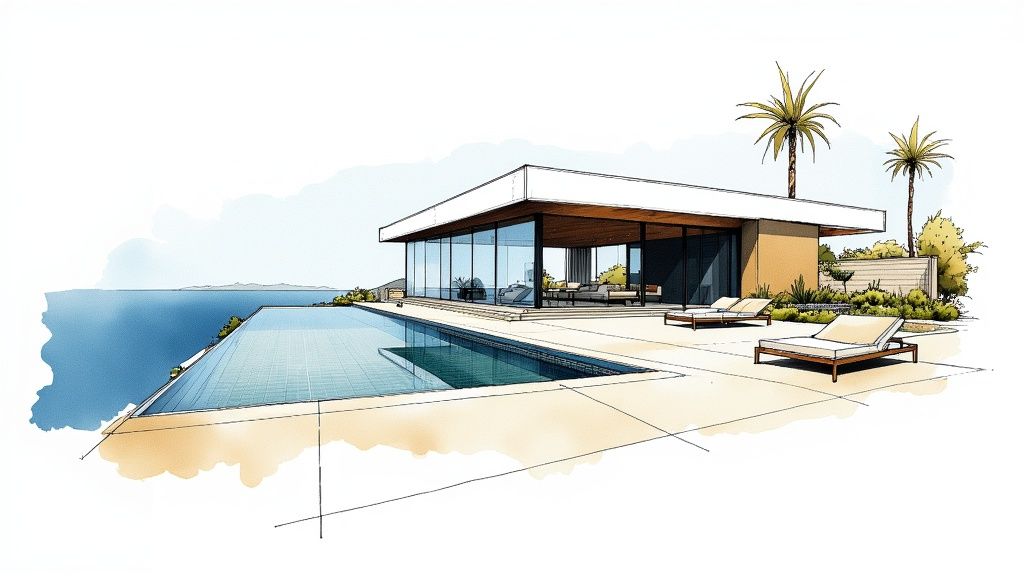
A luxury property description transcends a simple list of features; it sells a dream. This approach, popularized by high-end real estate firms like Sotheby's and The Agency, focuses on evoking emotion and painting a vivid picture of the exclusive lifestyle the property offers. Instead of just listing square footage, it describes the experience of living within those walls, appealing to the aspirations of affluent guests.
This strategy is about creating a narrative. The description becomes a story of sophistication, comfort, and unparalleled experiences. It’s less about the "what" (a big kitchen) and more about the "why" (an epicurean haven for creating culinary masterpieces and hosting unforgettable dinner parties). This shift in focus is crucial for distinguishing a premium property in a crowded market.
Strategic Breakdown
To craft an effective luxury listing, focus on sensory and evocative language. The goal is to make the reader feel what it's like to be there.
- Lead with the "Wow" Factor: Start with the single most breathtaking feature, like a panoramic ocean view or an architectural masterpiece of a staircase. This immediately captures attention and sets a premium tone.
- Describe Experiences, Not Just Spaces: Frame rooms around the activities they enable. A bedroom isn't just a room; it's a "serene sanctuary for restorative sleep." A patio is where you'll "savor sunset cocktails with the city lights twinkling below."
- Use Evocative Adjectives: Words like bespoke, curated, sun-drenched, sweeping, and artisanal elevate the description beyond the ordinary.
- Mention Exclusivity: If applicable, name-drop the renowned architect, interior designer, or exclusive neighborhood to add a layer of prestige.
See it in Action
This video from The Agency showcases how they market a luxury property by focusing almost entirely on the lifestyle and emotional connection, making it an excellent example of this technique.
By adopting this lifestyle-first approach, your property description becomes more than just an advertisement. It transforms into an invitation to a coveted experience, a key differentiator in the high-end market. You can explore a variety of other property descriptions examples to see how this principle is applied across different property types.
2. Family-Focused Suburban Home Description
A family-focused property description shifts the narrative from luxury and aspiration to practicality, safety, and community. This approach, widely used on platforms like Zillow and by local suburban real estate agents, targets the core needs of a family: space, security, good schools, and a supportive neighborhood. It's about selling a lifestyle centered on comfort, convenience, and creating lasting memories.
This strategy goes beyond listing bedrooms and bathrooms; it highlights how the home functions as the hub of family life. The description tells a story of morning routines in a sunlit kitchen, weekend barbecues in a fenced-in backyard, and kids safely playing on a quiet street. It answers the unspoken questions parents have, like "Is this a safe place for my children?" and "Will this home make our busy lives easier?"

Strategic Breakdown
To write an effective family-focused listing, the key is to build trust and highlight practical benefits. The goal is to make a family feel like this isn't just a house, but their future home.
- Lead with Family-Centric Features: Start with what matters most to parents. Mention the highly-rated school district, the cul-de-sac location, or the spacious, fully-fenced backyard right away.
- Emphasize Practicality and Function: Frame rooms based on their utility for a family. A bonus room becomes a "perfect playroom or teen hangout," while an open-concept living area is ideal for "keeping an eye on the kids while making dinner."
- Build a Sense of Community: Mention specific local amenities that appeal to families, such as nearby parks, community pools, annual neighborhood block parties, or walking trails. This paints a picture of a vibrant, welcoming environment.
- Use Reassuring Language: Words like move-in ready, well-maintained, secure, and spacious provide peace of mind. Highlighting safety features like a quiet street or a security system is crucial.
See it in Action
This Zillow listing for a home in a family-friendly suburb is a prime example of this strategy. Notice how it immediately highlights the school district and community amenities, focusing on practical benefits before diving into the home's specific features.
By prioritizing the needs and concerns of a family, your property description resonates on a much deeper level. It transforms from a simple list of features into a compelling vision of a happy, secure, and convenient family life, making it stand out among other property descriptions examples in a competitive suburban market.
3. Urban Condo/Apartment Listing with Walkability Focus
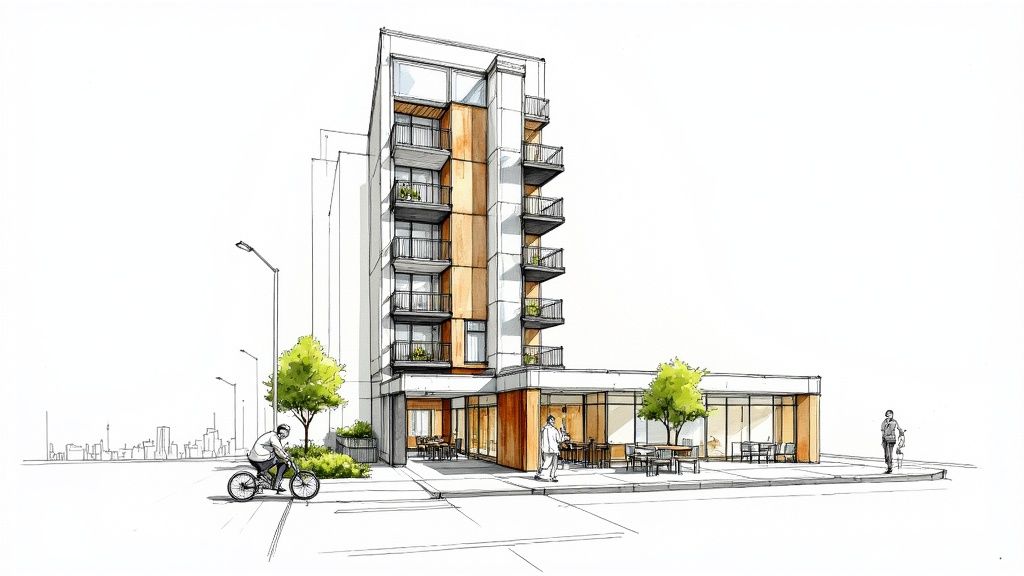
For urban properties, convenience is the ultimate luxury. This description strategy, championed by city-focused real estate firms like Compass and Douglas Elliman, pivots from property size to the unparalleled lifestyle afforded by a prime location. It targets guests who value experiences over square footage, selling the city itself as the primary amenity. The property becomes the perfect launchpad for urban adventures.
This approach is about marketing a car-free, frictionless lifestyle. Instead of focusing inward on the unit's features, the description looks outward, highlighting the vibrant neighborhood at its doorstep. It answers the key question for urban travelers: "What can I do, see, and eat just steps from where I’m staying?" This makes it one of the most effective property descriptions examples for city-center rentals.
Strategic Breakdown
To write a compelling walkability-focused description, you must become a local guide, highlighting the convenience and energy of the neighborhood.
- Lead with Location & Walk Score: Start by immediately establishing the property’s prime location. Mentioning a high Walk Score (e.g., "Walker's Paradise with a 95 Walk Score") provides instant, quantifiable proof of convenience.
- Name-Drop Local Hotspots: Mention specific, popular nearby cafes, restaurants, parks, and boutiques by name. This builds credibility and helps guests visualize their daily itinerary, like "grab your morning coffee from Blue Bottle just around the corner."
- Highlight Transit Access: Detail the proximity to public transportation. Specify which train or bus lines are nearby and mention key commute times, such as "a 10-minute subway ride to Times Square."
- Frame the View: Describe what guests will see from the windows. An urban view isn't a drawback; it’s a feature. Frame it as "gazing out at the vibrant cityscape" or "enjoying views of the historic brownstones across the street."
See it in Action
This video from Ryan Serhant, a master of NYC real estate, perfectly captures the energy of selling an urban lifestyle. While it's a for-sale property, the technique of marketing the neighborhood, the views, and the access is directly applicable to short-term rentals.
By centering your narrative on walkability and local attractions, your listing appeals directly to guests seeking an immersive urban experience. Highlighting these elements is also a key component of a strong marketing strategy. You can discover more about integrating keywords for local attractions in our guide to vacation rental SEO.
4. Historic/Character Property Description
Describing a historic property requires a different approach than marketing a modern home; it's about selling a piece of history. This method, often employed by organizations like the National Trust for Historic Preservation and specialty real estate agents, focuses on celebrating architectural heritage, original details, and the unique story the property tells. Instead of highlighting modern amenities, it emphasizes the craftsmanship and timeless character that cannot be replicated.
The strategy is to create a narrative that connects the guest to the past. The description becomes a testament to enduring quality and architectural significance. It's less about the "what" (an old fireplace) and more about the "why" (an original, hand-carved marble hearth that has been the heart of the home for over a century). This focus is essential for attracting guests who appreciate history, authenticity, and unique character.
Strategic Breakdown
To write a compelling historic property description, blend historical storytelling with rich, detailed observations. The goal is to make the reader feel like they are stepping back in time while still being assured of their comfort.
- Lead with Heritage: Start by identifying the property's architectural style and era, such as "a meticulously preserved 1890 Queen Anne Victorian." This immediately sets the tone and attracts the right audience.
- Celebrate Original Features: Detail the specific, authentic elements. Don't just say "hardwood floors"; say "original longleaf pine floors, beautifully restored to their former glory." Mention things like transom windows, pocket doors, or period-specific millwork.
- Use Authenticity-Focused Language: Incorporate words that convey a sense of history and craftsmanship. Phrases like period-appropriate, authentic restoration, original character, and timeless elegance build trust and appeal to history enthusiasts.
- Be Transparent but Positive: If there are quirks or non-modern aspects, frame them as part of the charm. For example, "The home retains its historic single-pane windows, offering an authentic glimpse into the past," is better than "the windows aren't updated."
See it in Action
This video from This Old House provides a great look into how experts discuss and appreciate the unique features of a historic home. It highlights the importance of focusing on the details and craftsmanship that make these properties special, which is a key principle in writing these types of property descriptions examples.
By adopting this heritage-focused approach, your description moves beyond a simple listing of rooms. It becomes a curated story, inviting guests to become part of the property's long and distinguished history, making it a truly unforgettable stay.
5. Investment Property/Income-Generating Description
An investment property description operates on a different wavelength than a traditional listing. Instead of selling a dream lifestyle, it sells a financial opportunity. This data-driven approach, popularized by commercial platforms like CoStar and LoopNet, shifts the focus from emotional appeal to concrete metrics like ROI, cash flow, and market potential. It speaks the language of investors, prioritizing numbers over narrative.
The strategy here is to present the property as a well-oiled financial asset. The description becomes a business prospectus, outlining the asset's performance, stability, and future growth prospects. It's less about the "what" (a charming duplex) and more about the "why" (a high-performing asset with a solid cap rate and a strong rental history in a burgeoning neighborhood). This analytical focus is critical for attracting serious investors who make decisions based on ledgers, not looks.
Strategic Breakdown
To craft an effective investment listing, you must prioritize clarity, transparency, and quantifiable data. The goal is to build a compelling business case for the property.
- Lead with Key Financials: Start with the most critical numbers: the capitalization (cap) rate, gross annual income, or net operating income (NOI). This immediately qualifies the property for investors seeking specific returns.
- Present a Financial Snapshot: Clearly outline the property's performance history. Include details on occupancy rates, average rental income per unit, and major capital expenditures. This builds trust and demonstrates asset stability.
- Detail Tenant and Lease Strength: For multi-unit properties, specify the quality of the tenants and the terms of existing leases. Mentioning long-term leases or a low vacancy rate adds significant value.
- Highlight Growth Potential: Go beyond current performance. Include a brief market analysis, mentioning local development projects, rising rental demand, or zoning advantages that signal future appreciation and income growth.
See it in Action
This BiggerPockets video breaks down how to analyze a rental property, showcasing the exact data points and financial metrics that investors prioritize. Understanding this perspective is key to writing a description that resonates with them.
By adopting this data-first approach, your property description transforms from a simple advertisement into a powerful investment proposal. It directly addresses the core concerns of your target audience, making it one of the most effective property descriptions examples for income-generating real estate.
6. Eco-Friendly/Sustainable Home Description
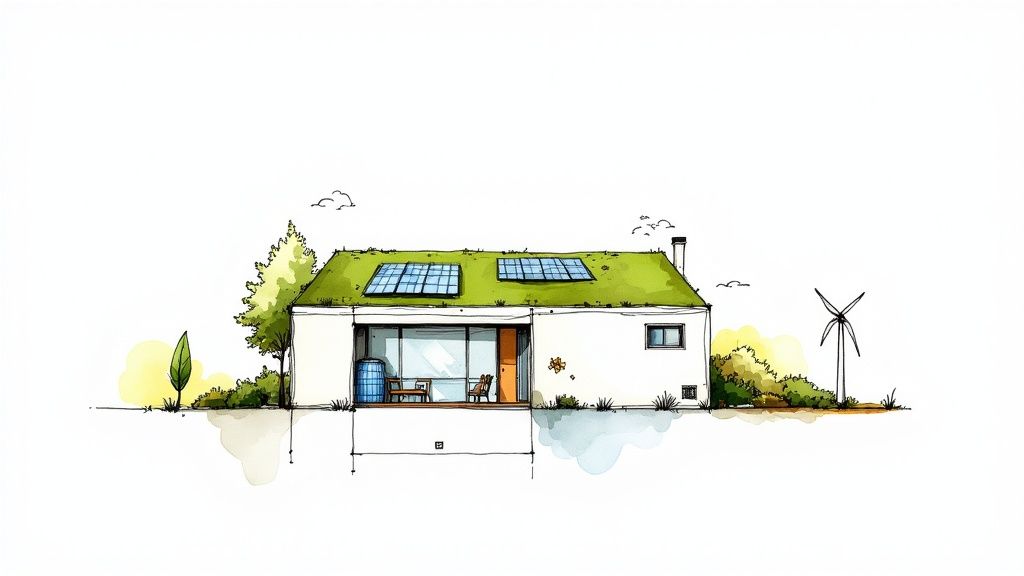
An eco-friendly property description targets a growing market of environmentally-conscious travelers and buyers by highlighting sustainability, green features, and energy efficiency. This approach moves beyond aesthetics, focusing on the tangible benefits of green living, such as lower utility costs, a smaller carbon footprint, and a healthier indoor environment. Popularized by certifications like LEED and Passive House, this strategy communicates value and responsibility.
This method is about educating and appealing to a specific set of values. Instead of just mentioning solar panels, it explains the direct impact: "harness the sun's power to reduce your energy bills and enjoy a guilt-free stay." The description becomes a compelling case for choosing a property that aligns with a guest's commitment to sustainability, demonstrating that comfort and eco-consciousness can go hand-in-hand.
Strategic Breakdown
To create an effective sustainable listing, you must translate green features into tangible guest benefits. The goal is to make the eco-friendly aspects a primary reason for booking.
- Lead with Certifications: Start by prominently featuring any official green credentials, like LEED, Passive House, or Energy Star ratings. This immediately establishes credibility and attracts guests specifically searching for sustainable options.
- Quantify the Impact: Don't just list features; quantify their benefits. For example, instead of "energy-efficient windows," write "triple-pane windows that keep the home whisper-quiet and reduce energy consumption by up to 30%." Mentioning specific dollar savings or carbon offset figures is highly effective.
- Explain Features in Plain Language: Avoid overly technical jargon. Explain why a feature like a geothermal heating system is special: "Enjoy perfectly consistent indoor temperatures year-round, powered naturally by the earth."
- Connect to Health and Wellness: Highlight features that contribute to a healthier stay, such as "non-toxic paint and natural building materials" or an "advanced air filtration system for pristine indoor air quality."
See it in Action
This video from The Wall Street Journal explores Babcock Ranch, Florida, America's first solar-powered town. It perfectly illustrates how to market an entire community based on sustainability, showcasing how these principles are communicated to attract residents who value a green lifestyle. The narrative focuses on energy independence, resilience, and a connection to nature.
By highlighting your property's green credentials, you not only attract a niche market but also add a layer of premium value. This type of property description example shows that sustainability can be a powerful marketing tool, transforming features into a compelling story of modern, responsible living.
7. Fixer-Upper/Potential-Focused Description
Describing a fixer-upper is a delicate art of balancing transparency with vision. This approach, popularized by renovation shows on networks like HGTV and investment platforms like BiggerPockets, shifts the focus from the property's current state to its future potential. Instead of highlighting flaws, it frames the property as a blank canvas for investors, flippers, or ambitious homeowners.
The strategy is to sell the opportunity, not the existing structure. It requires being upfront about the necessary work while simultaneously painting a compelling picture of the end result. It’s less about "what is" (outdated kitchen, worn floors) and more about "what could be" (a gourmet chef's space, beautifully restored original hardwood). This honesty builds trust while exciting buyers about the value they can create.
Strategic Breakdown
To craft a compelling fixer-upper listing, you must inspire confidence and ignite the imagination. Your language should be honest yet optimistic, focusing on foundational strengths and future possibilities.
- Lead with the Opportunity: Start by highlighting the core value proposition. Is it the prime location, the large lot, the "good bones," or the unbeatable price point? Frame it as a rare chance to enter a desirable market.
- Emphasize Strong Foundations: Mention key structural positives like a "solid foundation," "newer roof," or "good structural integrity." This reassures buyers that their investment is sound, and the necessary work is primarily cosmetic.
- Use Vision-Casting Language: Employ words that encourage buyers to imagine the future. Phrases like "envision an open-concept living area," "ready for your custom finishes," and "offers the perfect layout to create..." are powerful tools.
- Be Transparently Honest: Acknowledge the work needed directly but concisely. Stating the property "awaits a full cosmetic overhaul" or "is a project for a seasoned renovator" sets clear expectations and attracts the right, well-prepared buyers.
See it in Action
This video from This Old House provides a great example of walking through a property and focusing on what could be. The hosts expertly point out problem areas while simultaneously explaining the potential and vision for each space, turning daunting tasks into exciting projects.
By adopting this potential-focused approach in your property descriptions examples, you attract serious investors and visionaries who understand the value of sweat equity. You filter out unqualified prospects and connect with the perfect audience ready to transform a diamond in the rough.
8. Luxury Resort/Vacation Property Description
A luxury resort or vacation property description targets a dual audience: the lifestyle-seeking vacationer and the savvy investor. This approach, perfected by platforms like Vrbo Premier and luxury travel brands, goes beyond describing a beautiful space; it markets an effortless, amenity-rich experience while simultaneously highlighting its value as a turnkey rental asset.
The core of this strategy is to blend the aspirational dream of a perfect holiday with the practical appeal of a high-performing investment. Instead of just showing a beautiful villa, the description communicates the seamless guest experience, the on-site services, and the proven income potential. It answers both "What will my vacation feel like?" and "What is my potential return on investment?" This dual focus is essential for properties in premier destinations like Maui, Aspen, or the Caribbean, where the market is competitive and buyers are often looking for both a personal retreat and a source of revenue.
Strategic Breakdown
To create a compelling resort property listing, you must balance the allure of the destination with the tangible benefits of ownership or booking. The language should be both evocative and data-driven.
- Lead with the Experience: Start by painting a picture of the ideal vacation. Use sensory details to describe the guest experience, from "waking up to the sound of gentle waves" to "enjoying private chef services on your terrace." This captures the lifestyle buyer and the vacation renter first.
- Showcase Premium Amenities and Services: Go beyond the property itself. Detail the exclusive resort amenities like a private beach club, a world-class spa, concierge services, or on-site property management. These are key differentiators that promise a hassle-free experience.
- Quantify the Investment Potential: For investor-focused listings, integrate key metrics directly into the narrative. Mentioning "strong rental history with an average 80% occupancy during peak season" or "projected annual revenue of $X" provides concrete data that builds confidence.
- Leverage Social Proof: Incorporate snippets of guest reviews or testimonials. A quote like, "Our family’s most memorable vacation ever!" adds a powerful layer of credibility and emotional connection that resonates with both potential guests and buyers.
This method transforms a standard listing into a comprehensive value proposition. By addressing the needs of both the vacationer and the investor, you significantly broaden your appeal and position the property as a premium asset. For a deeper look at how this strategy is executed, you can see real-world results in these case studies on luxury vacation rentals.
8-Point Property Description Comparison
| Listing Type | Implementation complexity | Resource requirements | Expected outcomes | Ideal use cases | Key advantages |
|---|---|---|---|---|---|
| Luxury Home Description with Lifestyle Focus | High — crafted narrative, curated staging | High-quality photography, videography, copywriter, staging | Commands premium pricing, attracts qualified buyers | High-end estates, waterfront, architect-designed homes | Emotional appeal, strong differentiation, premium positioning |
| Family-Focused Suburban Home Description | Low–Medium — straightforward, factual | Local school data, neighborhood info, clear photos | Higher conversion among families, faster sales in target market | Suburban single-family homes, family neighborhoods | Addresses buyer priorities (schools, safety), trustworthy tone |
| Urban Condo/Apartment Listing with Walkability Focus | Medium — location-led storytelling | Walk score/transit data, neighborhood business mentions, good photos | Appeals to young professionals, can justify location premium | City condos, transit-oriented developments, downtown units | Strong lifestyle positioning, emphasizes convenience and amenities |
| Historic/Character Property Description | High — research and careful tone balance | Historical research, restoration records, period photography | Attracts niche buyers, can command premium for originality | Victorian/Colonial/period homes, landmark properties | Emotional authenticity, unique differentiation, heritage value |
| Investment Property/Income-Generating Description | High — data-driven, detailed disclosure | Rent rolls, financial statements, cap-rate calculations, valuations | Attracts investor buyers, filters casual inquiries, clearer valuations | Multi-family, commercial, rental portfolios, turnkey investments | Concrete ROI metrics, reduces emotional bias, targets serious buyers |
| Eco-Friendly/Sustainable Home Description | Medium–High — must verify claims and quantify savings | Certification docs (LEED/Passive), utility data, energy audits | Attracts eco-conscious buyers, supports premium via savings | Green-certified homes, net-zero properties, sustainable communities | Operational cost savings, positive brand/market differentiation |
| Fixer-Upper/Potential-Focused Description | Medium — honest condition reporting, potential framing | Inspection reports, cost estimates, before photos, contractor input | Attracts investors/DIY buyers, lower entry price, upside potential | Homes needing renovation, flips, undervalued neighborhoods | Opportunity narrative, lower purchase price, creative buyer appeal |
| Luxury Resort/Vacation Property Description | High — guest experience + income focus | Rental history, booking links, professional photography, management docs | Dual appeal to investors and end-users, high nightly rates possible | Vacation rentals, resort homes, high-demand tourist markets | Income potential, destination branding, strong seasonal premiums |
Automate Your Success: Your Next Steps to Better Descriptions
Throughout this guide, we've dissected a wide array of property descriptions examples, moving beyond simple templates to uncover the strategic framework that turns a good listing into a booking magnet. We've explored how to craft narratives for everything from luxury estates to cozy urban condos, each designed to connect with a specific guest avatar. The core lesson is clear: exceptional property descriptions are not just written; they are engineered.
The most successful listings blend creative storytelling with analytical precision. They paint a vivid picture of the guest experience while simultaneously embedding strategic keywords that capture search traffic on platforms like Airbnb, Vrbo, and Google. This dual-focus approach ensures your property is not only discoverable but also irresistible once found.
Recapping the Core Strategies
As you begin to apply these concepts, remember the foundational pillars that support every high-converting description we analyzed:
- Guest-Centric Language: Always write from the guest's perspective. Instead of listing features ("The home has a large deck"), frame them as benefits ("Imagine sipping your morning coffee on the expansive deck as you watch the sunrise").
- Sensory Details: Move beyond visual descriptions. Incorporate sounds, scents, and textures to create an immersive experience. Mention the "scent of pine from the nearby woods" or the "soothing sound of waves from the private balcony."
- Targeted Keyword Integration: Identify what your ideal guests are searching for. Use terms like "family-friendly retreat," "romantic getaway," "pet-friendly," and location-specific keywords naturally throughout your title, summary, and detailed description.
- A Clear Narrative Arc: Structure your description like a story. Start with a powerful hook, build excitement by detailing the experience, and end with a compelling call to action that encourages an immediate booking.
Your Actionable Roadmap to Mastery
Transforming your listings from passive descriptions to active marketing assets requires a deliberate process. Here are your next steps to implement what you've learned and start seeing tangible results:
- Audit Your Current Listings: Review one of your existing property descriptions. Using the "before and after" examples as a guide, identify areas for improvement. Is it feature-focused? Does it lack a compelling headline? Is it optimized for search?
- Define Your Guest Avatar: For that same property, create a detailed profile of your ideal guest. Are they a family seeking convenience, a couple looking for romance, or a group of friends wanting adventure? This profile will guide every word you write.
- Perform Keyword Research: Use platform search bars and simple SEO tools to find the keywords your avatar is using. Brainstorm a list of primary and secondary terms related to your property type, amenities, and location.
- Rewrite and Refine: Armed with your avatar profile and keyword list, rewrite the description. Focus on telling a story and selling an experience, not just a space. Even small details, like a well-described outdoor area, can be a major selling point. Harnessing technology can also streamline your descriptive process; explore how utilizing advanced tools for AI landscape design tools for visualizing a dream yard can help you conceptualize stunning outdoor spaces to highlight in your listings.
- Test and Measure: Don't just set it and forget it. A/B test different headlines, opening sentences, and calls to action. Monitor your booking rates, inquiry volume, and search ranking to see what resonates most with travelers.
Mastering the art of property descriptions is one of the highest-leverage activities a short-term rental manager can undertake. It directly impacts your visibility, conversion rate, and ultimately, your revenue. By moving from a checklist of features to a narrative of experiences, you build a powerful connection with potential guests before they even click "book," setting the stage for a memorable stay and a glowing five-star review.
Ready to elevate your listings without spending hours on copywriting? hostAI uses advanced AI to instantly generate unique, SEO-optimized, and high-converting descriptions from just a few details about your property. Stop guessing and start converting by visiting hostAI to see how automation can perfect your property marketing.