
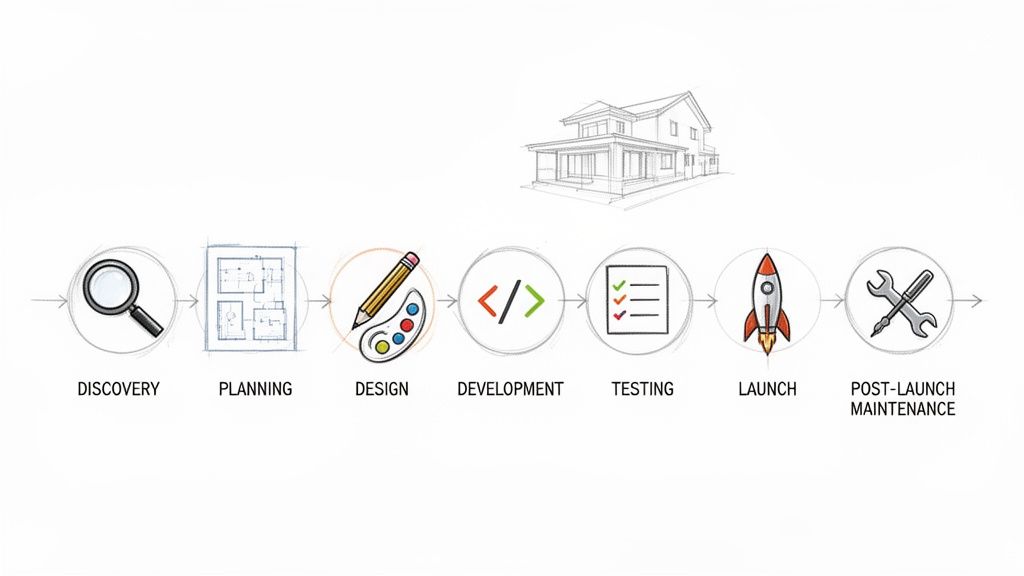
stages in website development
A Guide to the 7 Stages in Website Development
Posted on Jan 11, 2026
Think of building a high-converting website like building a house. You wouldn't just start throwing up walls without a detailed architectural blueprint, right? The same goes for your digital storefront. A proven, structured process is your blueprint for success, turning a potentially chaotic project into a clear, manageable roadmap.
This journey is broken down into seven core stages. Following them ensures every decision serves one primary goal: turning lookers into bookers.
Your Blueprint For a High-Converting Website
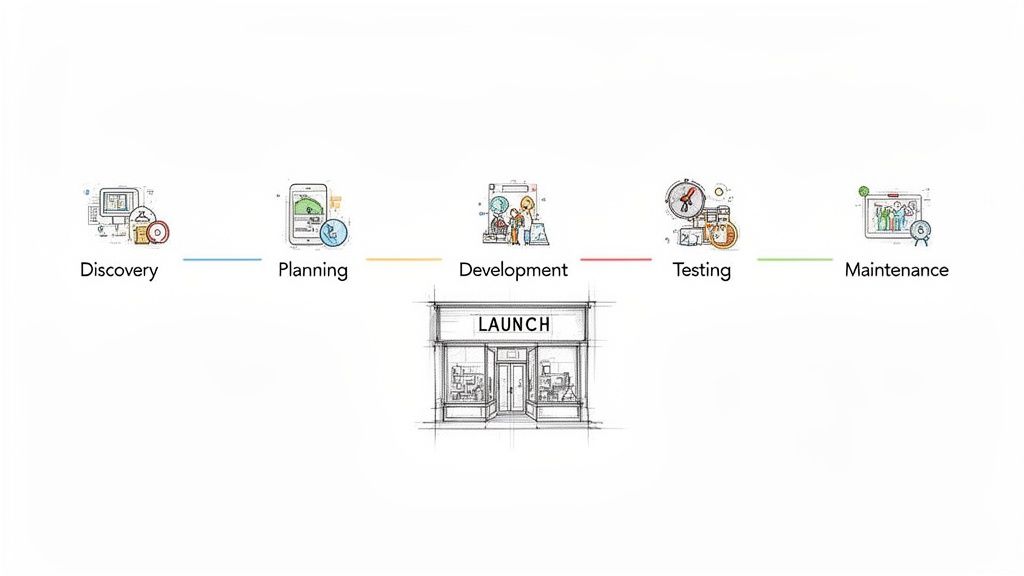
Without a plan, website projects get messy. Fast. You run into scope creep, blown budgets, and a final product that just doesn't deliver on your business goals. It’s a classic story, but one you can easily avoid.
By following a systematic approach, you're not just building a pretty website. You're engineering a digital experience that guides visitors seamlessly from that first glance at your properties all the way to clicking "Book Now." This framework isn't just a nice-to-have; it's your strategic advantage in a crowded market.
To get a feel for how this plays out in the real world, you can see a real-world example of a website development process. For our purposes, we're going to break down each step specifically for STR managers, giving you actionable insights you can actually use.
The 7 Stages of Website Development At a Glance
So, let's pull back the curtain on these seven stages. This isn't just some arbitrary checklist; it's the industry-standard playbook for a reason—it flat-out works. It creates clarity, ensures accountability, and provides a straight line from a simple idea to a revenue-generating asset for your business.
| Stage | Primary Goal | Key Deliverable for STRs |
|---|---|---|
| 1. Discovery & Strategy | Define goals, target audience, and project scope. | A documented project brief with key performance indicators (KPIs). |
| 2. Planning & UX | Create the website's blueprint and user journey. | A sitemap and wireframes showing the path to booking. |
| 3. UI Design | Craft the visual look, feel, and brand identity. | High-fidelity mockups of key pages (homepage, property pages). |
| 4. Development | Write the code to bring the design to life. | A functional website with an integrated booking engine. |
| 5. Testing & QA | Find and fix bugs, errors, and usability issues. | A fully tested, cross-browser compatible website. |
| 6. Launch & Deployment | Take the website live for the world to see. | A live, accessible website with analytics tracking installed. |
| 7. Maintenance & Growth | Keep the site secure, updated, and optimized. | An ongoing plan for backups, security, and performance improvements. |
Each phase builds directly on the one before it, ensuring nothing gets missed and the final website is cohesive and effective. For vacation rental managers, sticking to this process is how you establish trust with potential guests and create a user experience that drives direct bookings. Ultimately, a well-structured site is a massive piece of the puzzle when you set out to improve website conversion rates and scale your business.
Laying the Foundation with Discovery and Planning
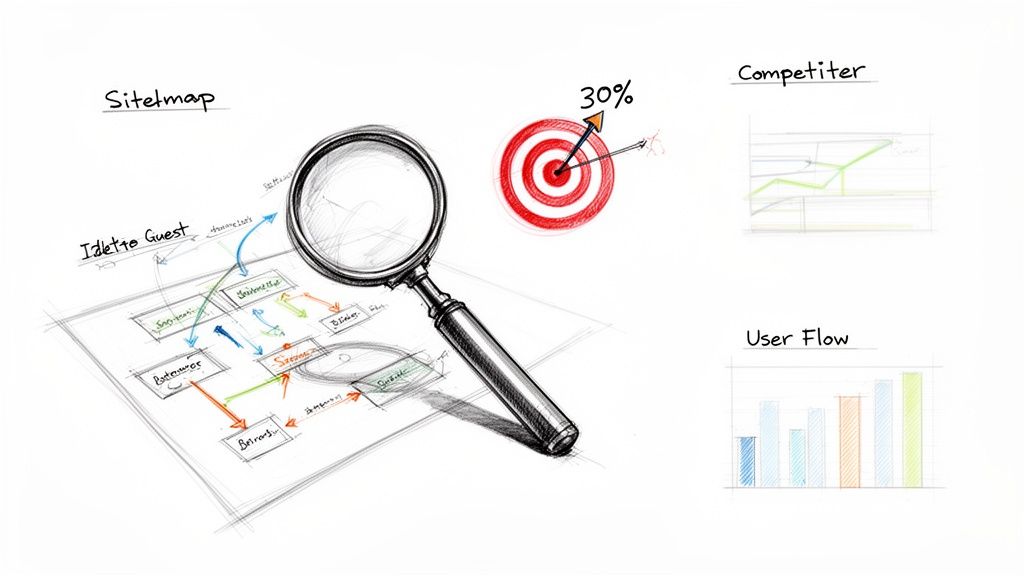
Before anyone even thinks about code or color palettes, the real work begins. The first stages of website development—discovery and planning—are the bedrock of your entire project. Rushing this part is like building a house without a proper foundation; it’s a recipe for expensive problems down the road.
Think of the discovery phase as your strategic deep dive. This is where you go from just wanting a "nice website" to defining exactly what success looks like for your business. It's a fact-finding mission that forces you to answer the tough questions that will shape every single decision, from the design to the final click of the "Book Now" button.
This is all about getting crystal clear on your goals. Are you trying to boost direct bookings by 30%? Or maybe your goal is to slash your reliance on OTAs in half. These kinds of measurable goals become your project's North Star, making sure every feature you build actually serves a purpose.
Defining Your Ideal Guest and Competitive Edge
A massive part of discovery is figuring out who you're even building this thing for. Who is your ideal guest? Is it a family hunting for a spacious cabin, or a digital nomad who just needs killer Wi-Fi for a month-long stay? Building out detailed guest personas is key here, as it helps you step into their shoes and design an experience they’ll love.
Next up, you have to size up the competition. Take a hard look at what other successful property managers in your area are doing online. What works on their sites? More importantly, what are they getting wrong? Finding those gaps is where you'll find your opportunity to build a much better booking experience.
Key Takeaway: The discovery phase isn't just a brainstorming session for cool features. It’s about creating a strategic framework that connects your website directly to your business goals and what your target guests actually want.
The documents that come out of this phase are pure gold. You’ll walk away with a solid project brief, clear key performance indicators (KPIs), and a real understanding of your place in the market. This clarity is what stops "scope creep"—that dreaded project-killer where new ideas constantly derail your timeline and budget.
Translating Strategy into a Concrete Blueprint
With your discovery work done, the planning phase is where you turn all those strategic insights into a concrete blueprint for your website. This is where the abstract ideas start to take physical shape. The two most critical things you'll create here are the sitemap and user flow diagrams.
A sitemap is basically the architectural plan for your site. It lays out every single page you'll have (Homepage, About, Properties, Blog, Contact, etc.) and shows how they all link together. This creates a logical structure that’s easy for both your guests and search engines to understand.
User flows, on the other hand, map out the exact journey a guest takes to do something important, like booking a property. By visualizing this path step-by-step, you can spot and smooth out any bumps in the road, making the booking process as painless as possible. This obsession with usability is a relatively modern concern.
Back when the first public website launched in 1991, user experience wasn't even a thought. But by mid-1994, with 2,738 sites all fighting for eyeballs, everything changed. Suddenly, you had to focus on conversion-driven layouts just to get noticed. If you're curious, you can learn more about the fascinating history of web design evolution.
This foundational planning ensures every single element on your site has a job to do: guiding your guests effortlessly toward that final booking confirmation.
Bringing Your Vision to Life with Design and Development
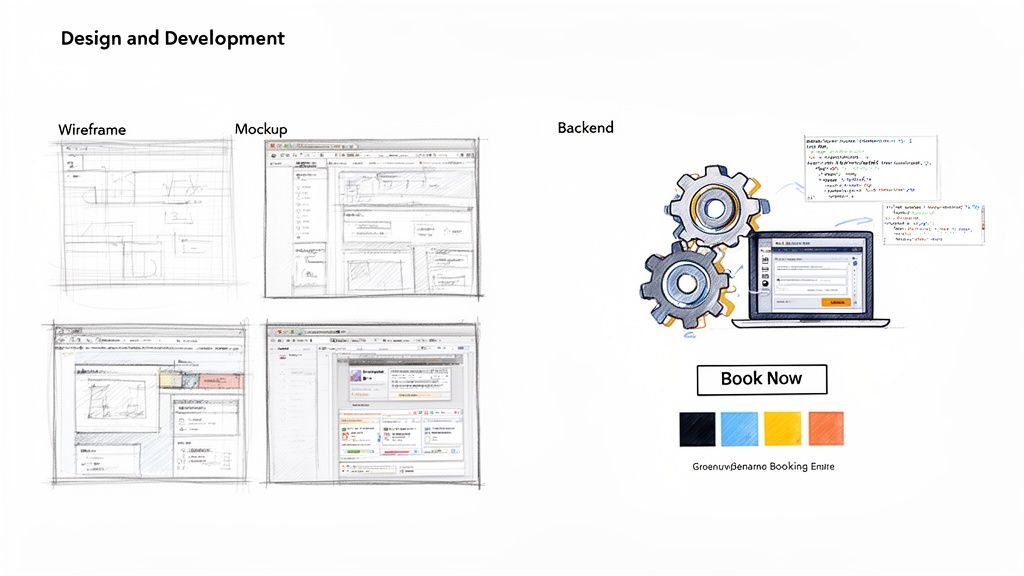
Alright, with a solid plan in hand, we’re heading into the most exciting part of the process—where your vision finally starts to look and feel like a real website. This is where the creative magic of design meets the technical nuts and bolts of development.
We’re about to turn that strategic blueprint into a functional, digital storefront for your properties.
First up is the design phase. And no, this isn't just about picking pretty colors and fonts. Good design is your silent ambassador; it builds trust, signals quality, and gives potential guests the confidence to pull out their credit card and book a stay directly with you.
Crafting an Unforgettable User Experience
The design process itself moves from rough sketches to a polished, pixel-perfect preview of your site. It typically unfolds in a couple of key steps, with each one layering on more detail and refinement.
The whole thing kicks off with wireframing. Think of a wireframe as the basic skeleton of your website. It's a simple, black-and-white layout that focuses purely on structure and function—where the logo goes, where the booking form sits, and how a guest gets from point A to point B.
Next, those bare-bones wireframes are fleshed out into high-fidelity mockups. This is where your brand's personality comes to life. We're talking color schemes, typography, and gorgeous imagery of your properties, all integrated to create a preview of the final product. This is your chance to give feedback and make sure the design truly captures the unique vibe of your vacation rentals.
Key Insight: The design phase isn't just about looking good; it's about crafting an intuitive user experience (UX). A great UX means a guest can find dates, see prices, and complete a booking with zero friction or confusion.
Ultimately, the goal is a seamless, trustworthy experience. A professionally designed website is a powerful signal that you’re a professional and reliable host. For a deeper dive into how visuals influence guest decisions, check out our complete guide to effective vacation rental website design.
Translating Design into a Working Website
Once you give the final thumbs-up on the mockups, the project moves into the development stage. This is where developers step in to write the code that brings those static visual designs to life. The process is generally split into two distinct but connected parts: front-end and back-end development.
Think of it like building a car. The front-end is everything a driver can see and touch—the shiny paint, the comfy seats, the steering wheel, and the dashboard. On your website, this is every visual element your guests interact with: the buttons they click, the photo galleries they scroll through, and the forms they fill out.
The back-end, on the other hand, is the engine under the hood. It’s the complex machinery that makes it all work but remains invisible to the guest. This includes the server, the database, and all the logic that powers your booking engine, syncs your calendars, and securely processes payments.
This systematic approach is the bedrock of modern web projects. It's why the most common frameworks break the process into key stages like discovery, planning, design, development, testing, and maintenance. This structure has become standard for a reason—it minimizes risk and makes it clear what you're getting for your investment at each step.
Traditionally, the development stage is the most time-consuming and expensive part of building a website. But this is where modern tools can make a huge difference. AI-powered platforms like hostAI are designed to dramatically speed up this process. Instead of building from scratch, they generate a high-performance website with a fully integrated booking engine in a fraction of the time, saving you thousands of dollars and months of waiting.
Stage 5: Ensuring a Flawless Launch with Rigorous Testing
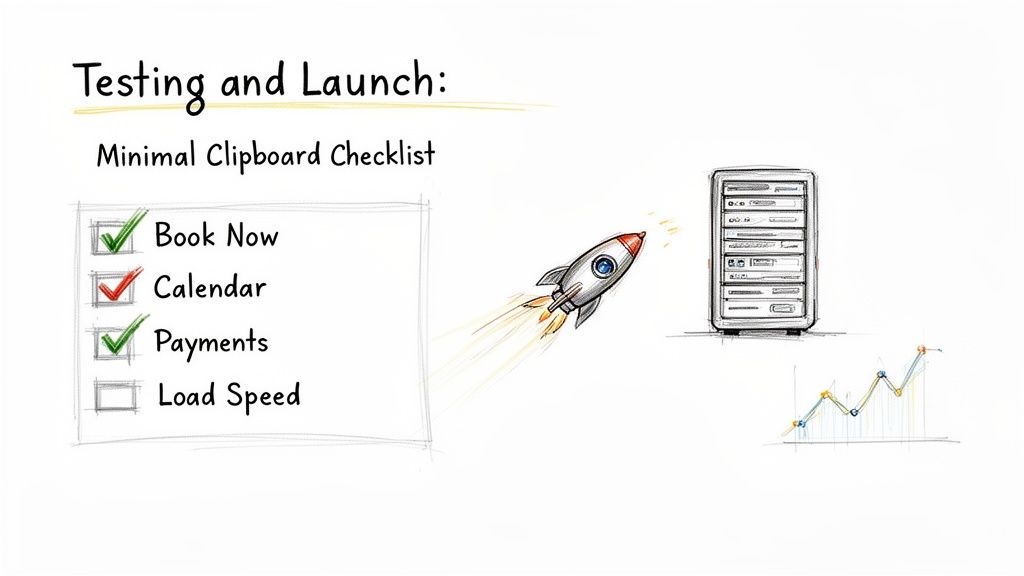
After all the planning, designing, and coding, your website is finally ready for its big debut. Almost. Before you pop the champagne, it's time for one of the most critical stages in the entire process: testing. Think of it as the final dress rehearsal before the curtains go up.
Skipping or rushing this stage is a huge gamble. A single broken link, a clunky booking form, or a slow-loading page can shatter a potential guest's trust and send them packing—straight back to the big OTAs. Rigorous testing is your insurance policy, making sure every part of your site works perfectly to deliver a smooth, professional, and confidence-inspiring experience for every visitor.
A Multi-Layered Approach to Quality Assurance
Good testing isn't just clicking around to see if things break. It's a systematic process that puts your website under a microscope from multiple angles, all to guarantee a seamless guest experience. Each type of testing zeros in on a different, but equally important, piece of your site's performance.
To really get a sense of how this fits into the bigger picture, it helps to understand how strategic QA testing is woven into the development process. Here are the core types you'll encounter:
- Functionality Testing: This is the most basic check. Does every button, link, and form do exactly what it's supposed to? The "Book Now" button is the undisputed star of this show—it has to work flawlessly, every single time.
- Usability Testing (UX): This is all about empathy. Can a first-time visitor easily find their way around? Can they find pricing, check availability, and understand your policies without getting frustrated?
- Performance Testing: Speed is everything in this business. Your site needs to load in a flash, even for a guest stuck with spotty airport Wi-Fi on their phone. Slow sites don't just annoy users; they get punished by search engines, too.
- Compatibility Testing: Your website is going to be seen on a dizzying array of devices, from brand-new iPhones to older Android tablets and giant desktop monitors. This testing ensures your property photos look just as stunning on all of them.
The STR Manager's Pre-Launch Checklist
As a property manager, your website isn't just a simple brochure. It's a complex booking and payment machine, and you have unique needs. Before launch, you or your team must meticulously run through every critical component to head off costly errors or lost revenue.
Think of it as your final walkthrough before a guest checks in. Everything has to be perfect.
Key Takeaway: A website launch isn't a single event; it's a carefully managed transition. A well-executed launch sets the stage for success, ensuring all your hard work translates into a reliable, high-performing website from day one.
Here is a practical checklist to guide you through this final verification process:
- Booking Engine Integrity: Process a full test booking from start to finish. Does the calendar correctly block the dates? Do the pricing calculations add up for different lengths of stay?
- Payment Gateway Functionality: Grab a credit card and run a real transaction. Did the payment go through? Did you and your "guest" receive the right confirmation emails?
- Content and Image Review: Proofread every single page for typos or grammar mistakes. Double-check that all your images are high-quality and load correctly, especially your hero property photos.
- Mobile Responsiveness: Go through the entire booking process on your own smartphone. Is it intuitive and easy, or a clunky, frustrating mess? With over 70% of travelers now booking trips on mobile, this is non-negotiable.
Flipping the Switch From Staging to Live
Once testing is complete and you've given the final green light, it’s time to launch. This involves moving the website from a private "staging" server to the live server where anyone can access it. This process, known as deployment, is planned carefully to minimize any potential downtime.
The final piece of the puzzle is setting up analytics. Tools like Google Analytics are installed to start tracking visitor behavior from the moment you go live. This data is pure gold, and learning how to analyze website traffic will be essential for making smart decisions about your marketing and site improvements down the road.
Mastering Post-Launch Maintenance and Growth
Crossing the launch finish line feels like a huge victory, but it's important to remember that this isn't the end of the journey. In fact, it’s just the beginning. The final, ongoing stage—maintenance and growth—is where you transform your new site from a static digital brochure into a dynamic engine that consistently drives direct bookings.
Think of your brand-new website like a brand-new car. You wouldn't just drive it off the lot and never get an oil change, right? The same principle applies here. Without regular upkeep, your site’s performance will degrade, security risks will grow, and its ability to attract guests will slowly fade.
This is the phase where the real return on your investment is realized. It’s about protecting your valuable asset while actively making it work harder for your business.
The Non-Negotiables of Website Maintenance
Before you can focus on growth, you have to nail the fundamentals of maintenance. These aren't flashy tasks, but they are absolutely essential for protecting your business, your guest data, and your reputation. Ignoring them is a surefire way to run into serious problems down the line.
Here are the core maintenance tasks that must be on your radar:
- Regular Backups: This is your safety net. If anything ever goes wrong—a bad update, a security breach, or human error—a recent backup allows you to restore your site quickly with minimal disruption to your booking calendar.
- Security Monitoring and Updates: Your website is a prime target for automated attacks. Regularly updating your software, plugins, and security protocols is critical to patch vulnerabilities and protect sensitive guest information.
- Performance Monitoring: A slow website is a conversion killer. Ongoing monitoring helps you keep an eye on page load times and server responsiveness, ensuring a fast, smooth booking experience for every visitor.
Key Takeaway: Proactive maintenance isn't an expense; it's an investment in the long-term health and profitability of your direct booking channel. It ensures your website remains a secure, reliable, and trustworthy platform for your guests.
From Maintenance to Strategic Growth
Once your maintenance routine is running smoothly, you can shift your focus to the exciting part: growth. This is where you leverage data to make smarter decisions, continuously improve the guest experience, and attract more organic traffic to your properties. The goal is to create a cycle of improvement that builds momentum over time.
This means moving beyond just keeping the lights on and actively looking for opportunities. Are certain property pages converting better than others? Why? Is your blog driving qualified traffic from search engines? The data holds all the answers.
Modern websites rely heavily on JavaScript frameworks, responsive design, and APIs for everything from marketing tools to payment gateways and PMS integrations. With programmatic SEO, personalization, and deep analytics becoming standard, the maintenance phase often eats up a huge chunk of a website's lifetime effort. In fact, industry analyses frequently estimate that over 50% of total website cost over several years comes from post-launch updates, optimization, and security patches. For those curious, you can explore more insights on the evolution of web development.
A Tale of Two Approaches
For STR managers, what happens after launch can look wildly different depending on the technology powering your website. A traditional, custom-built site often demands a lot of hands-on effort, while a modern, automated platform can handle most of the heavy lifting for you.
Let's break down the difference in a head-to-head comparison.
Comparing Traditional vs. Automated Website Maintenance
| Maintenance Task | Traditional Approach (Manual) | Automated Platform Approach |
|---|---|---|
| Security Updates | You or your developer must manually install patches for the core software, plugins, and themes. | Security is managed centrally, with patches and updates applied automatically in the background. |
| Performance Tuning | Requires manual optimization of images, code, and server settings to maintain speed. | Performance is automatically optimized with features like image compression and content delivery networks (CDNs). |
| Growth Optimization | Relies on manual A/B testing and SEO implementation, which can be slow and expensive. | Platforms like hostAI use AI to automatically optimize content and run programmatic SEO campaigns to drive traffic. |
Ultimately, this ongoing phase is what separates successful direct booking websites from those that just sit there and stagnate. It’s a continuous commitment to securing, refining, and growing your single most valuable marketing asset.
Got Questions? We’ve Got Answers.
When you're building a new website for your vacation rental business, a lot of questions come up. Knowing what to expect with timelines, budgets, and the whole nine yards can save you a ton of headaches down the road. Let's tackle some of the most common ones we hear from managers.
How Long Is This Going to Take?
This is usually the first question on everyone's mind. If you go the traditional agency route for a fully custom site, you're typically looking at anywhere from three to nine months. That long runway is for all the custom design work, tricky booking engine integrations, and writing every last word from scratch.
But let's be honest, the game has changed. With platforms built specifically for our industry, you can get a professional, high-converting website live in a matter of days or weeks—not months. It's the difference between building a house brick-by-brick versus using a high-quality prefab design.
What's the Single Biggest Mistake I Can Make?
Easy. Rushing through the discovery and planning stages. It’s so tempting to jump right into the fun stuff, like picking out colors and fonts, but skipping your homework is the most expensive mistake you can make.
If you don't have a crystal-clear strategy that defines your ideal guest, what makes your properties special, and exactly how you want people to book, your shiny new website will just sit there. It won't actually convert lookers into bookers.
Think of your plan as the blueprint for your website. It ensures every decision—from the main photo on your homepage to the color of the "Book Now" button—is laser-focused on one thing: getting more direct bookings.
Why Bother with Maintenance After We Launch?
Thinking your work is done the day the site goes live is a rookie move. Launch day is the starting line, not the finish line. Ongoing maintenance is absolutely critical, and it boils down to three things that directly impact your revenue.
First up is security. You’re handling sensitive guest data, and you have to protect it (and your business) from the constant threats out there. Then there’s performance. A slow, buggy site is the fastest way to lose a potential guest. They'll just click away in frustration.
Finally, and most importantly, maintenance is about growth. A "set it and forget it" website quickly becomes stale and invisible. Consistent updates and optimization turn your site from a static brochure into a dynamic, money-making asset that’s always working to attract new guests.
Ready to skip the long timelines and unpredictable costs? hostAI uses advanced AI to build a high-performance, direct booking website for your vacation rental business in a fraction of the time. See how you can launch a professional website that drives revenue from day one.