
how to be an airbnb host
How to Be an Airbnb Host A Guide to Profitable Hosting
Posted on Jan 28, 2026
So you're thinking about becoming an Airbnb host. Before you start picking out throw pillows and welcome baskets, we need to talk about the less glamorous—but absolutely critical—first steps. Turning a property into a successful short-term rental is about building a real business from the ground up.
This initial groundwork is what separates the hosts who make real money from those who end up with an expensive, time-consuming hobby.
Laying the Groundwork for a Profitable Rental
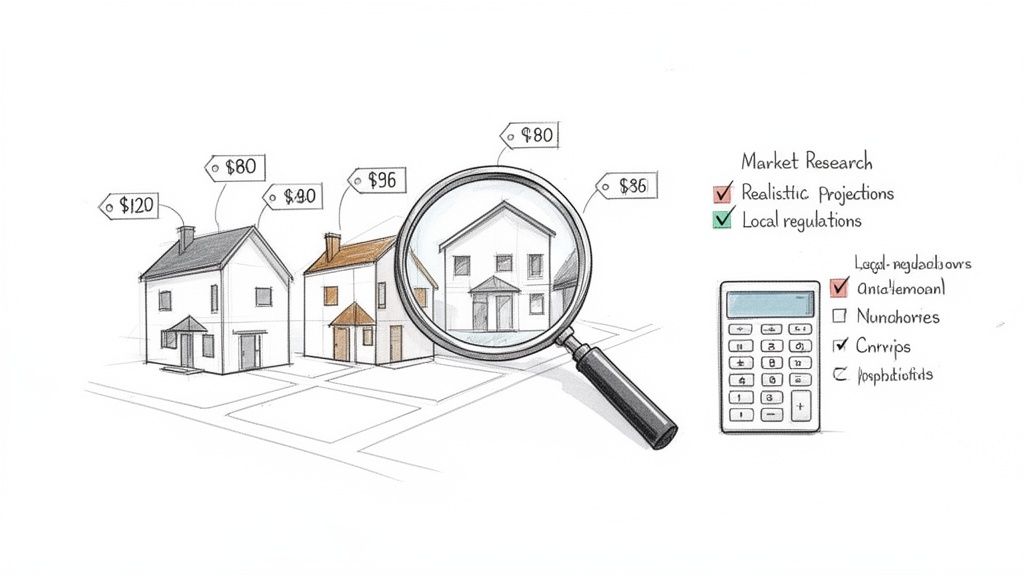
Many new hosts dive headfirst into interior design, but the secret to long-term success is buried in spreadsheets and local government websites. Getting this foundation right isn't just a suggestion; it's your roadmap to making informed decisions instead of costly guesses.
Skipping this stage is a rookie mistake that can lead to all sorts of headaches, from surprise expenses that sink your budget to legal notices that shut you down before you even get started.
Performing Smart Market Research
First thing's first: you need to become a local market expert. Fire up Airbnb and start acting like a guest looking to book in your neighborhood. Don't just glance at the nightly rates—that's a vanity metric. Click into the top listings and scrutinize their calendars to get a real sense of their occupancy. A place listed for $200 a night isn't a success story if it's empty half the month.
Take notes on what the most successful listings are doing right.
- Amenities: Are king beds the standard? Do they all feature a dedicated workspace or a pet-friendly policy? These are your clues to what guests in your area expect.
- Photos: Look at the photography. Notice the bright lighting, the smart angles, and the professional staging. This is your competition.
- Reviews: This is gold. Read the reviews to see what guests are raving about ("the espresso machine was a lifesaver!") and, more importantly, what they complain about ("the street noise was unbearable").
This isn't about copying your neighbors. It's about understanding the benchmark for quality and setting yourself up to compete effectively. To get the bigger picture, it also helps to understand the trends shaping the wider housing rentals industry.
Building a Realistic Financial Projection
Okay, now that you have a handle on what guests might pay, it's time to map out your numbers. A real financial forecast isn't just about dreaming of income; it's about staring your expenses straight in the face to plot a clear path to profitability.
Start with your fixed costs—the bills you have to pay every month, guests or no guests.
- Mortgage or rent
- Property insurance (make sure it covers short-term rentals!)
- Utilities like Wi-Fi, electricity, and water
- Property taxes
Next, layer in your variable costs, which go up and down with bookings. Think cleaning fees, restocking coffee and toiletries, and the service fees charged by the booking platforms. Getting all of this down on paper is a key part of creating a real business plan for your vacation rental.
Key Takeaway: Always, always have a contingency fund. A good rule of thumb is to set aside 1-2% of your property's value each year for unexpected maintenance. A broken water heater or a surprise roof leak can wipe out months of profit if you're not ready for it.
Navigating Local Laws and Regulations
This is the big one. The rules for short-term rentals can change dramatically from one town to the next, and even between different neighborhoods. Ignoring them is the fastest way to get hit with massive fines or a cease-and-desist order.
Your legal homework needs to cover three main areas:
- Zoning and Permits: Is your property even zoned for short-term rentals? Do you need a special permit or a business license to operate legally?
- Taxes: Get ready to become a tax collector. You'll almost certainly need to collect and pay local and state occupancy taxes, just like a hotel.
- HOA and Building Rules: If you're in a condo or a community with a homeowners' association, you must check their rules. Many have strict bans or regulations on short-term rentals.
The most reliable source of truth is your local city planning department. Give them a call. Doing this due diligence now protects your investment and ensures you're starting this journey on solid legal ground.
To help you stay organized, we've put together a checklist of the most important pre-launch tasks.
Your Pre-Launch Airbnb Hosting Checklist
This isn't just a to-do list; it's a strategic framework to ensure you cover all your bases before welcoming that first guest. Think of it as your final check before takeoff.
| Category | Key Action Items | Why It Matters |
|---|---|---|
| Legal & Compliance | Confirm local zoning laws and permit requirements. Check HOA/condo bylaws for any restrictions. Register for and understand how to remit occupancy taxes. | Prevents fines, shutdowns, and legal disputes. Ensures your business is legitimate from day one. |
| Financial Planning | Create a detailed budget with fixed and variable costs. Set up a separate business bank account. Secure STR-specific insurance coverage. | Provides a clear view of profitability, simplifies accounting, and protects you from liability. |
| Property Setup | Install key safety items (smoke detectors, fire extinguisher). Set up a reliable, high-speed Wi-Fi network. Purchase all necessary furniture, linens, and supplies. | Creates a safe, comfortable, and functional space that meets guest expectations and earns great reviews. |
Working through this checklist methodically ensures you're not just hoping for success—you're planning for it. It turns a potentially overwhelming process into a series of manageable steps.
Designing a Space That Earns Five Star Reviews
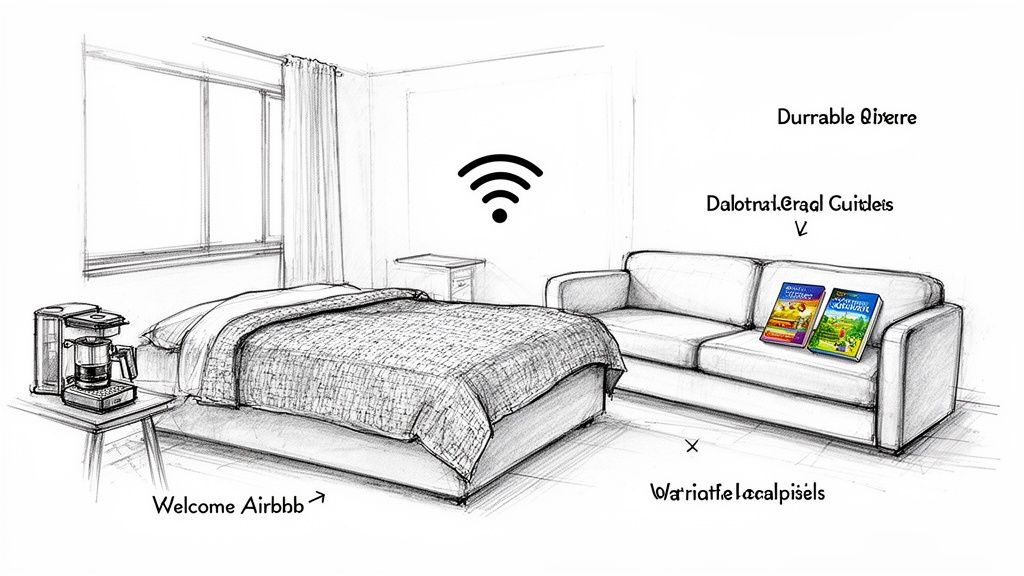
Okay, with the business side handled, we get to the fun part. Your property is the star of the show, and its design has a massive impact on your reviews, your nightly rate, and how often you're booked.
Great design isn’t just about looking good in photos, although that’s definitely part of it. It’s about creating a feeling—an atmosphere that makes guests feel instantly welcome, comfortable, and looked after.
This is your chance to turn four walls into a memorable experience. It's the difference between a guest thinking, "This is fine," and them raving, "I can't wait to come back." Let's dive into how to create a property that practically guarantees five-star reviews.
Furnishing for Durability and Style
When you’re just starting out as a host, it's incredibly tempting to hit up the cheapest furniture store you can find. I’ve seen it a hundred times, and it’s a mistake that always costs more in the long run. Guests are tough on furniture, and you need pieces that can handle the wear and tear from travelers who won't treat them like their own.
Your goal is to find that perfect balance between durability, comfort, and photogenic style. Think commercial-grade if you can, or at least stick with brands known for solid construction. A sturdy bed frame, a legitimately comfortable mattress, and a spill-resistant sofa are your three most critical investments.
- Bedroom: A comfortable bed is absolutely non-negotiable. Bad sleep is probably the #1 reason for a bad review. Invest in a quality mattress and offer a few pillow options—I always recommend having both firm and soft pillows available.
- Living Area: A sofa with removable, washable covers will be your best friend. Trust me. Darker colors or subtle patterns are also way more forgiving when it comes to minor spills and stains. Don't forget a decent-sized coffee table for laptops, drinks, and takeout.
- Dining Space: Even in a tiny studio, you need a dedicated spot for at least two people to eat. It doesn’t have to be a full dining set; a small bistro table or a functional kitchen counter with a couple of stools works perfectly.
The Non-Negotiable Amenities Guests Expect
Some things have moved from the "nice-to-have" category straight into "baseline expectation." If you miss any of these, you risk a disappointing review, no matter how stylish your space is. Think of this as the modern hospitality starter pack.
The absolute must-haves today are:
- Blazing-Fast and Reliable Wi-Fi: With remote work and streaming, this is arguably the most important utility you offer. Test your speeds and make sure the signal is strong everywhere in the unit. No dead zones.
- A Superb Coffee and Tea Station: You don't need a fancy espresso machine. But a clean, simple coffee maker (like a Keurig or Nespresso), an electric kettle, and a solid selection of coffee pods, tea bags, sugar, and creamer are essential.
- Quality Linens and Towels: Nothing says "cheap" like scratchy towels and thin sheets. You need at least two full sets of high-quality sheets for every bed, and a minimum of two bath towels, two hand towels, and two washcloths per guest.
- A Well-Equipped Kitchenette: If you have a kitchen, stock it for basic meal prep. We're talking pots, pans, utensils, knives, a cutting board, olive oil, and of course, salt and pepper.
Host Insight: When guests arrive, they're usually tired. The first thing they want to do is drop their bags, connect to Wi-Fi, and maybe make a quick coffee. Making those first few moments effortless sets a positive tone for the entire stay.
Adding the 'Wow' Factors That Get Mentioned in Reviews
Meeting expectations gets you good reviews. Exceeding them is what gets you those glowing, five-star reviews that act as magnets for future bookings. These are the small, thoughtful details that show you're not just a landlord, but a true host.
These "wow" factors don't have to break the bank. They just need to be thoughtful.
- A Curated Local Guide: Don't just leave a stack of tourist brochures. Create a personal guide with your favorite local coffee shops, hidden-gem restaurants, and the best walking routes. Make it personal.
- Smart Home Conveniences: A smart lock for keyless entry is a game-changer for you and your guests—no more lost keys or coordinating meetups. A smart TV with easy access to streaming services is another huge crowd-pleaser.
- Thoughtful Extras: Think about who you're hosting. For a family-friendly rental, a few board games or a high chair can make all the difference. For a business traveler, a dedicated workspace with an extra monitor and a universal charging station is a massive plus.
These are the details that create memorable moments, the kind of stuff people actually take the time to write about in their reviews. And those reviews are what will make your listing stand out from the crowd.
Crafting a Listing That Converts Browsers Into Bookers
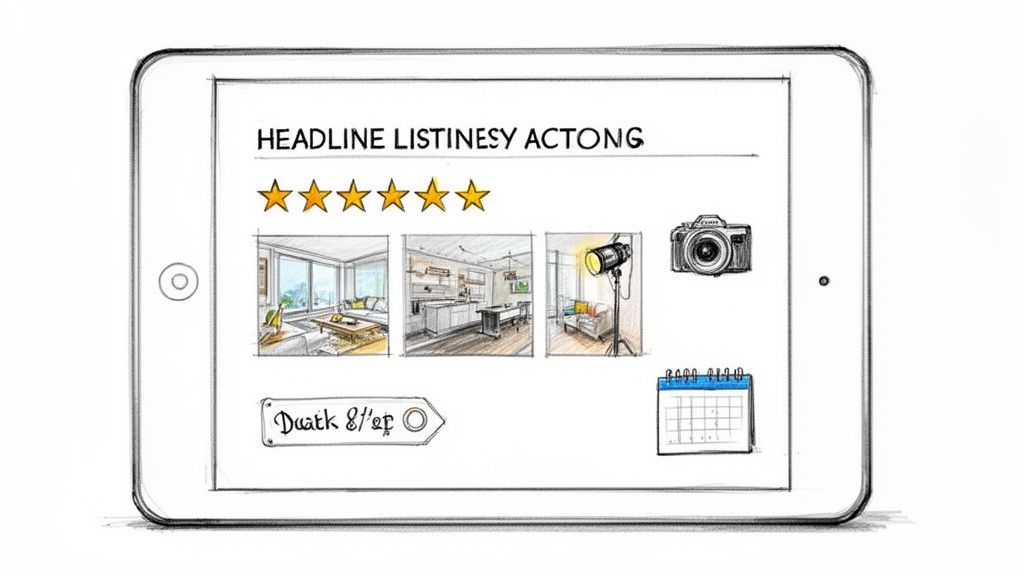
You’ve poured your heart into creating a beautiful, guest-ready space. That's the hard part, right? Not quite. Now, you need to make sure people actually see it.
Think of your Airbnb listing as your digital storefront. It’s your single most important marketing tool. A fantastic property with a weak listing is like a brilliant restaurant with no sign—it's an expensive secret nobody knows about.
To really succeed as a host, you have to master the art of turning a casual scroll into a confirmed booking. This isn't just about listing facts; it's about crafting an aspirational pitch that shows guests the amazing experience they're about to have.
The Power of Photography
Before a guest reads a single word, they’re going to judge your place based on the photos. Period. Great photography is the single most important element of a listing that actually gets booked.
You don't necessarily need to hire a pro, but you absolutely need to think like one.
A few simple rules I swear by for photos that pop:
- Chase the Light: Always shoot during the day. Open every blind and curtain to let the natural light flood in. A bright, slightly overcast day is perfect for avoiding harsh shadows. And whatever you do, never use your camera's built-in flash.
- Stage Every Shot: This is non-negotiable. Fluff the pillows, make the bed with hotel-crisp corners, and clear all personal clutter. A small touch like a bowl of fresh fruit on the counter or neatly folded towels on the bed makes a world of difference.
- Shoot from a Corner: This is an old real estate trick for a reason. Standing in a corner and shooting towards the opposite side of the room makes the space feel larger and more inviting. It captures more in a single, compelling frame.
- Show, Don't Just Tell: Don't just mention your awesome coffee bar or that perfect work-from-home nook—show it. A fantastic photo of a key amenity is way more powerful than a line of text.
Writing Titles and Descriptions That Sell an Experience
Your photos grab their attention; your words seal the deal. You’re not just renting a room—you’re selling an experience.
A generic title like "2 BR Condo" is a guaranteed way to get lost in a sea of identical listings. Be specific, be evocative. Put yourself in your ideal guest's shoes. What are they looking for?
A title like "Walkable Downtown Loft | King Bed + Fast WiFi" instantly connects with both leisure and business travelers. It highlights features that solve their problems before they even have to ask.
Your description needs to tell a story. Instead of a flat "There is a balcony," try something like, "Start your morning with coffee on the private balcony, overlooking the quiet courtyard." See the difference? You’re helping the guest imagine themselves there. If you're looking for more inspiration, these property description sample guides are a great place to start.
Host Insight: The first paragraph of your description is make-or-break. Lead with your absolute biggest selling point. Is it the jaw-dropping view? The unbeatable location? The unique design? Hook them right away.
Fine-Tuning Your Pricing for Maximum Profit
One of the biggest mistakes I see new hosts make is setting a static price. A "set-it-and-forget-it" approach leaves a massive amount of money on the table. Your pricing has to be dynamic, adapting to demand, seasonality, and local events.
A smart pricing strategy should always account for a few key factors:
- Seasonality: Your rates for a holiday weekend in July should look very different from a Tuesday in November.
- Local Events: Is there a huge conference, a music festival, or a major sporting event in town? That spike in demand means your prices should spike, too.
- Day of the Week: Weekend nights can easily command a 15-30% premium over weeknights in most markets.
Dynamic pricing tools can automate this for you, but even making manual adjustments after a quick look at competitor calendars will put you leagues ahead of the competition. Start with a solid base price, then layer in adjustments for demand. This is the key to staying booked and profitable all year long.
Mastering Operations for a Seamless Guest Experience
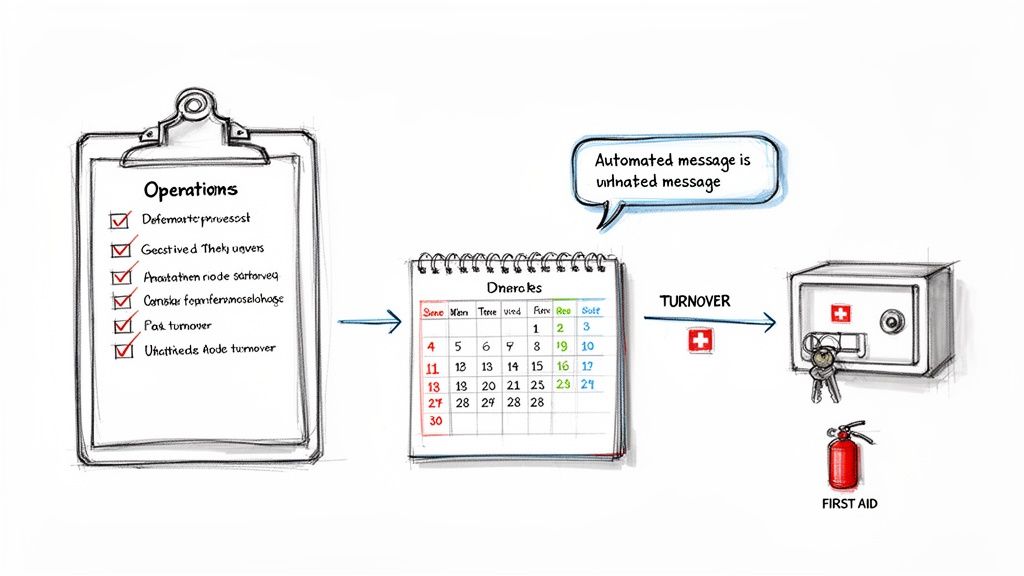
A killer property and a perfect listing are what get guests in the door. But it's the behind-the-scenes execution—the operational machine you build—that earns those glowing five-star reviews and keeps them coming back.
This is where the real work of hosting happens. The goal is to make incredible hospitality feel completely effortless for the guest, but that magic is built on a rock-solid foundation of systems and consistency. From the first inquiry to the final turnover clean, your operational game plan is what separates the amateurs from the pros.
Nailing Guest Communication
In a world of instant everything, prompt and friendly communication isn't just nice to have; it's non-negotiable. A slow response can mean the difference between a new booking and a lost opportunity.
You should be aiming to respond to all inquiries within an hour. This isn't just about good service—it's a critical metric in Airbnb's algorithm that directly impacts how visible your listing is. For hosts looking to professionalize every aspect of their business, exploring dedicated vacation rental management solutions can be a game-changer, especially when scaling up.
But the real secret to doing this without being chained to your phone 24/7 is automation. Use Airbnb’s scheduled messages to set up a simple, effective communication flow that does the heavy lifting for you.
- Booking Confirmation: The moment they book, an automated message should go out thanking them and confirming their dates.
- Pre-Arrival Details: Three days before check-in, send another message with the address, key access instructions, and a link to your digital guide.
- First-Day Check-In: A few hours after they're scheduled to arrive, a quick message makes a huge impression: "Hi [Guest Name], just wanted to make sure you got in okay and everything is to your liking!"
- Checkout Reminder: The evening before departure, send a friendly reminder of the checkout time and any simple instructions.
This simple sequence ensures your guests feel looked after at every key moment, building trust and cutting down on those last-minute questions.
The Art of the Flawless Turnover
Consistency is the name of the game. Your 50th guest deserves the exact same sparkling clean, perfectly staged property as your very first. The only way to guarantee this level of quality is with a detailed, non-negotiable checklist for your cleaning team (or for yourself).
Your turnover checklist is so much more than a list of cleaning tasks; it's a complete property reset.
Host Insight: I swear by creating a "photo checklist" for my cleaners. I take pictures of exactly how each room should look—pillows fluffed a certain way, remote controls placed just so, curtains perfectly straight. It removes all guesswork and ensures brand consistency across every single stay.
A bulletproof turnover process needs to cover three key areas:
- Cleaning: This is the basics, like vacuuming, sanitizing surfaces, and scrubbing bathrooms. Get granular. Don't just say "clean kitchen," list out every single task.
- Staging: This is all about resetting the property to its "photo-ready" state. Fold the towels the same way every time, arrange the decorative pillows, and make sure everything looks perfect.
- Inventory & Maintenance: Your cleaner should be your eyes and ears. They need to check for any damage, test key electronics, and restock all consumables (coffee, paper towels, soap) from a locked owner's closet.
Prioritizing Guest Safety and Peace of Mind
Making your guests feel safe isn't just about meeting basic requirements; it's a fundamental responsibility. Showing you genuinely care for their well-being fosters trust and is often mentioned in glowing reviews.
Make sure your safety essentials are visible and easy to find.
- Fire Safety: A fire extinguisher should be in an obvious spot, like under the kitchen sink, and clearly marked. And please, check the batteries in your smoke and carbon monoxide detectors regularly.
- First-Aid Kit: Keep a well-stocked first-aid kit in a bathroom vanity or kitchen cabinet.
- Emergency Info: Post a laminated sheet on the fridge with the property address (you'd be surprised how many guests forget it) and local emergency numbers.
Ultimately, the guest experience is what defines success in this business. The platform's top hosts—the 1 million Superhosts—achieve their status by nailing these details, leading to 4.8+ ratings and 20-30% more bookings. With U.S. occupancy rates projected at 56.2% for 2025, it’s the hosts who deliver consistently great, safe stays that will not just survive, but thrive.
Scaling Your Business Beyond a Single Platform
Relying entirely on one platform like Airbnb is like building your business on rented land. It’s a fantastic way to get started, no doubt. But if you’re serious about long-term growth and creating a resilient business, you have to own your brand and build a direct relationship with your guests.
This is the leap from being just an Airbnb host to becoming a modern hospitality entrepreneur. The goal is to diversify where your bookings come from, cutting your dependency on a single algorithm or fee structure. When you build your own marketing channels, you’re the one in control—of your brand, your guest data, and ultimately, your bottom line.
Why You Need a Direct Booking Website
Your most powerful tool in this journey is a dedicated direct booking website. Think of it as your digital flagship store. It’s the one corner of the internet that is entirely yours. You make the rules, you showcase your properties exactly how you want, and you capture bookings without paying out hefty commissions.
A professional website also builds incredible credibility. It tells potential guests you’re a serious, established operator, not just a casual host. That trust factor is often the final nudge someone needs to book directly with you, saving both of you a nice chunk of change.
Here’s an example of a clean, professional booking site built with a tool like hostAI.
This site puts the properties front and center with a modern, easy-to-use interface that just feels trustworthy. A design like this instantly elevates your brand and turns your side hustle into a professional hospitality business.
Automating Your Brand Building with AI
Not too long ago, building and marketing a brand meant hiring a dedicated team or shelling out for expensive agencies. Now, AI-powered tools built specifically for hosts can handle the entire process, making it accessible for operators of any size. This tech works in the background to attract and keep guests, freeing you up to focus on what you do best: hospitality.
These modern systems are designed to work in concert, creating a powerful marketing engine:
- Intelligent Website Creation: Tools like hostFront can spin up a high-converting, SEO-optimized booking website for you in minutes. It handles the design, property showcases, and the booking engine—giving you a pro-level online presence without writing a single line of code.
- Automated Email Marketing: The easiest way to get new bookings is by re-engaging past guests. A system like hostMail automates this, sending personalized email campaigns to your guest list with special offers or reminders for their next trip.
- Hands-Free Advertising: Finding new guests usually means diving into the complex world of online advertising. Platforms like hostDistro can manage this for you, running automated and optimized ad campaigns across different channels to drive new, qualified traffic right to your website.
Key Insight: The real magic happens when these tools are integrated. Your website captures guest info, your email system nurtures those relationships, and your advertising finds new leads. It all works together to create a self-sustaining cycle of direct bookings.
The potential for growth here is massive. With the vacation rental market projected to hit $108 billion by 2025, professional hosts are turning to technology to get an edge. The average U.S. host earned $44,235 annually, and multi-property operators who use AI-driven marketing have seen their direct bookings double. You can find more Airbnb market trends and statistics to see where the industry is heading.
Adopting a multi-channel approach is the definitive strategy for scaling your rental business. To dive deeper, check out our guide on what multi-channel distribution means for hosts. By combining the massive reach of major platforms with the high-margin profitability of direct bookings, you’ll build a more stable, valuable, and future-proof hospitality brand.
Your Top Airbnb Hosting Questions, Answered
Jumping into the world of short-term rentals always kicks up a lot of questions. As you get started, you’ll quickly find that a lot of situations don't have simple, textbook answers. I've been there. So, let's tackle some of the most common things new hosts ask, with straightforward advice to help you get going with confidence.
How Much Can I Realistically Earn?
This is always the first question, and the only honest answer is: it completely depends on your property and your market. You'll see headlines touting average host earnings around $44,000 a year, but that number is just a national benchmark. It means very little for your specific situation. A studio in downtown Austin has a totally different ceiling than a three-bedroom cabin in a seasonal ski town.
Your first move should be to become a detective in your own neighborhood. Tools like AirDNA or even Airbnb's own estimator are a decent starting point, but the real gold is in manual research. Find the top-performing listings right around you and dig in.
- Become an expert on their calendars. Don't just glance at the nightly rate. How many nights are they actually booked? Occupancy is where the money is made.
- Watch their pricing like a hawk. How do their rates jump for weekends, holidays, or that big local festival? This is your market's real pricing strategy in action.
- Figure out what they're offering. What amenities justify their price point? This will show you exactly how to position your own property to compete.
The hosts who pull in the big numbers don't just set their price and forget it. They are constantly tweaking, adjusting, and reacting to the market.
What Are the Absolute Must-Haves for Guests?
Sure, your place needs to be spotless—that's table stakes. But what really makes a stay great? Think about what a guest wants after a long, stressful day of travel. They want things to be easy, comfortable, and seamless.
Host Insight: I always tell new hosts to live by the 'three C's': Comfort, Connectivity, and Cleanliness. If you nail these three pillars, you're already ahead of 90% of the competition and on your way to a steady stream of five-star reviews.
A truly comfortable bed with quality sheets is non-negotiable. Seriously, don't skimp here. Beyond that, the essentials are surprisingly simple but make a huge difference:
- Fast, reliable Wi-Fi isn't a perk anymore; it's a utility, just like power and water.
- A simple coffee and tea station. Make it easy to use first thing in the morning.
- Plenty of towels, basic toiletries (soap, shampoo), and extra pillows.
- Small, thoughtful touches go a long way. A smart TV already logged into a guest account or a couple of universal charging cables on the nightstand shows you're thinking about their experience.
How Do I Deal with Bad Reviews or Difficult Guests?
It’s going to happen. It's not a matter of if you get a tough guest or a less-than-perfect review, but when. The trick is to not take it personally and to have a game plan. When that negative review pops up, remember your public response is for all your future guests to see.
Always respond quickly, publicly, and professionally. Thank them for the feedback, acknowledge their issue without getting defensive, and briefly state how you fixed it. Something like, "Thanks for letting us know about the slow drain. We appreciate the heads-up and have already had a plumber come out to resolve it." This shows future bookers that you're a responsive, proactive host who takes care of their property.
When you have a difficult guest during a stay, keep all your communication on the Airbnb platform. That creates a paper trail. If they're breaking house rules, don't be afraid to get Airbnb Support involved—that's what they're there for. But your best defense is a good offense: crystal-clear house rules and a solid guest screening process from the start.
Should I Manage This Myself or Hire Someone?
This really boils down to how much time you have and how hands-on you want to be.
Managing it all yourself means you keep 100% of the revenue, but you also field every 11 PM "how does the thermostat work?" message, coordinate every cleaning, and handle every clogged drain. It’s a job.
A co-host is a fantastic middle ground. They’ll usually handle guest communication and day-to-day operations for a cut of the booking revenue, typically somewhere between 10-20%.
If you're looking for a more passive investment, a full-service property management company is your answer. They do everything, from marketing to maintenance, but their fees reflect that, usually in the 20-30% range. Sit down and do the math on what your time is truly worth. The cost of hiring help might be a bargain compared to the personal cost of being on-call 24/7.
Ready to turn your hosting side hustle into a real business? hostAI provides the tools you need to build a professional brand, automate your marketing, and drive high-margin direct bookings. Create your own intelligent booking website and start owning your guest relationships at https://gethostai.com.